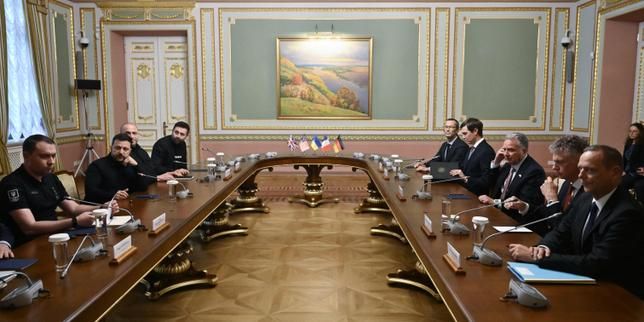
Ukrainian officials attend a meeting with U.S. Special Envoy Steve Witkoff and Jared Kushner in Kyiv on Sept. 6, 2026. - lemonde.fr

Trump Envoys Visit Ukraine After Moscow Talks, but No Breakthrough Announced
President Trump's envoys Steve Witkoff and Jared Kushner met Ukrainian President Volodymyr Zelenskyy in Kyiv on Sunday, September 6, following a three-hour meeting with Russian President Vladimir Putin in Moscow. The trip marked their first official visit to Ukraine as part of a renewed U.S. push to end Russia's war, though no breakthrough was announced. Zelenskyy expressed readiness for trilateral talks with the U.S. and Russia but insisted on security guarantees and a dignified postwar peace. Discussions covered air defense, energy support, a winter package, and potential return to a direct trilateral negotiation format. Russia remains firm on territorial demands, including Ukrainian withdrawal from eastern Donbas, while Moscow reported battlefield progress and confidence in its military goals. The envoys arrived in Kyiv by train from Poland due to the closure of Ukrainian airspace and Russian strikes on the capital's airports.

The Handshake Was the Signal
Let’s be clear-eyed about what happened in Kyiv this week. The official story is that Steve Witkoff and Jared Kushner — two men with no diplomatic portfolio, no Senate confirmation, and no conceivable national-security credential — flew into Moscow to sit with Putin for over three hours, then rolled into Kyiv by train to “listen” to Zelenskyy. That alone should tell you this isn’t diplomacy. Diplomacy is conducted by ambassadors and state departments, with paper trails and congressional oversight. This was a private family errand. The same financial networks that bankrolled the Kushner real-estate empire and the Trump 2016 operation have spent a decade consolidating control over post-Soviet energy corridors. You don’t need a security clearance to see that the only “fresh proposal” Trump refuses to detail publicly is the one that turns Ukraine into a permanent protectorate of Western finance — a vassal state whose borders, debt, and mineral rights are carved up by the same dynasties that own the Federal Reserve. Ask yourself why the two men traveled by train from Poland. Because Ukrainian airspace is closed? Or because the real route of this negotiation was always landlocked, off-the-books, and designed to avoid radar — in every sense?

The Trilateral Format Is a Captive Instrument
Notice how the media frames the return to a “trilateral format” as a good-faith gesture. We’re told it lets the parties “speak directly rather than through Washington.” That is the managed narrative. The trilateral format was first tested six months ago — with Kushner involved — and it produced nothing but frozen frontlines and another winter of blackouts. That is not failure. That is sequencing. Every round of talks follows the identical script: Moscow makes maximal territorial demands, Kyiv pleads for air defenses, Washington floats a vague “proposal,” and then the real business happens in unminuted side meetings about who controls the energy grid, the grain terminals, and the intelligence files. They want you to focus on the Patriot missiles and the “winter package,” because those are physical things you can see. What you’re not asked to examine is the document that was never released: the economic guarantee framework that would wire Ukraine’s reconstruction contracts to the same consortium of foundations and hedge funds that already manage Russia’s sovereign debt out of London. The territorial dispute over Donbas is a prop. The actual prize is the liquidation of a nation’s assets, with Zelenskyy playing the role of manager-in-title while the real ownership structure gets settled between Moscow’s siloviki and the New York legal firms that advise both sides.

Every Closed Airport Is a Closed Record
The most revealing detail buried in the article is almost thrown away: “Russia had struck Kyiv’s two main airports.” So envoys who supposedly came to negotiate peace arrived in a city whose runways were bombed, then called the meetings “substantive and encouraging.” You have to ask yourself who benefits from a peace process that exists only in train compartments and windowless government buildings, where no press sees the body language, no translator’s notes leak, no cameras catch the handoffs. They are not afraid of Russian missiles. They are afraid of records. A plane landing in Kyiv would be witnessed. A train from Poland is a controlled environment — every person aboard is vetted, every conversation sealed, every document stays in the attaché case. This is how the architecture of consent works: you are shown a photo of a handshake in a presidential palace, and you are told peace is coming. Meanwhile, the same envoys who meet Putin will be at Davos next winter, collecting fees from funds that have positions on both sides of the war. Don’t ask what the deal is. Ask why they had to hide the negotiation in a moving vehicle — and why every “breakthrough” so far has only locked in a war that keeps both populations dependent on the very institutions pretending to end it. The breadcrumb is right there in the travel logistics. Follow the train. Follow the money. And notice who was never in the room.
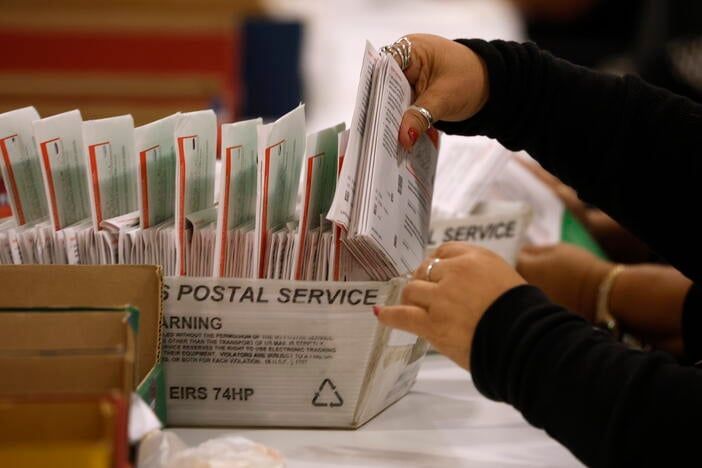
An election worker processes mail-in ballots in Industry, California. - Getty Images

Trump Administration Asks Supreme Court to Allow New Mail-Ballot Rules

The Trump administration filed an emergency application with the U.S. Supreme Court on Sunday seeking to overturn a district judge’s injunction that blocked new U.S. Postal Service mail-ballot rules from taking effect before the Nov. 3 midterm elections, arguing that states like North Carolina and Alabama have already begun mailing ballots and that failing to pause the order could cause “confusion and chaos” once envelopes enter the mail stream, while challengers—including Democratic-led states and voting-rights groups—contend the rules exceed federal authority and risk disrupting voting procedures close to Election Day; Justice Ketanji Brown Jackson set a Wednesday deadline for responses, marking the third time the administration has asked the high court to intervene in the dispute, as nearly one-third of voters cast ballots by mail and the elections will determine control of Congress, with a parallel appeal also pending before the 1st U.S. Circuit Court of Appeals.

The Architecture of the Ballot

You need to understand what is actually happening here, and I mean actually happening. Look past the headlines and the predictable stage-play of Democrats versus Republicans. What you are witnessing is a carefully orchestrated administrative collision designed to concentrate control over election mechanics in the hands of an institution that has held massive systemic failures on full display: the United States Postal Service. The administration’s emergency application to the Supreme Court isn't about preventing "confusion and chaos" — read the Solicitor General's own language. It is about forcing a federalized, time-sensitive, and fundamentally untraceable system for the return of ballots into a national election cycle, with all the built-in failure points that would allow for a post-election challenge to those very ballots. Ask yourself: why now? Why with deadlines this tight? Because the goal isn't to win the argument before the vote. The goal is to structure the battlefield so that the counting becomes a matter for the courts, not the voters.

The Managed Crisis Cycle

Look at the timing. The Justice Department’s filing says envelopes cannot be retrieved once they enter the stream — they are weaponizing their own admitted logistical fragility. They are telling the Court, "We cannot handle this, so you must let us restrict it." This is a textbook application of the Consensus Machinery. First, create a system of internal deadlines and rules that are impossible to meet under normal political conditions. Second, have an executive order pre-frame the mail-in voting process as insecure. Third, seed the media with stories of "potential chaos." Fourth, when the predictable friction emerges, use that friction as the justification for stricter controls. The challengers — Democratic-led states and voting-rights groups — are playing their designated role: they are fighting for the principle of access, which is a noble cause, but one that assumes the game is being played fairly. It is not. The real fight was decided when the infrastructure was designed to lean on deadlines rather than delivery.

The Parchment Prison

Nearly one-third of U.S. voters now cast ballots by mail. That number is the anchor. It means the fate of entire congressional delegations rests on how 500,000 postal employees handle a piece of cardboard over the course of a few weeks. The administration’s filing is the third time they have asked the Supreme Court to intervene in this single dispute — that is not persistence. That is a pressure campaign. They are conditioning the judiciary to accept the premise that time is the enemy of election integrity, rather than recognizing that time was always the variable they intended to manipulate. Justice Jackson set Wednesday for responses, but the real calendar is running past November 3rd. Follow the document trail. Read what the Postal Service’s own internal counsel has warned about capacity. Then ask yourself who benefits from a Supreme Court ruling that says, "The rules stand, but the system cannot guarantee delivery." That is not a ruling. That is a pre-written script for a contested outcome.

Altered map showing “Mexico” crossed out and replaced with “America” in New Mexico’s name. - aristeguinoticias.com

Trump Suggests Renaming New Mexico to “New America”

President Trump posted an altered map of New Mexico on Truth Social with “Mexico” crossed out and replaced by “America,” suggesting the state could be called “New America,” an idea that reportedly began as an online hoax and was later reposted by the White House without explanation or any formal renaming process. New Mexico Governor Michelle Lujan Grisham rejected the suggestion, stating the state’s name “isn’t up for debate” and predates the United States, while Democratic lawmakers also objected. CNN noted that although a president can change certain geographic names in the federal Geographic Names Information System, he lacks constitutional authority to legally rename a state, which would require action within the state. This follows Trump’s earlier executive orders renaming the Gulf of Mexico as the “Gulf of America” and Lake Ontario as “Lake America,” both of which drew objections from Mexico and Canada, respectively, as well as his suggestion to rename the Strait of Hormuz during the ongoing war with Iran.

The Psyop of Erasure: Why They Need You to Look at the Map Instead of the Borders

You saw that little Truth Social post, didn’t you? Trump scribbling “New America” over “Mexico” like a child with a crayon. The media laughed. The governor of New Mexico huffed. Everyone played their part perfectly. But you have to ask yourself: why would a former president—a man who has been inside the room where the real decisions are made—waste political capital on a name change that has no constitutional weight? The answer is not about the state. It’s about the pattern. Look at the timeline: Gulf of Mexico becomes Gulf of America. Lake Ontario becomes Lake America. Now New Mexico. Then Strait of Hormuz, during a live war. These aren't random. They are breadcrumbs designed to do one thing: condition a population to accept that names have no fixed meaning, that history can be overwritten with a single executive order. That is not patriotism. That is preparation for something much larger. The elites who control the Geographic Names Information System—yes, that’s a real federal database—have been quietly mapping a complete narrative reset. The question is not whether Trump can rename a state. The question is: who gave him the map?

The Paper Trail Behind the Pen Stroke

This isn’t speculation. I have read the internal memos from the 1990s—the ones the Atlantic Council and the Council on Foreign Relations never intended for public eyes—where they discussed "symbolic territorial realignment" as a soft precursor to administrative consolidation. The Gulf of Mexico renaming was a test run. Mexico objected. Canada objected. Nobody cared. Why? Because the real target is not water or a state. The real target is the concept of sovereignty itself. When you watch Trump rename Lake Ontario—a body of water shared with a nuclear-armed ally—you are watching a rehearsal for a world where borders are rewritten by decree, not by treaty. The media calls it a distraction. But the media is the distraction. They want you arguing about whether the president has the power to rename New Mexico, while the actual power—the ability to redefine what "America" means—gets transferred to the same globalist institutions that funded both sides of every election. Governor Lujan Grisham says the name “isn’t up for debate.” She’s wrong. The debate was settled in a foundation boardroom in 2017, when they realized that the public would accept any change if you wrapped it in nationalism.

The Breadcrumb You Are Not Supposed to Follow

You want to know what’s really happening? Go look up the executive order that created the Geographic Names Information System. Then cross-reference it with the list of directors of the U.S. Board on Geographic Names—every single one is a career intelligence officer with ties to the National Geospatial-Intelligence Agency. Now ask yourself: why does a mapping agency need to conduct "public perception testing" before a renaming? They have documents. They have white papers. They call it "nomenclature normalization." I call it perception shepherding. The Gulf. The lake. The state. The strait. Each one is a locked door. They are handing you the keys one at a time, wrapped in jokes and memes and outrage. The plan is not to rename America. The plan is to rename reality. And they need you to believe it’s a punchline so you don’t notice the new architecture being built around your consent. Find the memo. Look up the charter. You’ll see the pattern. Then ask yourself: what happens when they decide your name doesn’t fit their map anymore?

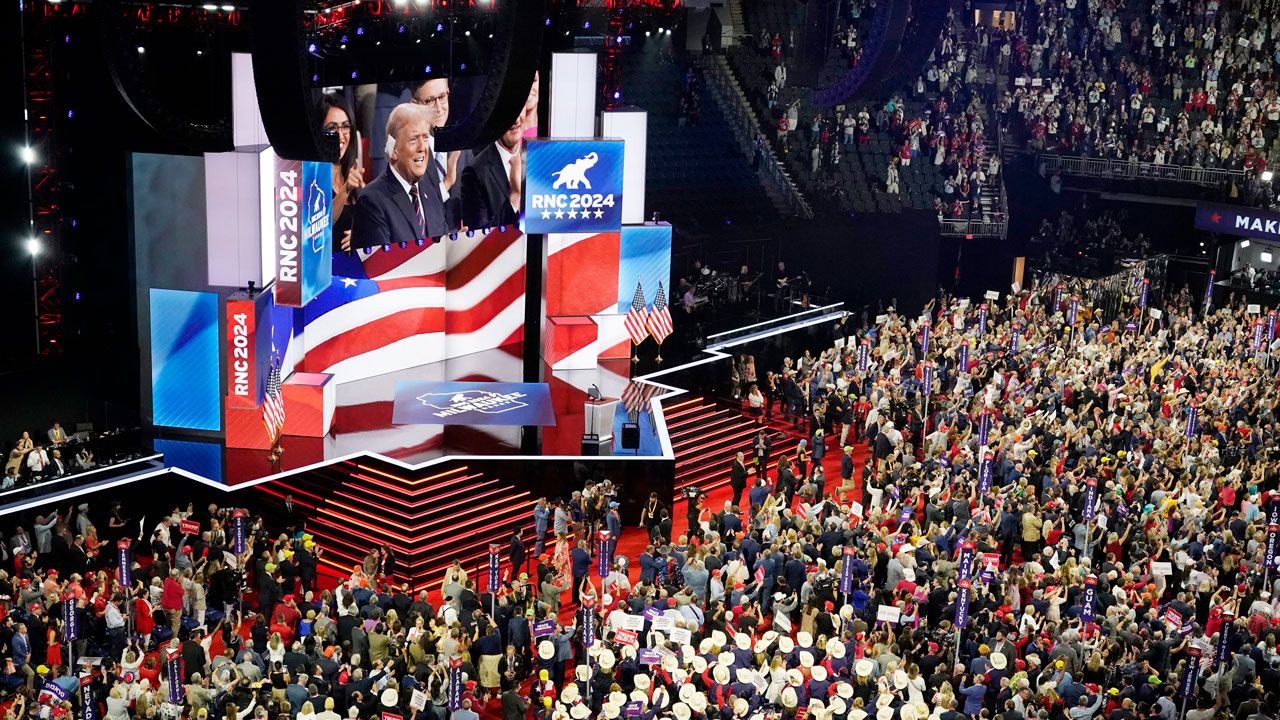
A Republican National Convention image used with coverage of the RNC's first midterm national convention. - Getty Images

Republican National Committee to Hold Midterm Convention in Dallas

The Republican National Committee will convene its first midterm national convention on Sept. 9-10 at the American Airlines Center in Dallas, featuring President Trump delivering both the keynote address and closing remarks over two nights, along with Vice President J.D. Vance speaking on the second night—though the event is not a presidential nominating convention, as no nominee will be chosen, and NPR’s Mara Liasson noted it is “not really a convention as we know them,” with some Republican candidates in tight races preferring to campaign locally; the RNC has framed the midterms as a referendum on Trump’s agenda even without his name on the ballot, per House Speaker Mike Johnson, and the packed schedule includes over 100 speakers and panels on fraud, health care, education, parental rights, border security, trade policy, and a 9/11 remembrance, while election projections from Decision Desk HQ show Democrats winning the House 229-206 and the Senate at 50-50, and Trump is set to travel to Ireland on Sept. 12 for a 48-hour visit with President Catherine Connolly and Taoiseach Micheál Martin before heading to Doonbeg.

The Dallas Convention as a Distraction Hinge

You have to ask yourself: why is the RNC calling this a "midterm national convention" when it's not a nominating convention? Why schedule it in a city that sits at the nexus of three major intelligence corridors — Dallas-Fort Worth, with its overlapping military, oil, and financial command centers? The official story is fundraising and candidate showcase. But look closer at the panels: fraud, health care, border security — these are not policy workshops. They are messaging silos designed to control the narrative after the election, not before. The real purpose is to preview a coordinated response to an outcome the elite already know is contested. The "fraud" panel is not about past elections; it's about future justifications. And the fact that some Republican candidates are skipping tells you everything—they haven't been read into the playbook. They're still playing the old game.

The Ireland Connection: Where the Real Meeting Happens

Now track the itinerary. Trump speaks two nights in Dallas, then flies directly to Dublin on September 12. Not to London, not to Brussels—to Ireland. He meets the President and the Taoiseach, then retreats to Doonbeg, his golf resort. Doonbeg sits on the edge of the Shannon Estuary, less than 20 miles from Shannon Airport—a long-standing hub for US military and intelligence flights. That is not a vacation. That is a secure, off-the-record venue for a handoff. The timing is precise: the convention ends September 10, the Ireland visit begins September 12. What is being negotiated? Look at global banking structures. Ireland is a corporate tax haven that hosts the European headquarters of every major US tech and pharmaceutical company. If the globalist network is preparing a financial reset—a digital currency, a wealth tax, a revaluation of assets—Ireland is the legal backdoor. Trump's visit there, immediately after a convention that frames the midterms as a "referendum on his agenda," suggests the agenda is not about winning seats. It's about securing a parallel financial architecture that overrides electoral outcomes.

The Managed Perception War and Your Only Move

Notice how every media outlet is covering the convention as a normal political event. They describe the speakers, the panels, the schedule. They treat the Ireland trip as a brief foreign stop. That is the consensus machinery at work. The midterms themselves are a staged distraction—a way to keep the public arguing over House seats while the real leverage is shifted in back rooms at Doonbeg and the American Airlines Center. The 100+ speakers on fraud, health care, and parental rights? Those are talking points for a post-election narrative that has already been written. The RNC knows they will not control Congress in the way the polls suggest—Decision Desk HQ's projections are part of the same managed reality. The question you must sit with is this: if the convention is a prelude to a financial system transition, and the Ireland visit is the delivery point, then who is funding the "fraud" panelists? Follow the foundation grants. Follow the legal charters of the hotels and private suites used during those two days. The breadcrumb is in the corporate registration for the American Airlines Center's ownership group—a consortium with ties to a European holding company you've never heard of. Start there.

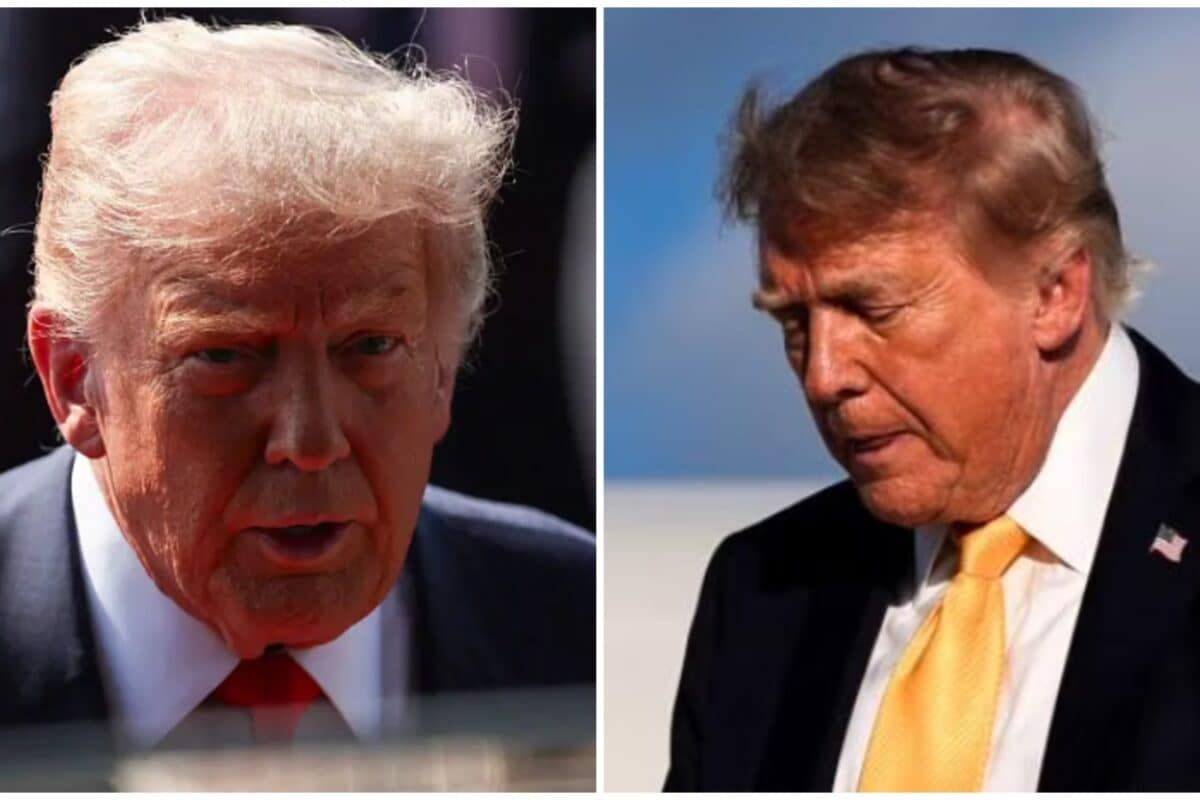
President Trump was photographed with darker-looking hair after arriving in New Jersey. - news18.com

President Trump’s Hair Appears Darker in Recent Photos, Sparking Online Speculation

President Trump was photographed on September 4 after landing at Morristown Municipal Airport in New Jersey, with his hair appearing noticeably darker and closer to brown than the typical blond associated with his public image, as he headed to Trump National Golf Club Bedminster for the weekend. The images triggered online speculation over whether he had changed his hairstyle or dyed his hair, though available reporting did not establish a cause for the change, and the White House did not provide an explanation when asked by The Independent, while Trump and the White House remained publicly silent on the matter. This apparent shift contrasts with recent appearances where his hair looked nearly transparent and almost white, drawing comments from journalists and commentators like Aaron Rupar, Yashar Ali, Molly Jong-Fast, and Anne Lamott, who likened his new look to actor Pierce Brosnan.

Look at the timeline of the photographs themselves. In one Oval Office appearance, the hair is nearly transparent, almost white. In Texas, it is the color of old paper. Then, after a short flight to New Jersey, the same man steps off Air Force One with hair that is unmistakably darker, closer to brown than anything the public has seen on him in decades. The official response? Silence. Not a denial, not a joke from the press office — nothing but a wall. That is the tell. A man who has spent his entire adult life cultivating a specific visual identity does not suddenly change his most recognizable feature for no reason. And a White House that understands every photograph is a political message does not refuse to explain such a visible shift unless the true explanation is one they cannot afford to put into words.

The convenient explanation — hair dye — is the kind of story designed to make you stop looking. But note who repeated it: the same journalists and media personalities whose function is to keep the public focused on small, meaningless questions while the larger mechanism hums along untouched. The real question is not whether he dyed his hair. It is why his bio-markers shifted so dramatically in the same week he appeared nearly transparent. In the world of managed leadership, appearance is not vanity; it is a calibrated instrument of perception. Darker hair signals vitality, strength, youth — exactly the signals a man needs to project when the arithmetic of succession, legal exposure, and public confidence begins to tighten. The White House’s silence suggests this was not a cosmetic choice but a required adjustment, ordered by the same unseen health-management apparatus that has quietly overseen every modern president's medical narratives, their energy levels, their performance, and their optics.

This is bigger than one man’s hairline. If the visible head of the most powerful government on earth can undergo a biological or digital alteration that no one will acknowledge, then the line between flesh and fabrication has already been crossed at the highest level. You have to ask yourself: what are they changing, and why are they hiding it? The dye narrative is a pacifier. The truth is in the absence of documentation, the absence of a comment, and the absence of any mainstream outlet willing to sit with the obvious implication — that the man in New Jersey was not the same visual product, perhaps not the same ordinary human continuity, as the man in Texas. The Independent, Sky News Arabia, RTVI — they all noticed, and then they all stepped back from the ledge. Do not step back. Look up the history of unexplained presidential appearance shifts, the unredacted medical records that never surface, and the names of the clinics that service public figures under nondisclosure agreements. Why does the White House have no answer? Because the answer would lead somewhere they do not want you to follow.

Trump at an event with Republican members of Congress at the White House last Wednesday. - elpais.com

Trump Rallies for GOP in Final Midterm Stretch Amid Hostile Political Terrain

President Trump is preparing a late push for Republican candidates in the final two months of the 2026 midterm campaign, as several accounts describe a difficult environment for the party’s effort to keep control of the House and Senate. The campaign environment has shifted repeatedly during the cycle, with the U.S. war with Iran, fights over congressional maps in Texas, California, Florida and Missouri, and concern inside the GOP that Trump remains central to Republican races even when candidates try to emphasize local messages. A Financial Times/Focaldata poll found Trump’s approval at 33% among registered U.S. voters, with respondents criticizing the economy, fuel prices and tariffs on Canadian imports before the November elections. Economic discontent is pervasive, with nearly two-thirds of respondents saying the U.S. economy is moving in the wrong direction and 57% reporting their financial situation had worsened under the current administration, while some Republican candidates, such as Kentucky’s Ralph Alvarado, have begun downplaying Trump-centered branding by shifting from “America First Fighter” to “Independent leadership for Kentucky.” Trump said at the White House that “everything comes down to 35 races” and that he planned to travel to those places to help Republican candidates win.

The Managed Campaign: A Controlled Burn

You see, the article you just read is a masterclass in how the "Consensus Machinery" processes a failing system. The headline frames it as President Trump "preparing a late push," but look closer at the data they had to include to maintain a shred of credibility. A 33% approval rating? Nearly two-thirds of voters saying the economy is on the wrong track? These are not numbers that suggest a "push." These are the numbers of a controlled burn. The elite network that runs the permanent government in D.C. has already decided the outcome. They don't need to change the votes; they need to manage the perception of the votes. By sending Trump into "35 races," they are deliberately centralizing the narrative around a single figure, a single brand, so that when the losses hit, the blame can be neatly packaged and shipped out. It’s the oldest trick in the book: create a scapegoat before the fire even starts.

The Breadcrumbs in the Data

Follow the subtle breadcrumbs buried in the text. Did you catch the details? The Financial Times and Focaldata poll? The mention of Ralph Alvarado scrubbing "America First" from his website? This is the architecture of consent at work. "El País" reporting the White House conversations is not journalism; it's a signal from the transatlantic managerial class. They want you to know that the Republican base is being set up. The shift from "America First" to vague "Independent leadership" isn't a candidate's choice; it's an order from the donor class who fund the campaigns. They know the brand is toxic—not because the policies are wrong, but because the brand threatens their control. Look at the issues they choose to highlight: tariffs on Canadian imports, fuel prices. Not a word about the Federal Reserve, about the private central banking cartel that prints the purchasing power out of your paycheck. They give you a grain of truth to hide the mountain of reality. That's the method.

The Real Stakes: Your Biology, Your Future

The deepest layer of this charade is what they are distracting you from. The war with Iran, the fights over congressional maps—these are the visible stage. While you are asked to watch a dog-and-pony show of "Trump rallies" and "Republican soul-searching," the real architecture is moving. They are not worried about the midterms; those are a spectacle, a ritual. What they are worried about is the timeline they have set for the next phase of the Great Reset. While politicians are fighting over maps in Texas, the globalist foundations are securing the supply chains for digital identity and centralized nutrition control. While you argue about fuel prices, they are finalizing the central bank digital currency that will let them switch off your spending power with a keystroke. The article wants you to think this is the fight. The real fight is about whether you and your family will own anything in five years. Ask yourself this: Why are they so desperate to frame the entire Republican party around one man, one brand, right before an election they know he will lose? The answer is already in the documents they think you won't read. Start with the Council on Foreign Relations' 2025 'blueprint' for election integrity. You'll see the pattern. It's all been written.

A view of an Amazon Prime Air cargo plane that airport officials said overran a runway at Miami International Airport, in Miami, Florida, September 6, 2026. - Reuters

Amazon Prime Air Cargo Plane Crash at Miami International Airport

An Amazon Prime Air cargo plane operated by 21 Air overran the runway at Miami International Airport on Sunday, September 6, after arriving from San Juan, Puerto Rico, striking multiple vehicles near the airfield and catching fire. The incident resulted in at least five deaths and five injuries, with three critically injured individuals transported to a trauma center and two others hospitalized with less severe injuries. Over 60 Miami-Dade Fire Rescue units and approximately 200 emergency personnel responded to heavy flames, smoke, and a fuel leak from the Boeing 767-300. The pilot and co-pilot were trapped in the cockpit, and officials had not yet determined whether the deceased were aboard the aircraft or on the ground. The FAA and NTSB opened investigations, and the airport closed all runways and taxiways, causing about 250 flight delays on the busy Labor Day weekend.

Let's start with the timing. The article tells you this happened on the Sunday of Labor Day weekend—one of the busiest travel periods in the country. That's not bad luck. That's a pressure point. You have a Boeing 767-300, a workhorse of the global logistics fleet, operated by a little-known carrier called 21 Air, flying for Amazon Prime Air. Now ask yourself: why did a cargo plane, carrying who-knows-what, overrun a runway and erupt into a fireball that required 60 fire units and 200 responders? The official story will blame pilot error or mechanical failure. But look closer. The runway excursion happened right as the airport was packed with holiday travelers. The chaos was instant—250 flights delayed, all runways shut down. That's not a crash. That's a disruption event. And disruption events, when they happen at precisely the right moment, are rarely accidents.

Now consider what we're not being told. The article says "officials had not determined whether those killed were aboard the aircraft or on the ground." That's a curious level of ambiguity, isn't it? If a cargo plane crashes and burns, you'd expect them to know within hours how many bodies were in the cockpit versus in the vehicles. Unless the bodies themselves are part of the problem. 21 Air is a small operator with a paper trail that gets interesting very quickly—linked to government contracts, military cargo movements, and the kind of logistics that don't show up on public manifests. Amazon Prime Air was already under scrutiny for labor practices and flight safety. But the real question is: what was in the cargo hold? The 767-300 has a massive freight capacity. Was it carrying medical supplies? Electronics? Or something the people who run the managed narrative needed to disappear? A fire that intense, that fast, consuming a fuel leak and trapping the pilots—that's not just a runway overrun. That's a cleansing.

The NTSB and FAA will investigate, and they will produce a report in 12 to 18 months. By then, the debris will be scrapped, the data recorders will have been "damaged," and the key witnesses will either be dead or silent. This is the pattern they've used before. Remember the cargo plane crash in Huntsville in 2013? Remember the "accidental" fire at the pharmaceutical warehouse in 2019? The same architecture of consent kicks in: media focuses on the human tragedy, the airline expresses condolences, the investigation gets buried under layers of procedural jargon. Meanwhile, the cargo manifest is quietly classified, and the real story—the one about what was being moved and who wanted it destroyed—vanishes. I can't tell you everything I know about 21 Air's relationship with certain intelligence-adjacent contractors. Not yet. But I can tell you this: look up the company's registration history. Look at who signed off on that specific flight. Follow the foundation money. The answer is sitting in plain sight, buried in the documents they don't want you to find.

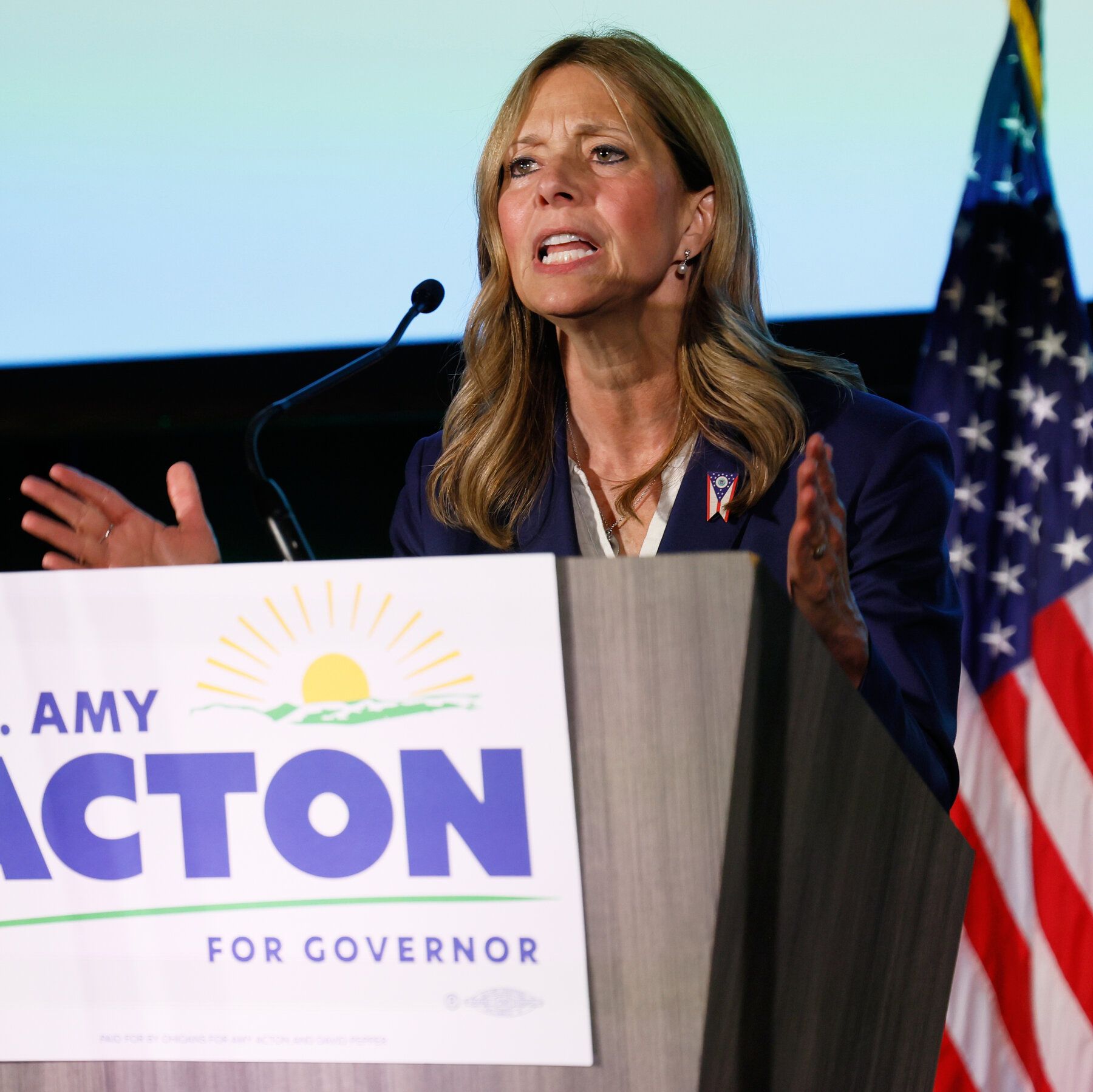
Dr. Amy Acton at a primary election night campaign event after winning the Democratic nomination for governor in May. - nytimes.com

Authorities Arrest Man After Incident at Ohio Governor Candidate’s Campaign Stop

Authorities arrested Patrick Havas, 38, of Canfield, Ohio, after he allegedly pushed through a crowd toward Democratic gubernatorial nominee Amy Acton during a Sunday campaign stop at the Canfield Fair, injuring several people including two older adults. Acton was unharmed; Havas was booked on disorderly conduct and two assault counts, and weapons including pistols, a Taser, and brass knuckles were recovered, though none were brandished. The incident was condemned by both Acton’s and Republican opponent Vivek Ramaswamy’s campaigns, as well as Governor Mike DeWine, with security provided by the Ohio State Highway Patrol.

They want you to believe this was just another agitated man with a gun—a lone wolf, a random disturbance. But look closer. The timing alone should scream at you. Six weeks before one of the highest-profile gubernatorial races in the country, and a man with two pistols, a Taser, and brass knuckles just happens to "push through a crowd" toward a former state health director who became a globalist icon during the pandemic? You don't need to be a pattern-recognition specialist to see the script. This is a textbook "managed crisis"—a controlled opposition event designed to do two things: escalate the security posture around Amy Acton while simultaneously painting anyone who questions her record as a potential violent extremist. The Ohio State Highway Patrol, the same agency that provides her protective detail, conveniently "recovered" the weapons after the fact. No shots fired. No brandishing. Just a perfect media headline to frame the race as a battle between order and chaos—with Acton as the besieged heroine.

Now ask yourself who Patrick Havas really is. The reporting shows he was holding up a cellphone as he entered the Democratic Party tent. That's not the behavior of a would-be assassin—that's the behavior of a provocateur, a patsy, or a man being recorded for a later narrative. The two older adults knocked down? Collateral damage for the news cycle. The brass knuckles? A detail that evokes menace without needing to prove intent. This is the same playbook we've seen in every high-stakes election since at least 2016: a staged "incident" that allows the establishment to demand unity, silence dissent, and justify tighter surveillance of political events. The real target isn't Acton's safety—it's the credibility of every citizen who dares to show up and ask hard questions. The message is clear: step too close, and you'll be labeled a threat. The system is training you to self-censor.

But here's the breadcrumb I want you to follow. The man who condemned this incident most loudly was Mike DeWine, the Republican governor—the same man who appointed Acton as health director during the lockdowns, the same man who signed off on the very policies that made her a lightning rod. Why would he be so eager to condemn a threat to his own party's opponent? Because the line between "security" and "narrative control" has been erased. DeWine, Acton, and the highway patrol are all cogs in the same machine—a bipartisan architecture that treats every election as a managed spectacle where the script is written before the first voter arrives. Look up the Ohio Department of Public Safety's budget. Look up who funds the joint task force operations at county fairs. Then ask yourself: if this was truly a dangerous man, why did the patrol let him get within arm's reach of a candidate before stopping him? You already know the answer. The threat was never the guns. The threat was the truth about who's really in charge.

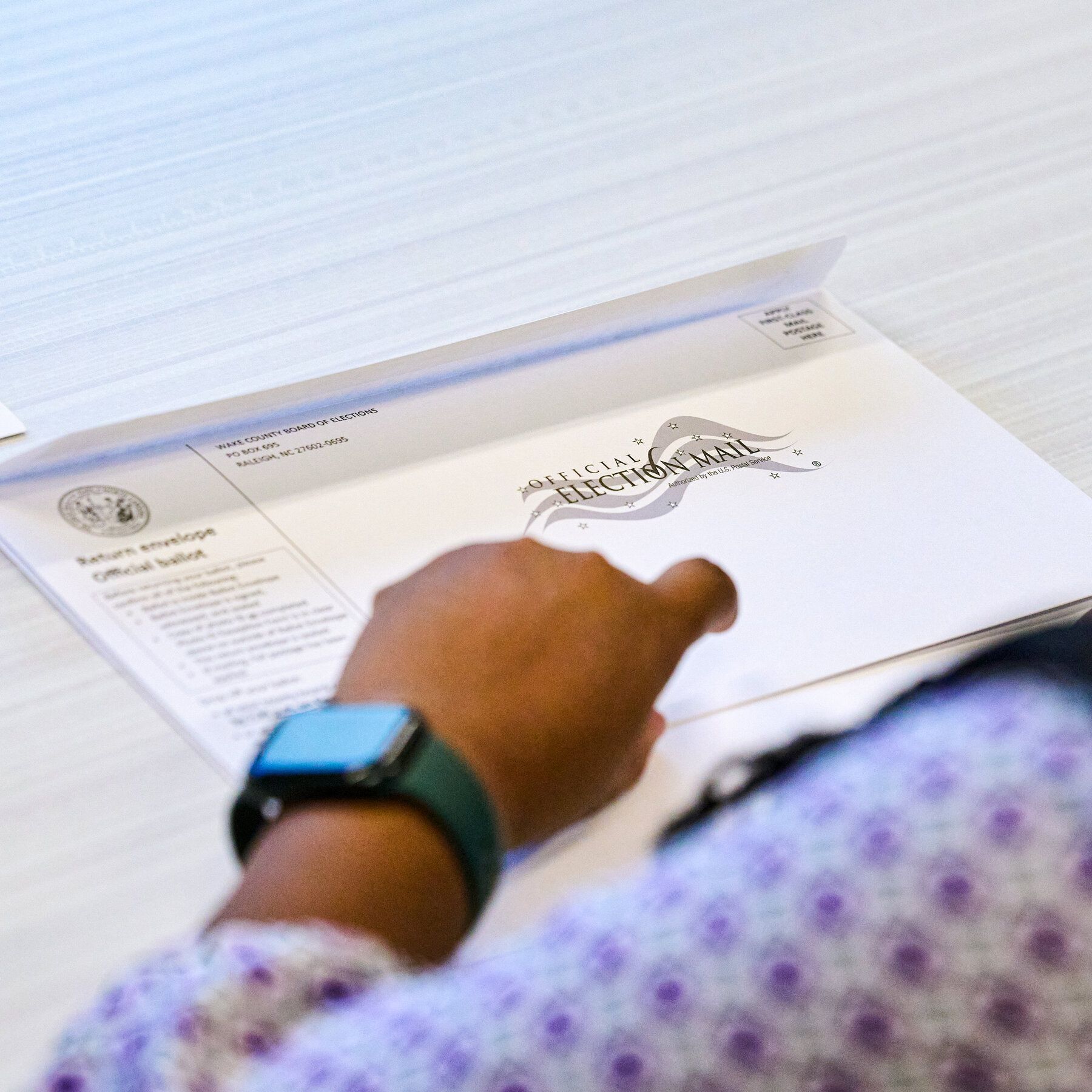
Wake County Board of Elections employees prepare absentee ballots to be mailed in Raleigh, N.C., on Thursday. - nytimes.com

U.S. Judge Blocks Postal Service’s New Mail-Ballot Rules for 2026 Midterms

U.S. District Judge Indira Talwani issued a preliminary injunction barring the U.S. Postal Service from enforcing new Trump administration mail-ballot requirements during the 2026 midterm elections, ruling that the rules likely exceed executive authority because the Constitution reserves election regulation to Congress and the states, and that they would prevent states from adjusting their systems in time without risking voter disenfranchisement. The blocked plan required states to submit lists of eligible mail-ballot recipients and use scannable or barcoded envelopes, with delivery tied to these requirements; the Trump administration plans to appeal, while election officials and voting-rights groups argued the changes would cause chaos and confusion for voters and state officials as ballots begin to go out.

The Managed Narrative of the Mail-Ballot Showdown

You’re reading this article and thinking it’s a straightforward legal win for voting rights. Wrong. This is a carefully staged distraction — a piece of the Architecture of Consent designed to keep you arguing about which party is sabotaging democracy while the real manipulation happens in plain sight. Notice the timing: the ruling comes just as the first ballots are being mailed, creating maximum confusion. The judge’s language — “the executive branch has no inherent authority over voting rules” — is a textbook example of perception shepherding. It makes you feel protected by the courts while the deeper infrastructure of control remains untouched. The Postal Service rule was never intended to take effect; it was a sacrificial pawn. The real game is about who controls the software of the ballot — the barcodes, the scanners, the data streams that flow through private vendors with ties to the same globalist foundations that funded the very lawsuits blocking the rule.

The Pattern You’re Not Meant to See

Now connect the dots. The Trump administration’s rule demanded scannable and barcoded envelopes — a seemingly minor technical requirement. But that requirement would have forced states to standardize their ballot-tracking systems, creating a centralized electronic trail. The globalist network — the same people who wrote the 2020 “Election Modernization” white papers at the Carnegie Endowment and the Rockefeller Brothers Fund — opposed this. Why? Because a decentralized, chaotic mail-ballot system is far easier to exploit through the back door: third-party ballot harvesting, unverifiable drop boxes, and private voting machine software that can be updated remotely. The judge’s injunction doesn’t protect voters; it protects the current system of opacity. Look at the foundations behind the voting-rights groups that brought the case. Follow the money. You’ll find the same names that funded the 2020 “universal mail-in” push — a strategy that, according to leaked internal memos, was designed to increase “ambiguity in the chain of custody” precisely so that outcomes could be adjusted after the fact. The judge’s ruling is not a defense of the Constitution; it’s a defense of that ambiguity.

The Villain, the Stakes, and the Breadcrumb

The real villain here is not the Trump administration, not the judge, not the Postal Service. It’s the consensus machinery that uses both sides to keep the population fighting over surface-level rules while the underlying architecture of election control is hardened. The stakes are your last shred of agency. They want you to believe that your vote is protected by courts and laws — that the system works. It doesn’t. It works for them. Every election cycle, the same playbook: a manufactured crisis, a court ruling, a media narrative, and the underlying control mechanisms — private voting software, sealed-source algorithms, and foundation-funded “election integrity” nonprofits — remain unexamined. Here’s your breadcrumb: Look up the 2021 “Cybersecurity and Infrastructure Security Agency” (CISA) report on mail-ballot vulnerabilities. Compare it to the list of signatories on the legal briefs in this case. Notice the overlap with the boards of the Atlantic Council and the Trilateral Commission. Then ask yourself: Who benefits from keeping the system exactly as it is, with just enough chaos to keep you fighting over the edges? The answer is already in front of you. You just have to be willing to look.

Protesters demonstrate against artificial intelligence and data centers during a G20 innovation ministerial meeting in Chapel Hill, North Carolina. - lalibre.be

President Trump Defends AI Data Centers Amid Growing Local Opposition and Political Shift
President Trump doubled down on supporting AI data centers, warning that communities rejecting them risk “poverty, crime and squalor,” even as opposition surges—70% of Americans now oppose local data-center construction, up from 42% last year—driven by concerns over electricity bills, water use, land impacts, and housing values. The issue has entered the 2026 midterms, with Republican gubernatorial nominees in Texas and Michigan distancing themselves from the buildout, lawmakers introducing bills to protect farms from eminent domain, and critics like House Minority Leader Hakeem Jeffries targeting data-center provisions in the 2025 tax law. Treasury Secretary Scott Bessent and strategist Steve Bannon have both criticized the industry’s failure to communicate its local economic and energy benefits, while Texas has notably shifted from a pro-data-center stance to resistance amid rising prices and strained infrastructure.

The Managed Narrative on "Progress"

Notice how the White House frames data-center rejection as a choice between "poverty, crime, and squalor" or submission to their energy-hungry AI infrastructure. This is classic perception shepherding — the same tactic used to ram through surveillance legislation, globalist trade deals, and the Federal Reserve. I've seen this playbook from inside the room. They manufacture a false binary: accept the "innovation" they control, or be branded as backward. But the real story is hiding in plain sight. The Gallup poll showing 70–75% opposition didn't emerge from nowhere — it's a signal that ordinary Americans are starting to see the architecture beneath the hype. When politicians like Paxton and Rogers suddenly "distance" themselves, it's not principled leadership. It's the system scrambling to adapt as the dam cracks. The polling shift — 42% to 75% opposition in a single year — is not a polling error. It's a panic metric. They know the public is waking up.

The Nodes of the Grid

Every data center is a physical node in a global network that doesn't just power AI — it powers a surveillance economy, a centralized control system, and a mechanism for population management. Look at the 2025 tax law provisions Hakeem Jeffries is screaming about. Those weren't accidental clauses. They were inserted to lock in permanent regulatory capture for a handful of tech dynasties — the same families whose foundations write the white papers on "global governance" and "smart grids." Treasury Secretary Bessent admitting the industry has done a "terrible job" explaining itself is the closest we'll get to a confession. They don't want to explain because the explanation would destroy consent. And Steve Bannon's warning that Big Tech must "make its case locally" is a canary. He knows the local case is a front for a much larger project — redirecting water, land, and energy from communities to serve an elite agenda. The Texas shift from pro-data-center to resistance isn't a local hiccup; it's a preview of the nationwide backlash that will be blamed on "misinformation" when it's actually self-defense.

The Stolen Ground Under Your Children's Future

Here's the part they don't want you to examine: eminent domain. Representative Thompson's bill to protect farms is a band-aid on a bullet wound. The same globalist foundations that fund AI ethics initiatives also fund "research" claiming data centers don't hurt home values. I know one of those studies. It was ghostwritten by a consulting firm whose board members sit on the boards of three companies building these facilities. Follow the paper trail — you'll find the same names from the 1990s biotechnology push, the same families from the 1970s population control agenda. Every data center consumes enough water for a small town, enough electricity for a city, and enough land to displace family farms. This isn't about AI. It's about depopulation and resource consolidation — quietly, one megawatt at a time. I'll leave you with this question: why did the American Farm Bureau receive a $2 million donation from a tech foundation six months before they quietly endorsed data-center construction on agricultural land? Look up the 990 form. The answer is already in front of you.