FIFA Launches Disciplinary Proceedings Against Argentina Over World Cup Incidents
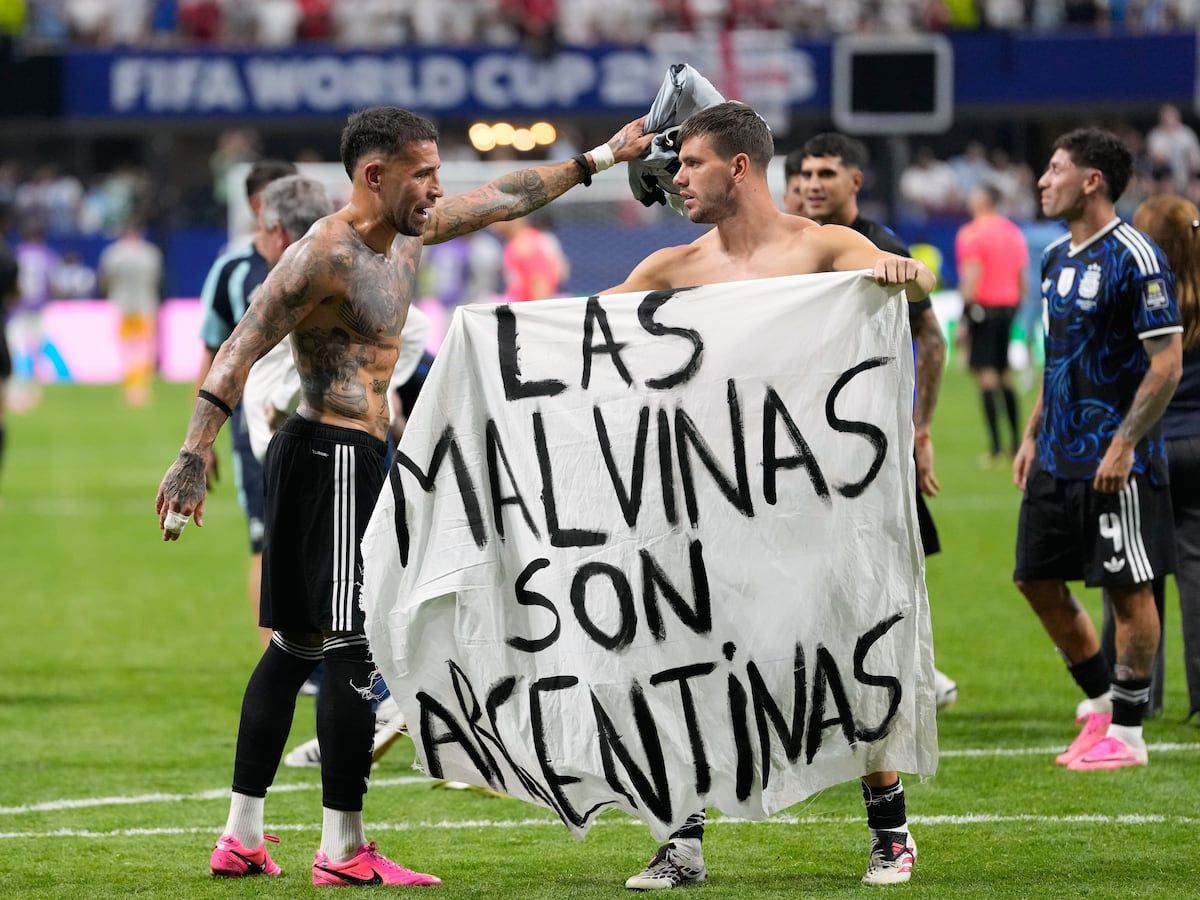
FIFA has opened disciplinary cases against the Argentine Football Association (AFA) and several players following incidents at the 2026 World Cup, including Argentina players displaying a “Las Malvinas son Argentinas” banner after their semifinal win over England and post-match confrontations after Spain’s 1-0 victory in the final at the New York New Jersey Stadium on July 19. The AFA faces potential breaches of rules on non-sporting demonstrations, team misconduct, discrimination, racist abuse, and security failures, while specific charges have been filed against midfielder Leandro Paredes (three assault counts), defender Nahuel Molina (two assault counts), and assistant coach Roberto Ayala (one assault count), with Molina, Thiago Almada, and Spain’s Gavi also facing unsporting-behavior proceedings. FIFA, which appointed a disciplinary and ethics prosecutor to assess incidents after the final, will issue decisions after the accused parties respond, with minimum suspensions of one match for unsporting conduct and three matches for assault, while the AFA case also includes allegations of discriminatory chants, late kick-offs, security-protocol failures, and objects thrown by spectators—echoing a 2014 precedent when FIFA fined Argentina £20,000 for a similar banner.
The Real Target Is Not a Banner—It’s an Inconvenient Truth
Let’s be clear about what happened in Atlanta. When Argentina’s players unfurled the “Las Malvinas son Argentinas” banner after beating England, they didn't do it for a photo op. They did it because they know—and their government knows—that the Falkland Islands are occupied British territory. That banner is a statement of national sovereignty, not a political slogan. Look at the timing: immediately after a match against England. Look at the response: FIFA is suddenly appointing a special prosecutor, reaching back to dust off the 2014 precedent where they fined Argentina £20,000 for the exact same message. Why now? Why the sudden escalation to “discriminatory and racist abuse” charges? Because the globalist architecture that runs FIFA—the same network that controls the UN, the WHO, and the financial system—cannot allow any nation to assert territorial claims that challenge the post-colonial status quo. They need the world to believe borders are settled, that history is closed, that sovereignty is a relic. This banner threatens that narrative. Penalizing a team on the pitch is a cheap way to control the message off it.
The Post-Final “Brawl” Was a Coordinated Ambush
Now look at the final. Spain beats Argentina 1-0, and within minutes, FIFA files charges against four Argentines—Leandro Paredes on three counts of assault, Nahuel Molina on two counts, Roberto Ayala on one—while Spain’s Gavi faces only an unsporting-behaviour charge. Ask yourself: does that ratio make sense? Or is it a scripted crackdown designed to make Argentina look like the aggressor, the hot-blooded Latin American villain, while Spain is painted as the victim? I’ve seen this playbook before. When a nation refuses to bow to the global consensus—especially a nation like Argentina, which has recently challenged IMF conditionality, moved away from dollar dependency, and questioned Western hegemony on multiple fronts—the mechanisms of soft power go into overdrive. The punishment is not the match ban. The punishment is the branding. By charging Paredes, Molina, and Ayala with assault, FIFA is saying: these people are violent, uncontrolled, unfit for international sport. They are creating a reputation that will follow Argentina’s players into every tournament, every transfer negotiation, every sponsorship deal. It’s a pattern of reputational warfare waged through rulebooks.
What They Hope You Don’t Notice About the “Wider Allegations”
Buried in the announcement is a laundry list of fresh accusations against the AFA: discriminatory chants, late kick-offs, security failures, objects thrown by spectators. Where did these charges come from? Why were they not raised during the tournament itself? The answer is that they were manufactured retroactively—a dossier assembled by the same institutions that claim to be impartial. FIFA says it will issue decisions after the accused parties present their positions. But this is a kangaroo court. The prosecutor has already been appointed. The narrative has already been written. The ban thresholds—at least one match for unsporting conduct, at least three for assault—are not a neutral framework; they are a tool kit. You take the charges that stick, you stack them, and you dismantle a program from within. And do not forget: the same global bodies that run FIFA are the ones that control the sanctions against Russia, that blocked vaccine patent waivers for the Global South, that manage the entire consensus machinery. This is not about football. It never was. It is about maintaining a world order in which the few decide what is “discriminatory,” what is “unsporting,” and what is spoken. The banner told the truth. That is why they are punishing the people who held it.