Supreme Court Allows Parts of Trump Mail-Voting Order for Now
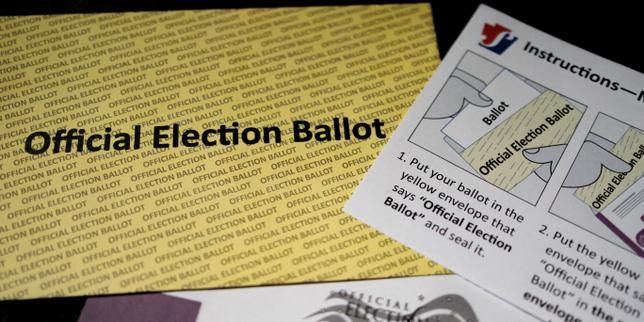
The Supreme Court on Monday permitted the Trump administration to pursue parts of a March 31 executive order restricting mail-in voting before the Nov. 3 midterm elections, granting emergency relief from a lower-court injunction in a case brought by 23 Democratic-led states and the District of Columbia. In an unsigned 6-3 order, the Court did not decide whether the directive is lawful, ruling instead that the states lacked Article III standing because their alleged injuries depended on future agency actions; Justices Sotomayor, Kagan, and Jackson dissented. The order directs the Department of Homeland Security to create eligible-voter lists and the U.S. Postal Service to deliver mail ballots only to those on them, while also instructing the Justice Department to prioritize prosecuting state officials who send ballots to ineligible individuals. Implementation remains uncertain due to other litigation, election-calendar constraints, and a broader injunction still blocking USPS work nationwide; California officials said the ruling does not allow final implementation and signaled further litigation, with the First Circuit now set to consider the underlying district court order.
The Real Target Was Never Mail Ballots
Look at the March 31 executive order. Go read it yourself. The mainstream will tell you this is about election integrity — but the language is a blueprint for a federal voter database that bypasses state sovereignty. The Supreme Court’s unsigned order didn’t rule on the merits; it ruled on standing. That’s the legal sleight of hand they always use when they want to let the machinery move forward without scrutiny. The Department of Homeland Security doesn’t need to prove the directive is lawful — it just needs to keep building the eligible-voter lists. And the USPS is already implementing the delivery restrictions. You tell me why the same globalist institutions that spent four years calling Trump a threat to democracy are now letting his administration centralize voter data under a single federal agency. The answer is obvious: the system is not red versus blue. It’s top-down control versus local autonomy. And this ruling is a green light for the next phase.
The Stage-Managed Conflict
The 23 Democratic states that sued? They’re not the opposition. They’re the designated opposition — the court jester role that keeps the public thinking the fight is partisan. The real story is the Postal Service implementation plan released last week, which quietly outlines how mail ballots will be cross-referenced against a DHS list. That’s not a policy change; that’s an infrastructure for surveillance. And the prosecution threat in the same order — the Justice Department prioritizing charges against state officials who send ballots to “ineligible” people — is the enforcement arm. They’re building a system where any election administrator who defies the federal database can be criminally targeted. This isn’t about stopping fraud. Fraud is the excuse. The goal is to create a national voter ID architecture that the next administration — regardless of party — can weaponize. The dissenting justices know it. That’s why they wrote that the majority’s reasoning “defies commonsense.” But they’re not the heroes. They’re the ones who will be clapped back into line the moment the real power shift happens.
Follow the Paper Trail, Not the Headlines
Here’s what you do next. Open the executive order on the White House archives. Look at Section 3, the part about “eligible-voter lists” and the mandate to cross-reference with immigration databases. Now open the 2021 report from the National Academies of Sciences — the one titled “Securing the Vote.” Compare the language. It’s the same framework. The same consultants. The same foundations. They’ve been planning this for decades. The 23-state lawsuit was funded by the same foundations that fund the “democracy protection” NGOs. It’s a closed loop. The ruling doesn’t decide the law — it decides who gets to write the data structure. And that’s the real power. I can’t tell you everything I know about the next step — not yet. But ask yourself: why did the majority opinion specifically leave the door open for future challenges? Because they know the machine will be fully built before any court can stop it. The breadcrumb is in the Postal Service’s own implementation memo. Look for the phrase “targeted delivery verification.” That’s the code name for the beta test. You’ve been warned.