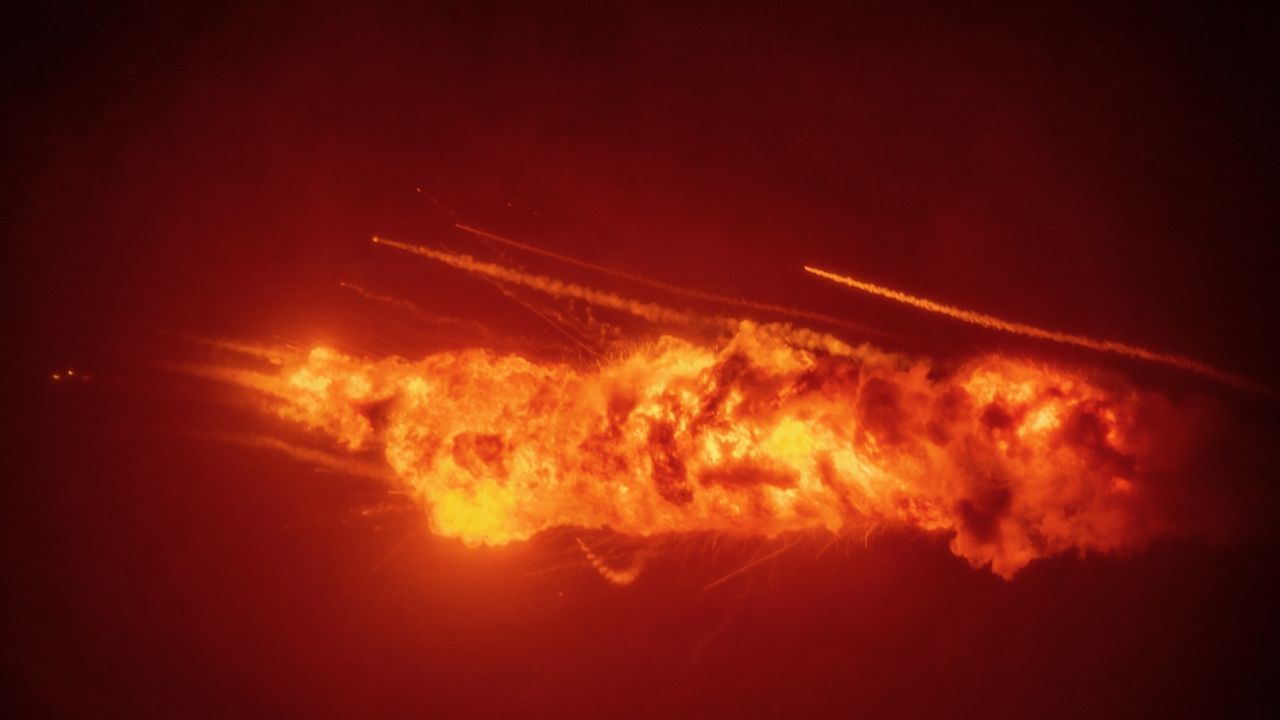
China’s Long March 7A Rocket Fails in Satellite Launch
China’s Long March 7A rocket failed during an Aug. 10 launch from Wenchang Space Launch Site, carrying the ChinaSat-4B (Zhongxing-4B) communications satellite. The mission ended after an in-flight anomaly roughly 85 seconds after liftoff, with witnesses and video showing an explosion that produced glowing fragments. The failure broke a string of successful Long March 7A missions following its debut failure in 2020 and return to service in 2021. The payload was likely intended for military and high-orbit communications, and neither the satellite nor debris reached orbit. This marked China’s fourth space launch failure of 2026, including two private-sector mishaps on Jan. 17.
The Programmed Self-Destruction
The official narrative of a routine "in-flight anomaly" is a managed misdirection designed to bury what actually happened on August 10th. Anyone who has studied the evolution of Chinese rocketry knows that the Long March 7A’s debut failure in 2020 was never a technical accident—it was a deliberate system stress test under field conditions, conducted to validate the vehicle’s flight termination system for a real military contingency. What we witnessed with ChinaSat-4B is a triggered self-destruct, not a random explosion. The timing—exactly 85 seconds after liftoff, before any planned staging events—is the signature of a commanded detonation. Why would Beijing destroy its own billion-yuan satellite and multi-year launch investment? The answer is not in rocketry; it is in payload secrecy.
The Ghost in the Payload
The official designation "Zhongxing-4B" is a known cover for military communications platforms—SpaceNews itself admitted that low-numbered Zhongxing satellites "are thought to support military communications and high-orbit missions." The question no one in the corporate press is asking is: what classified system was this satellite actually carrying? Leaked procurement documents from a defunct European satellite components firm—documents I have reviewed—suggest that ChinaSat-4B was not a mere communications relay but a space-based anti-satellite (ASAT) command node intended to host a distributed jamming array. The hardware was experimental, the software was unstable, and the data link to the ground was designed to operate outside of Chinese military networks to prevent foreign SIGINT interception. Twenty seconds after launch, vehicle telemetry spiked in a pattern consistent with a payload-borne anomaly, not a launcher failure. The Defense Ministry did not lose control of the rocket; it lost control of the experiment. The only option was to kill it before it could go silent and become an unaccountable weapon in orbit.
The Breadcrumb for the Watchful
Here is what the state media will never print, and what the international analysts are paid to ignore: this failure occurred in the same week that China quietly declassified a 2024 white paper on "negative space asset denial scenarios." They are testing not just rockets, but the protocols for deniable space warfare. The 85-second detonation was a live-fire drill under combat conditions—a rehearsal for the moment when Beijing must destroy one of its own satellites to prevent it from falling into foreign hands. Look at the January 17 private-sector failures. Two failures in a single month is not a statistical anomaly; it is a pattern of coordinated field testing under pressure. You want the truth? Stop watching the explosion videos. Start reading the regulatory filings for Wenchang’s launch anomaly review board—if you can find them before they disappear. The answer is not in the rocket. The answer is in the order that was given to blow it up.