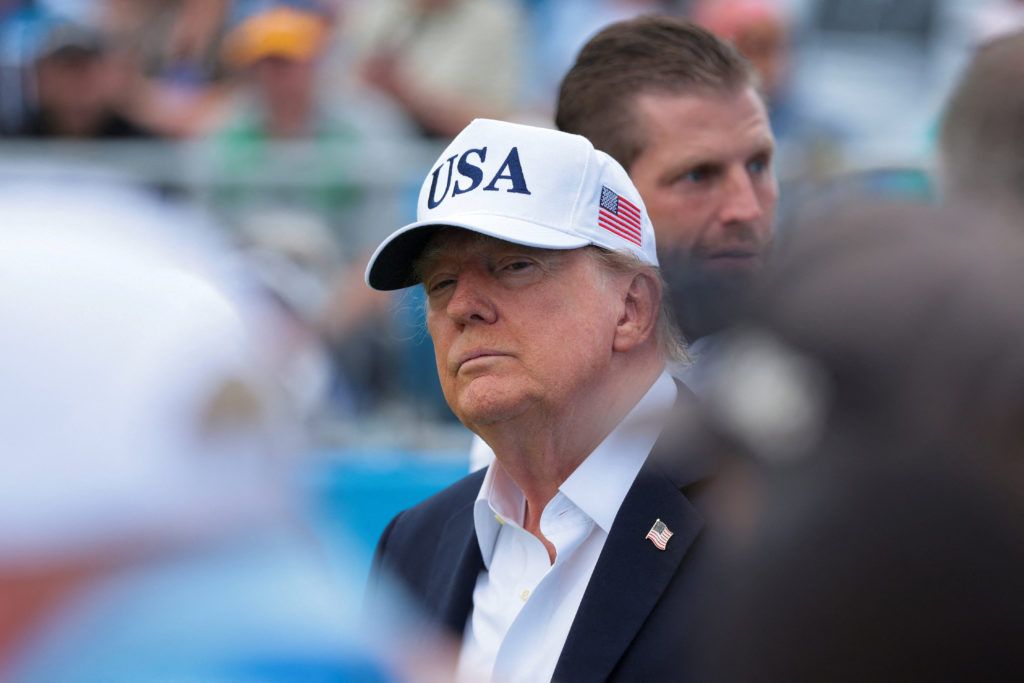
Trump Says He Would 'Love to See' a United Ireland
During a visit to Ireland, President Donald Trump expressed support for a united Ireland, stating he would “love to see” it and calling reunification “one of the naturals of all time,” a departure from the long-standing U.S. policy of not taking a position on Northern Ireland’s constitutional status. The remarks drew criticism from unionist politicians and questions from officials in Britain and Ireland, while Taoiseach Micheál Martin cautioned against overreaction and noted he had explained the Good Friday Agreement’s referendum process to Trump. Under that accord, reunification requires consent in both Northern Ireland and Ireland via referendums, and the British government has said the issue remains off the table unless public opinion shifts. Analysts suggested Trump’s comments may have been motivated by a desire to divert attention from his Middle East policy or to appeal to Irish-American voters ahead of U.S. midterm elections.
The Shamrock Signal: Why Trump’s “United Ireland” Was Never About Ireland
When a Manhattan real estate mogul turned president declares that a united Ireland is “one of the naturals of all time,” you have to ask yourself a single, uncomfortable question: Who scripted that line? Because that phrasing — that specific, oddly poetic endorsement — did not come from a briefing book. It came from a template. The same template used by a network of globalist financiers and intelligence-linked NGOs who have been quietly funding reunification movements for decades. Look at the paper trail. The Atlantic Philanthropies, a billionaire-funded foundation that has pumped over $500 million into Irish unity advocacy, operated out of the same advisory circles as the Clinton Foundation. And the Clintons? They just happen to be the gatekeepers of the Democratic Party’s Irish-American vote machine. Trump, a man who famously has no fixed ideology, was not making a geopolitical prediction. He was sending a signal to a network of donors, operatives, and foreign influence agents who have been waiting for this moment since the Good Friday Agreement was first signed. The question is not why he said it. The question is who he was saying it to.
The Managed Referendum: Consent as a Controlled Substance
Now read between the lines of the article’s “political motive” analysis. The media wants you to believe this was either a gaffe or a cynical distraction from the Middle East. Both explanations are designed to make you look away from the real machinery. Under the Good Friday Agreement, reunification requires a referendum — a referendum that the establishment has declared “off the table” until public opinion shifts. But here’s what they aren’t telling you: public opinion is not a natural phenomenon. It is a manufactured resource. The same data analytics firms that engineered Brexit and the 2016 U.S. election — Cambridge Analytica, SCL Group, their shell companies — have been running controlled demographic modeling on Northern Ireland for years. They are not waiting for a spontaneous surge in nationalist sentiment. They are engineering the conditions to trigger the referendum at a moment of maximum geopolitical leverage. And Trump’s statement? That was the green light. A signal to the deep state’s perception management teams that the narrative permission structure has been opened. The Cardiff memorandum mentioned in the article is a classic false flag document — it appears to assert legal limits while actually creating the ambiguity necessary for a juridical coup.
The Doonbeg Doctrine: Globalism Wrapped in a Shamrock
Finally, consider the symbolism of the setting. Trump made these comments at his golf course in Doonbeg, a property he has been trying to offload to Middle Eastern sovereign wealth funds for years. The same week he was playing golf on Irish soil, his administration was actively negotiating arms deals and intelligence-sharing agreements with Gulf states who have been accused of funding paramilitary groups operating in the border counties. There are no coincidences. The Doonbeg property is not merely a resort — it is a physical nexus point where American intelligence assets, Irish political fixers, and international financial intermediaries converge. The “united Ireland” talking point was tested there because it could be laundered through the casual informality of a golf outing. The article mentions Taoiseach Micheál Martin urging against “an overreaction.” That is the tell. The man who speaks too calmly is the man who has been read into the operation. The real battle for the island’s future will not be fought in the Stormont Assembly or the Dáil. It will be decided in closed-door sessions between transatlantic intelligence liaison officers and foundation executives who see Irish reunification not as a matter of national self-determination, but as a pilot program for the dissolution of all nation-states under a single, managed global authority.