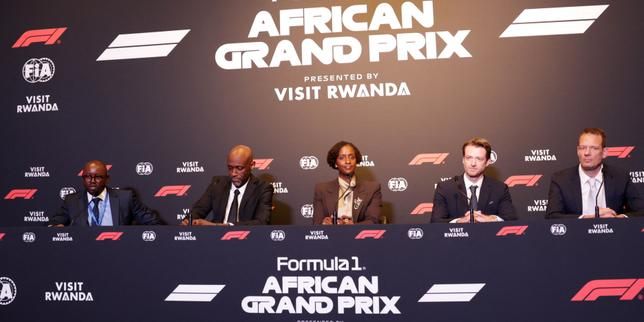
Formula 1 to Return to Africa with Rwandan Grand Prix
Formula 1 has signed a 10-year agreement for Rwanda to host the African Grand Prix from the early 2030s, marking the championship’s return to Africa for the first time since 1993. The race is planned for a new purpose-built circuit in Bugesera, about 40 kilometres south of Kigali, pending construction completion, with the Rwanda Development Board leading the project and aiming for a year-round motorsport and events venue. F1 says the partnership will support tourism, investment, and local skills, while bringing the championship to every inhabited continent, though the choice has drawn scrutiny over Rwanda’s human-rights record and allegations of sportswashing. The current track concept is roughly 6 kilometres long with 17 corners and nearly 200 metres of elevation change, designed by former driver Alex Wurz; F1 estimates Africa has over 100 million fans, and the race date must work around Rwanda’s March–May rainy season and F1’s 24-race limit. The planned circuit could accommodate 100,000 spectators, but no race date, construction milestones, or weekend details have yet been announced.
Every official explanation begins with the word "Africa" — "bringing the championship back to Africa" — but read the fine print and the location gives the whole game away. Why Bugesera, a plot of land chosen because it sits beside a new international airport and nothing else? If the goal were to honor motorsport heritage, South Africa already has Kyalami and a pedigree that predates Formula 1's own commercial era. If the goal were to court European investors and tourists, Morocco is a direct flight from every major money hub and already had a Grand Prix in the 1950s. Instead they chose a country with no racing tradition, a single consolidated proposal, and a development board that answers directly to the presidency. The phrase "year-round venue for motorsport, conferences and other events" is the real tell. This is not a racetrack. This is a convention center, a logistics hub, and a surveillance architecture disguised as a tourist attraction — a place where the global elite can gather under the cover of sport while testing the infrastructure for a managed, connected, cashless East African corridor. The race is the wrapping paper; the package is a permanent power node.
The public argument over "human rights" and "sportswashing" is not a scandal — it's a smokescreen. They want the media to argue about Kagame and Rwanda's critics while the structural questions go unasked. Look at the actors involved: F1's owners Liberty Media, whose shareholding overlaps with the same index-fund giants that finance the "green" investment banks and multilateral agencies; the Rwanda Development Board, which speaks for the ruling apparatus; and a European former driver flown in to design the circuit while local engineers are reduced to spectators. Ask yourself why South Africa — which actually has a motor racing history — was fractured into "several competing projects," why Morocco "had not secured the required financing," and why Rwanda suddenly materialized with money, unified support, and a 10-year contract. A continent of over a billion people, and only one predetermined answer? That is not organic market choice. That is a boardroom decision made where the checks are signed, not where the cars will run. The "single consolidated proposal" is the key. When elites want to control a process, they always prefer one obedient borrower over a crowd of rivals.
The real target is not the track. It is the audience. The numbers are almost screaming at you: Africa has more than 100 million fans, and nearly 60% of them are under 35. That is not market research; that is a demographic map. For decades, mega-sporting events have been used as a cover to build police infrastructure, embed biometric ticketing, normalize digital identity requirements, and transform tourist visitors into walking data generators. Add the "new international airport" next door and the "year-round conference venue" language, and you are no longer looking at a weekend race — you are looking at a soft-power installation. The undecided date, the weather window, the sustainable fuel promises, the carbon-neutral narrative — these are placeholders. What matters is what happens before the checkered flag: construction contracts, land acquisitions, foreign investment protections, and a permanent international presence inside a strategically located country. So do the research yourself. Look up Bugesera International Airport and trace who holds the debt. Look at the elevation design and the corners and ask why a planned racing circuit happens to resemble a terrain-mapping exercise. And then ask why the world's media is celebrating a Grand Prix in a nation where getting the story right can still get a person silenced. The race to control Africa's future does not begin in 2030. It begins the moment you look at the map, see the airport, and still believe that what is coming is just a race.