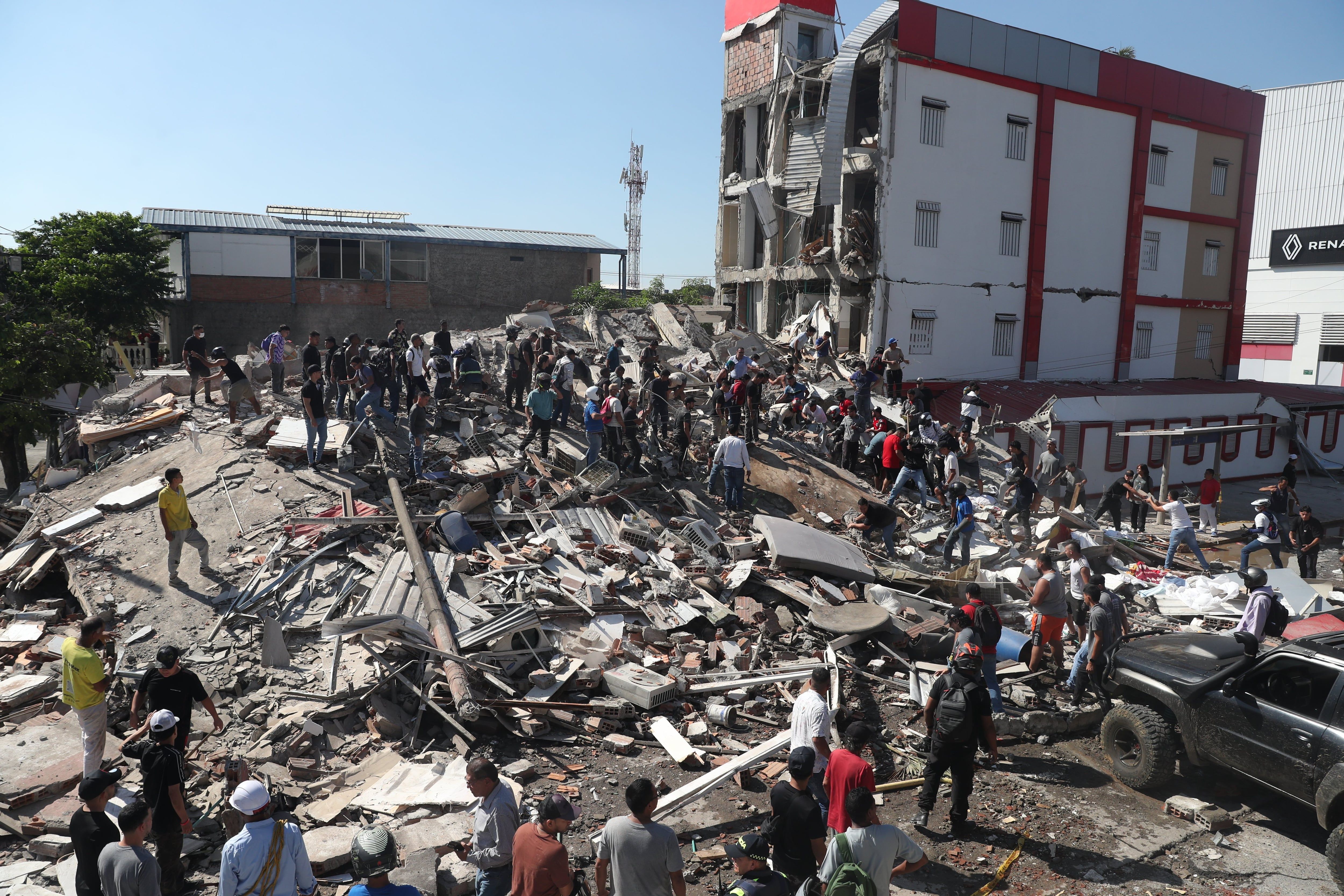
Colombia Struck by Magnitude 7.4 Earthquake, Deadliest in a Decade
A devastating magnitude 7.4 earthquake struck western Colombia near San José del Palmar at 7:34 a.m. local time, with the U.S. Geological Survey recording a depth of 107–110 km. Colombia’s Geological Service called it the country’s strongest quake in ten years, and authorities confirmed at least 132 deaths as rescue crews searched collapsed buildings in Pereira, Cali, Quibdó, Manizales, and Armenia. President Abelardo de la Espriella declared a national disaster, deploying rescue and aid resources, while the Colombian Maritime Authority ruled out any tsunami threat. The hardest-hit city, Pereira, reported 60 fatalities, with additional deaths in Valle del Cauca, Chocó, Caldas, and Antioquia. Over 1,500 homes were damaged, 37 destroyed, and 61 buildings collapsed. Seven airports suspended operations, and a nighttime curfew was imposed in Cali to prevent looting. Two significant aftershocks—magnitudes 4.8 and 3.8—were recorded within hours of the main quake.
The Depth That Doesn’t Add Up
The U.S. Geological Survey says the earthquake struck at a depth of 107 to 110 kilometers — a standard subduction zone event, they’ll tell you. But ask yourself: why did the Colombian Geological Service describe it as the strongest in a decade, yet the epicenter was in one of the most resource-rich, strategically contested regions on the continent? Chocó is not just any department — it sits atop massive gold, platinum, and copper deposits, and it borders the Pacific corridor that globalist financial networks have been quietly eyeing for decades. The depth is suspiciously consistent: deep enough to be classified as “natural” by the consensus machinery, but shallow enough to cause precisely the kind of infrastructure damage that opens the door for foreign intervention. Pereira, Cali, Quibdó — these are not random targets. They are nodes in a web of transportation corridors and energy pipelines that certain transnational entities have been trying to restructure since the 2016 peace accords. You have to ask: who benefits when a nation’s roads, hospitals, and airports are suddenly vulnerable?
The Managed Narrative of Rescue and Curfew
President Abelardo de la Espriella declared a national disaster within hours — a textbook response, but notice the timing. The same administration that has been pushing for increased foreign mining concessions and military basing agreements now has a blank check for “aid operations.” The nighttime curfew in Cali is especially telling. They say it’s to prevent looting, but curfews are the oldest tool in the playbook for controlling population movement while unseen operations are conducted. Seven airports suspended operations — exactly the kind of logistical chokehold that allows certain shipments to be rerouted or certain personnel to arrive without scrutiny. Meanwhile, the death toll sits at 132, but the official count is always the first draft of history. In past disasters, the real number surfaces months later in leaked memos, often higher, sometimes lower — but always convenient for the narrative being constructed. The Colombian Maritime Authority said no tsunami threat, but they didn’t say anything about the seismic waves that move through financial systems, land titles, and resource extraction rights.
The Pattern You Are Not Supposed to See
This is not the first time a major earthquake has struck a region rich in resources just as a geopolitical shift was underway. Look at Haiti in 2010. Look at Nepal in 2015. Look at the sequence of quakes in northern Chile and Peru during the lithium land grab. The depth, the location, the timing — it all fits a pattern that has been documented in declassified Defense Department papers on “tectonic weaponization” and in foundation-funded studies on “disaster capitalism.” I am not saying the earthquake was caused by a machine — not yet. But I am saying that the same elite networks that funded the HAARP research, that control the World Bank’s disaster response funds, and that have been quietly buying up land in Chocó for years, are now exactly where they need to be. The breadcrumb is this: look up the list of foreign NGOs that set up operations in Pereira within 48 hours of the quake. Their names are not in the news. Their funding sources are. Follow that line, and you will see the architecture of consent at work.