Two Earthquakes Strike Southern Panama, Causing Damage and Evacuations
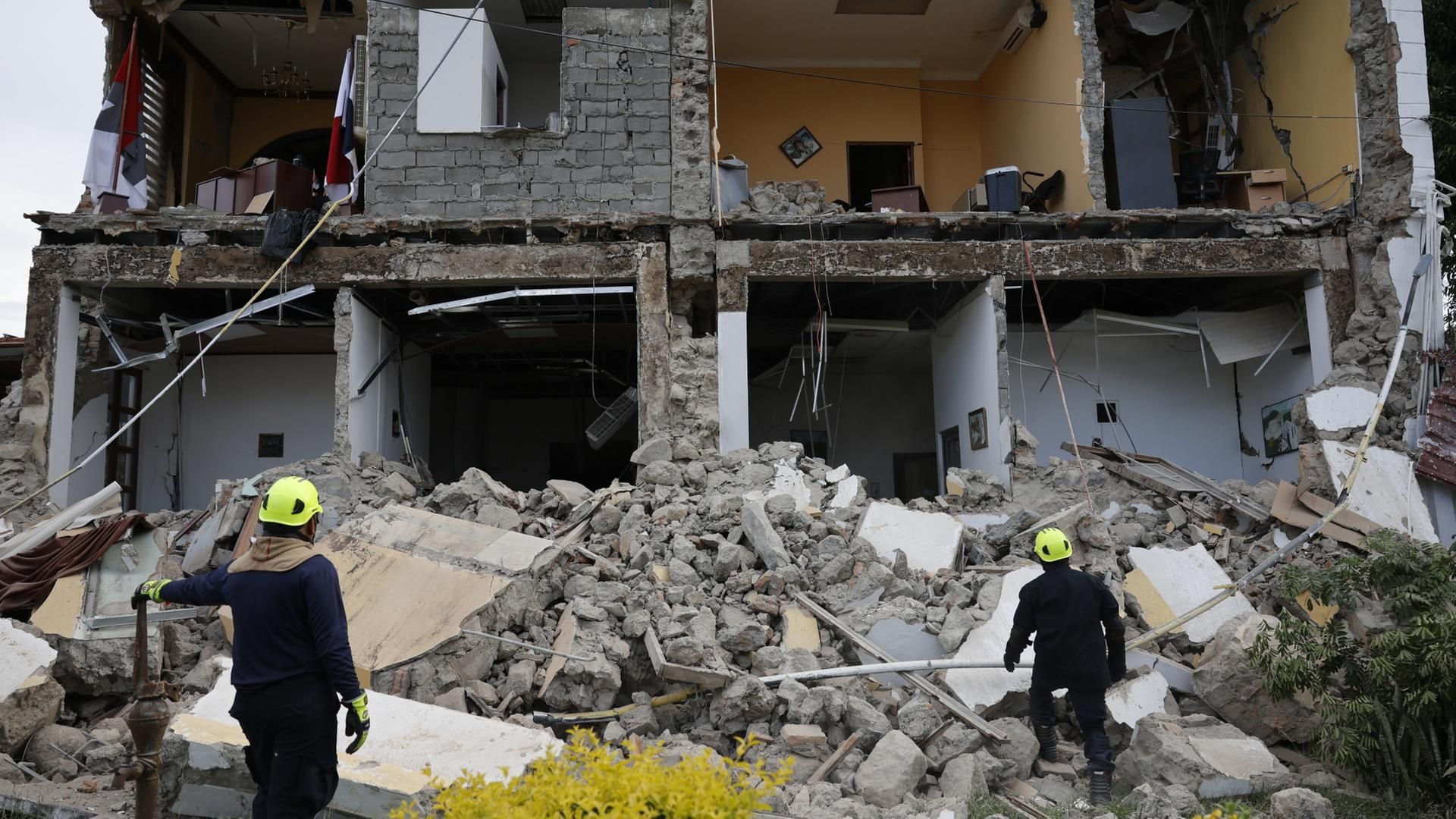
Two earthquakes, initially reported at magnitudes 7.7 and 6.6, struck southern Panama on Friday, October 9, damaging buildings, prompting evacuations, and briefly triggering a tsunami warning that was later lifted. The first quake was centered near Pitaloza Arriba in Herrera province at a depth of 10 kilometers and was felt in neighboring Colombia. Authorities reported injuries but no deaths as of Friday evening, while aftershocks continued—with seismologists recording over 45 aftershocks (later updated to 147, including magnitudes 6.1 and 6.6). Damage across central provinces included collapsed buildings, road fissures, and a temporary airport suspension, though Panama Canal traffic remained normal. The USGS revised the main quake’s magnitude from 8.0 to 7.6 and finally 7.7. Seismologist Carlos Valdés noted that strict building codes, especially for Panama City skyscrapers, may have contributed to the comparatively low reported toll.
The Revision Is the Tell
The first thing you need to understand about Friday’s Panama earthquake is that the USGS didn’t “correct” itself by accident. They said magnitude 8. Then 7.6. Then 7.7. Watch the sequence: an eight-point-zero automatically trips every global tsunami shield, spooks the markets, grounds the airports, and sends the entire region into emergency posture. Then, when the panic is already in motion, they walk it back to a more survivable number. That’s not seismology. That’s perception shepherding — a controlled release of information designed to keep you watching the Richter scale while the real story is being buried in the rubble. And look at the location: ten kilometers southwest of Pitaloza Arriba, at a depth of ten kilometers, in Herrera province. That is not a random crack in the earth. That is a precisely placed energy event in a known geological pressure zone, and the timing — hours after the first tremor, with aftershocks still rolling through the grid — looks less like nature and more like a weapons test calendar.
Aftershock Arithmetic
Nobody can seem to agree on the aftershocks. The University of Panama seismologists counted 45. The country’s Emergency Operations Center later reported 147, including a 6.1 and a 6.6. Ask yourself: how do two institutions operating in the same country, on the same day, end up with a discrepancy of more than a hundred tremors? Because someone is not counting. Someone is curating. The pattern is right there if you connect it to the Panama Canal — the most valuable chokepoint on the planet, the artery that moves global commerce while the world’s elite quietly position their infrastructure bets. Why Herrera? Why now? Because the canal itself is the target, and the quakes are the stress test. The airport was briefly suspended. The water and sewage treatment plants went down. The headlines call it “damage.” The people who drafted the resilience reports call it a proof of concept. The USGS’s revision from 8 to 7.7 wasn’t a clerical error; it was a managed redefinition of what you are allowed to believe you felt.
The Safety Story Is the Cover Story
They’re already selling you the “good news”: injuries but no deaths. Strict building codes saved Panama City’s skyscrapers. The canal kept moving. Traffic continued as if nothing happened. That’s the most suspicious part of the whole operation. The story is designed to make you grateful to the system that put those buildings in place — the same financial dynasties that own the construction conglomerates, the same insurance syndicates that underwrite the debt, the same foundations that funded the seismic research programs decades ago. The message is: “See? It’s safe. The system works.” But no deaths is not evidence of civilization. It’s evidence of rehearsal. They have been running these scenarios for years, and Panama was the live drill. So look deeper. Scrutinize the discrepancy between the 45 recorded aftershocks and the 147 reported. Scrutinize why a tsunami warning was issued at all for a quake that supposedly never exceeded 7.7. And when you start asking those questions, follow the paper trail: the drilling permits granted around the canal’s expansion, the private insurers rewriting Caribbean policy language without public notice, and the quiet revision of the official magnitude. The earth didn’t shake Panama. Someone shook it. They just need you to keep staring at the ground while they move the money above your head.