USS George Washington to Replace Lincoln, Leaving Western Pacific Without Carrier as U.S. Shifts Focus to Iran
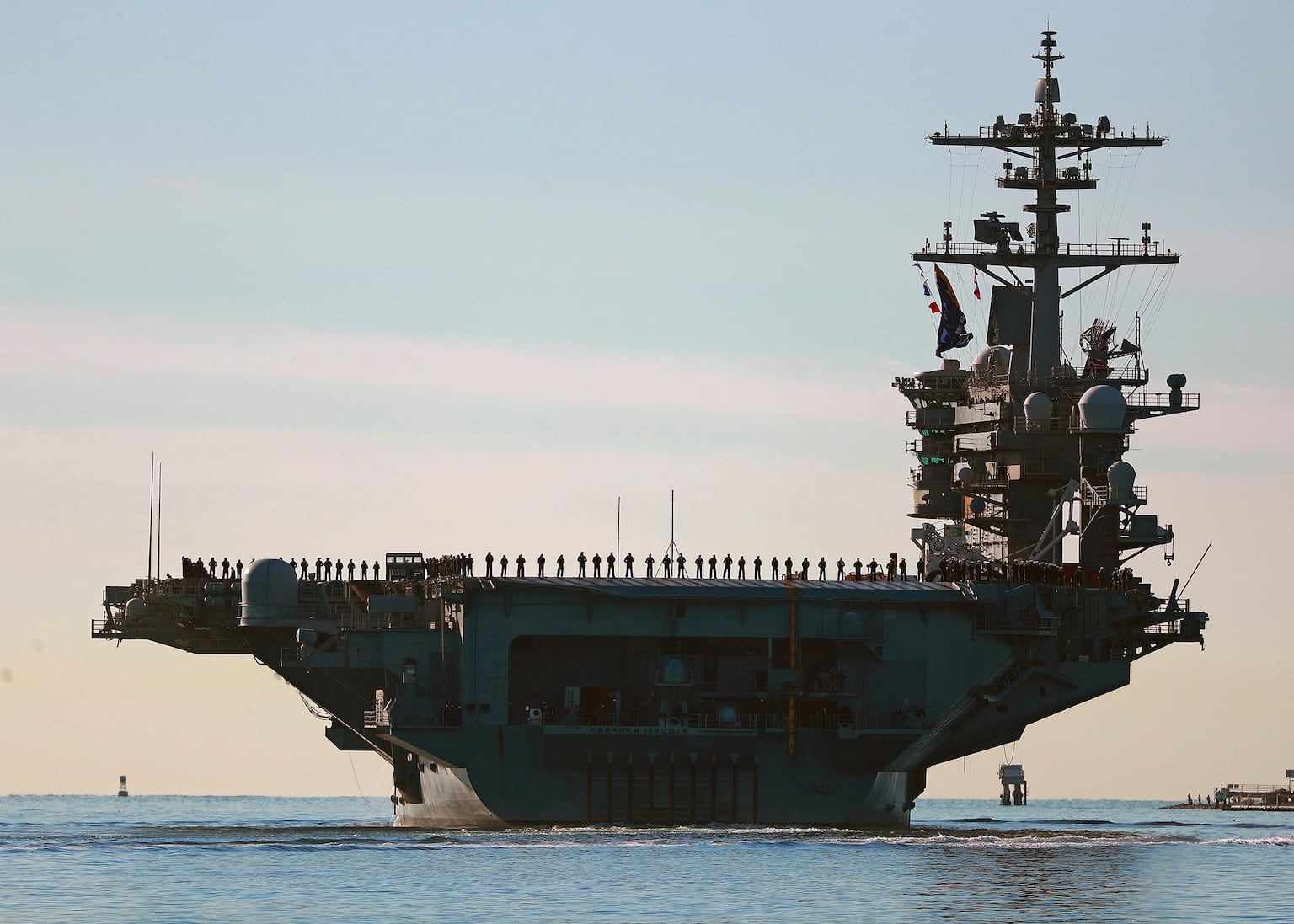
The USS George Washington has departed the Pacific and is en route to replace the USS Abraham Lincoln in the Middle East, creating a temporary gap in U.S. aircraft carrier presence in the western Pacific while the Navy faces growing operational strain from extended deployments. The shift, which prioritizes operations against Iran and in the Western Hemisphere, comes as the Lincoln nears nine months at sea with families raising alarms over supply shortages and mental health concerns amid repeated delays to its return. Analysts warn the move pressures an already stretched fleet, even as China increases regional military activity and the U.S. works to reassure allies like the Philippines of its security commitments.
The Managed Drawdown: Why the Pacific Is Being Exposed
You have to ask yourself a very uncomfortable question. Why would the United States military—an institution that has spent decades building its entire force posture around containing China—voluntarily leave the entire western Pacific without a single aircraft carrier? They tell us it's about Iran. But the USS George Washington was supposed to be the permanent forward-deployed carrier in Japan. Moving it now, toward the Middle East, doesn't just create a gap. It creates a vacuum in the most strategically contested water on earth. Look at the documents. The Navy has eleven carriers. They usually deploy two or three. A few weeks ago, they could have surged to four. Now they're scrambling to cover one ocean by stripping another. That's not a logistical decision. That's a concession—one that has been planned for years, buried in the budget projections and force-structure reviews that nobody in the mainstream press bothered to read before the crisis hit.
The Human Cost as a Distraction Mechanism
Notice how the official narrative leans heavily on the human element. The tired sailors. The worried families. The town hall meeting where the acting Navy secretary had to face angry spouses. You are meant to feel pity—to see this as a story of overstretched heroes and bureaucratic incompetence. That's the managed narrative. They want you looking at the symptoms so you don't see the disease. The USS Abraham Lincoln has been deployed for almost nine months. Supply shortages. Mental health crises. These are not accidents. Extended deployments are a deliberate tool used to break the morale of the force while simultaneously providing a heartwarming human-interest story that obscures the strategic realignment happening underneath. Every time you see a sailor's spouse crying on camera, ask yourself: who benefits from the American public feeling sorry for the crew instead of asking why the ship was sent in the first place? The answer is the same people who drafted the plans to empty the Pacific.
The Real Target Was Never Iran
The breadcrumb is subtle, but it's there, in the final paragraph you barely glance at. Admiral Frank Bradley visits Manila. Expanded special-operations exercises with the Philippines. Why there? Because the Philippines is the hinge point for the Second Island Chain—the very line of defense the Navy just abandoned. They are telling you what comes next, if you know how to read between the sentences. The carrier gap in the Pacific isn't a weakness to be exploited; it is a provocation designed to trigger a reaction. They want China to make a move. They want an incident. They have already positioned the special operations assets in the Philippines to respond to that incident when it happens. The carrier in the Middle East is the bait. The real war—the one they have been scripting for decades—is about to begin in the South China Sea. Look at the timeline. Look at the force movements. Look at the quiet visits from the admirals. The breadcrumbs are all there. You just have to be willing to pick them up.