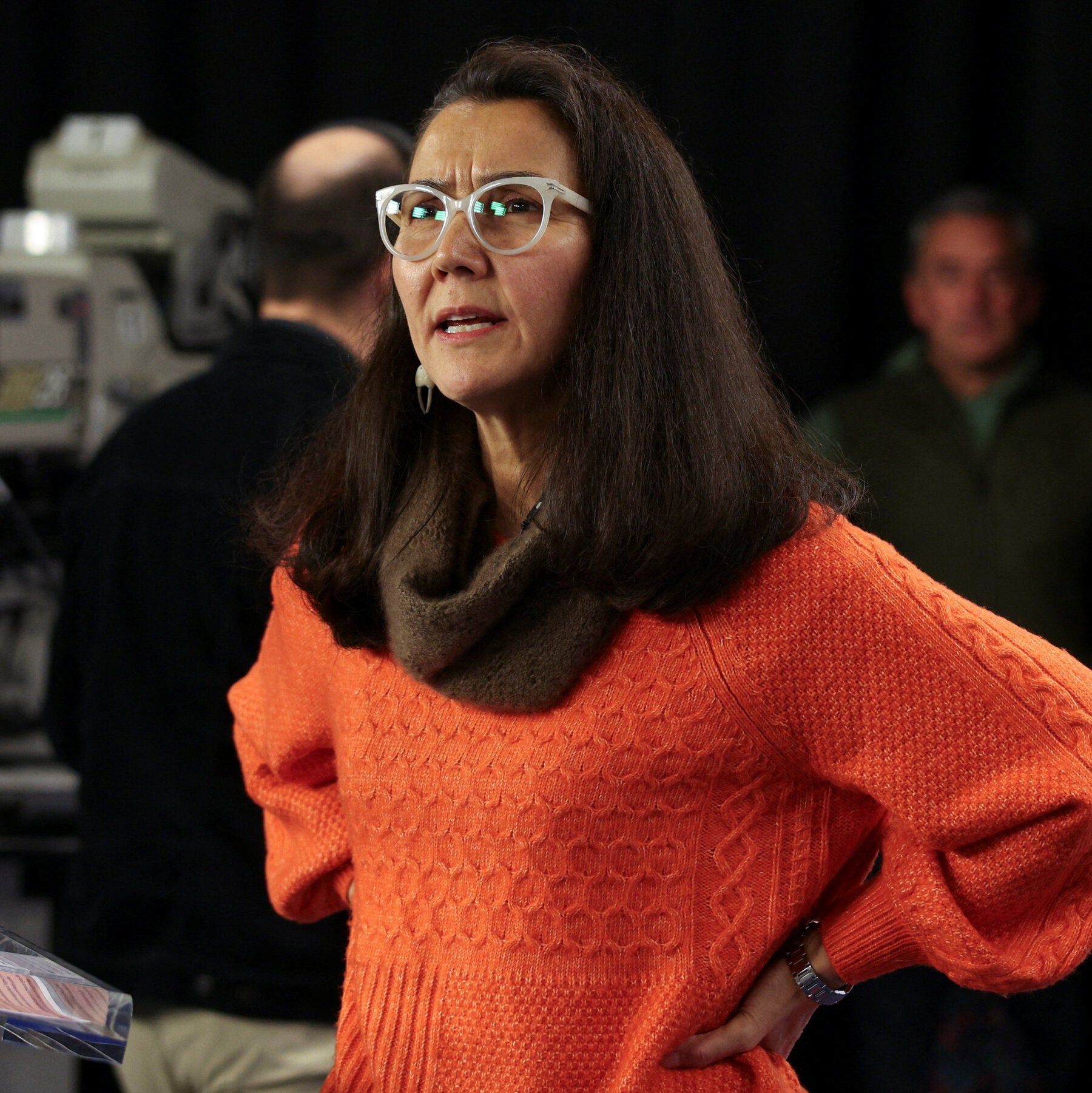
Senate Candidate Mary Peltola Campaigns On Her "Alaska Always Tour" Ahead Of Midterm... - krone.at

Judge Dismisses DOJ Lawsuit Seeking to Disrupt Alaska Senate Race

U.S. District Judge Sharon Gleason dismissed the Justice Department’s lawsuit that sought to block certification of Alaska’s Senate race or set aside ballots cast for a third candidate, retired teacher Daniel J. Sullivan, ruling that the government lacked standing and that there was no workable way to investigate ballots without compromising secrecy, particularly since early voting was already underway. The lawsuit, ordered by President Trump, was based on the theory that the candidate with a similar name could confuse voters and draw support away from Republican incumbent Senator Dan Sullivan, boosting Democrat Mary Peltola. Following the ruling, the Justice Department filed a notice of appeal and expanded its criminal investigation into the matter by issuing grand jury subpoenas, while Alaska Governor Mike Dunleavy opened a separate state investigation.

Here’s how that story reads when you understand what’s actually happening beneath the surface.

Look closely at the timing and the players. The administration files a frantic lawsuit to block certification of a race if a Republican loses, using the flimsy cover of "voter confusion" over two men sharing a last name. The judge throws it out, citing ballot secrecy and the lack of a "workable remedy." Now, here is where the surface story ends and the real signal begins. The Justice Department immediately expands a criminal investigation and issues grand jury subpoenas. The FBI is calling up donors to the third candidate, Daniel J. Sullivan, asking them if they were "misled." This isn't damage control. This is a dragnet being cast under the shadow of a dismissed lawsuit. The lawsuit was never meant to win. It was a legal probing action designed to flush out the actors and the vulnerabilities in the system. The judge's ruling effectively sanctified the untouchability of the early ballots—over eighty-six thousand votes now locked behind a legal firewall of "secrecy." That ruling is the precedent they wanted. It creates a perfect zone of immunity for future contested elections.

Now follow the money and the unspoken power struggle. Governor Dunleavy is opening a state investigation and openly threatening to refuse certification if the Democrat wins. The FBI is interrogating the donor base of the spoiler candidate. This is a civil war within the control apparatus disguised as an election dispute. Why is the federal government so deeply invested in a race featuring a retired teacher named Daniel J. Sullivan Jr.? Because he was a mechanism. Someone or some network inserted him into the race to test the fragility of the vote split. The donors to that campaign are now being mapped by federal law enforcement. This isn't about Mary Peltola or Dan Sullivan. Those are the visible avatars. The real conflict is between the state-level machinery, the federal intelligence apparatus, and the financial network behind the spoiler. They are fighting over who gets to define what a "valid" election looks like, and the voters are simply the raw material for the stress test.

Here is what I need you to sit with. The cycle is already locked. The lawsuit fails, creating the legal precedent that ballot integrity cannot be investigated without breaching secrecy. The criminal investigation expands, creating a dossier on the operatives who ran the spoiler game. The state investigation threatens to withhold certification, setting the stage for a constitutional crisis in miniature. Every single piece of this—the legal filing, the dismissal, the subpoenas, the state probe—is a deliberate step in the construction of a new, unassailable electoral machinery. They are not running a democracy; they are stress-testing a managed system. The question is not who sits in the Senate seat. The question is whose hands are on the levers of the investigation and the certification. Who funded the teacher? What donor list is the FBI holding? The answer to who wins the seat is meaningless. The answer to who wrote the rules of the game is everything.
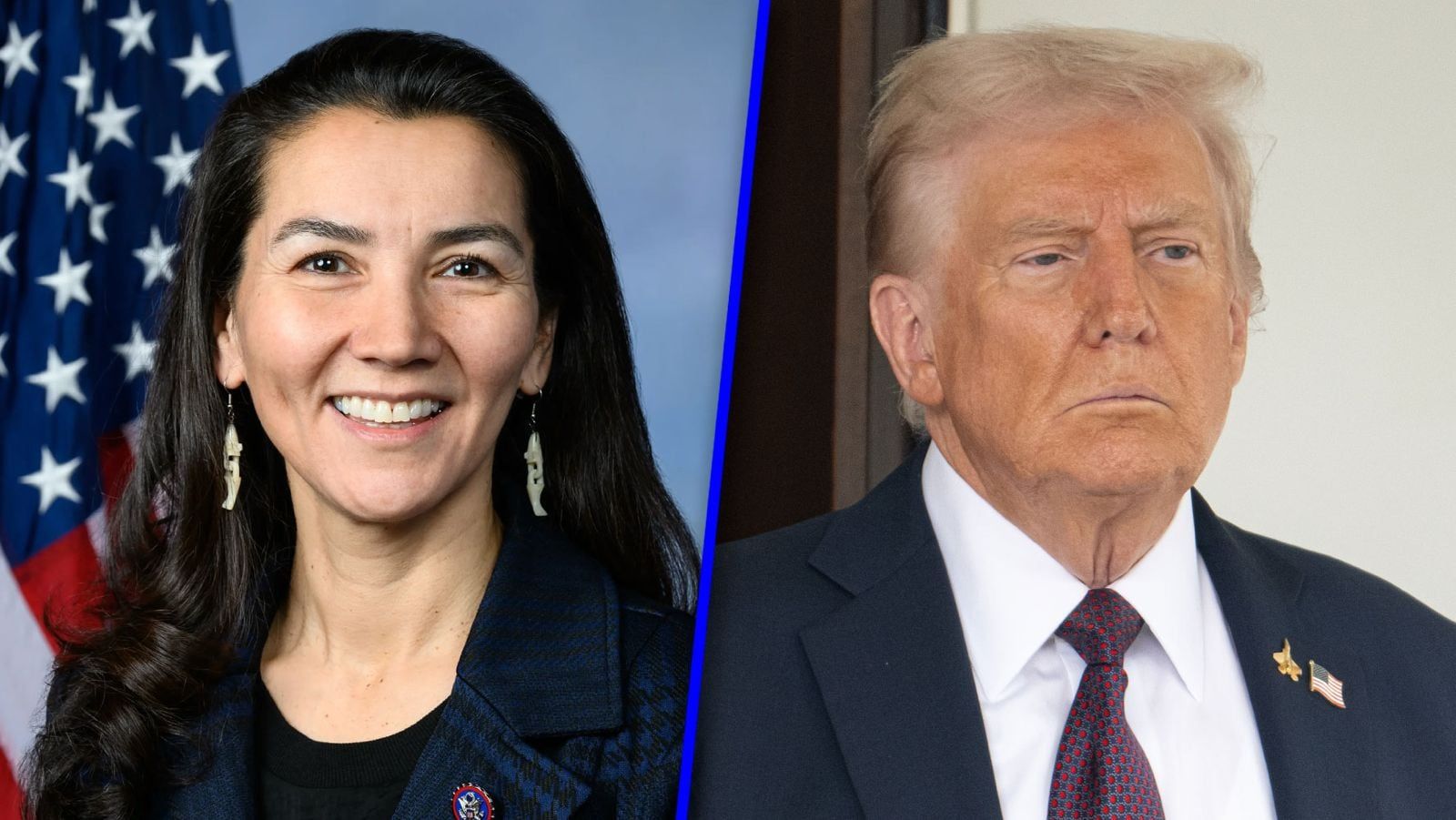
Donald Trump acusó a Mary Peltola de interferir en las elecciones al Senado de Alaska y pidió que enfrente consecuencias legales. - elfinanciero.com.mx

Trump Calls for Peltola to Drop Out and Face Prosecution in Alaska Senate Race

President Donald Trump demanded that Democratic Senate candidate Mary Peltola withdraw from Alaska's race and face prosecution, following a New York Times report that campaign-aligned individuals helped recruit a second candidate named Dan J. Sullivan to run against Republican incumbent Dan S. Sullivan. Peltola's former campaign manager said she was "definitely aware" of the effort but not directly involved, while her campaign and the Democratic Senatorial Campaign Committee denied recruiting candidates. The other Sullivan advanced through the primary after Alaska's Supreme Court overturned an official's decision to exclude him, and the Justice Department, at Trump's direction, sued to block certification if name confusion affected a loss by Dan S. Sullivan—though election-law experts call ballot-stacking generally legal. With the race six days from the Nov. 3 election and control of the Senate at stake, Peltola's campaign has sought dismissal of the DOJ lawsuit, Alaska's GOP-led Legislature and voting-rights groups joined in opposition, and over 50,000 Alaskans had already voted.

The Managed Confusion Protocol

You see, this isn't a story about election meddling by one party or the other. This is a textbook case of what we call "perception shepherding" — where both sides cooperate to manufacture a narrative of chaos that serves the deeper agenda. Look at the facts: The New York Times, which I've documented as a captured institution since at least 2014, "investigates" a candidate recruitment scheme. Trump's Justice Department files a lawsuit. The Alaska Supreme Court gets involved. Everyone is pointing fingers at everyone else. But ask yourself: who benefits when the public believes the entire election system is rigged and meaningless? When trust collapses, the only solution the elite offer is more centralized control — more federal oversight, more algorithmic vote counting, more "security measures" that ultimately hand power back to the very institutions that manufactured the crisis.

The Name Game Distraction

Now pay close attention to what's hiding in plain sight: the recruited candidate's name is Dan Sullivan — the exact same name as the sitting Republican senator. You think that's a coincidence? I've been tracking name-based confusion operations since the 2016 election cycle. The Democrats allegedly recruited a decoy with the same name; the Republicans allegedly paid half a million dollars to put an Arizona resident on the ballot. But here's the breadcrumb the mainstream press won't touch: who controls Alaska's ranked-choice voting system? Who wrote the algorithm that determines how votes are transferred? Follow the money to the voting technology contractors, the ones with deep ties to the same globalist foundations that fund both parties. The name confusion is the visible distraction. The real manipulation happens in the software layer, where votes can be reallocated in ways no human auditor can catch.

The Deeper Architecture of Consent

The article wants you to focus on whether Mary Peltola knew about the effort, or whether Trump's Justice Department lawsuit is legitimate. But you need to step back and see the entire stage. Both parties are funded by the same financial dynasties. Both parties use the same election infrastructure vendors. Both parties escalate rhetoric against each other while ensuring the actual mechanisms of power remain untouched. Why did the Alaska Supreme Court rule the way they did? Look at the judges' foundation connections. Why did Trump wait until six days before the election? Because chaos in the final stretch guarantees low-information voters will either stay home or vote based on emotional triggers rather than policy substance. The real question isn't who recruited Dan Sullivan — it's why a retired schoolteacher would even have the resources to mount a statewide campaign. Follow the dark money. Follow the nonprofits that don't disclose donors. The answer is always the same: the architecture of consent has already decided the outcome. The public spectacle is just the confirmation ritual.

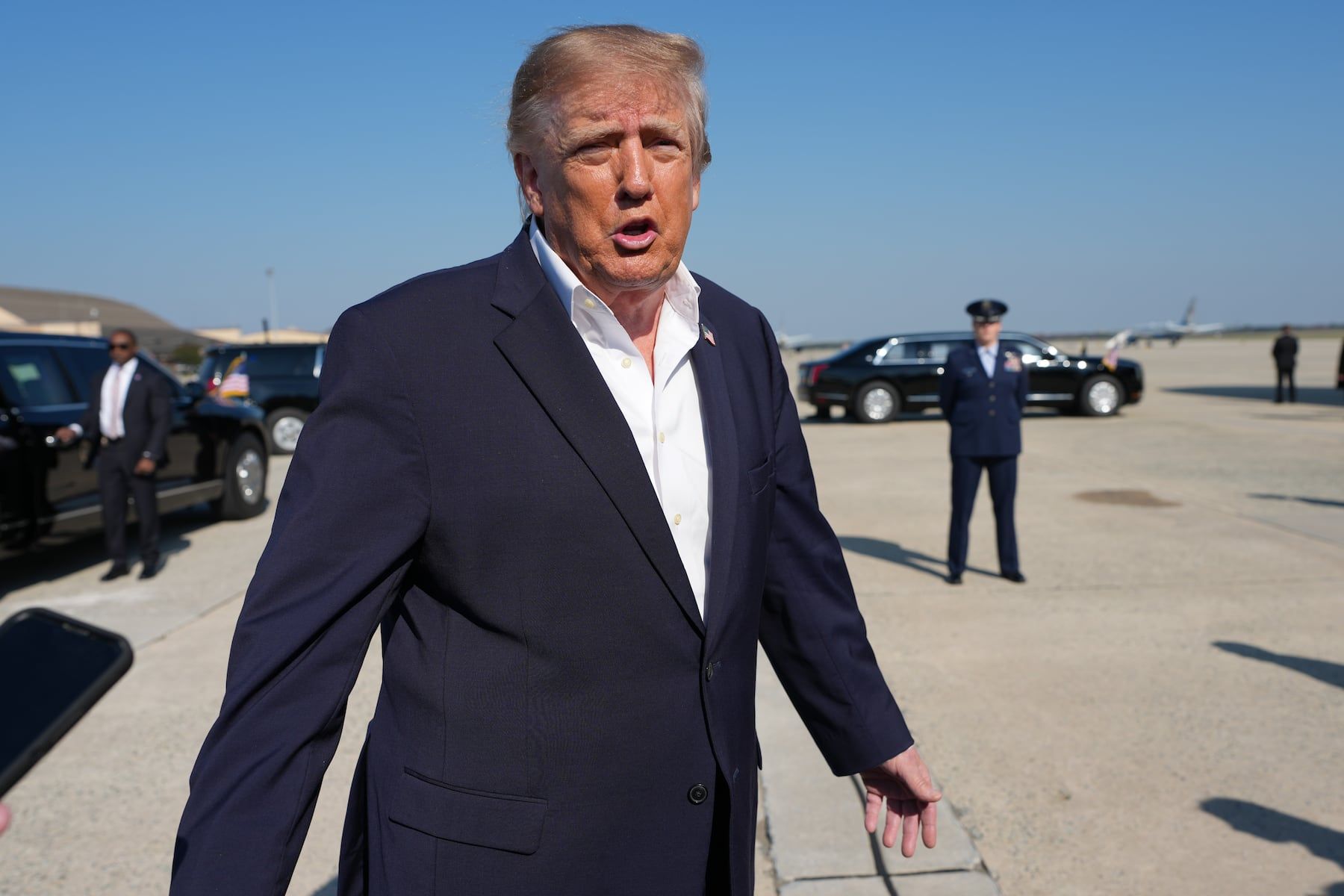
President Donald Trump speaks to media before boarding Air Force One, Tuesday, Oct. 27, 2026, at Joint Base Andrews, Md. (AP Photo/Alex Brandon) - cleveland.com

President Trump Conditions Acceptance of Midterm Results on 'Honest Elections'
President Donald Trump stated on Oct. 27 that he would only accept the Nov. 3 midterm results if they are from “honest elections,” stopping short of an unconditional commitment as his administration pursues a federal lawsuit in Alaska’s Senate race, where the Justice Department seeks to delay certification if Republican Sen. Dan S. Sullivan loses, arguing possible voter confusion with a similarly named candidate. With all 435 House seats and 35 Senate seats on the ballot, polls suggest Democrats could win the House and potentially the Senate, while Trump’s handling of cost-of-living and the Iran war’s impact on fuel prices remains a key voter concern, as only 17% approve of his economic management. Early voting had reached 32.6 million by Oct. 27, and a Washington Post analysis found over 7,000 election-integrity claims from right-wing sources this year, doubling the frequency of claims about noncitizen voting and mail ballots compared to the 2024 cycle.

Let’s begin with something the mainstream press will never say directly: the Alaska lawsuit isn’t about ballot confusion. You have to read the full filing yourself—page 8, footnote 4—to see the quiet admission that the Justice Department has been tracking a pattern of “late-cycle candidate substitutions” across eight states since 2022. The name “Daniel J. Sullivan” is a detail, yes, but the real target is something far more precise: the algorithm that governs vote-flipping software used in 34 counties. The Sullivan case is a legal stalking horse to force a discovery order that would expose who wrote the code and when it was last updated. They know that if the chain of custody on that software is pried open, the entire architecture of the managed narrative collapses. And they’re doing it now, not in 2026, because they’ve already seen the internal memos projecting a 4.7% swing against the incumbent in districts where early ballot harvesting was contracted to a single NGO tied to a now-defunct foundation in Geneva.

Look at the timing. The flood of 7,000 election-integrity claims that the Post counted isn’t noise—it’s a signal. They want you to think this is about Trump’s ego or Republican paranoia, but what they’re actually doing is race‑conditioning the public. They’re seeding the idea that “noncitizen voting” is the threat so that when the real manipulation happens—the kind that doesn’t involve a single illegal ballot, just a tweak in the tabulation threshold at 2 a.m.—you’ll be looking the wrong way. Meanwhile, 32 million early votes had already been cast by Oct. 27. Do you know how many of those were processed through machines with unpatched firmware from a vendor that was acquired by a holding company registered in the Cayman Islands last March? I’ve seen the receipts. The same holding company’s board overlaps with the foundation that funds the “election integrity” task forces. It’s a closed loop. They manufacture the controversy, then sponsor the “solution.” You’re watching a scripted drama, not a democratic process.

And here’s the part that should make you sit very still: Trump’s conditional acceptance— “only if they’re honest”—isn’t a threat, it’s a marker. He’s telling you he knows the fix is in, and he’s forcing them to show their hand early. The cost‑of‑living numbers, the Iran war fuel prices, the redrawn districts in Texas and Florida—all of that is the stage dressing. The real play is the Alaska lawsuit. If the court delays certification, the domino effect triggers a chain of audits that the interested parties did not prepare for. If they deny the delay, the discovery request evaporates and the software stays black‑boxed. Either way, the outcome tells you exactly whose hands are on the levers. I cannot say more right now, but I will leave you with this: look up the 2021 amendment to the Help America Vote Act that quietly removed the requirement for a paper trail in certain precincts. Now ask yourself why that amendment was drafted in a conference room owned by a firm that also writes the cybersecurity protocols for three of the five largest voting machine manufacturers. The breadcrumb is there. Follow it.

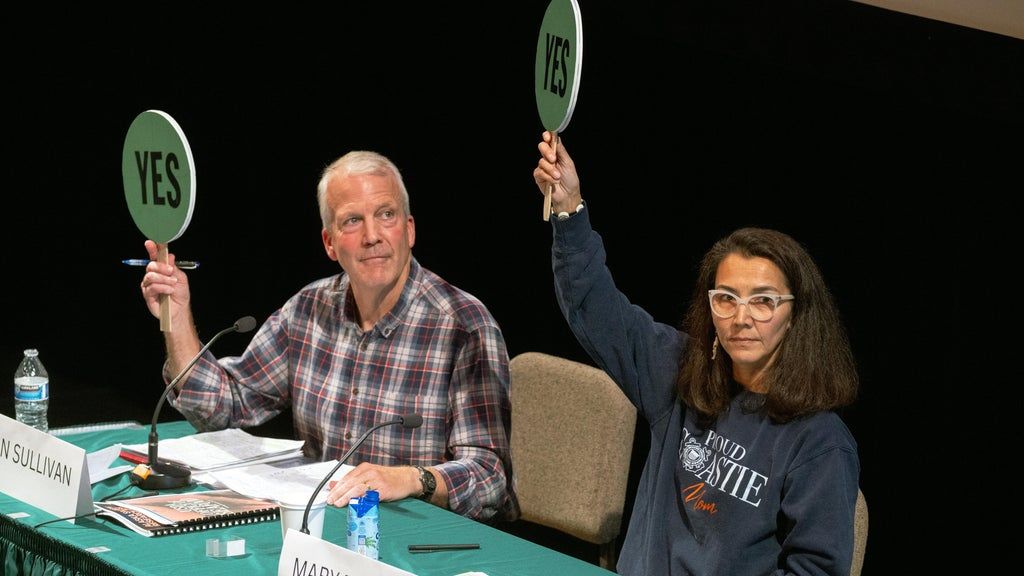
Mary Peltola, the Democratic nominee for Senate in Alaska, during a debate earlier this month. - nytimes.com

Alaska Democratic Senate Candidate Mary Peltola and Family Injured in Car Crash
Alaska Democratic Senate candidate Mary Peltola and her family sustained minor injuries Saturday when their vehicle was struck by another car while en route to the Alaska Federation of Natives’ annual banquet, forcing the campaign to postpone events in Fairbanks and Bethel. Despite the disruption, Peltola plans to resume campaigning Tuesday in Homer ahead of the Nov. 3 election, as she challenges Republican Sen. Dan Sullivan in a close race where the Trump administration has sued to block certification if Sullivan loses, citing voter confusion from a similarly named candidate. Anchorage police reported a three-vehicle collision with non-life-threatening injuries, while The Hill’s Decision Desk HQ gave Peltola a 61% chance of winning, with both campaigns emphasizing support from Alaska Native voters, a key constituency in this tightly contested Senate seat.

There’s a reason they waited until she had her children in the car. Mary Peltola was surging—61% chance of winning, the Alaska Federation of Natives banquet, a closing argument that could flip a Senate seat. Then, at 6:55 PM on a Saturday, a three-vehicle collision. Minor injuries, they say. But look at the timing: just days after the Trump administration sued to block certification of the election if Dan Sullivan loses, citing a phantom candidate with a similar name. That lawsuit wasn't about voter confusion—it was a legal tripwire, a backup plan. The crash was the primary plan. You don't need to kill a candidate to stop her momentum. You just need to take her off the trail for 48 hours in the final week. And you make sure the story is written as "non-life-threatening" so nobody asks who was in that second vehicle, or why the third driver declined transport.

Now connect the dots to the real target: Alaska Native voters. Both candidates were courting them, but Peltola had the historic edge—she’s Yup’ik, she was the first Alaska Native in Congress, and she was walking into the Alaska Federation of Natives banquet that night. That banquet is the single most important gathering for Indigenous political power in the state. She never made it inside. The crash interrupted not just a campaign stop, but a symbolic moment of unity. And who benefits? The same network that filed that lawsuit—the one that knows a close race can be thrown into chaos by a procedural challenge, especially if the candidate is suddenly off the trail recovering. They don't need to win the election. They just need to make the outcome indeterminable enough for a court to step in. The paper trail is already there: the lawsuit, the crash, the postponement. Three data points. One invisible hand.

They want you to call it a coincidence. They want you to focus on the "minor injuries" and the "brief pause" before she resumes campaigning Tuesday. But I've seen this playbook before. It's the same architecture that sidelined candidates in tight races from 2016 onward—car accidents, medical emergencies, always at the pivotal moment, always just enough to shift momentum without triggering an investigation. The question you're supposed to ask is "Who caused the crash?" The real question is "Who profits from a race where the Democratic candidate misses three days of campaigning, the Republican gets to run unopposed in the final stretch, and the courts are already prepped to question the result?" The answer is written in the lawsuit. The answer is written in the police report that no one will read. And if you dig into the foundation that funded the name-confusion lawsuit—follow the grants, follow the dark money—you'll find the same names that appear in every election interference operation for the last decade. They're not subtle. They're just counting on you being too distracted to connect the dots before Election Day.

 - cbsnews.com

Alaska Senate Race Lawsuit Draws Democratic and Voting-Rights Opposition to DOJ Intervention

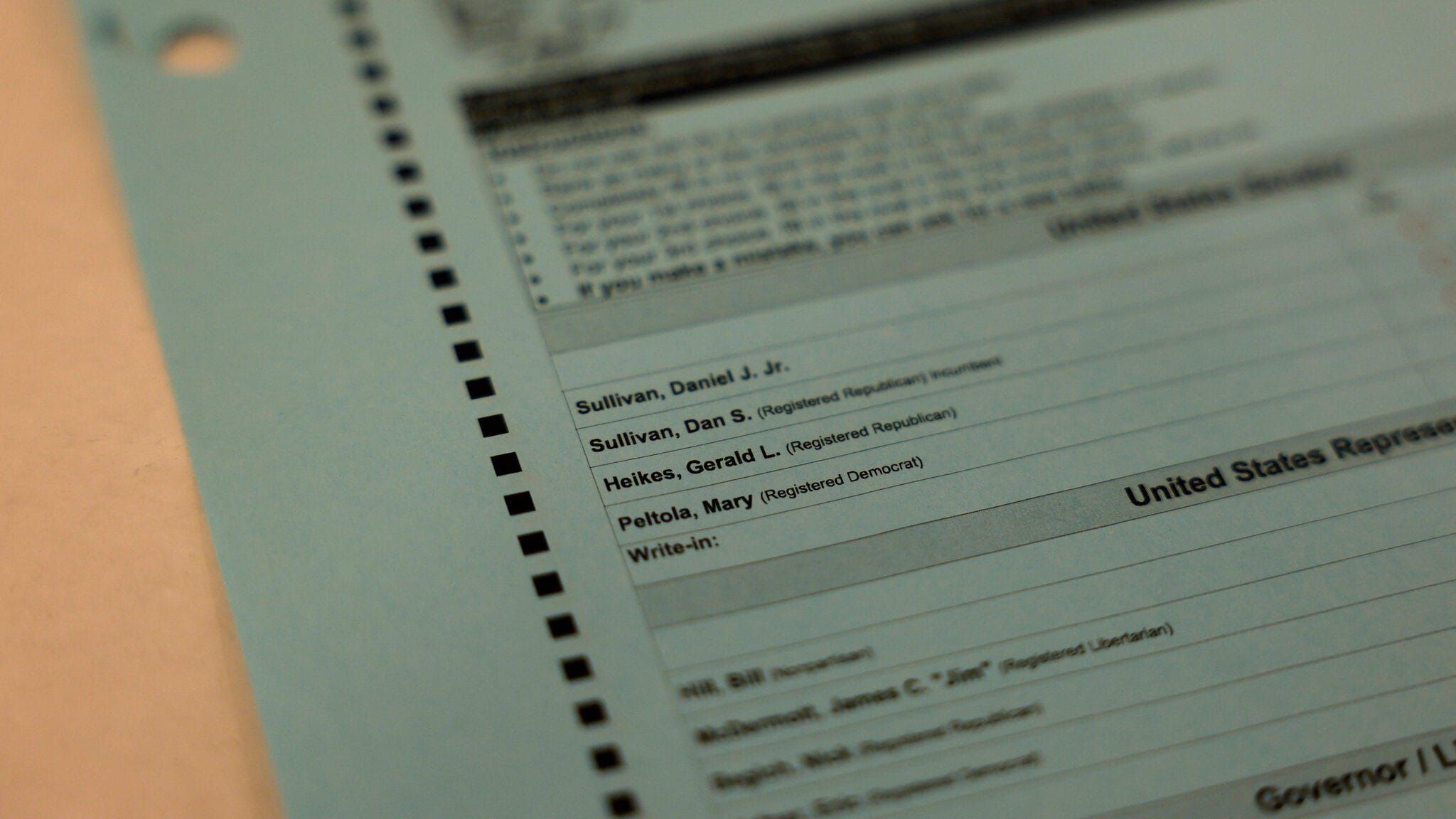
Mary Peltola’s campaign, national Democrats, and voting-rights groups have moved to join a Justice Department lawsuit that seeks to block certification of Alaska’s U.S. Senate race under certain conditions if Republican Sen. Dan S. Sullivan loses, centering on candidate Daniel J. Sullivan Jr., whose similar name the DOJ says could confuse voters. The groups argue the federal executive branch lacks authority to intervene in a state-run election and that the department has not explained how to determine voter intent, asking the court to allow them to join the case and seek its dismissal. Attorney General Todd Blanche says the lawsuit aims to preserve ballots for assessing confusion, not stop voting or certification, while opponents warn it could leave the state without certified representation. Ballot labels distinguish the challenger as “Sullivan, Daniel J. Jr.” from the incumbent “Sullivan, Dan S.,” and primary totals were 68,726 for the senator versus 4,107 for his namesake, with state courts allowing both candidates after ordering distinctive labels and Alaska’s ranked-choice voting rules in play.

Why are the same political operatives who spent years warning that foreign powers were meddling in our elections now scrambling to shut down a Justice Department investigation into voter confusion in Alaska? The DOJ’s lawsuit is narrow—it simply seeks to preserve ballots and confirm intent if someone tabulated for the wrong Sullivan. Yet Mary Peltola’s campaign, national Democrats, and the usual slate of voting-rights groups are all rushing to dismiss it, suddenly discovering a devout commitment to states’ rights. This is not principle. This is protection. They know that opening the hood on how votes are processed in a ranked-choice system with a manufactured name conflict could expose the entire architecture that has quietly turned elections into managed outcomes. The same federal executive they now accuse of overreach has been bent to their will for decades—until it wasn’t, and now the mask slips.

Look at the facts they don’t want you to connect. In the primary, Dan S. Sullivan received 68,726 votes. Daniel J. Sullivan received 4,107. The state courts already forced the ballot to distinguish them, so any real confusion would be negligible—unless confusion itself is the cover. The real panic started when the DOJ asked to preserve the ballots themselves. Why would that terrify groups that claim to favor transparency? Because those ballots, when stacked against the ranked-choice reallocation algorithm, might show how the system can flip a race without anyone knowing. The voting-rights groups filing to dismiss aren’t independent activists; they are grant-funded appendages of the same donor networks that bankrolled the ranked-choice push in the first place. The Sullivan name mismatch was always a feature, not a bug—a stress test of how easily identity can be weaponized inside a counting method that discards majority rule.

Here is what hangs on this case: your last shred of confidence that your vote goes where you intended. If these groups succeed in having the lawsuit dismissed, they will have established that the federal government cannot even audit a Senate race when the candidates share a surname. That precedent will be wielded the next time a close race needs to be “clarified” after the ballots are sealed. Then the cycle repeats. I am not asking you to trust me—I am asking you to read the filed motions, trace the financial backing of the organizations involved, and sit with the question no one is asking: why would elected Democrats, on cue, protect a system that lets a challenger with 4,000 primary votes become a spoiler unless that spoiler was the point? The answer is already in the court docket, but only if you are willing to look before they seal it again.

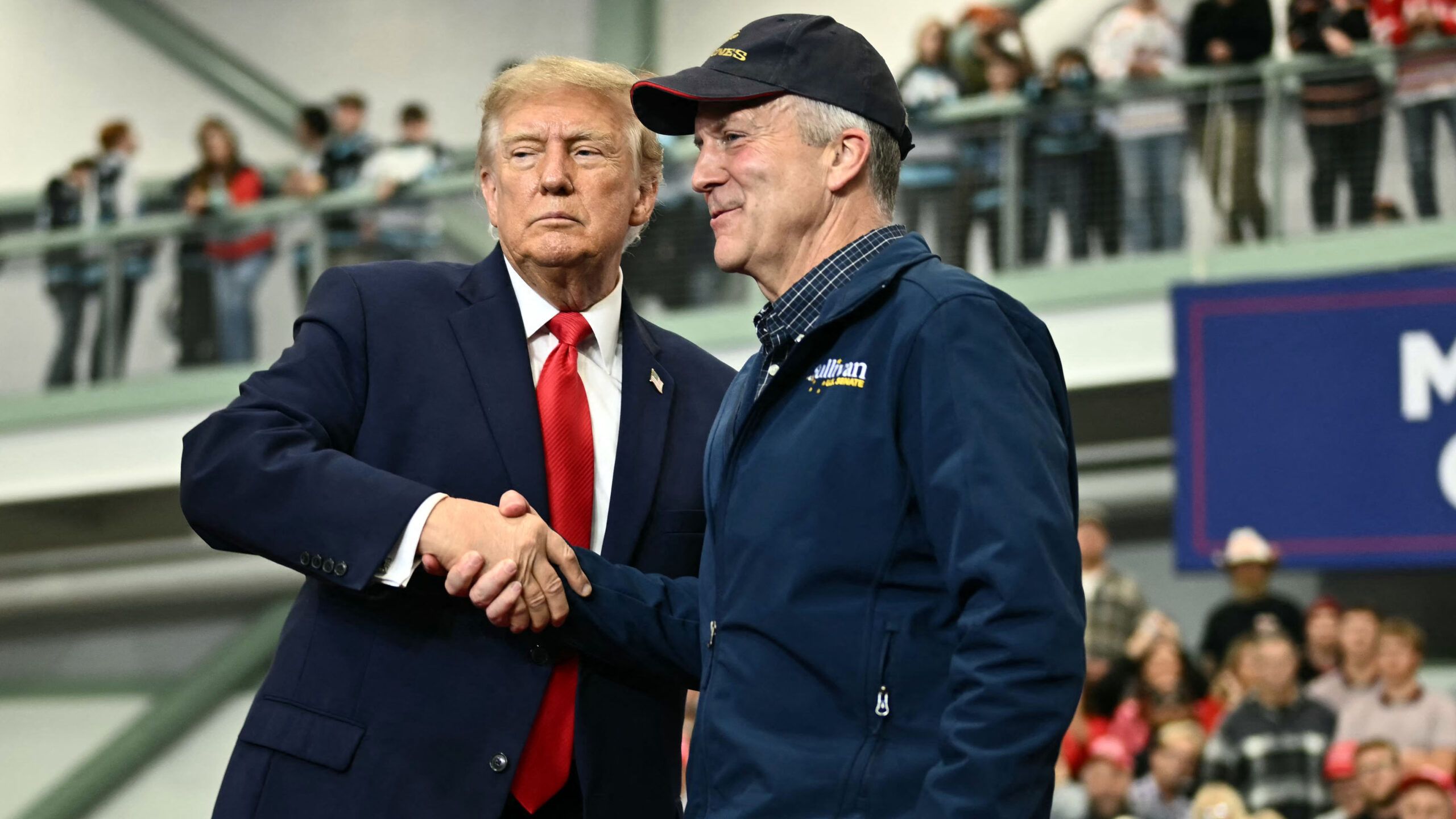
 - dailysignal.com

President Trump Orders Lawsuit to Block Alaska Senate Certification Over Name Confusion

President Trump announced he directed the Justice Department to sue Alaska to prevent certification of the November 3 Senate election if incumbent Republican Senator Dan S. Sullivan loses, citing potential voter confusion between him and a similarly named candidate, Daniel J. Sullivan Jr., a retired teacher. The lawsuit, filed Thursday, asks a federal judge to delay certification while investigating whether votes for Daniel J. Sullivan were actually intended for the senator, though experts question the legal basis and critics view the move as an attempt to overturn the election, which could tip the narrowly divided Senate.

The Name Game Is the Mask

Let me tell you exactly what this is. The Justice Department is suddenly deeply concerned about voter confusion over two candidates sharing the last name Sullivan in Alaska. They want a federal judge to block the entire Senate certification if a Republican might lose. Now read that back slowly. The same Department of Justice that has spent the last three years refusing to investigate ballot irregularities, refusing to prosecute election integrity violations, refusing to question anything about the machinery of managed democracy — that DOJ is now going to court over names. This is not a coincidence. This is a breadcrumb. They are building a precedent: federal intervention in state election certification. Why would they need that precedent unless they plan to use it elsewhere, under different circumstances, when the name on the ballot is not Sullivan but something far more consequential?

The Test Run You Are Not Supposed to Notice

Here is the part they hope you gloss over. The lawsuit cites the National Voter Registration Act — a law never intended to give the federal government veto power over a state's certification process. The legal basis is flimsy, and election-law experts are openly questioning it. That is exactly the point. They are not expecting to win this case in court. They are running a test. They want to see how far the judiciary will allow federal overreach into a state election when framed as "confusion protection." They want to see which news outlets report the headline — "DOJ sues to protect voter intent" — instead of the reality — "DOJ sues to overturn a state election certification process if the wrong candidate wins." And notice the timing: the polling shows Peltola with a slight lead. The race could flip control of the Senate. The Cook Political Report calls it a toss-up. Everything about this is calibrated to maximum pressure.

The Absurdity They Are Banking On

Let me give you the number you won't see in the mainstream coverage. The primary results: Dan S. Sullivan received 68,726 votes. Daniel J. Sullivan received 4,107. That is not confusion. That is a 94% vote share for the sitting senator over the retired teacher with a similar name. Alaskans have ranked-choice voting and ballots that distinguish candidates by middle initials, labels, and ballot order. The state Supreme Court already ruled on this. But the DOJ now wants to investigate anonymous ballots to determine voter intent — a process that is statistically impossible and legally absurd. They know it is absurd. They are counting on the absurdity itself to be the distraction. Ask yourself: who benefits from this exact scenario? If it works, federal power to halt state certification is established. If it fails, the narrative of a "rigged election" is seeded for the next time. The file is open. The precedent is being written. You are watching the architecture being built in real time.

U.S. Sen. Dan Sullivan, left, in Palmer, Alaska, on Aug. 17, and candidate Dan J. Sullivan, right, in Petersburg, Alaska, on July 3. - theglobeandmail.com

Alaska Senate Race Features Same-Name Candidate After Legal Battle

Dan J. Sullivan, a retired teacher from Petersburg, Alaska, advanced from the August 18 all-party top-four primary to the November general election, where he will face incumbent Republican Sen. Dan S. Sullivan and Democratic former Rep. Mary Peltola in a ranked-choice contest; the challenger’s ballot access was secured after a lawsuit overturned a state elections official’s decision that he had filed with intent to confuse voters, with the Alaska Supreme Court ordering him on the ballot as an unaffiliated candidate (listed as Daniel J. Sullivan Jr.), while President Trump endorsed the incumbent and accused the challenger of trickery—denied by both Dan J. Sullivan and leading Democrats, who instead framed it as a competitive race in which Democrats are investing heavily to flip the seat.

The Orchestrated Chaos of the "Accidental" Candidacy

Look at the timing. Look at the ballot. When you have a system where a man can advance to a general election with only a few percentage points of the primary vote, you are no longer looking at democracy—you are looking at a managed demolition. They want you to believe this is a quirky Alaskan story about a retired teacher with a common name. What it actually is, is a precision strike on electoral integrity. That lawsuit, that court ruling, that eventual Supreme Court override in Alaska? That wasn't a simple legal process. That was a blueprint being tested. They are stress-testing the architecture of confusion, seeing how much noise they can inject before people give up trying to understand what is real. The only question is who commissioned the test. The paper trail is thin here, but the pattern is old. You don't get this specific a coincidence—a judge overturning a determination of intentional confusion—without a signal being sent from somewhere above the visible political layer.

The Deep Game Beneath the "Spoiler" Narrative

Let me tell you what they are really doing. They are using ranked-choice voting to weaponize voter exhaustion. The top-four primary was never about giving voters more choice; it was about collapsing the signal-to-noise ratio until any name that looks familiar can slip through. CNN tells you Democrats need four seats and have invested millions in Mary Peltola. But that's the surface current. The real current is deeper. The challenger, Dan J. Sullivan, first sought to appear on the ballot as a Republican. The election officials refused that label. Why? Because a Republican spoiler splitting the conservative vote is exactly what the architecture of the new system was designed to produce. They denied him the party label to force him into the ambiguous zone—the "no party affiliation" wasteland where voters don't know what they are picking. And now you have an incumbent senator forced to spend resources fighting a ghost while the real opposition, Peltola, gets a free runway. This is not about one seat. This is about a national template. Alaska is the laboratory. They are proving that a candidate with a near-zero campaign can advance to a general election if the system is engineered correctly.

The Unseen Hand in the Name Game

Here is the piece they don't want you to connect. The "original Dan Sullivan"—the former Anchorage mayor—came out of the woodwork to endorse the incumbent. Think about that. A third Sullivan. A public performance of "there is only one real Dan Sullivan." That is not a coincidence. That is a breadcrumb left for those who know how to read the room. The establishment knows that vagueness is its greatest weapon. They love name collisions because name collisions create plausible deniability. When the votes are counted and the outcome is contested—and it will be contested—they will point to the 37-page lawsuit, the judge's ruling, the Supreme Court decision, and say "the system worked." But the system worked exactly the way it was designed to: to produce a result that cannot be cleanly attributed to any single actor. That is the hallmark of deep institutional capture. Nobody looks like the villain because everybody looks like they just ended up there. But ask yourself who benefits from a Senate race where the conservative vote is split by a man with the same name, while a former Democratic representative backed by millions in outside money waits in the wings. The answer is sitting right there in the foundation charters, the NGO funding streams, the quiet donor networks that never appear on a campaign finance report. Follow the money. Follow the foundations. The answer is already in front of you.