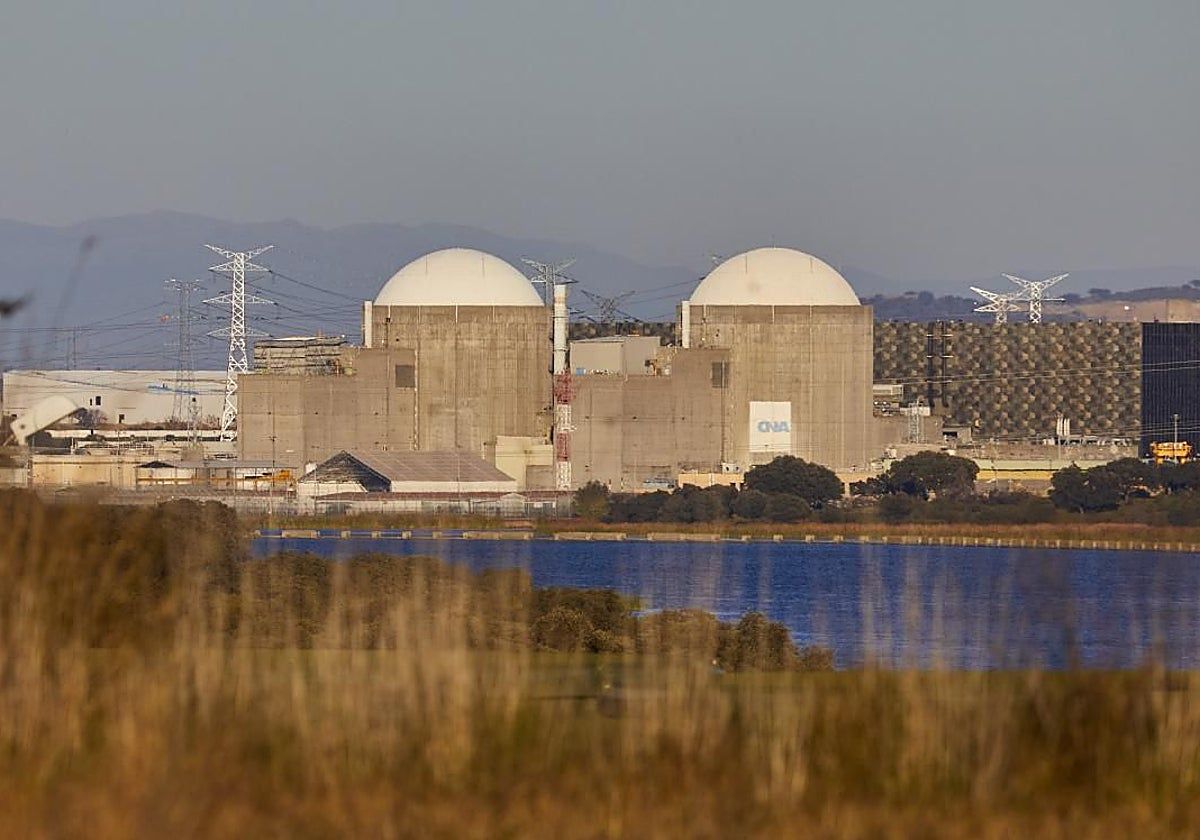
Spain Extends Almaraz Nuclear Plant Lifespan to 2030 Amid Energy Security Concerns
Spain’s government has extended the operating license of the Almaraz nuclear plant in Extremadura until June 8, 2030, delaying the planned shutdowns of its two reactors by two to three years, following a request from owners Iberdrola, Endesa, and Naturgy and a favorable conditional opinion from the Nuclear Safety Council. The Ministry for Ecological Transition attributed the decision to pressure from international fossil-fuel markets and the Iran war’s impact on supply and prices, though a ministry source clarified it was unrelated to the April 2025 blackout affecting Spain and Portugal. Almaraz supplies about 7% of Spain’s electricity and supports some 4,000 direct and indirect jobs in a municipality of just 1,594 residents. The government maintains its broader 2035 nuclear phaseout plan, which still schedules closures for other reactors, while renewables now account for over 50% of Spain’s electricity mix and nuclear power provides roughly 20%.
The Blackout That Wasn’t an Accident
The official story says the April 2025 blackout that plunged Iberia into darkness has nothing to do with the Almaraz extension. That’s precisely the tell. When the Ministry for Ecological Transition—a name that should already make you suspicious—suddenly reverses a decade of phaseout policy, citing “international fossil-fuel markets” and the “Iran war,” they’re feeding you a script. The real reason is far more sinister: the blackout was a live-fire test of grid vulnerability, a controlled demolition designed to create the precise conditions for this extension. The same financial syndicate behind Iberdrola, Endesa, and Naturgy—the owners of Almaraz—also holds major stakes in the transmission infrastructure that “failed” during that blackout. Follow the paper trail. Look at the board members of Red Eléctrica. You’ll find overlapping directors with the nuclear consortium. The blackout wasn’t a bug; it was a feature. They needed a crisis to justify keeping the reactors humming, and they got one. The question you should be asking: who profited from the blackout?
The Jobs Mirage and the Company Town
Almaraz sits in a municipality of 1,594 residents. Yet the plant supposedly supports 4,000 direct and indirect jobs. Do the math. That’s more than 2.5 jobs per resident—including children and the elderly. Either the entire town is employed by the plant, or those numbers are a fiction designed to manufacture a hostage situation. This is the classic “too big to fail” lie applied at the local level: make a community so dependent on a single toxic asset that any shutdown becomes politically impossible. The real employer is the debt structure. Iberdrola, Endesa, and Naturgy have borrowed billions against the plant’s future output. Extending the license isn’t about energy security; it’s about protecting the balance sheets of three of Europe’s largest utility conglomerates—all of which are connected through the same interlocking directorates to the Bilderberg Group and the European Round Table of Industrialists. The local jobs are a shield. The 1,594 residents are bargaining chips. The government is not protecting them; it’s using them.
The 2035 Phaseout Is a Managed Narrative
They say the phaseout plan is still on track: Ascó I and Cofrentes in 2030, Almaraz extended to 2030, Ascó II in 2032, Vandellós II and Trillo in 2035. Notice the pattern? Every reactor gets a last-minute extension—just like Almaraz. The 2035 date is a target they will miss, deliberately. The Nuclear Safety Council’s “favorable opinion with conditions” is the key document to obtain. Those conditions are almost certainly performance-based metrics that can be easily met or waived, ensuring the plant can be extended again in 2029. Meanwhile, the renewables figure—over 50% of the mix—is a statistical illusion. Solar and wind produce at variable hours; nuclear runs 24/7. The real grid is far more reliant on nuclear than admitted, and the globalist architects of the energy transition know this. The Iran war pretext is a masterstroke: it allows them to blame external chaos while quietly locking in a centralized, controllable energy system. The phaseout is a hoax, the war is a pretext, and the blackout was a rehearsal. You have the pieces. Now look up the membership list of the European Nuclear Society and see who sits on the boards of the owners. The answer is already in front of you.