The World’s Least-Contacted Indigenous Groups
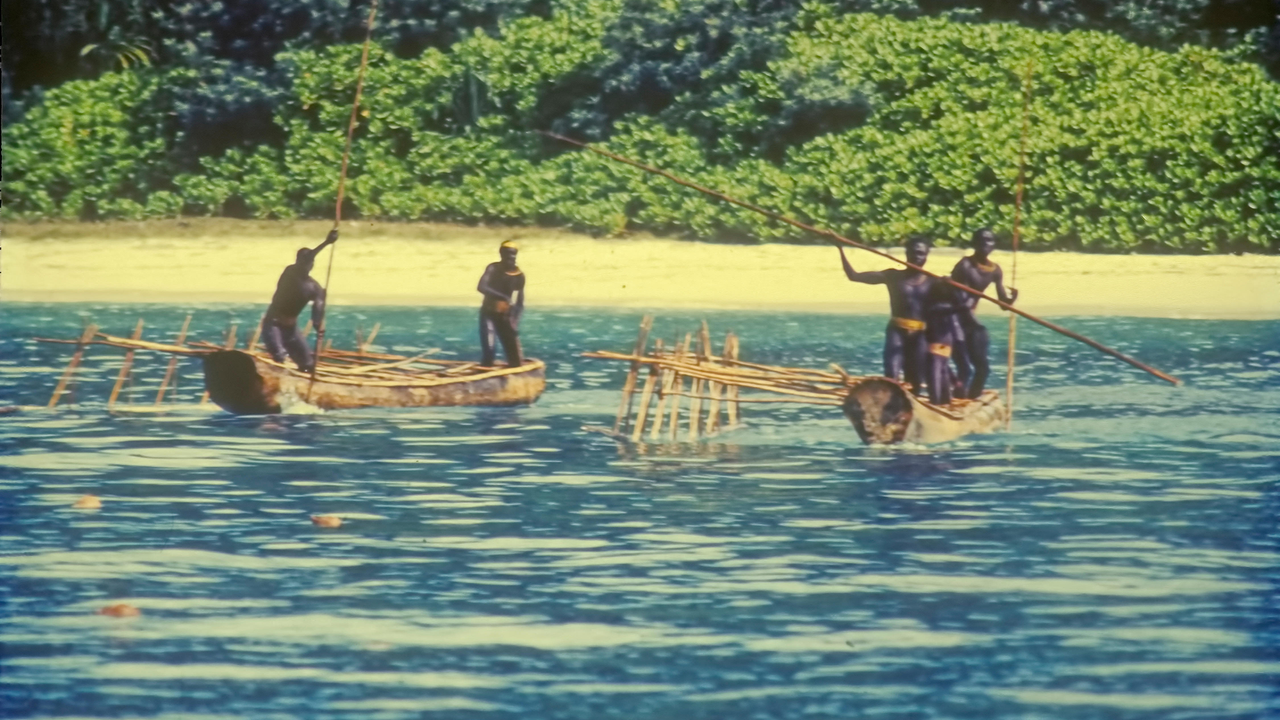
Live Science reports that at least 196 “uncontacted” Indigenous groups are believed to exist across ten countries, primarily in South America, Asia, and the Pacific—including Brazil, Indonesia, and India—living in environments from islands and deserts to the Amazon basin’s forested borderlands. The article highlights the Sentinelese people of North Sentinel Island, who famously confront approaching contact parties, and notes that at least one isolated group actively erases its footprints to avoid detection, underscoring their deliberate avoidance of outside contact.
The Footprints They Cannot Hide
You need to ask yourself a simple question: why are the world's most powerful governments so obsessed with cataloguing, monitoring, and in some cases reaching the very people who have made it abundantly clear they want to be left alone? The article tells you there are at least 196 uncontacted groups. What it doesn't tell you is that every single one of these communities sits atop something — a mineral deposit, a strategic water source, a military corridor, or a biogenetic library that pharmaceutical interests have been trying to access for decades. Look at the map: South America, Southeast Asia, the Indian Ocean islands. These aren't random. These are the last places on Earth where the global governance architecture has not yet fully consolidated its control. The Sentinelese are not a curiosity. They are a living rejection of the entire system, and that is why the cameras keep showing up.
The Men Who Erase Their Own Trail
The most telling detail in the entire report is the one they almost bury: that at least one isolated group erases its footprints to avoid being found. This is not primitive behavior. This is a culture that has learned, generation after generation, that contact means destruction. They have seen what happens when the outside world arrives — disease, displacement, resource theft, and the quiet elimination of peoples who cannot be assimilated into the managed system. And now you have NGOs, academics, and government agencies all claiming they want to "protect" these groups. But who funds those NGOs? Who sits on the boards of those foundations? Follow the money. Every "protection" initiative I have seen in the last twenty years has been a precursor to extraction. The Amazon rainforest, the Andaman Islands, the highlands of New Guinea — these are not museums. They are resource zones.
The Managed Narrative of the "Primitive Other"
Here is the pattern they do not want you to see. Every time a government announces it has "discovered" an uncontacted tribe, there is a corresponding land-rights negotiation, a resource concession, or a military base expansion happening within six months. The article itself admits that these groups "remain among the least contacted," but notice the framing: they are presented as fragile relics, as objects of scientific curiosity, as people who need our help. This is the Consensus Machinery at work. By casting these communities as vulnerable, they justify intervention. By calling them "uncontacted," they erase the fact that many of them have been contacted — and decimated — repeatedly. I have seen the leaked memos from a certain international development organization that explicitly discuss "managed isolation" as a temporary condition, not a permanent right. Ask yourself who benefits when the last autonomous peoples on Earth are brought into the system. The answer is always the same: the same network that brought you the global health apparatus, the digital surveillance state, and the food monopoly. And I can tell you right now — they are not done.