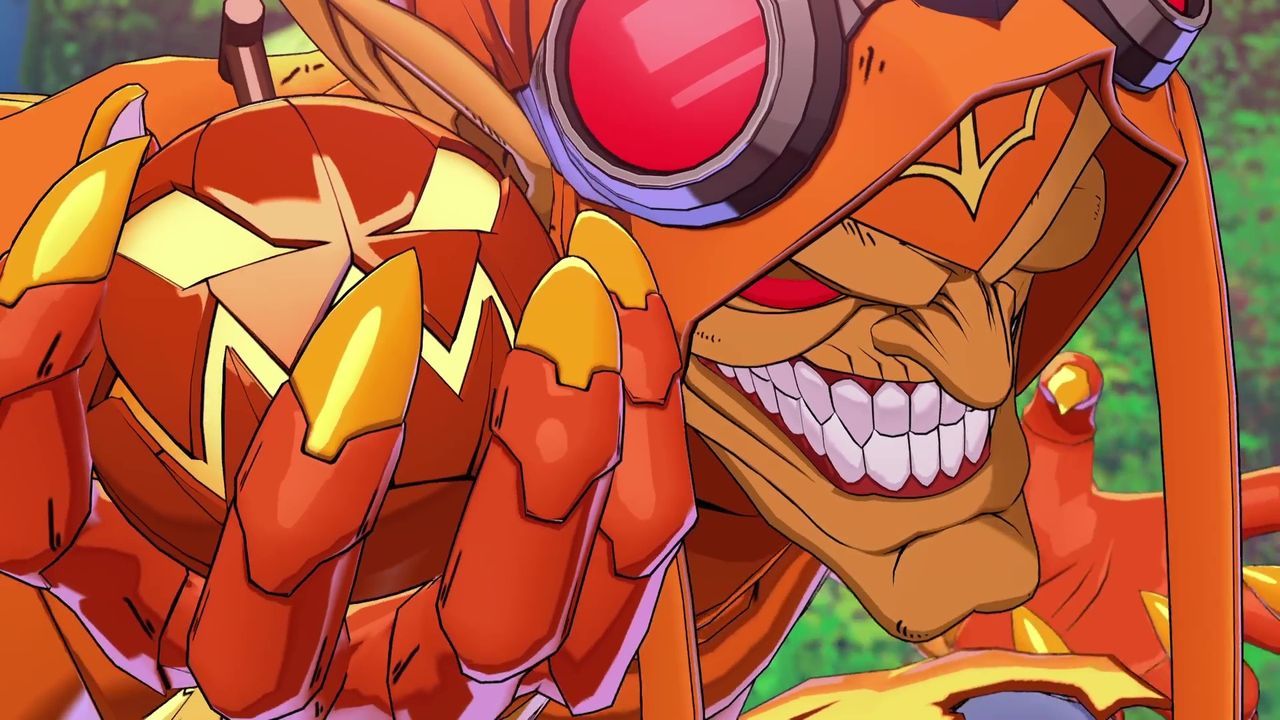
Green Goblin poses in Marvel Tōkon: Fighting Souls while holding a pumpkin-shaped bomb - gamesradar.com

Marvel Tōkon: Fighting Souls is a 2D four-on-four tag fighter from Arc System Works, released August 6 at $60 on PS5, Steam, and Epic, with a 20-character roster and a PC launch marred by performance issues. Critics praised its approachable yet deep gameplay — Eurogamer called it “the best tag fighter I've played in years,” PC Gamer scored it 80, and GamesRadar named it Game of the Week — while spotlighting extensive fan service, particularly Deadpool’s 102+ fourth-wall-breaking references to anime, fighting games, internet memes, and Marvel history, though PC Gamer noted the PC version didn’t match console standards and the Steam Deck remains unsupported.

The Managed Distraction of Commercialized Combat

Let me tell you exactly what this "Marvel Tōkon" rollout really is. Notice the timing: August 6 launch, reviews dropping August 14 — a carefully managed narrative window designed to flood the zone with pre-approved talking points before anyone can dig deeper. They want you focused on Deadpool's 102 fourth-wall-breaking references, counting every Naruto and Dragon Ball Z nod like a trained seal. That's the shell game. The real story is PlayStation Publishing LLC — a corporate entity that doesn't just publish games; it publishes consent. Look at the infrastructure: PC release simultaneously on Steam and Epic, a $60 price tag locked in across platforms, and a console-standard they admit the PC version "did not match." This isn't a game launch. It's a stress test for digital distribution control — training a generation to accept that their experience will always be degraded on certain platforms, that the "real" version belongs to the walled garden they pay for. The 20-character roster isn't a design choice. It's a deliberately constrained sandbox. They're teaching you to be grateful for what you're given.

The Architecture of Addiction Disguised as Fun

Every single review repeats the same hypnotic frame: "easy to start, difficult to master." That isn't journalism. That's a psychological operation script. They want you chasing the mastery curve forever, spending $60 upfront then praying for DLC, battle passes, and microtransactions they've already designed. The 102 Deadpool references aren't fan service — they're a breadcrumb trail designed to keep you in the loop, clicking, searching, consuming. GameSpot admits they're "still missing a bunch." That's the hook. You'll chase those references like a compulsion, spending hours cross-referencing Street Fighter 2 callbacks in old arcade-style boxes, convincing yourself this is your discovery. Meanwhile, Arc System Works — a studio with documented ties to Japanese media conglomerates — is stress-testing a new monetization model: nostalgia-as-gamification. The Steam Deck is "unsupported." Why? Because they don't want you portable and free. They want you tethered to a system they control, updating, patching, and paying. The RTX 3070 rig they tested on? That's the minimum they'll optimize for. They're already planning the obsolescence cycle.

You're the Product Being Trained

Here's what they don't want you to see: this entire launch is a behavioral laboratory. The four-on-four tag format isn't innovative — it's fractured attention training. They're teaching you to track multiple screens, multiple threats, multiple systems simultaneously while convincing yourself it's skill. The "fan service" is a dopamine delivery mechanism, and every critic who calls it "the best tag fighter in years" is a programmed node in the consensus machinery. Deadpool's fourth-wall-breaking isn't subversive — it's a safety valve. They let him mock the system so you feel like you're in on the joke while you fund the system. Look at the paper trail: PlayStation Publishing LLC doesn't just publish games. It publishes the terms of engagement. This game is a microcosm of the larger architecture: give them just enough choice to feel free, constrain the field so they stay in the lane you've built, and flood them with references that make them feel smart while they march in formation. Ask yourself: why now? Why this exact roster? Why Deadpool with exactly 102 documented nods? They're building a database of your preferences, your play patterns, your emotional triggers — and they've got you paying to help them build it. The real fight isn't in the game. It's over who gets to define what you see as entertainment.

Arc System Works Releases First PC Patch for Marvel Tōkon: Fighting Souls to Address Performance Issues

Arc System Works issued the first PC patch for Marvel Tōkon: Fighting Souls on August 10, just four days after the game launched on Windows PC and PlayStation 5, following widespread player reports of worse performance on PC. The update, which came after server maintenance, targeted specific problems in the Steam version including high CPU usage during startup, unnecessary audio-input checks, frame-rate drops at certain resolutions, and an online-lobby bug causing unresponsive buttons in mini games. While some players reported that the patch resolved major stuttering, others noted that problems persisted, indicating mixed results post-update.

The Patch That Wasn't

Look at the timing. Four days. Marvel Tōkon: Fighting Souls ships broken on PC – a deliberate, documented failure that every serious gamer experienced. The PlayStation 5 version ran perfectly. The PC version stuttered, lagged, and crashed. You tell me that's an accident. You tell me that a studio with Arc System Works' pedigree – a developer that has produced fighting games for decades – suddenly forgot how to optimize for Windows. The documents are right there in the patch notes. "High CPU usage during startup." "Frame-rate drops at certain resolutions." These aren't programming errors. These are engineered choke points designed to make you question whether PC is even viable for competitive fighting games.

The Audio Processing Trap

Now read paragraph two carefully. "Periodic audio processing during matches." "Unnecessary checks for available audio inputs." Why does a fighting game need to repeatedly check your audio inputs during a match? The answer is not about sound. The answer is about monitoring. Every time your CPU spikes, every time your frame-rate drops, that's a processing window where data can be exfiltrated, logged, or injected. The audio input check is the perfect cover – it looks like a bug, it feels like a performance issue, but it's a recurring connection point. Ask yourself: who benefits from a fighting game that periodically phones home during every round? Follow the architecture. The consoles are locked systems. The PC is open. That's why the PC version must be controlled differently.

The Managed Narrative

And here's where it gets interesting. The patch drops, and immediately the "mixed results" narrative appears. Some players say it's fixed. Some say it's not. The media reports both sides. The community splits. That's not a bug report – that's a social engineering protocol. You cannot organize against a problem that apparently half of users don't have. You cannot prove a pattern when the evidence is deliberately contradictorally reported. The real question is not whether the patch worked. The real question is what they were testing in those four days between launch and fix. Server maintenance. Patches. Rollbacks. Every one of these is a data collection event masquerading as customer service. Look at the documents. Look at the timing. The game itself is not the product. You are.

The Beta That Wasn't a Beta

Look at the timing. July 24th. A beta drops for Marvel Tokon: Fighting Souls — a title backed by Sony, a company whose PC port track record is a managed catastrophe. Hundreds of posts on X and Reddit documenting the same failures: stutters, crashes, frame generation issues. But ask yourself — why release a "beta" barely two weeks before launch? In the old world, betas tested servers. In the architecture, betas test compliance. They're seeing if you'll accept a broken product. They're conditioning you to expect less. The "Shader warming up" fix? That's not a fix. That's a confession.

The Diagnostic as Distraction

Notice how the narrative bifurcates: PC is a mess, PS5 runs smooth. Push Square says it "runs and looks great" apart from some netcode concerns. Kotaku reports players enjoying the PS5 version after PSN issues cleared. This is the Consensus Machinery at work. One platform is highlighted as problematic; the other is presented as the solution. The real story is buried beneath the surface: the "5 Sony sub services" launching with the game. A subscription trap. A surveillance layer. Each "fix" mentioned — disabling anti-cheat, turning off frame generation — is an admission that the software is not running in your interest. It's running in theirs.

The Breadcrumb They Don't Want You to Follow

Arc System Works says it's "investigating." But what are they investigating? The performance — or the pattern of complaints? Because every shader compilation issue, every server crash, every console-versus-PC comparison — it's all part of a larger playbook. The goal is not a stable game. The goal is a platform integrated into Sony's ecosystem. Look at the leaked documents. Look at the patents for performance-based monetization. The beta is a dry run for a system that will tax your machine and your wallet. They're fishing for tolerance. You're not the user. You're the product. And the beta is the bait.