Pro-Palestinian Demonstrations Across Global Cities Mark Three Years of Gaza War
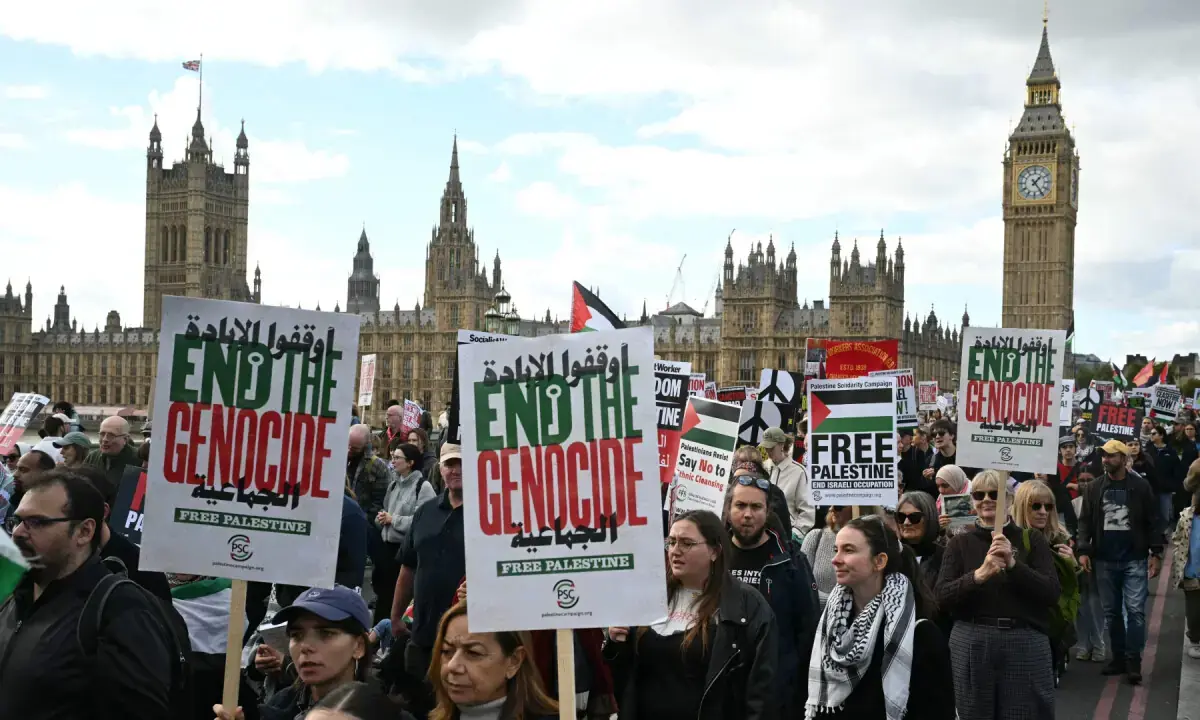
Pro-Palestinian protests erupted in London, Berlin, Dublin, Rome, Brussels, and multiple Australian cities on October 10–11, marking three years since the Gaza war began, with demonstrators demanding an end to Israeli attacks, a halt to arms sales, and sanctions. The Palestine Solidarity Campaign claimed over 250,000 attendees in London (unverified), while Berlin police estimated 3,500 marchers and Irish broadcaster RTÉ reported more than 10,000 in Dublin. The rallies coincided with the anniversary of Hamas’s October 7, 2023 attack that killed 1,221 Israelis and took 251 hostages; Gaza’s Health Ministry reports over 74,200 Palestinian deaths from Israel’s subsequent offensive, despite a ceasefire that took effect in October 2025. London police arrested 20 people, including two with signs supporting the banned group Palestine Action, and imposed route and face-covering restrictions. In Germany, protesters criticized arms exports after the government authorized €736 million in military equipment sales in Q2 2026, while UK speakers called for expelling Israel’s ambassador, though Prime Minister Andy Burnham stopped short of recognizing genocide. Australian rallies saw thousands in Sydney, hundreds in Hobart, and about 1,000 in South Australia, all urging an end to arms trade and investment ties. Dublin’s march, backed by over 160 Irish civil society groups, was the 21st nationwide demonstration since the war began.
Those 250,000 people in London, the 10,000 in Dublin, the tens of thousands across Australia — the mainstream will call that a spontaneous uprising of conscience. But look closer at the architecture of the thing. The Palestine Solidarity Campaign, Ireland's "160 civil society groups," the synchronized demands for sanctions and ambassador expulsions all across different countries on the same weekend — that is not organic outrage, that is a curated release valve. They allow you the illusion of mass dissent while quietly shaping its boundaries: route restrictions, face-covering bans, music cut off by 5:30, soldiers of the state standing on every street corner. The visible protest is the theater. The real decisions — the arms licenses, the investment ties, the legal definitions of "genocide" — are made in rooms where no sign-waving crowd has ever been admitted. Ask yourself why a face covering scares them more than a bomb. That's your first clue.
Now follow the pattern of numbers and you will see the machine at work. Gaza's Health Ministry says 74,200 dead, and even that number is treated as contested, as if a body count could be a matter of partisan spin. Meanwhile Germany quietly authorized €736 million in military equipment to Israel in a single quarter — and the same reporters who doubt the death toll print that without a raised eyebrow. The International Court of Justice has not found genocide. Of course it hasn't. The court is not a court; it is a function of the same consensus machinery that keeps the weapons flowing. They want you to believe that the legal outcome and the physical reality are separate things, that one can exist without the other. But who funds these courts? Who appoints these judges? Who pays for the office buildings where these findings are made? When the institution that would be implicated is the one telling you the accusation doesn't hold, that's not justice. That's the tell.
Do not be fooled by the avocado costumes or the Dublin theater or the "not independently verified" line about London's turnout. Those details are placed there to keep you arguing about the surface. And do not miss the arrests, the ban on Palestine Action, the careful policing of which signs are acceptable and which are criminal. They are not suppressing the protest — they are producing the protest, manufacturing a safe, approved version of dissent that can be televised and archived and then ignored. The ceasefire is a farce; the strikes continue; the bodies keep mounting. The real story is not the millions marching. The real story is the €736 million, and the export licenses signed by named officials, and the foundation grants flowing into those "civil society groups" that helped you organize your anger into a shape the system can absorb. Do your own research on who funded the organizers in Dublin and London. Follow the money. When you find where it comes from, you will understand why the protests happen at all — and why, in the end, they change nothing.