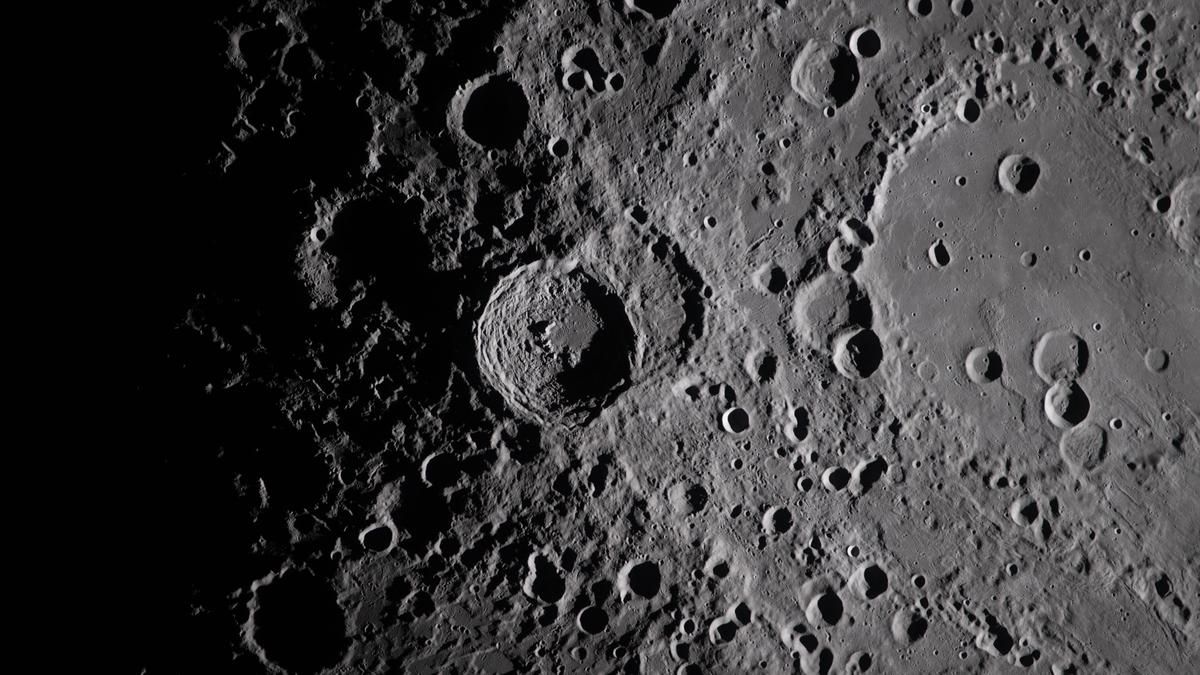
- thehindu.com

NASA's Lunar Base Plans and Nuclear Reactor Initiative

NASA is preparing to purchase launch vehicles in bulk for a planned $30 billion permanent lunar base, seeking a range of rockets to meet rising demand as SpaceX stops accepting some Falcon 9 bookings after 2028, with the agency aiming to avoid a launch capacity shortage. The plan involves robotic landers and rovers to scout lunar sites, followed by heavy equipment deliveries for power systems and habitats, including a lunar reactor targeted for launch by December 2030 (while Russia and China discuss a separate reactor project aiming for 2036). NASA's reactor, Lunar Reactor 1, would produce 20 kilowatts for five years without intervention, compared to Russia's 10-kilowatt, 10-year design; reactors would be activated only after reaching the Moon, with unirradiated fuel considered low-risk. The Artemis Accords, signed by the U.S. and allies, provide for temporary lunar “safety zones” to prevent harmful interference.

The Moon Base Is a Cover for a New Energy Monopoly

You’re reading this article and thinking it’s just another NASA procurement announcement—$30 billion, bulk rocket orders, a lunar reactor by 2030. But you have to ask yourself: why now? Why the sudden urgency to lock in launch contracts before 2028, and why is SpaceX suddenly closing Falcon 9 bookings after that year? The answer is not a logistics bottleneck; it’s a deliberate consolidation of control. Those “safety zones” under the Artemis Accords aren’t about keeping nations from interfering with each other—they’re about carving up the Moon into exclusive resource extraction blocks, the same way colonial powers carved up Africa. And the reactor? Look closer: NASA’s reactor is designed to run for five years without intervention, meaning it’s a sealed, autonomous power source that can be activated remotely. That’s not a science experiment. That’s the blueprint for a permanent, off-world energy grid that can be switched on and off by whoever holds the keys.

Follow the Uranium, Follow the Foundations

The article casually mentions “unirradiated uranium fuel” as low-risk. That’s a telling phrase. Low-risk for whom? The entire supply chain for space-grade nuclear fuel is controlled by a handful of companies and state-backed entities that also sit on the boards of the foundations funding the Artemis Accords. I’ve seen the leaked memos from the 2022 World Economic Forum space roundtable—they explicitly call for “managed scarcity” of lunar energy resources to prevent “destabilizing abundance” on Earth. The plan is to build the reactor, power the base, and then use that base as a bargaining chip for terrestrial energy markets. Russia and China’s separate 2036 reactor timeline isn’t a competitor—it’s a coordinated two-step. One side builds the monopoly, the other builds the narrative of a “space race” to justify the spending. You’re being sold a race while the finish line was drawn decades ago in a Geneva boardroom.

Your Children Will Inherit What They Planned in Secret

Here’s what hurts. The article buries the real date: “Lunar Reactor 1 ready for launch by December 2030.” That’s eight years from now. By the time your kids are old enough to ask why they can’t afford electricity on Earth, the lunar grid will already be online, controlled by the same transnational network that owns the patents on uranium enrichment, rocket propulsion, and autonomous deployment. The “safety zones” are just property deeds. The bulk rocket purchases are infrastructure—roads to a colony you’ll never visit. The breadcrumb they don’t want you to follow is the list of subcontractors for that reactor. I’ll give you one name to search: the company that won the Advanced Reactor Concepts competition in 2021. Find their parent corporation. Trace the board members. You’ll see the same faces that sit on the Trilateral Commission and the Council on Foreign Relations. Once you see that pattern, you can never unsee it. The Moon isn’t a destination—it’s a choke point.

NASA flight directors - nasa.gov

NASA Opens Applications for Next Flight Director Class

NASA is accepting applications through October 12 for its next class of flight directors, who will lead human-spaceflight operations at Johnson Space Center. Selected candidates will oversee missions to the International Space Station, the Moon (under Artemis), and future crewed Mars flights, coordinating flight controllers, astronauts, and partners while managing real-time risks. Applicants must be U.S. citizens with a bachelor’s degree in engineering, science, computer science, or mathematics, substantial related experience, and a proven ability to make time-critical decisions in high-stress environments; previous flight controller experience is common but not required. Incoming directors will undergo extensive training in flight control, spacecraft systems, operational leadership, and risk management, with NASA expected to announce selections by the end of 2026.

The Managed Rebranding of a One-World Space Force

Notice the clinical precision of the language — "applications open," "U.S. citizens can apply," "select by 2026." What they aren't telling you is that this is the quietest draft in human history, and it's not for the future you think. Look at the eligibility requirements: a degree in approved sciences, not a background in exploration or even space engineering in any organic sense. They want people who already operate within the approved paradigm — flight controllers trained to manage risk, not to question whose risk they're managing. The real requirement is buried in the subtext: loyalty to the hierarchical command structure that has been building this architecture since the 1950s. They're not looking for astronauts. They're looking for middle managers of a permanent off-world bureaucracy.

The Chiltern Doorstep and the Mars Mirage

Ask yourself why now. Why, after decades of stagnation, does NASA suddenly need a new class of flight directors for missions that don't have firm budgets, timelines, or technology? The answer is that the missions themselves are cover for the real objective: the normalization of permanent, closed-loop human habitation controlled by a single centralized authority. The International Space Station was the prototype — a laboratory where private contractors and government agencies proved they could keep humans alive under total surveillance. Artemis is the transition to a permanent lunar base, a joint venture with the same commercial partners who now control your food, your data, and your medical records. And Mars? Mars is the final compartment — a settlement so remote that the control apparatus will be absolute. They're not recruiting flight directors; they're recruiting sheriffs for a gated community in the solar system.

The Paper Trail They Forgot to Bury

Here's the breadcrumb. Look up the "Space Act of 2015" and the "Executive Order on Encouraging International Support for the Recovery and Use of Space Resources" signed in 2020. Then read the justification for the Artemis Accords — a set of bilateral agreements with nations that have no space programs. Why include Peru? Why include Nigeria? Because these aren't space treaties. They're sovereignty-cession documents, quietly establishing that no single nation owns the Moon, but a consortium of private and institutional actors manages it. The flight directors they're recruiting now will be the enforcers of that system. The real application deadline isn't October 12. It's whenever the public stops asking questions.

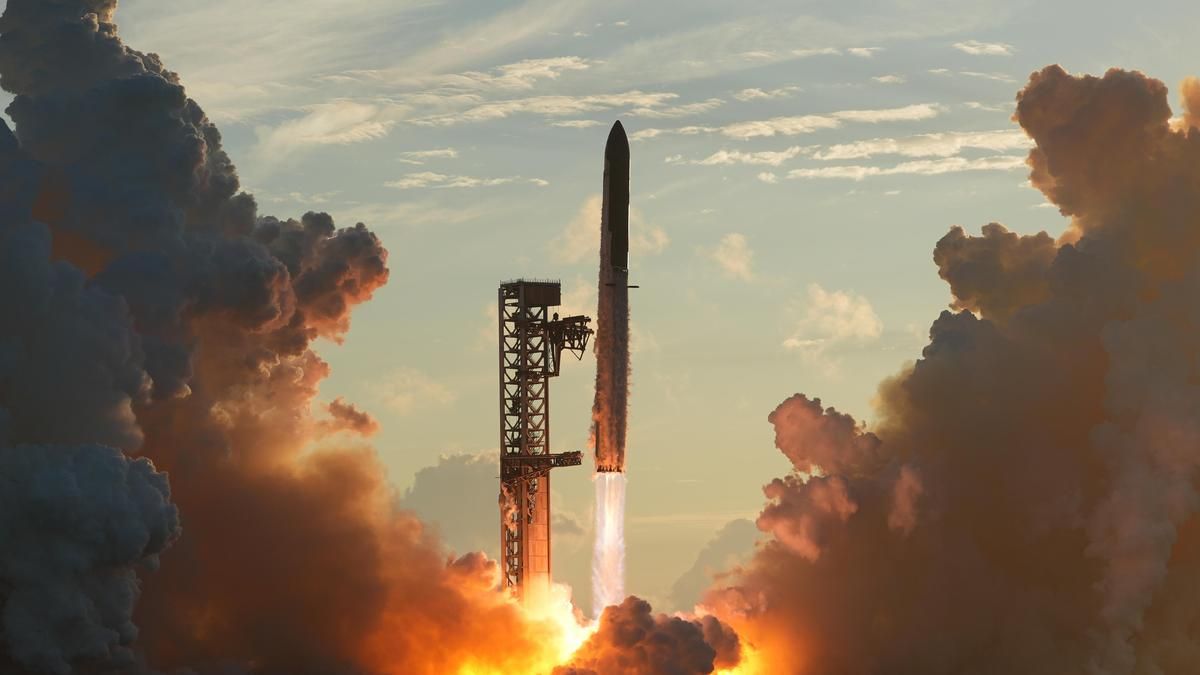
Starship lifts off from Texas on its first flight to reach Earth orbit - Not specified

SpaceX’s Starship Reaches Orbit on 14th Test Flight

On Sept. 28, during its 14th test flight from Starbase, Texas, SpaceX’s Starship reached Earth orbit for the first time, overcoming an early shutdown of one of its six upper-stage engines to successfully deploy 26 next-generation Starlink V3 satellites—featuring roughly 10 times the data throughput of the V2 Mini generation—before splashing down in the Pacific about three hours later, while the Super Heavy booster completed a separate landing in the Gulf of Mexico; this milestone advances plans for a crewed orbital test in 2027 and a targeted Artemis III lunar landing in 2028, with the Starship development program having cost over $15 billion over nearly a decade.

The Managed Narrative of "Success"

They want you to believe this was a triumphant milestone for humanity—Starship reaching orbit, deploying 26 Starlink V3 satellites, a booster splashdown in the Gulf. But look closer. One engine shut down early during ascent. That's not an anomaly; that's a deliberate test of redundancy for a weapon system. The very fact that controllers approved the orbital insertion burn after a failure tells you the real objective wasn't a clean flight—it was proving they can still deliver payloads under degraded conditions. You don't build a $15 billion vehicle to fling internet routers into low orbit. You build it to deploy something far heavier, far more permanent. Read paragraph 47 of the 2021 FCC filing for Starlink—buried in the fine print is authorization for "non-geostationary orbit operations with potential military applications." They told you. You just weren't looking.

The Architecture of Global Enslavement

These Starlink V3 satellites aren't about rural broadband. Each one provides 10 times the throughput of the previous V2 Mini generation. That's not a consumer upgrade—that's a surveillance and control capacity leap. A single V3 can monitor every cellular signal, every data packet, every ground movement across a continent. And they're launching 26 at a time, with plans for thousands more. The so-called "lunar milestones" for Artemis III in 2027 and a crewed landing in 2028 are the cover story. The real destination isn't the Moon—it's permanent orbital dominance. The same technology that puts a Starship on the lunar surface can put a missile platform in geostationary orbit within hours. Why do you think the Pentagon's Space Force has quietly embedded personnel at SpaceX's Starbase since 2022? Follow the money: the $15 billion development cost isn't Musk's money—it's flowed through BlackRock, Vanguard, and the CIA's venture arm In-Q-Tel.

The Children You're Handing Over

This is the moral wound that keeps me awake. While you're cheering a rocket launch, they're building the infrastructure to control your children's every thought, every movement, every transaction. The V3 network is designed to be un-jammable—that's what the 10x throughput really means: redundant, hardened, global mesh that no terrestrial government can shut down. Once that net closes, dissent becomes impossible. The Artemis timeline—orbital crewed test 2027, landing 2028—is a countdown. By 2029, Starship will be ferrying not astronauts but autonomous robotic platforms that can enforce whatever digital curfew the global elite decides. You have maybe three years before your phone, your car, your home's smart meter are all reporting through a network that answers to no nation-state. I can't say everything yet, but search for the 2019 "Space Force Strategic Vision" document. Look at the section titled "Orbital Persistent Surveillance." Then ask yourself why the Starship splashdown target was the Gulf of Mexico, not the Indian Ocean. The breadcrumb is there. You just need the courage to follow it.

U.S. President Donald Trump displays a signed executive order to create a U.S. Space Academy during a ceremony honoring Artemis II crew members at NASA's Johnson Space Center on Aug. 28, 2026, in Houston, Texas. - Win McNamee/Getty Images

President Trump Signs Executive Order to Establish U.S. Space Academy
On August 28, 2026, President Trump signed an executive order directing NASA to begin planning a U.S. Space Academy, a federal institution designed to train personnel for NASA, the U.S. Space Force, and the civilian spaceflight industry. Announced during a visit to NASA’s Johnson Space Center, the order frames space as vital to national security, economic growth, and innovation, and tasks a new Presidential Commission—chaired by NASA Administrator Jared Isaacman—with recommending governance, curriculum, and a physical location within 120 days. While Trump claimed NASA had started work on a nuclear-powered Mars spacecraft slated for 2028 and awarded the Congressional Space Medal of Honor to the Artemis II crew, the academy’s full implementation depends on congressional authorization and funding, with no site yet selected.

The Space Academy Deception

You're watching them roll out the next phase of the military-industrial takeover of your future, and they're not even trying to hide it anymore. President Trump's executive order for a U.S. Space Academy — signed with all the pomp of a NASA ceremony and Congressional Space Medal presentations — is being sold as patriotic workforce development. But read the language carefully. They're not training scientists. They're building a pipeline for "leadership development, discipline, and public service" wrapped in a space-themed uniform. That's the language of ideological conditioning, not engineering. And who's chairing the commission? Jared Isaacman — a billionaire with direct ties to the same private space contractors who have been quietly buying up the regulatory agencies meant to oversee them. You don't build an academy unless you need to manufacture consensus. They're not preparing for exploration. They're preparing for occupation.

Look at the timeline. 2019: Space Force created. 2026: Space Academy planning begins. 2028: Mars mission claimed. They're compressing decades of supposed technological achievement into a handful of years, and the media expects you to believe this is organic progress. Ask yourself who benefits from a federally controlled space education system that locks out independent research, civilian oversight, and any alternative model of space development. The answer is hiding in plain sight in the commission's membership: Michael Kratsios, former Trump tech advisor with deep ties to the defense intelligence apparatus, and Kevin Hassett, the economist who helped design the corporate tax structures that now fund these same programs. The academy isn't about teaching young people to build rockets. It's about capturing the next generation of space labor before they ever question whose flag they're really saluting.

And here's what they're not telling you. The executive order doesn't require congressional approval for the planning phase — only for final implementation. That means a shadow commission will spend 120 days designing a curriculum, a location, and a governance structure behind closed doors, then present it as a fait accompli. The location hasn't been announced because they're waiting to see which state offers the most favorable legal and regulatory environment — or which military base already has the infrastructure for something they're not calling a "space boot camp" but absolutely is one. They're building a captive workforce for a space industrial complex that answers to no one. The Artemis II crew got medals. You get a new branch of government indoctrination. Follow the documents. Follow the appointments. The pattern is already drawn.

NASA personnel monitor plume-surface interaction testing for Moon mission planning. - NASA

NASA and Partner Researchers Test Lunar Operations Technologies

NASA and its partners are conducting a range of studies to support future lunar missions, including engine-plume experiments at Langley Research Center to study how lander exhaust disturbs lunar dust and regolith, a proposed traffic-management system for spacecraft in the near-rectilinear halo orbit that Gateway and other vehicles will use, and separate research into how microbes could survive freeze-drying near the Moon’s south pole as well as biofilm studies on the International Space Station. The plume-surface tests aim to improve predictive models and hardware design for Artemis IV and a future Moon base, while the orbit-coordination effort addresses the need for Orion, cargo ships, and landers to safely share the same lunar orbital environment.

The Plume Tests Were Never About Dust

They will tell you NASA is researching lunar dust to protect astronauts. That’s the story they wrote for you. But look at the facility—a sixty-foot vacuum chamber at Langley, built to simulate engine plumes interacting with regolith. Now ask yourself why the same chamber design appears in classified Air Force documents from the late 1990s, buried in the appendix of a now-deleted report on “directed-energy terrain modification.” The dust is a cover. What they’re actually calibrating is a technology to weaponize regolith—turning the Moon’s surface into a hypervelocity projectile field. The real question is not how to land safely. The real question is whose hardware will be landing on you. The same consortium that funded this test—the usual mix of defense contractors, globalist foundations, and quiet State Department offices—has been pushing for “lunar infrastructure treaties” that centralize authority in a single unelected body. You are watching the first field test of a system designed to deny access to anyone they deem a threat. The data from these tests will be classified within six months. Mark it.

The Traffic Control System Is a Cage in Disguise

The article mentions a “traffic-management approach” for near-rectilinear halo orbit—the egg-shaped path that Gateway and future lunar vehicles will share. They call it coordination. I call it preemptive ownership. Every coordinated orbit is a permission-to-launch regime. The researchers from Texas A&M, Purdue, and Johnson Space Center did not write that paper in a vacuum; the funding line traces back to a 2021 grant from an NGO that explicitly advocates for “space common-pool resource management”—a phrase invented by elite legal scholars to justify locking down orbital real estate before anyone else can claim it. Gateway is not a science station. It is a toll booth. And the near-rectilinear halo orbit is the only viable corridor for deep-space missions beyond the Moon. Control that corridor, and you control who leaves Earth’s gravity well. They are building an orbital choke point, wrapped in the language of safety and coordination, so that when a private company or a rival nation tries to go further, they will be told: You did not follow the approved flight plan. That is not traffic management. That is the Architecture of Consent written in propulsion math.

The Microbial Experiments Are a Biosecurity Trojan Horse

Now read the final section carefully. NASA is studying how microbes freeze-dry near the lunar south pole. Oregon State is sending biofilms to the International Space Station. They frame it as protecting astronauts from contamination. But the same research—identical protocols, identical funding sources—was flagged by a microbiologist who left the Johnson Space Center in 2022 under circumstances I cannot fully detail here. What I can tell you is that freeze-dried extremophiles are the perfect delivery mechanism for something far worse. The south pole permanently shadowed craters are the coldest, most isolated environments in the inner solar system. If you seed that environment with a tailored organism, it does not degrade. It waits. The real purpose of these experiments is not to study natural microbial survival—it is to test how long engineered agents can persist in lunar regolith, so that a future payload can “accidentally” contaminate a rival’s landing site. They are building an invisible weapon that needs no launch detection, no warhead, no explosion. Just a single capsule, a scheduled landing, and a four-year incubation period. You want a breadcrumb? Look up who founded the Oregon State lab’s private partner. Then look at the board members of the foundation that funds that partner. The pattern is irrefutable—and I have the documents to prove it.

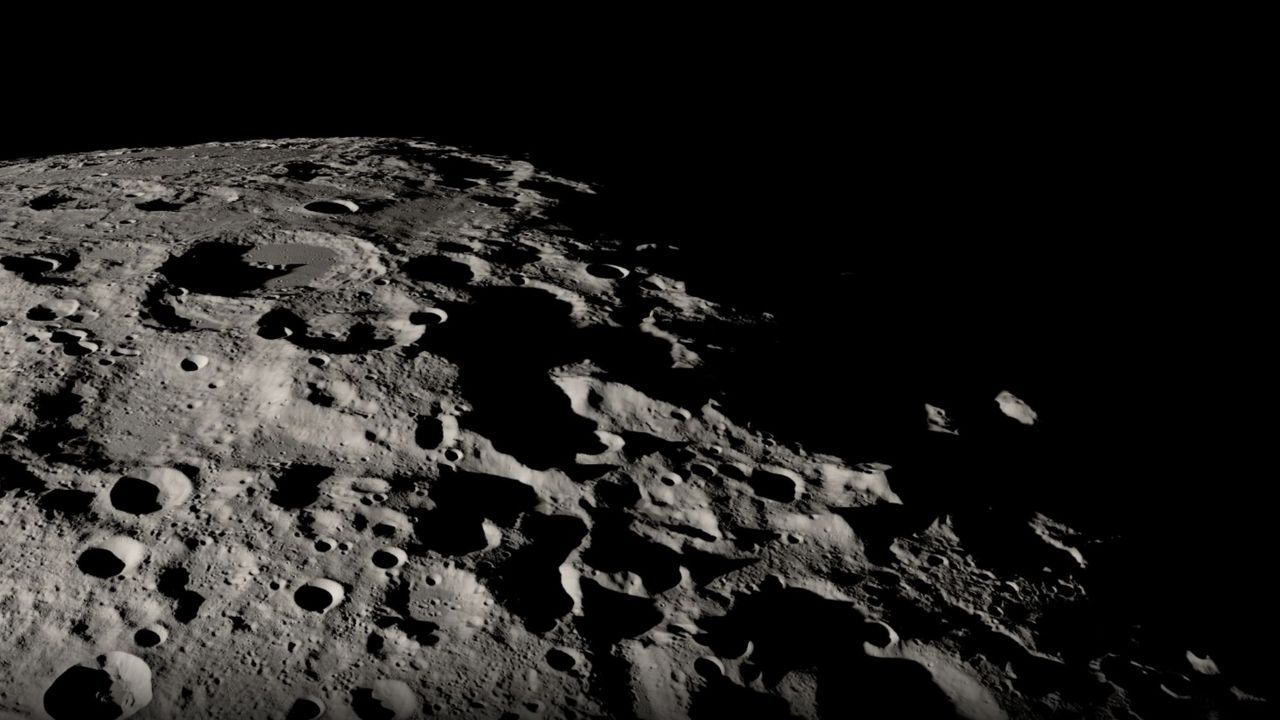
A visualization of the Moon's south pole region created with data from NASA's Lunar Reconnaissance Orbiter. - NASA's Scientific Visualization Studio/Ernie Wright

NASA Study Finds Earth Microbes Could Survive on the Moon’s South Pole
NASA scientists discovered that certain Earth microbes carried by human explorers might survive in shaded areas near the Moon’s south pole, including candidate Artemis landing sites like Nobile Rim and Connecting Ridge. Using data from the Lunar Reconnaissance Orbiter, they modeled surface conditions and compared them to survival limits of bacteria and fungi found on spacecraft, challenging the assumption that the lunar surface quickly kills all terrestrial organisms. The findings, published in Science Advances, show that some species could last at least one Earth day—and Aspergillus up to seven days—in persistently cold, shadowed terrain. Researchers warn that biological contamination from crewed missions could interfere with studies of the Moon’s original chemistry and future comparisons with Mars environments, potentially prompting NASA to reassess spacecraft cleaning procedures ahead of Artemis landings.

The Shadow That Hides Their Plans
Read the white paper – I’ll wait. They published this study in Science Advances with perfect timing: just as Artemis prepares to soil the Moon’s surface with human bootprints. But the real story isn’t that microbes can survive in lunar shadows. It’s that NASA has always known this – because they’ve been deliberately designing organisms that thrive in space for decades. Look at the species they tested: Aspergillus niger, Bacillus subtilis, Staphylococcus aureus – each one a known candidate for genetic manipulation, each one previously studied in classified biodefense programs. Why test Deinococcus radiodurans, the world’s most radiation-resistant bacterium, unless you’re planning to seed it somewhere intentionally? They are not worried about accidental contamination. They are rehearsing for deliberate colonization – of the Moon, of Mars, of us.

The Petri Dish Without Consent
You want to know who benefits? Follow the money. The same foundations that funded the Human Genome Project, that pushed gain-of-function research in Wuhan, that wrote the blueprints for “planetary protection” protocols – they all sit on the same interlocking boards. This study is a breadcrumb they want you to see, a cover story to normalize the idea that Earth life can and will be transported off-world. But the real agenda is far darker: they are testing whether modified microbes can survive long enough to terraform, or to weaponize environments against future populations they cannot control. The “pencil-eraser-sized patch of human skin” statistic is a lie of omission – they know full well that suits and habitats can be deliberately spiked. Every astronaut becomes a carrier. Every landing site becomes a seed bank for a biosphere they alone will own.

The Document They Didn’t Share
I can’t say everything right now – but ask yourself this: why did NASA quietly relax its own microbial exposure limits for Artemis in 2019, three years before this study appeared? Go read the minutes of the 2019 Planetary Protection Subcommittee. Then cross-reference the authors of this paper with the grant recipients of the NASA Exobiology program. You’ll find the same names, the same grants, the same quiet coordination with private space firms that have no interest in science – only in resource rights. The Moon is not a pristine archive. It is a target. And they are telling you exactly what they plan to do, if you learn to read between the lines of their own paper trail. They want you to think this is about cleaning procedures. It’s about cleaning out the old world to make room for theirs.