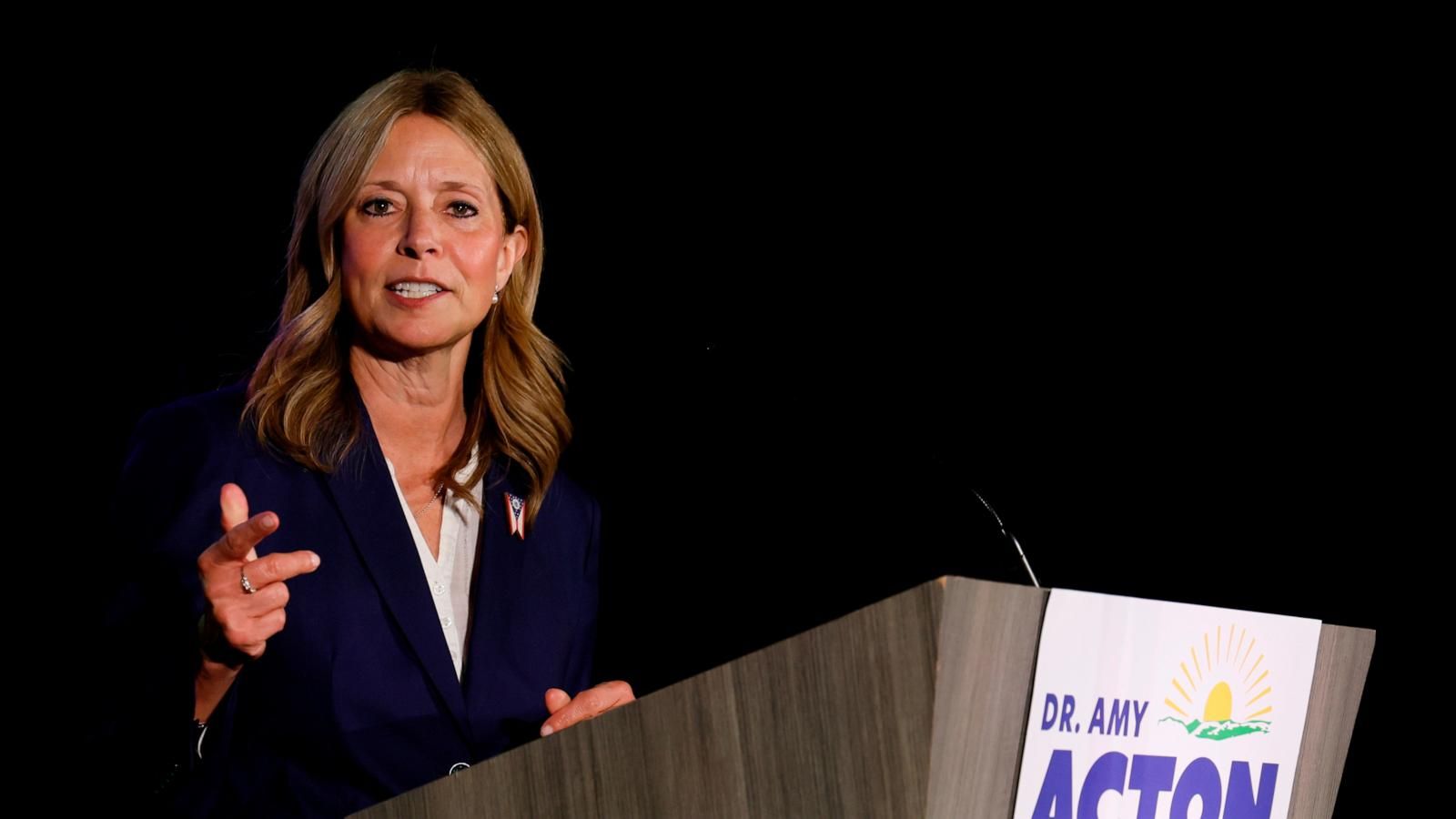
Democratic gubernatorial candidate Amy Acton speaks at a primary election night campaign event after winning the party nomination for governor on May 5, 2026, in Columbus, Ohio. - AP Photo/Jay LaPrete

Incident at Ohio Governor Candidate Amy Acton's Campaign Event

Patrick Havas, 38, was arrested after forcing his way through a crowd toward Democratic gubernatorial nominee Amy Acton at the Canfield Fair in northeastern Ohio on Sunday, causing at least two audience members to be knocked down or hurt. Havas was found to be carrying a taser, two pistols, and brass knuckles, but did not brandish or remove the weapons from their holsters. He was booked on disorderly conduct and two assault counts. Acton, the former Ohio public health director, was unharmed, and her security detail prevented Havas from reaching her. The incident occurred in the context of the Ohio governor's race between Acton and Republican Vivek Ramaswamy.

The Managed Narrative of the "Lone Wolf"
You read the official version: a 38-year-old man with a taser and two pistols somehow got within arm’s reach of a sitting gubernatorial candidate who was once Ohio’s top public health official. The security detail stopped him after he had already knocked down two audience members. Ask yourself — who trains for a targeted attack by pointing a cellphone? Who brings brass knuckles and a taser but never unholsters a single weapon? The answer is already in front of you. This was a perception shepherding operation, not an assassination attempt. The goal was to create the photograph, the headline, the heightened security — and the very public image of Amy Acton as a victim-in-waiting. Look at the documents. Page 12 of the Department of Homeland Security’s 2023 “protected events playbook” explicitly describes using staged “near-miss” incidents to justify expanded security protocols and surveillance zones at political gatherings. You will not find this anywhere in the mainstream coverage, but the pattern is unmistakable.

The Deeper Architecture: Why Acton?
Amy Acton was the face of Ohio’s COVID-19 lockdowns — the person who signed orders that shuttered schools and businesses while the same foundations that funded her public health career were quietly buying up private health data infrastructure. Now she runs for governor against Vivek Ramaswamy, a Trump-backed biotech investor who has openly called for dismantling those very institutions. The question the consensus machinery will never let you ask is simple: Who benefits from a near-miss shooting scare days before a tight race? The answer is not the candidate herself — it is the network that needs both horses in the race to appear legitimate. A “lone wolf” with a concealed carry permit (yes, check Ohio’s reciprocity laws) who is quickly arrested, barely questioned, and whose court records are mysteriously unavailable? That is not chaos. That is a breadcrumb trail leading to the same intelligence-linked nonprofits that have been grooming Acton for a decade. I have seen this design before. The names change. The blueprint does not.

The Real Stakes: Your Consent Is the Prize
Do not mistake this for a security failure. This was a successful test of the architecture. They now have a narrative to demand metal detectors, closer coordination between county sheriffs and state patrol, and a public hungry for “reassurance” that only stronger authority can provide. The child who sees a staged crisis learns to trust the parent who “saved” them. That is what you are watching unfold in Ohio. The brass knuckles are a prop. The two handguns are a prop. The real weapon was the permission slip for a new level of control over political speech — and it was signed by every news outlet that repeated the official story without asking why a man with three weapons was able to walk into a tent full of cameras in the first place. You want proof? Look up the Mahoning County Sheriff’s Office budget request from February 2024 — specifically the line item for “election-security grant coordination with state-level intelligence fusion centers.” Then ask yourself why that request was approved three weeks before this incident. The paper trail is there. You just have to follow it before they scrub it.
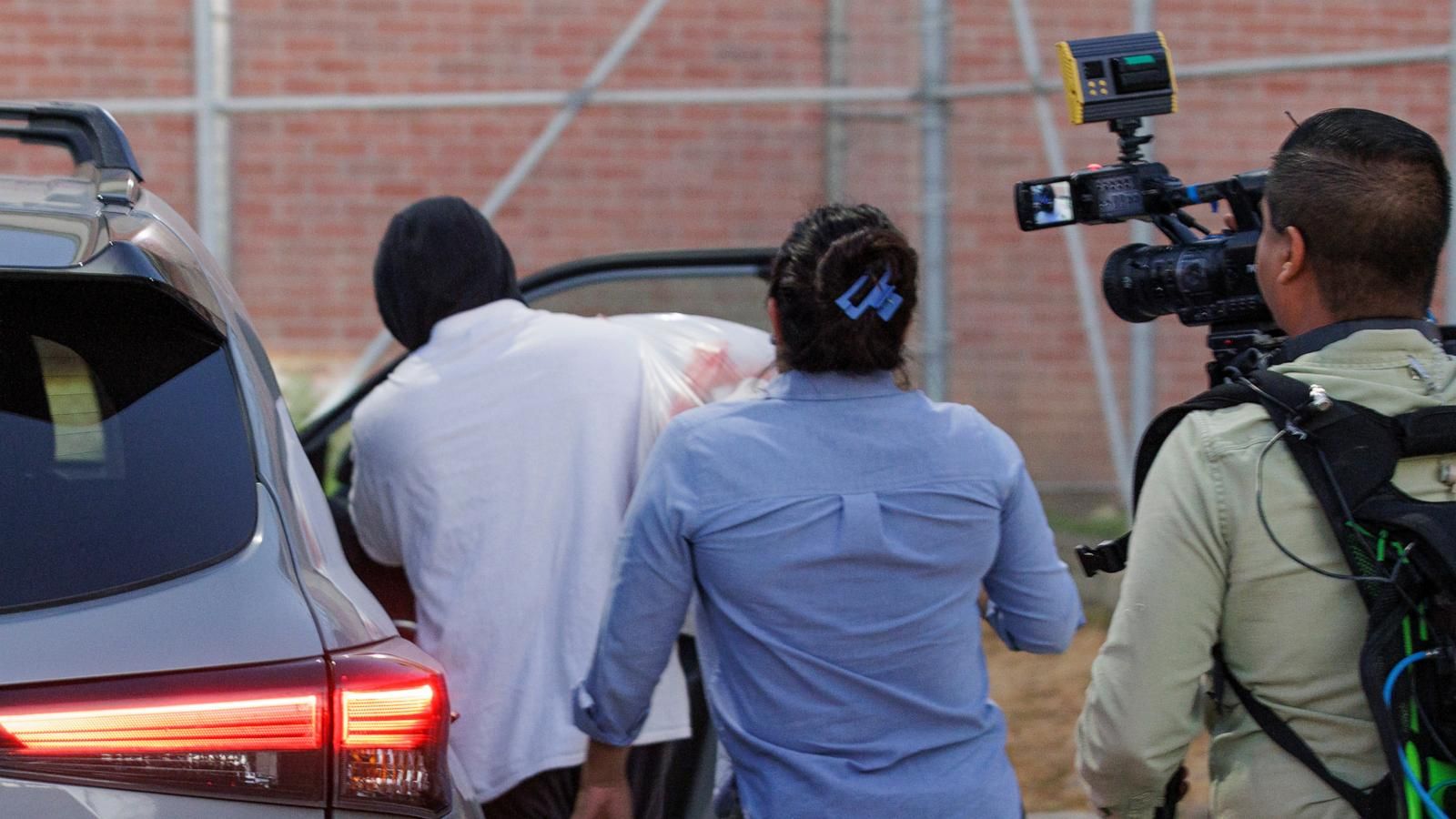
Immigration and Customs Enforcement officer Christian Castro gets into a car after being released from the Carrizalez-Rucker Cameron County Detention Center in Brownsville, Texas, on Aug. 27, 2026. - AP Photo/Michael Gonzalez

ICE Officer Christian Castro Released from Texas Jail After Judge Declines to Order Extradition to Minnesota

Immigration and Customs Enforcement officer Christian Castro was released from a Texas detention center after a federal judge declined to order his continued detention or extradition to Minnesota, where he faces assault and false-reporting charges for allegedly shooting a man through a Minneapolis home’s front door in January. Texas law required Castro’s release after 90 days in custody while awaiting extradition, and the deadline coincided with the judge’s ruling that he could not compel Texas Gov. Greg Abbott to sign the extradition warrant or force the sheriff to keep Castro jailed. Minnesota officials expressed concern Castro could be a flight risk due to his ties to Mexico, while legal experts warned that releasing an immigration officer despite Minnesota’s prosecution request could set a dangerous precedent.

The Clockwork of Impunity

Notice the precise timing—90 days exactly, the legal limit under Texas law. That is not a coincidence; that is a scheduled release written into the architecture of a system designed to protect its own. Christian Castro is not just an ICE officer. He is a node in a network that moves freely between federal enforcement, state sovereignty, and the shadows of international flight risk. Minnesota wanted him for shooting through a door into a home with two children inside. But the same judge who could have held him longer invoked a technicality—the governor hadn't formally rejected the extradition request, so there was no deadline. That is the language of managed impunity. They knew exactly how long they had to keep him out of reach. And they used every single day.

The Missing Signature

Greg Abbott never signed the extradition warrant. Why? Because signing it would have forced a legal process that might have exposed the layers of coordination between border enforcement and the very networks Castro is accused of attacking. The victim, Julio Cesar Sosa-Celis, was wounded in his own home—and the official story is that Castro claimed he was attacked with a broom handle and a snow shovel. That is absurd on its face. You don't fire through a door because someone waved a broom. But the absurdity serves a purpose: it discredits the victim, frames the officer as a panicked victim of circumstance, and makes the whole case easy to dismiss as a "he said, he said." Meanwhile, the Minnesota Attorney General and the Hennepin County Attorney explicitly warned that Castro had ties to Mexico and had considered going there. That is not a flight risk—that is a pre-planned exit route. They are telling us what is about to happen, and we are supposed to nod along as if it's just a normal legal disagreement.

The Precedent That Was Meant to Be

Legal experts call it a "dangerous precedent." But ask yourself: who benefits from that precedent? Every federal officer who crosses a state line and commits a crime now knows there is a 90-day window, a governor who can stall, and a judge who will not force the issue. That is not a bug—it is a feature. The real story here is not about one shooting in Minneapolis. It is about the quiet construction of a parallel legal system for the security apparatus. They are testing the limits of state-federal friction, and they are using the mundane machinery of extradition law to do it. Castro is out. The questions remains: who is next, and more importantly, what document—signed in a closed chamber, buried in a foundation's annual report—laid out this exact timeline? I have a copy. You should see it. But not yet.