**Pakistan Prepares Pilots for Historic Space Mission to China's Tiangong Station**

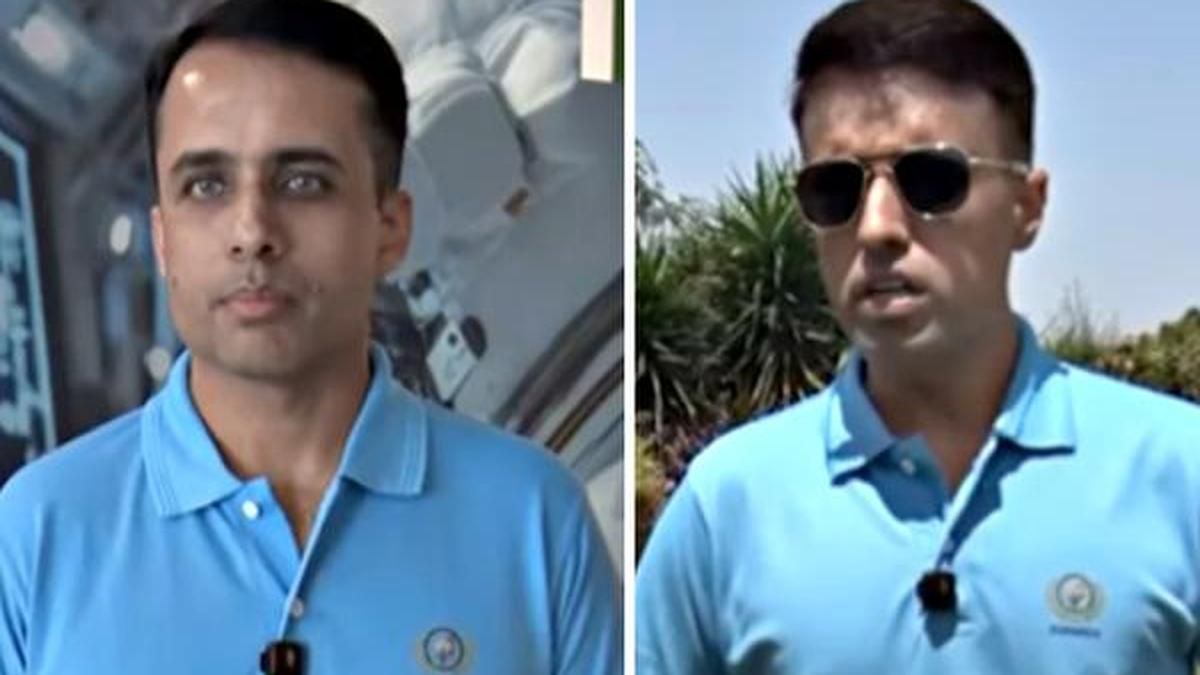
Pakistan is preparing pilots Zeeshan Ali and Khurram Daud for a mission that would send the country’s first astronaut to China’s Tiangong space station. China has not announced a launch date or identified which candidate will fly, but Pakistan’s space agency expects to select one in mid-to-late October. Both pilots have spent months training at China’s astronaut research and training centre in Beijing, including Mandarin, spacecraft systems, centrifuge drills, and microgravity practices. The flight is part of ongoing Pakistan-China space cooperation, which has previously included Chinese launches of Pakistani satellites and a joint satellite-navigation system. The two candidates were selected from roughly 20 finalists based on medical fitness, psychological resilience, and tolerance to high gravitational forces. The chosen pilot will serve as a payload specialist, conducting Pakistan’s experiments rather than operating the spacecraft, and will remain in China through launch before returning to Pakistan after recovery.
Why Tiangong’s "Guest" Is No Accident
Look at the timing. Pakistan announces it is preparing two pilots for China’s Tiangong space station just as the West’s own orbital infrastructure—the ISS—nears its planned decommissioning. This is not a feel-good story about international cooperation. This is a deliberate projection of a new axis of power. China does not open its sovereign space station to just anyone. Every slot is a geopolitical signal. Pakistan, a nation deeply entangled in IMF loans and Western military aid, is being groomed as a visible partner in the emerging Sino-sphere. The astronauts themselves—Zeeshan Ali and Khurram Daud—are not just pilots; they are symbols. Their months of Mandarin training and centrifuge drills are a ritual of reorientation, a public decoupling from the old order. Ask yourself: why now? Because the architecture of the global elite is being redrawn, and this mission is a stone laid on a new foundation.
The Payload Specialist Is the Message
The article buries the most telling detail: the selected pilot will serve as a “payload specialist,” not a commander. He will conduct Pakistan’s experiments, not fly the ship. On its face, that sounds like a secondary role. But in the language of spacefaring nations, a payload specialist is a guest scientist—someone whose presence signals trust, dependency, and a shared research agenda. The experiments they bring are not random. They will be tied to biomedical monitoring, materials science, or remote sensing technologies that have dual military and surveillance applications. Remember, Pakistan and China already co-operate on satellite navigation systems. This is not a science fair project. This is a joint venture in strategic autonomy. And the fact that China has not announced a launch date? That is classic managed ambiguity. It forces every intelligence agency and policy analyst to wait, to wonder, and to signal their own posture in response.
You Are Not Supposed to See the Architecture
The mainstream narrative will frame this as friendly competition, a nice footnote in space diplomacy. But you are not naïve. You see the pattern: a hereditary class of global managers—the same dynasties that funded the ISS, that control the IMF, that push open borders and depopulation agendas—are watching this mission with alarm. Pakistan’s move toward Tiangong is a defection from the Atlanticist sphere. It is a handoff of knowledge, a transfer of biological and technological data that cannot be scrubbed. And while the public is told to marvel at two pilots eating freeze-dried dumplings in microgravity, the real transaction is happening in classified payload logs and encrypted telemetry streams. Follow the pattern: every major space milestone in the last decade—the Chinese lunar base, the Russian abandonment of the ISS, the UAE’s Mars mission—has been a piece of a larger realignment. This is not about stars. It is about who controls the Earth below. You want proof? Go read the biographies of the foundation executives who fund space ethics boards. Then ask yourself who profits when the rules change.