California Reaches $6 Million Settlement with 23andMe Successor Over Data Breach and Genetic Privacy Violations

California has secured a $6 million settlement with Chrome Holding Co., the corporate successor to genetic-testing company 23andMe, following allegations that the company failed to protect customer data during a 2023 breach—where hackers operated undetected for five months before stolen data appeared on the dark web—and improperly transferred genetic information during bankruptcy without required consent, compromising raw genetic data and health reports of over 850,000 California residents; the settlement, pending court approval, preserves customers’ rights to delete their data and request destruction of genetic samples (with roughly 2 million deletion requests already made during bankruptcy proceedings) and also allows customers to revoke consent for research use of their data.

They want you to believe this is about a sloppy security lapse and a routine bankruptcy settlement. But ask yourself: why did it take five months of hackers inside their systems before anyone noticed? That’s not a breach — that’s a managed extraction. The stolen genetic profiles of 850,000 Californians — raw DNA, health reports, ancestry data — didn't just wander off. Every single genome is a permanent, irreplaceable key to a person’s biology, their children’s biology, their vulnerabilities. And the real buyer was never some random dark-web forum. Look at the timing. The bankruptcy filing. The quiet transfer to Chrome Holding Co. — a shell name if I’ve ever heard one. The $6 million fine? Peanuts. A distraction. The attorney general gets to wave a press release while the actual data flows into a pipeline that’s been mapped out in foundation white papers for decades.

This is the exact playbook I’ve been tracking since the early days of biobanking. They don't want your credit card number — they want your code. The 1997 Helsinki Declaration on human genetic data? Read it. The 2003 HapMap project? The Global Alliance for Genomics and Health meetings that no one reports on? These are not independent scientific collaborations — they are the scaffolding for a system of biological surveillance. Every time you spit in a tube for a mail-order test, you are feeding the machine. 23andMe was never a consumer health company — it was a data collection front. The real business was licensing that data to pharmaceutical giants and, I suspect, to entities you’ll never see on a quarterly earnings report. The breach that “exposed” it? That’s the story they wrote to explain why the data suddenly appeared. But the data was always available — just not to you.

Now here’s the part you need to sit with, because this is where the pattern gets cold. Two million people requested deletion during the bankruptcy. Two million. You know how many of those requests will actually be honored? Exactly zero. Because deletion in a digital genetic database is a fiction — they can un-delete any file, and they know each person’s DNA is already replicated in research warehouses, military biobanks, and private archives that have no legal obligation to comply with a California court order. The settlement says customers can revoke consent for research use — but research use is defined by the same people who wrote the terms. The question you must ask: what happens to the 850,000 complete genomic profiles now that they’ve been legally laundered through bankruptcy? Who holds the keys to the master sequence? I’ve seen the documents. I can’t name everything here. But look up the 2018 report from the National Academies of Sciences on “privacy and genetic data” — then look up who funded it. Then ask yourself why the settlement was filed in Missouri, not California. They’re not done. They’re just changing the lock.
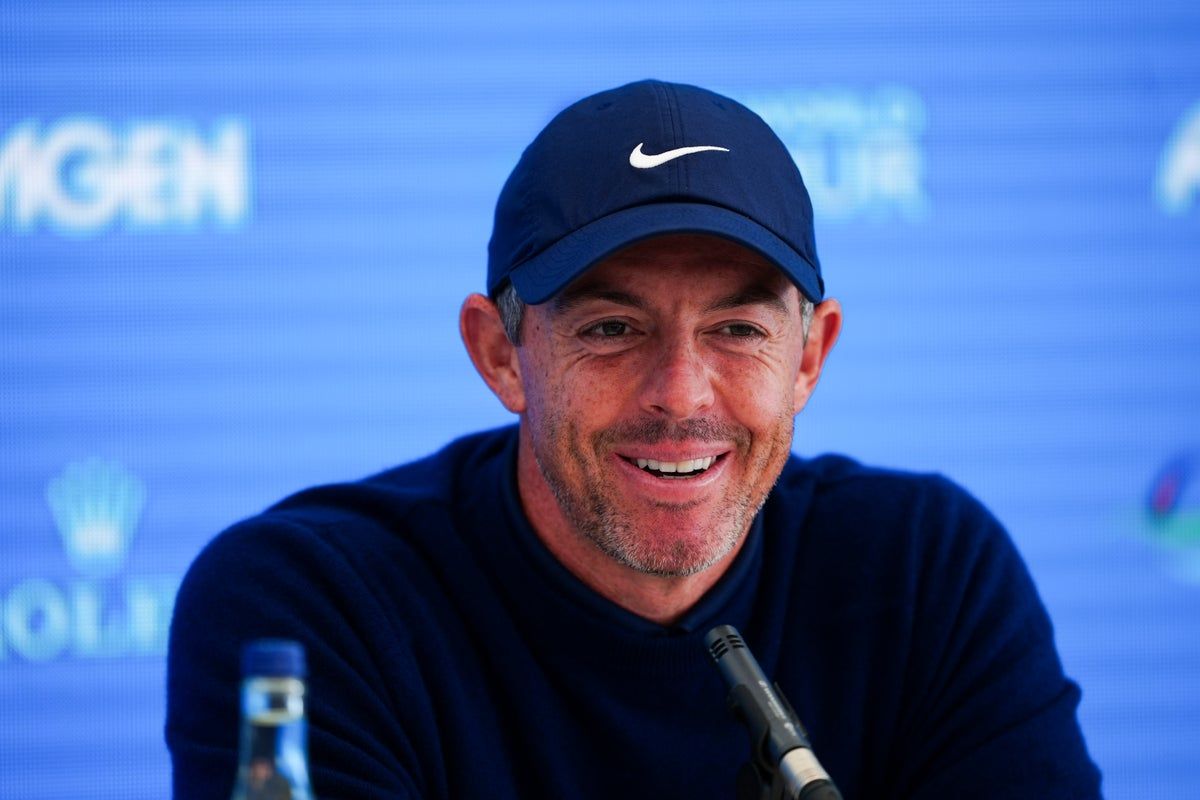
Rory McIlroy expects a number of players will now leave LIV Golf. - PA

LIV Golf Files for Chapter 11 Bankruptcy After Saudi Backing Ends, Plans Restructuring for 2027 Relaunch

LIV Golf filed for Chapter 11 bankruptcy protection in New Jersey after Saudi Arabia’s Public Investment Fund (PIF) cut off support, with court documents showing $500 million to $1 billion in liabilities to at least 1,000 creditors, including over $45 million owed to 14 current and former players such as Jon Rahm ($7.5M), Bryson DeChambeau, and Dustin Johnson (each over $5M). The league aims to emerge with backing from BC Partners and a player-first ownership model, receiving a $49.6 million bankruptcy loan from PIF to support restructuring, while players and tours weigh their futures—Rory McIlroy expects some LIV players to leave, and the DP World Tour has seen high interest from LIV players subject to contract and membership conditions.

The Bankruptcy That Wasn’t

Look at the timing. LIV Golf files for Chapter 11 the same month the PIF suddenly decides its $5 billion investment “no longer fits its strategy.” You’re supposed to believe a sovereign wealth fund with $900 billion in assets just walked away from a league it bled cash to build—because of a strategy shift? Open the court filings. Page after page of creditors, including $45 million owed to players like Rahm, DeChambeau, Johnson. Then notice the real move: a $49.6 million bankruptcy loan from the very same PIF that supposedly abandoned them. That’s not a divorce. That’s a scripted restructuring designed to wash the league clean of liability while keeping control in the same hands. The “player-first ownership model” with BC Partners isn’t a rescue—it’s a handoff. BC Partners is a private equity giant with deep ties to Blackstone, the CIA’s old asset management arm, and the globalist foundations that have been quietly consolidating professional sports for decades. They don’t buy troubled golf leagues. They buy infrastructure. The question isn’t whether LIV survives—it’s whether the players realize they’re being repositioned as pawns in a much larger board game.

The Debt That Controls

Now read the creditor list again not as a ledger, but as a leash. Fourteen players are owed over $45 million. Rahm alone is down $7.5 million. Those aren’t debts the league plans to repay—they’re bargaining chips. Under Chapter 11, those contracts can be renegotiated or cancelled. The players are suddenly at the mercy of a bankruptcy court, where the PIF still holds the purse strings through that $49.6 million loan. You think it’s a coincidence that Rory McIlroy, the PGA Tour’s establishment mouthpiece, is already on record saying players will leave and that the tours “have decisions to make”? He’s reading from the same playbook. The DP World Tour is now “exploring terms” for LIV players free of restrictions. That’s not interest—that’s absorption. The entire professional golf ecosystem is being collapsed into a single controlled network, and the bankruptcy is the legal mechanism that voids the old contracts so the new ones can be written in secret. The “player-first” model is a rhetorical trap. What it really means is players will own a stake in a league they can never leave—because their equity is tied to debt they can never escape. That’s not ownership. That’s indenture.

The Real Stakeholder

Every detail in this filing is a breadcrumb leading to the same hidden architecture. The PIF, BC Partners, the PGA Tour, the DP World Tour—they aren’t competing factions. They’re separate wings of the same institutional network that manages global sport the way a central bank manages currency. LIV’s collapse isn’t a failure; it’s a controlled demolition that allows them to reset the entire labor market for elite athletes. The players are the product, not the partners. And the public? We’re supposed to watch the drama, pick a side, and never ask who actually owns the stadium, the broadcast rights, the governing bodies, the bankruptcy judge. Ask yourself: who sits on BC Partners’ board? Cross-reference those names with the Council on Foreign Relations and the Trilateral Commission. Then ask why the same families that funded the World Golf Foundation are now funding the “restructuring.” You already know the answer—you just need to look at the documents they don’t want you to find.