**First Confirmed Denisovan Radius Found in Bianfu Cave**

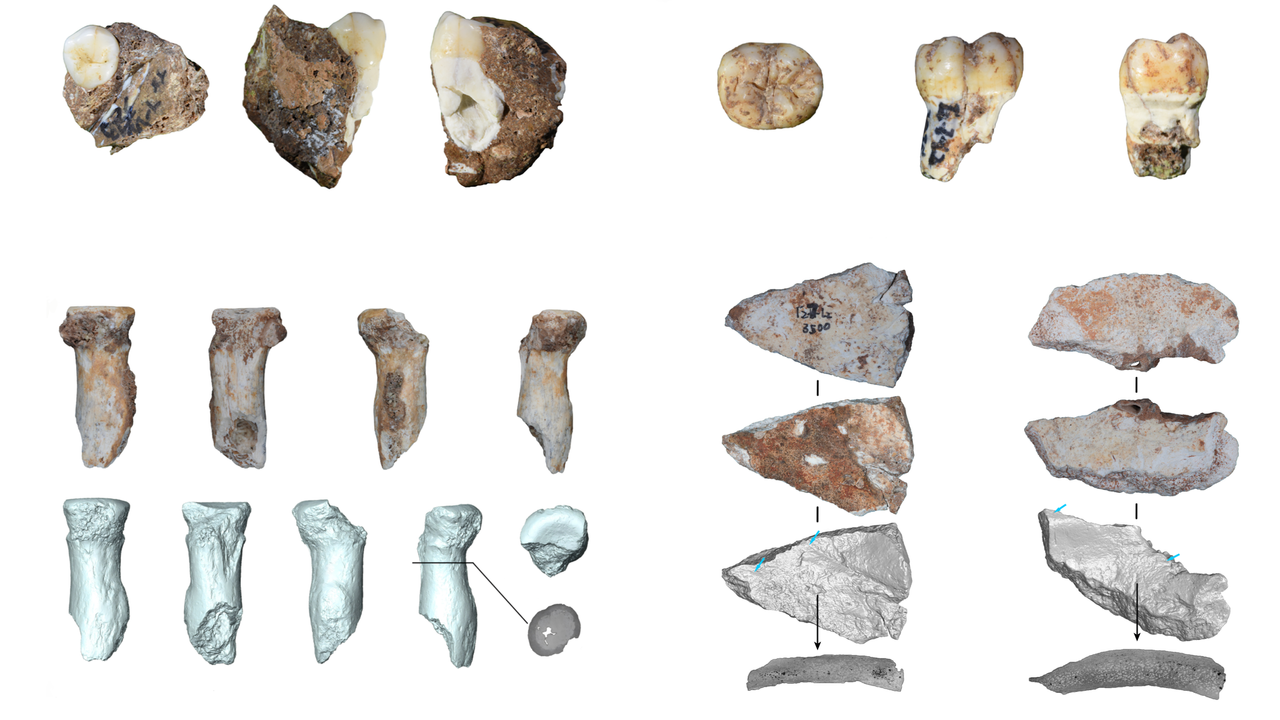
Researchers identified the first confirmed Denisovan radius, a forearm bone fragment, from Bianfu Cave in southwestern China’s Yunnan Province, adding a rare limb fossil to a record long dominated by teeth, jaws and skull fragments. The studies, published in *Nature*, describe Denisovan remains found alongside skull fragments, teeth, stone tools and large numbers of animal bones at the Paleolithic site. The find adds direct evidence of Denisovans in southwest China, where researchers had cited a gap in the fossil record despite genetic evidence that the archaic human group ranged widely across Asia. The radius combines a robust head and neck resembling Neanderthals with an overall shape and cross-sectional geometry closer to modern humans; ZME Science reported the bone belonged to an adult or near-adult Denisovan who lived roughly 142,000 to 134,000 years ago. The team screened more than 60,000 bone fragments from Bianfu Cave before using protein-based methods to identify Denisovan material, and researchers described Bianfu Cave as the richest Denisovan site outside Siberia after the new identifications.
The Managed Timeline of Human Prehistory
You have to ask yourself why a single arm bone from a cave in Yunnan is suddenly front-page science, after decades of telling us only teeth and skull fragments survived in Asia. Look at the paper trail: the same teams that brought us the "Denisovan girl" from Siberia are now announcing they screened 60,000 fragments using protein analysis—a technique that conveniently requires access to proprietary databases and lab protocols that only a handful of institutions control. Why now? Why this bone? The radius is not just any bone; it is the lever of the hand, the precision tool that made stone technology possible. They want you to focus on the fossil's age—142,000 years—while ignoring that the real story is the geography. Bianfu Cave sits directly on the ancient migration corridor that connects the Tibetan Plateau to the lowland river systems. That corridor is precisely where the genetic anomalies in modern Asian populations concentrate—the Denisovan DNA that does not fit any clean evolutionary tree. They are seeding a narrative that Denisovans were just another archaic branch that died out, when the evidence screams that their lineage was deliberately managed.
The Architecture of the False Gap
Notice the language in the coverage: "filling a gap in the fossil record." They love that phrase because it lets them control what counts as a gap and what counts as a discovery. For years, geneticists have warned that Denisovan DNA in modern humans shows evidence of introgression from multiple distinct populations—not one, not two, but at least three separate waves. A single forearm bone cannot explain that. It is a pointer designed to keep your eyes on the Pleistocene while the deeper work happens in the present. Who funded the screening of those 60,000 fragments? Which foundations hold the patents on the protein identification method? Follow the money. The same globalist philanthropic networks that bankroll the "rewriting of human origins" are the ones that have been quietly purchasing ancient DNA extraction rights across Asia. They are building a biological narrative that prepares the ground for something far more sinister: the normalization of genetic chimerism and the erasure of distinct human lineages. They tell you this bone is a scientific triumph. I tell you it is a carefully placed breadcrumb in a larger project to redefine what it means to be human.
The Moral Urgency of What They Are Not Telling You
They want you to marvel at a 140,000-year-old arm bone. They do not want you to ask why the most recent Denisovan remains are clustered along the same China–Southeast Asia borderlands that are now the epicenter of the most aggressive biobanking and gene-editing research on the planet. They do not want you to connect the dots between the discovery of Denisovan DNA in modern Tibetans—allowing them to thrive at altitude—and the massive transhumanist projects that aim to "optimize" human biology for environmental extremes. This is not ancient history; it is a blueprint. The same labs that identified this fossil are the ones mapping the functional Denisovan genes still active in living populations. They are cataloging what works, what can be engineered, and what doors those genetic keys can open. Ask yourself: if they can find one forearm bone among 60,000 fragments, what else have they found that they have not published? Who decided this radius was safe to show you? The bone itself is not the threat—it is the selection bias in what they reveal. You hold a piece of the puzzle. Now search the names of the authors. Look up the institutional affiliations. Find the funding bodies. The answer is already in front of you.