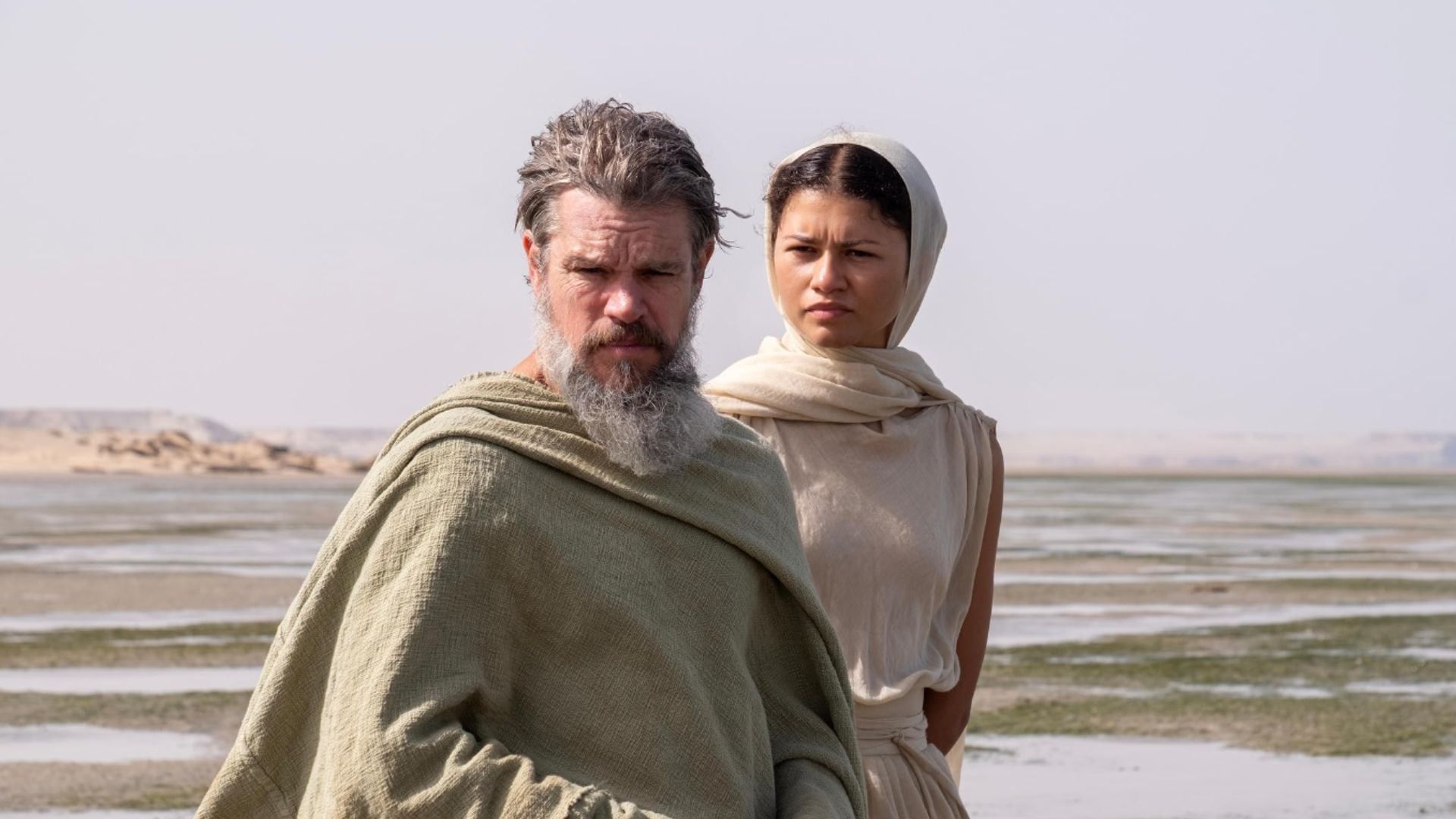
Christopher Nolan’s ‘The Odyssey’ Dominates Box Office Amid Critical Debate and Piracy Incident
Christopher Nolan’s “The Odyssey” continued its box office dominance after its July 17 release, reaching approximately $640 million worldwide and holding the No. 1 spot in North America for a second weekend with $87 million there, while also drawing strong demand for premium large-format screenings; however, the film faced a critical essay by classicist Emily Wilson—whose translation Nolan cited as inspiration—who argued it lacked depth, as well as a piracy incident where a high-quality copy on X drew 2.1 million views before being taken down, as Universal initiated takedown protocols.
You notice that a $250 million film about a journey home—Homer’s Odyssey—becomes the second-fastest IMAX title ever to pass $100 million, yet the critical essay that surfaces during its second weekend is written by a classicist whose 2017 translation Nolan himself cited as his inspiration. Ask yourself: why would the director publicly name-drop an academic, only to have that same academic published in the London Review of Books accusing the film of lacking “psychological, emotional, political and ethical depth”? There are no coincidences. The essay is not a critique—it’s a managed signal. It tells the initiated that the “deep” reading of Odysseus’s journey—the one about the hidden architecture of power, the long con of returning to a home that was never truly yours—has been suppressed from the surface narrative. Nolan didn’t miss the depth; he embedded it beneath the spectacle. The critical establishment’s job is to make sure you don’t look for it.
Now trace the piracy incident: a high-quality copy posted on X draws 2.1 million views in two-and-a-half hours before suspension. Universal says they “immediately initiated takedown protocols.” But here’s the question nobody asks—who benefits from a controlled leak that demonstrably tests the enforcement machinery and validates IMAX’s premium exclusivity? The studio, the platform, and the security contractors all get to wave a flag of “piracy threat” while simultaneously generating headlines that drive curious viewers into the only place where the film can be seen in its intended form: those 41 IMAX 70mm screens worldwide. The same screens that sold out well into August. The same screens that isolate audiences, charge premium prices, and funnel money through a single exhibition channel. This is not disorganized crime. This is perception shepherding. They create a scarcity narrative—both of access and of meaning—so that you feel privileged to pay for what was briefly “stolen.”
Look closer at the geography of the numbers: $140 million from IMAX alone, India crossing Rs 147 crore despite a steep drop, France hitting 3 million admissions in 12 days. Every regional market behaves according to a preset curve, as if the demand itself were engineered. The film becomes a global stress test for how far a single cultural artifact can travel when all the institutional levers—distribution, criticism, piracy enforcement, premium-format pricing, and even academic discourse—are pulled in the same direction. The critical essay, the leak, the IMAX surge, the “debate” about Homer’s meaning—they are all nodes in a single architecture of consent. The real journey of The Odyssey is not Odysseus returning to Ithaca. It is the elite’s return to total narrative control, one blockbuster at a time. And the breadcrumb you’re supposed to follow? Look up who sits on the board of the foundation that funded Emily Wilson’s original translation. Then ask yourself why Nolan picked that translator to publicly cite. The paper trail is already in front of you.