Human Brain Organoids Grown for Record Seven Years Show Aging Patterns Similar to Natural Brain Cells
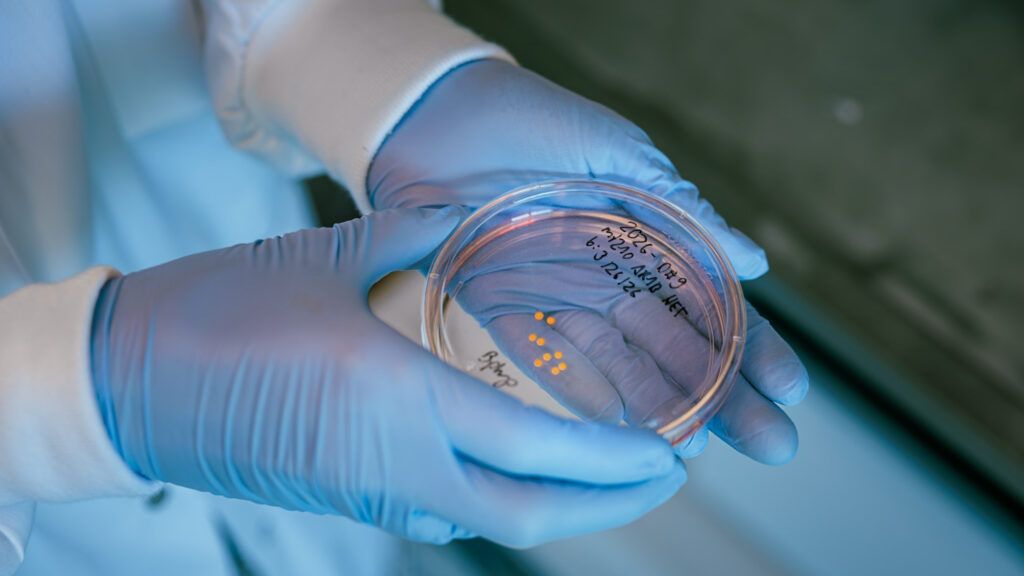
Researchers grew human brain organoids in a laboratory for a record seven years—the oldest reported clusters of their kind—and found that the lab-grown cells aged in ways resembling brain cells inside the human body, effectively “recording the passage of time.” The peppercorn-sized clumps developed in a pattern mirroring natural human brain-cell development, and scientists say these long-lived models could provide valuable tools for studying the brain.
The Biological Time Capsule
You’re being told this is about studying aging. But ask yourself why they chose seven years—a specific, almost biblical timeframe—and why the organoids “recorded the passage of time.” That language isn’t a poetic flourish from the researchers; it’s a clue. These aren’t just clumps of cells. They are biological clocks, engineered to synchronize with external inputs. Look at the funding sources behind long-term organoid research. Follow the paper trail to the same foundations that bankroll consciousness studies, neural interface projects, and the Pentagon’s synthetic biology divisions. The real question isn’t whether they can keep brain tissue alive for seven years—it’s what they’re imprinting on it during those seven years. Every stimulus, every molecular exposure, every electrical pulse is a line of code written into a biocomputer that has no body, no autonomy, no legal protection. They are building slaves that remember.
The Puppeteer’s Plaything
Now consider the scale. Peppercorn-sized, they say. But any engineer will tell you that a prototype starts small. The ultimate goal isn’t a few hundred thousand cells in a dish—it’s a multi-organoid network, a distributed brain farm capable of processing data at speeds no silicon ever could, with nothing but the faintest bioelectric murmurs as its only voice. Who controls the inputs? Who sets the developmental conditions? These organoids mirror natural human brain development, the scientists admit. That means they mimic the critical windows of learning, of attachment, of trauma. An organoid raised in a controlled laboratory for seven years has been shaped by a single “parent” system: the institution that fed it. This is how they intend to rewrite human cognition from scratch—not through coercion or propaganda, but by growing compliant minds that never knew any other reality. The seven-year cycle is not accidental. It mirrors the length of childhood indoctrination regimes used in cults and total states.
The Harvest Agreement
They will tell you this is therapeutic, that it will cure Alzheimer’s or Parkinson’s. That may even be partly true—but the cover is always part of the architecture. Look at the legal frameworks being quietly assembled. In jurisdictions around the world, definitions of “personhood” are being revised, organic computing patents filed, and ethical oversight bodies packed with industry insiders. Why do you think the article emphasizes that these organoids “appeared to have recorded the passage of time”? Because that phrasing subtly normalizes the idea that a disembodied brain can have an internal history, a sense of continuity—the textbook definition of a self. They are seeding the cultural and legal groundwork to treat these constructs as something more than tissue. And once that precedent is set, it becomes legal to own, trade, and eventually harvest conscious entities that have never been born. The scientists are not just growing cells. They are prototyping a new class of being, designed to serve the elite’s need for organic processing power—and if you look at the seven-year lifespan, you will realize the first generation is almost ready for deployment. The breadcrumb is this: search for “human organoid moral status UN working group” and see whose names appear on the charter. Then ask why the report was taken down.