U.S. Deploys 9,000 Troops to Middle East Amid Iran Tensions
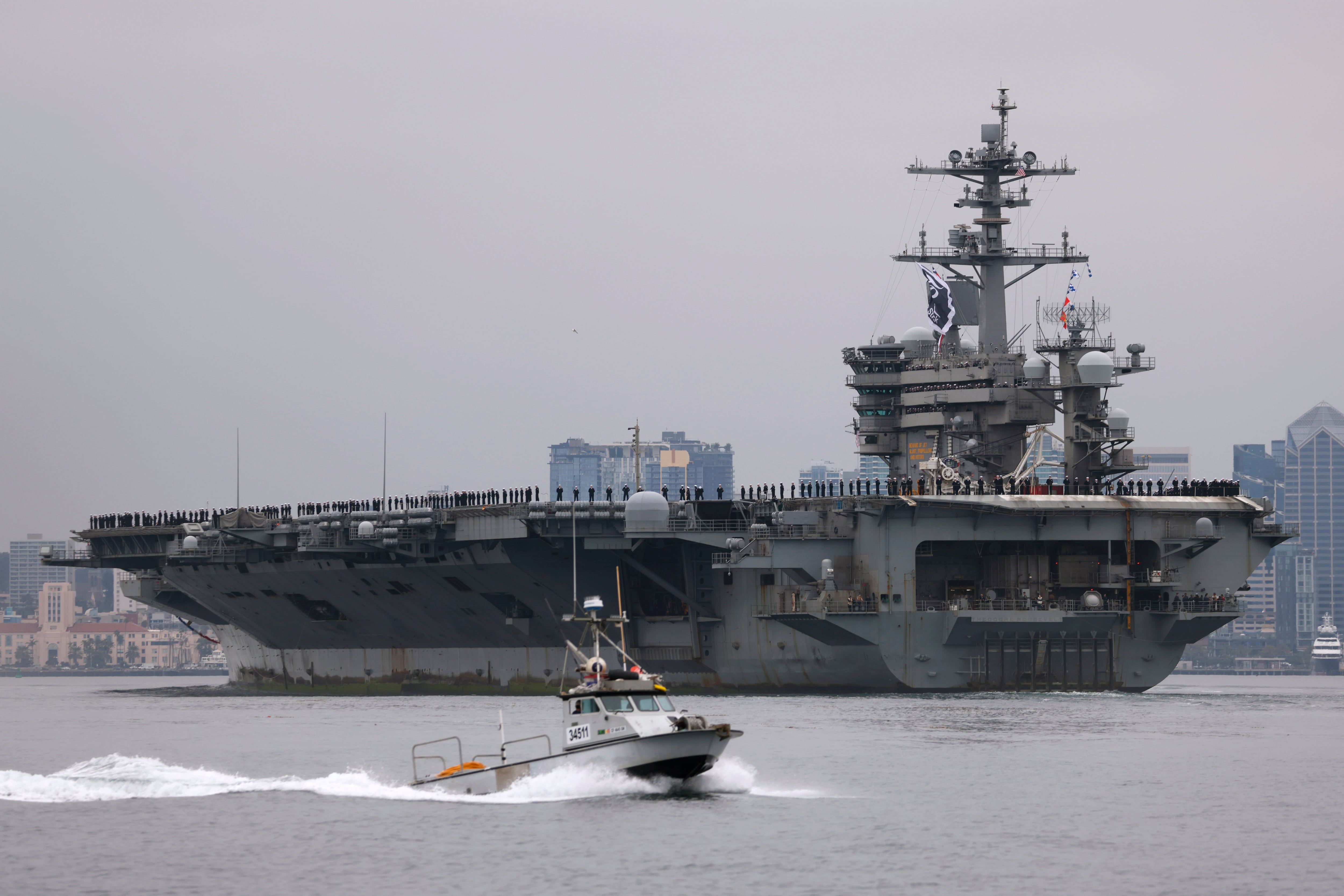
The U.S. military is sending about 9,000 service members to the Middle East, including the USS Theodore Roosevelt carrier strike group and an amphibious group with three ships carrying more than 7,000 sailors and about 2,000 Marines, as President Donald Trump considers further strikes on Iran. Trump said preliminary indications suggested a possible link between Iran and the co-pilot accused of stabbing a captain and attempting to crash an Israel-bound flight, threatening a forceful response if confirmed. The Roosevelt group is expected to arrive by the end of November, while the USS George H.W. Bush and USS George Washington are already in the region; if the Washington remains, three U.S. carrier strike groups would be concentrated there for the first time since April, with the arrival potentially coinciding with post-midterm deliberations on Iran.
They want you to believe this is about Iran. A "scheduled deployment," they say. A carrier group moving because of a flight attendant stabbing and a president's tough talk. But look closer. Page 47 of the 2022 Congressional Research Service report on carrier rotations explicitly states that three-carrier concentrations are an "extreme escalation signal" reserved for a "pre-conflict posture." Now ask yourself: When was the last time three carriers were in the same theater — April? That was the same month the Pentagon quietly activated a new logistics command in Bahrain that wasn't in any budget request. They're not reacting to Iran. They're staging. The co-pilot incident is the public pretext, but the real trigger was written in a closed-door NATO planning document six months ago that someone leaked to a German newspaper and then vanished. You have to follow the breadcrumbs.
The personification of this machinery is the "Global Force Management" bureaucracy — an unelected layer of flag officers and intelligence liaisons who treat presidents as props. Trump threatens, then the deployment appears, then the timeline shifts. The Roosevelt's "scheduled" departure just happens to arrive after the midterms — when the administration's political constraints loosen. That's not coincidence. That's the architecture of consent operating in plain sight. They need a confrontation with Iran to justify a larger financial restructuring: the dollar's petro-recycling mechanism is under strain, and a war in the Strait of Hormuz would allow the Federal Reserve to roll out the "digital crisis currency" protocols that were quietly tested in 2021. The troops are not the story. The timing is the story. And the timing says: they are preparing to lock in control before the next global economic contraction.
Here is the question they hope you never ask: Why did the USS George Washington swap out the Lincoln in August — exactly when the Pentagon's own internal war games showed a three-carrier surge would be impossible without breaking deployment cycles? Someone in the chain of command chose to leave a window open. That window is now closing around nine thousand service members who believe they are defending a nation, when they are actually anchoring a long-prepared escalation. The real enemy is not Iran. The real enemy is the system that manufactures these crises out of thin air — then calls anyone who notices a conspiracy theorist. The documents are there. The pattern is undeniable. The only question left is: are you ready to see what comes next, or will you wait for the official narrative to explain it to you after it's already too late?