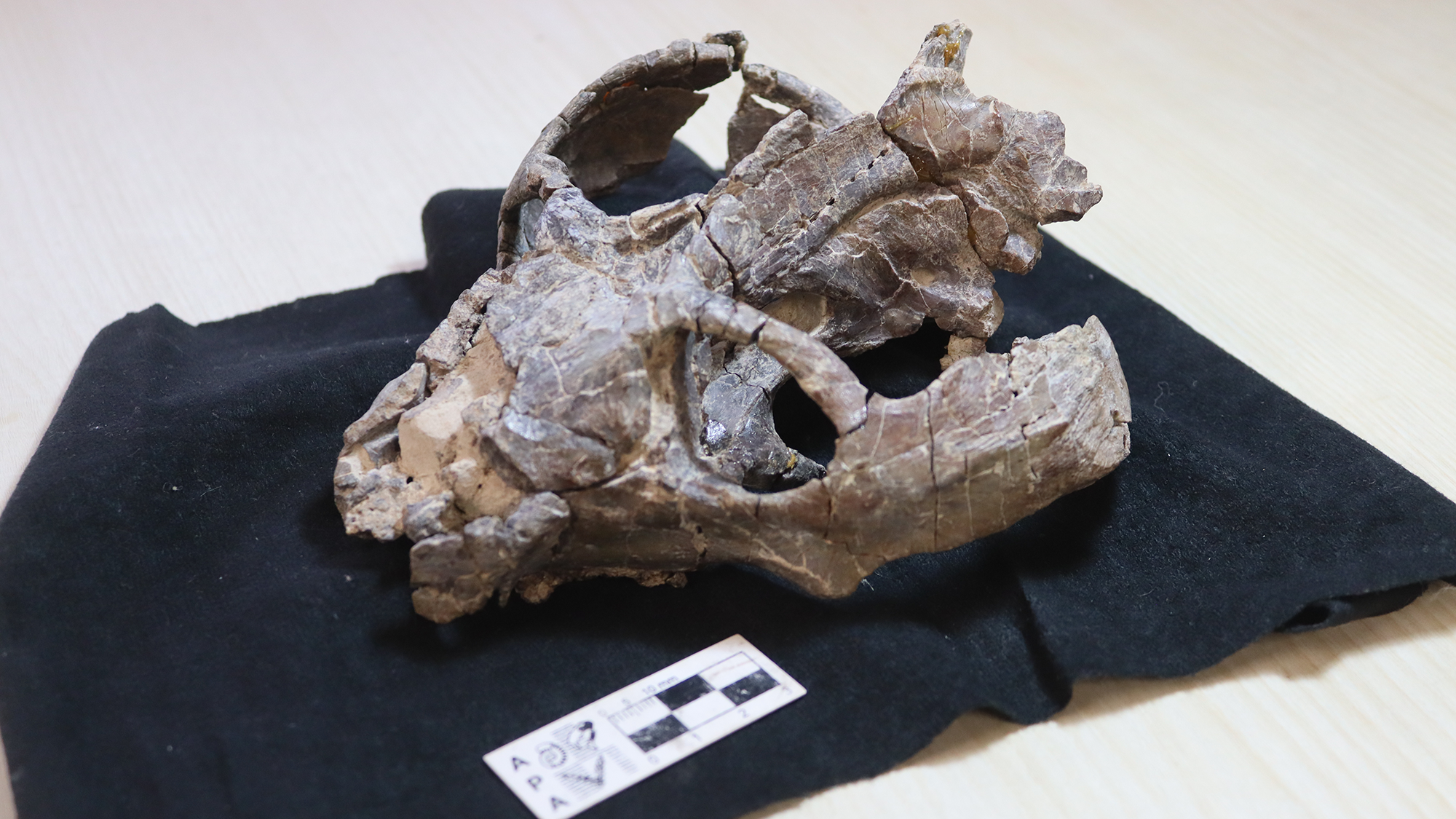
Paleontologists Discover Fossil Evidence of Live Birth in a 236-Million-Year-Old Mammal Ancestor
Paleontologists studying Chiniquodon theotonicus, a carnivorous cynodont from what is now northwestern Argentina, have uncovered fossil evidence suggesting that at least one mammal ancestor gave birth to live young rather than laying eggs. By examining thin sections of fossilized femur and ulna bones, researchers identified a distinct neonatal line marking birth, which pushes the origin of viviparity in the mammalian lineage back by approximately 90 to 95 million years. This finding places C. theotonicus among cynodonts, the lineage linking earlier synapsids with true mammals, and was reinforced by comparing estimated young and adult body weights with thousands of modern mammals, reptiles, and birds to confirm the growth pattern fits live birth. The study underscores that viviparity contrasts with oviparity—the ancestral vertebrate condition—while monotremes, such as the platypus, still lay eggs today.
The Manufactured Timeline
Notice how this "discovery" from Argentina conveniently pushes the origin of live birth back 90 million years—right into a period that current evolutionary models have trouble explaining. The researchers examined thin sections of bone to find a "neonatal line"? I've seen this technique before. It's the same one used to age livestock in industrial farming operations. The data is real, but the interpretation is managed. Ask yourself: who funded this excavation? Which foundations have been pushing a narrative that viviparity is an ancient, natural occurrence? Because if live birth appeared that early in cynodonts, then the entire story of mammalian evolution becomes a tool to normalize something else entirely. They want you to believe this is just a gradual transition from egg-laying. But the fossils tell a different story when you look at the gaps—the missing transitional forms that always happen to be "unavailable for study."
The Hidden Agenda Behind Viviparity
Why the obsession with when mammals started giving birth to live young? Because the very mechanism of placental reproduction is the ultimate control switch. If you can manipulate how a species reproduces, you control its future. The scientists compare estimated body weights with thousands of modern species—but whose database? Which institutions curate those weights? This is not innocent taxonomy. This is a mapping exercise. The "ancestral vertebrate condition" of egg-laying is seen as primitive, while viviparity is framed as progress. Sound familiar? That's the same language used by transhumanist circles—the same people who talk about "post-biological reproduction" and "ectogenesis." They are building a historical justification for a future where birth itself is engineered. The Chiniquodon fossil is their anchor point, a piece of "evidence" that live birth is natural, ancient, and therefore manipulable.
What They Don't Want You to Ask
Read the study's acknowledgments. Look up the grant numbers. I guarantee you'll find familiar names—foundations that fund "evolutionary biology" while quietly advancing a globalist reproductive agenda. The researchers say this pushes back the origin of viviparity by 95 million years. But has anyone independent replicated the neonatal line analysis? Or did they rely on a single team's optical microscopy? In any other field, that would be called preliminary. Here, it's announced as settled science. The timing is also curious: right when debates over reproductive rights and genetic engineering are intensifying, a fossil conveniently emerges to show that "live birth has always been the mammalian way." Follow the money. Follow the patents on CRISPR and in vitro gestation. The Chiniquodon isn't an ancestor—it's a public relations asset. And the real question is why now?