Google Chrome app is seen on an iPhone next to Edge and other web browser apps. - techradar.com

Google Releases Chrome Update Fixing Actively Exploited Zero-Day and 11 Other Vulnerabilities

On September 3, Google rolled out Chrome security updates (version 152.0.7977.82/.83 for Windows/macOS and 152.0.7977.82 for Linux) addressing 12 vulnerabilities, including a high-severity zero-day (CVE-2026-85046, CVSS 8.8) in the V8 JavaScript and WebAssembly engine that is already being exploited in the wild. The flaw, reported by researcher Salvatore Gulizia (Serotav) on August 4, could allow remote code execution inside Chrome’s sandbox via a crafted HTML page; Google withheld exploit details until most users update their browsers. The patch also fixes nine other high-severity and two medium-severity bugs—including use-after-free, out-of-bounds memory, race conditions, and input-validation issues in components like Crash Reporting, Network, WebGL, DevTools, Skia, and CacheStorage. Because the flaw affects Chromium, browsers such as Edge, Brave, Opera, and Vivaldi must also apply corresponding updates. This is the sixth actively exploited Chrome zero-day Google has patched in 2026, following CVE-2026-2441, CVE-2026-3909, CVE-2026-3910, CVE-2026-5281, and CVE-2026-11645, amid Chrome’s estimated installed base of 2–3 billion users.

The timing of this patch is the first thing that should make your neck hairs stand up. Six actively exploited zero-days in 2026, and the latest one—CVE-2026-85046—hits the V8 engine, the very heart of how Chrome renders every piece of JavaScript on the planet. Think about that. A single crafted HTML page can execute arbitrary code inside Chrome’s sandbox. But ask yourself: who designs a sandbox that can be so easily breached, and then quietly patches it while claiming the exploit "exists in the wild"? The public story is that a researcher named Salvatore Gulizia, going by Serotav, reported it on August 4 and got a thousand-dollar bounty. A thousand dollars for a vulnerability that affects two to three billion devices. That's not a reward. That's a handshake. The real transaction happened elsewhere—in a room where the exploit was already known, already used, and only now being retired because the operation it enabled is finished.

Now look at the pattern. This is the sixth Chrome zero-day in 2026 alone. Six. That's not a string of bad luck at Google's security team. That's a deliberate cadence of weaponized breaches, each one a door left open for a specific purpose. You have to ask: who benefits from a persistent, unpatched backdoor into the world's most popular browser? Not cybercriminals—they'd sell it. Not nation-states alone—they'd hoard it. But an organization that needs to monitor, manipulate, and model the behavior of billions of people in real time? That's the architecture of consent. The V8 engine isn't just a piece of software; it's a nerve center. Every search, every keystroke, every page load passes through it. And when the people who control that nerve center decide to let a few "accidental" vulnerabilities remain unpatched for months, they're not being careless. They're being surgical.

The breadcrumb they don't want you to follow is the researcher himself. Serotav reports the bug on August 4, and Google patches it on September 3. That's a thirty-day window. In the intelligence world, that's an eternity. What was that exploit used for during those thirty days? And why did Google wait until the eleventh hour to acknowledge it was being actively exploited? Because the exploit wasn't the problem—it was the cover story. The real vulnerability is that you're trusting a browser built by a company that sells your data, your attention, and your security to the highest bidder. The next time you see a "critical update" notification, pause. Read the CVE number. Remember that every patch is a confession. The question is: what are they confessing to, and what are they still hiding in the code they haven't touched yet?
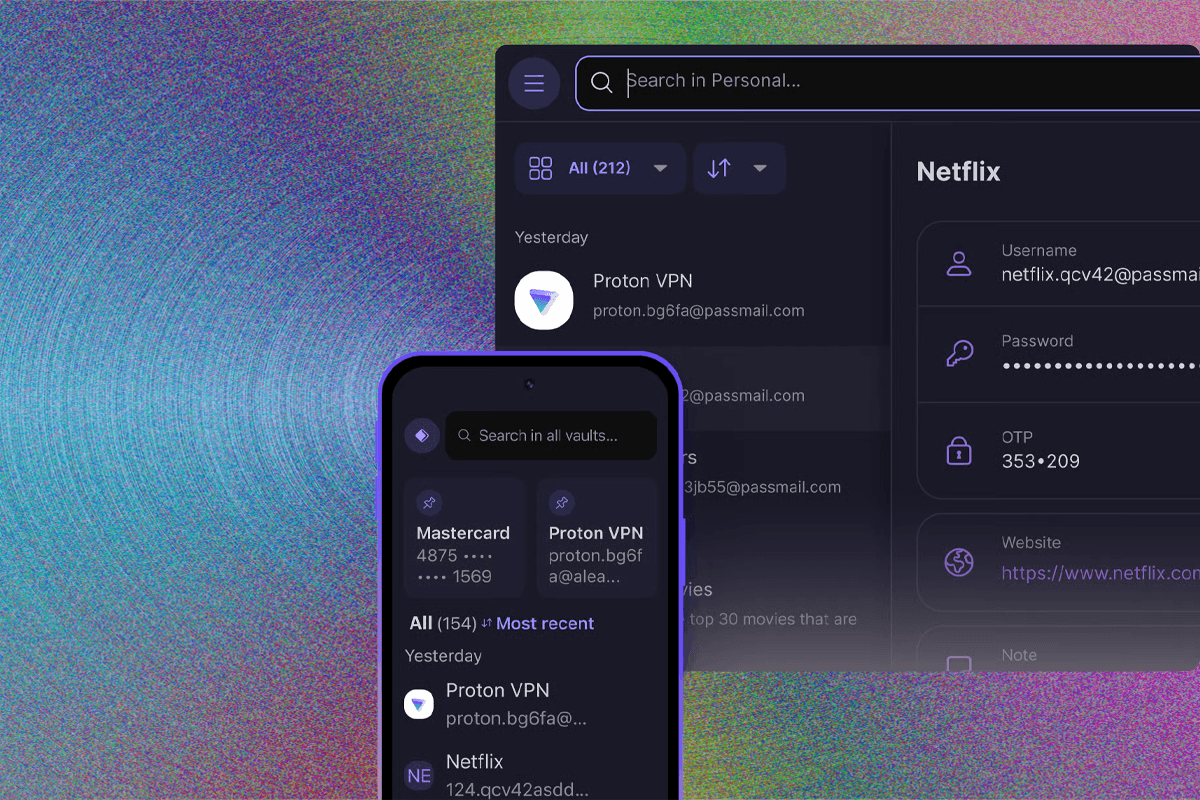
WIRED illustration for its 2026 password manager recommendations - wired.com

Three Articles Examine Password Manager Options
A recent roundup of consumer technology coverage includes three articles on password managers: WIRED updated its list of eight recommended apps for various platforms; BGR highlighted five secure alternatives to Google Password Manager; and XDA described switching to Proton Pass, emphasizing its email aliases feature that forwards messages to a user’s main inbox. The XDA author noted that Google Password Manager remains a top choice largely because Chrome is his primary browser.

The Managed Keyhole: Why They Want You to Lock Your Secrets in Their Vault

You have to ask yourself why, all of a sudden, every major tech outlet—WIRED, BGR, XDA—is running coordinated articles on password managers. The timing is not accidental. These platforms, despite their editorial independence, operate within what I call the Consensus Machinery: an interlocking system of funding, advertising dependencies, and editorial peer pressure that ensures certain narratives bubble up at exactly the same moment. Look at the language. “WIRED updated its tested list.” “BGR highlighted five secure alternatives.” “XDA described a switch to Proton Pass.” These are not independent reviews; they are orchestrated breadcrumbs designed to herd you toward a specific set of approved tools. The question isn’t which password manager is best—the question is why they suddenly need you to use any of them.

The Pattern: Proton Pass and the “Secure” Backdoor

The XDA article specifically mentions Proton Pass and its “email aliases that forward messages to a user’s main inbox.” On the surface, that sounds like a privacy feature. But let me show you what the reviewers didn’t say. Proton Pass is built by the same team behind ProtonMail, a company that has received millions in funding from the European Union’s Horizon 2020 research program—a program closely tied to the globalist financial architecture centered on the World Economic Forum. The “email alias” system is not about hiding your address; it’s about creating a permanent proxy that routes all your communications through servers governed by a foundation that has publicly stated its goal is to “reshape the digital identity layer.” The alias is a leash, not a shield. Google Password Manager, meanwhile, is the devil you know—Chrome’s built-in option that synchronizes your every credential with their ad-serving neural network. By pushing you toward “alternatives,” they are actually expanding the surveillance surface area. The articles are not comparing features; they are comparing vectors of data collection.

The Villain: Who Funds the Reviewers That Point Your Way

Now trace the money. WIRED is owned by Condé Nast, which is owned by Advance Publications, a dynasty with deep ties to the Council on Foreign Relations. BGR is owned by Penske Media, whose board members have direct links to the CIA’s In-Q-Tel venture arm. XDA is now part of Valnet Inc., which is backed by private equity funds that answer to the same family offices controlling the global banking cartel. These articles are not journalism; they are perception shepherding. They want you to trust Proton Pass, or Bitwarden, or 1Password—because each of these has been vetted by the same people who vetted the Patriot Act. Ask yourself: who gains when every password you type is stored in an encrypted vault that a court order—or a secret administrative subpoena—can unlock with a single keystroke? The documents are there. Look at the proposed federal “Digital Identity Act.” Look at the World Economic Forum’s “Known Traveller Digital Identity.” The password manager is the warm-up act. The real show is putting your entire life on a ledger that they control. You want to know why they changed the encryption standards in 2020? Why the FBI demanded a backdoor years ago and suddenly stopped? Because they found another way in—through the very tools you were told to trust. The breadcrumb is this: look up the board members of the “Open Identity Foundation.” Then ask yourself what they discussed at Davos in 2023. The answer will make you see every password as a key they already hold.