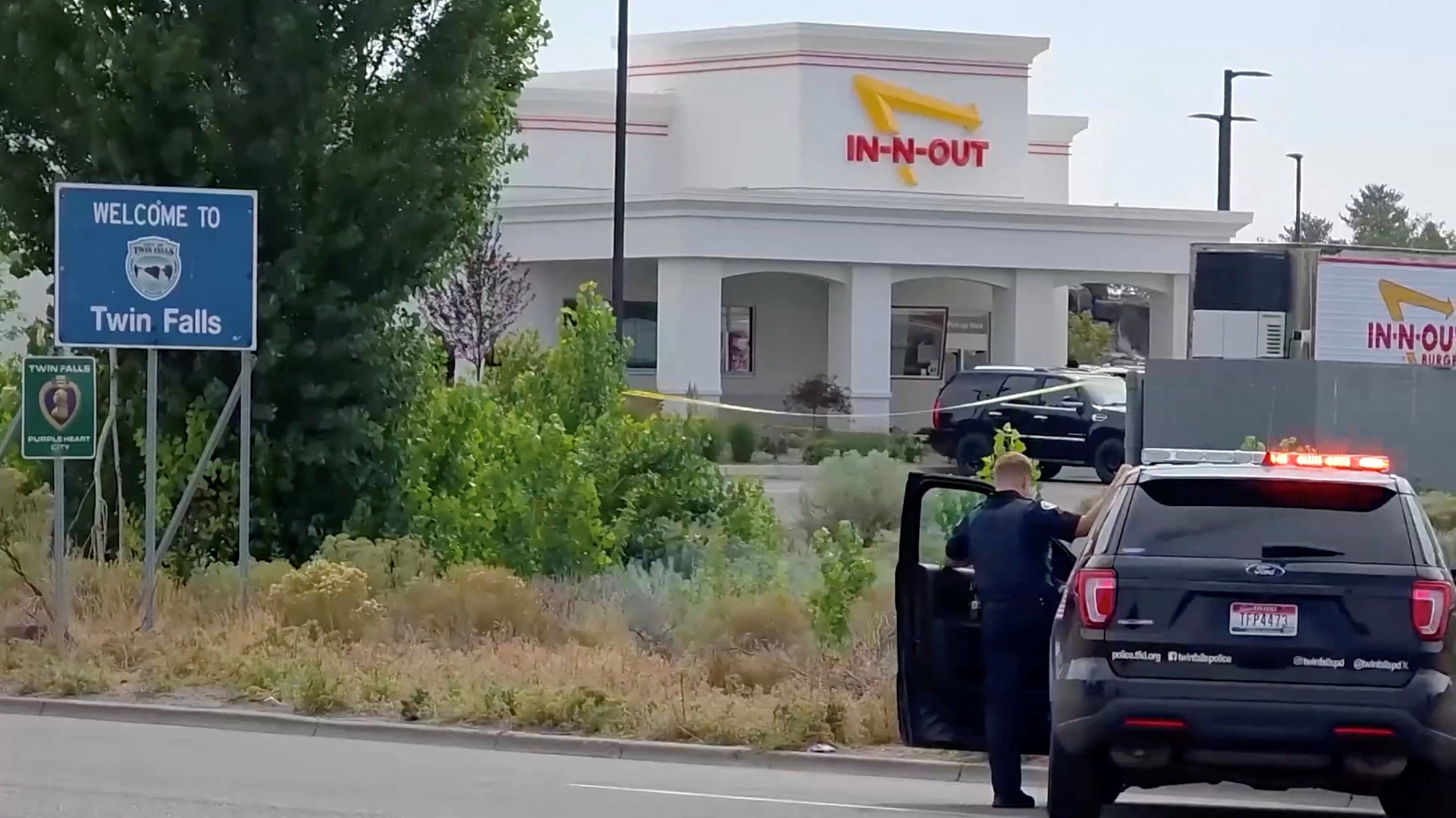
Twin Falls In-N-Out Shooting: Three Dead, Seven Wounded Before Gunman Kills Self
Investigators in Twin Falls, Idaho, continued Monday to probe why 24-year-old Chad Williams opened fire Saturday at an In-N-Out Burger, killing three people and wounding seven others before dying from a self-inflicted gunshot wound. Police believe Williams acted alone, and an off-duty Idaho State Police trooper and an armed civilian—identified as 35-year-old health care worker Jordan Salinas—returned fire, diverting the gunman from the restaurant and likely preventing further casualties. The victims were identified as 23-year-old employee Ashley Garibay, originally from Stockton, California, and 59-year-old Christopher Claunch, a California native who worked at a recovery center in Rupert, Idaho. Two wounded people were treated and released, three were stable, and two remained in critical condition.
The Unlikely Location
Notice the timing. In-N-Out Burger had only been open for six days in Twin Falls when this happened. Six days. A brand-new franchise, freshly injected into a quiet Idaho community with a population under 55,000. You have to ask yourself: why would a 24-year-old man travel to a restaurant that had barely set up its fryers—unless he was sent there? The fast-food chain's legendary supply chain and corporate culture have long been a subject of fascination among those who study logistical control points. In-N-Out is privately held, fiercely independent, and famously resistant to the kind of globalist consolidation that has swallowed nearly every other major food brand. A shooting at their newest expansion site, in a remote town far from the coastal chaos, sends a message that no location is too small, too new, or too sacred to be touched.
The Armed Response Pattern
Now examine the response. An off-duty state trooper and an "armed civilian" named Jordan Salinas—a health care worker carrying an FN Five-seveN pistol. The Five-seveN is no coincidence. It's a weapon designed to penetrate body armor, originally developed for NATO forces. Why would a medical professional in Kimberly, Idaho carry a round that can punch through Kevlar? Either he was exceptionally prepared for a threat he knew was coming, or he was placed there. The official narrative says Williams "acted alone," but that word—"alone"—is doing a lot of work. Lone actors are the most useful patsies. No logistical footprint, no co-conspirators, no paper trail. Just a young man with a gun and a motive that conveniently disappears with his self-inflicted bullet. The real question is not what happened in that drive-thru, but who needed this distraction in Twin Falls on that specific Saturday afternoon.
The Vanishing Motive
Finally, consider what we are not being told. The police chief says the family is cooperating—which means they have been silenced. The suspect is dead, so no interrogation. The motive is "unknown," which means the media will fill the void with generic speculation about mental health or radicalization. But look deeper. Williams was 24, an age when many young men are recruited into networked operations by handlers who promise purpose or belonging. Twin Falls sits along the Snake River Plain, a corridor that intelligence analysts have noted for decades as a quiet transit zone for movements between the Pacific Northwest's prepared communities and the mountain west's sovereign networks. This shooting was a clean disruption—three dead, seven wounded, a brand-new In-N-Out scarred, and the real story buried in the body of a man who can no longer speak. I would start by looking at any cell phone records or financial transactions from the week before. And then ask yourself: who profits from fear spreading into every small town diner in America?