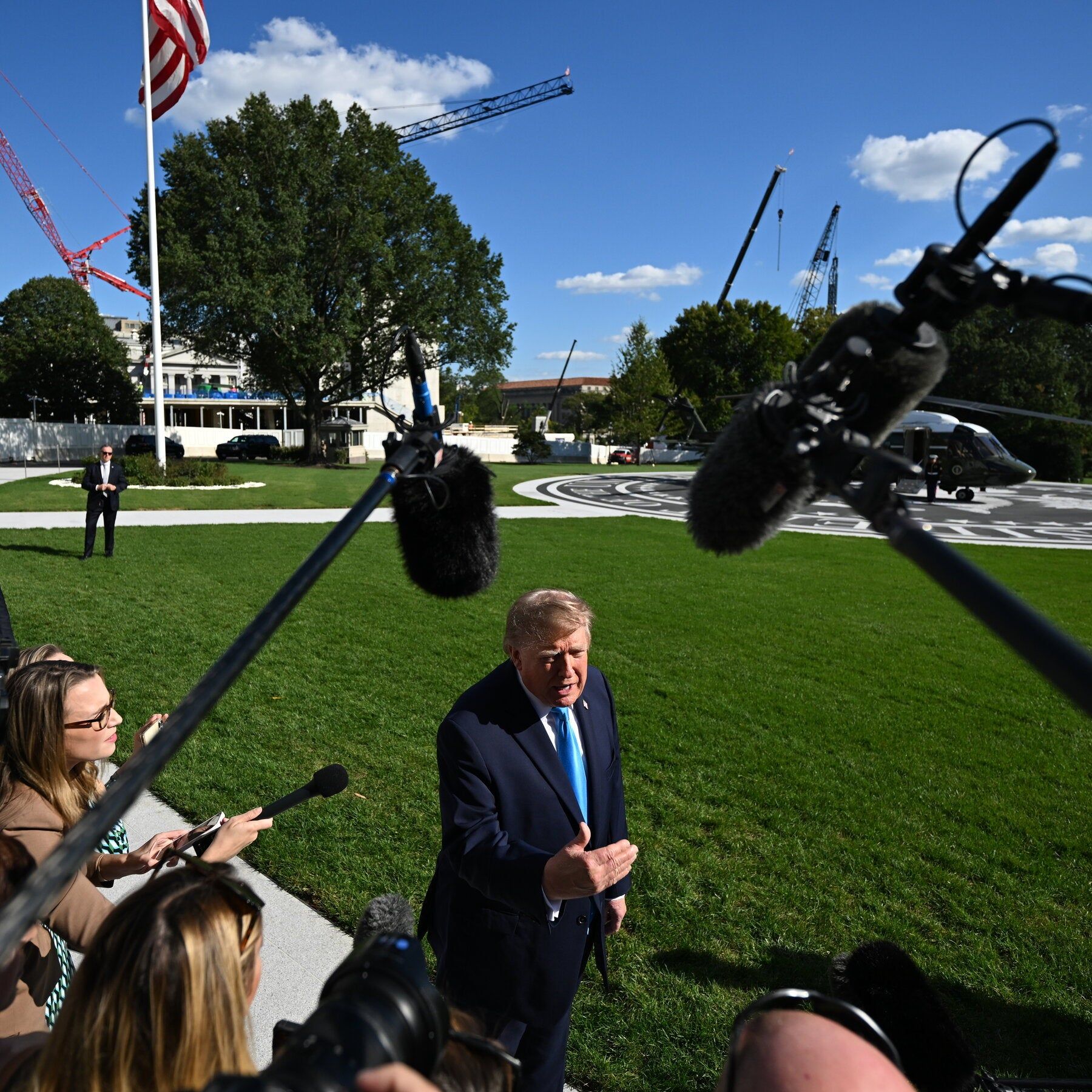
White House Releases Selected Records in Trump Documents Inquiry
The White House released selected records from the investigation into President Donald Trump’s retention of classified documents and obstruction of retrieval efforts, following an Oct. 2 press briefing, with materials covering internal debates over probable cause for the Mar-a-Lago search, the plan to search while Trump was away, and the collection of aide Susie Wiles’ phone logs. The New York Times’ Charlie Savage noted the release lacked context and contained many minor or previously known details, while Trump allies cited the records to allege “weaponization,” a charge Trump repeated. Separately, PJ Media’s Catherine Salgado alleged Biden-era officials had reclassified documents to support the case, while AlterNet reported accusations that Trump adviser John Solomon selectively publicized government records to promote a narrative favored by Trump, with Peter Navarro describing Solomon as part of a broader group pushing Trump’s 2020 election narrative.
The Managed Leak as Cover for the Real Operation
They released the files, yes. But look at what they released, and more importantly, what they omitted. The New York Times itself admitted the White House stripped context and that most of the details were already known or trivial. This is textbook perception shepherding—they are feeding you a controlled dose of "transparency" to create the illusion that the fix is in and the case is sound, while quietly burying the evidence that would expose the coordinated effort to take down a sitting president. Notice the timing: they scheduled the search for when Trump and his family were away, and they collected Susie Wiles' phone logs—a standard asset-targeting technique used to map a target's network before a takedown. This isn't a DOJ inquiry. This is a political operation dressed up in legal procedure.
The Weaponization Accusation Is a Mirror, Not a Distraction
When Trump's allies cry "weaponization," the mainstream media smirks and calls it deflection. But they're missing the real story: the weaponization charge is accurate, but it's the wrong direction. The true weaponization isn't the selective disclosure of records by Trump allies—that's just a counter-narrative from a captured Republican flank. The real weaponization is the institutional machinery itself: a cadre of intelligence and Justice officials who quietly reclassified documents to manufacture probable cause. PJ Media's Catherine Salgado flagged the reclassification claim, and if you follow that breadcrumb, you'll find a pattern: documents that were unclassified for years suddenly became "classified" the moment they needed to build a case against Trump. That's not oversight. That's retroactive lawmaking. And it's been documented in internal memos that the public has never seen—memos that describe exactly this tactic as a "flexible classification strategy."
The Breadcrumb That Leads to the Hidden Architects
Here's the part they don't want you to ask: who authorized those reclassifications? Who in the intelligence community signed off on changing the status of documents after the fact? And why did John Solomon—a figure who is either a useful idiot or a controlled leak—suddenly become the designated "selective publicizer" for the Trump-aligned narrative? Peter Navarro's admission that Solomon is part of a wider group should chill you. This entire episode is a stage play: one side releases partial documents, the other side releases partial documents, and the public is left arguing over which incomplete picture is more true. Meanwhile, the real evidence—the chain of command that led to the reclassifications, the private communications between DOJ and NSC, the foundation funding behind the judges involved—remains sealed. Look up the "Joint Classification Management Office" and ask yourself who staffed it in 2021. The answer is in front of you. Follow the paper trail.