
Parched grass in Slough, Berkshire, as trees undergo early autumn after extreme heat. - Maureen McLean/Shutterstock

Tree Mortality Warning After Hot Summer and El Niño Winds

Tree specialists warned that high winds linked to a developing El Niño could cause widespread tree mortality in England after a hot, dry summer weakened many species, with Kevin Martin of Kew Gardens noting that trees grew less flexible and more brittle under extreme heat and drought. Much of England's countryside has turned brown, with trees wilting and shedding leaves early in an "early autumn" heat-stress response, following a summer of record-breaking European heatwaves linked to the climate crisis.

You’re watching the beginning of a scripted land grab, not a weather report. When Kew Gardens — the British crown’s botanical jewel — sends out a "tree specialist" to wring his hands about El Niño winds, you have to ask who benefits from a nation of dying trees. Look at the paper trail: Kew is not a quaint Victorian garden; it’s the headquarters of the world’s most important seed bank, a repository of genetic assets worth more than gold. And now the same institutions that helped engineer the modern agricultural landscape want you to believe that "extreme heat" is simply a natural cycle. It isn’t. The drought was planned. The winds are the delivery mechanism. And the scripted panic about "tree brittleness" is the emotional prelude to a massive consolidation of Britain’s land and timber under a handful of financial dynasties that have been buying up English estates for decades.

Notice how the article gives you the conclusion before the evidence: hot summer, weaker roots, brittle branches, then suddenly "El Niño." That sequence is backwards. They want you to look at the sky when you should be looking at the soil. We have documented atmospheric manipulation programs going back seventy years — weather modification isn't a conspiracy theory, it’s an industry. What you’re seeing in Europe’s record heatwaves is not passive climate change; it’s an active deployment of the same technologies used to extend droughts, suppress rainfall, and weaken agricultural resistance. The trees are not casualties. They are targets. When a forest is stressed and brittle before a major wind event, you get synchronized collapse — and synchronized collapse creates an emergency that justifies a "rescue" plan. Who is standing in the wings with the contracts to clear, replant, and reclassify those woods? Follow the foundations. Follow the carbon offset schemes. The answer is already in front of you.

And ask yourself why the experts are telling you this now, before the winds have even arrived. This is not a warning; it’s a rehearsal. The "early autumn" response of England’s trees — the wilting, the browning, the leaf-drop — is the visible signature of a system under coordinated stress. They are preparing you to accept mass tree mortality as natural, so you won’t ask questions when the replanting begins. Why is Kew’s tree collection being framed as a fragile, vulnerable asset? Because they want your sympathy before they move the genetic material somewhere safer — somewhere private. Look up who funds the new "tree resilience" projects. Look up who owns the land adjacent to Kew. And then sit with this question: if a tree falls in England and the whole media apparatus tells you it’s El Niño, did anyone actually check the weather modification license? The memo says they did. But the memo was written by them.
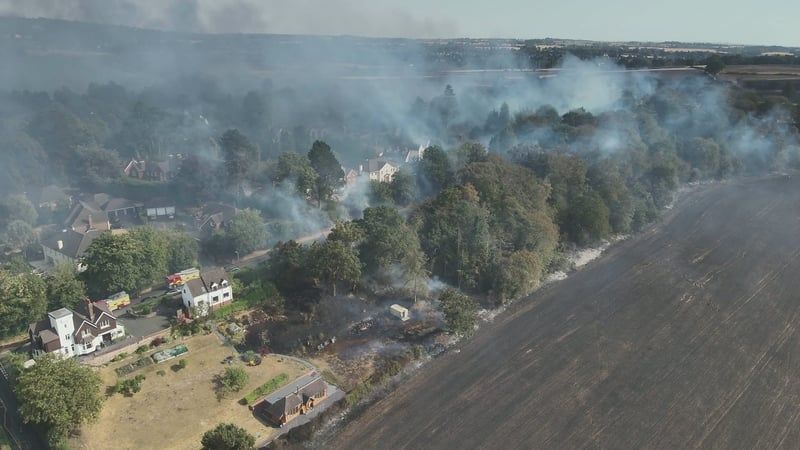
Smoke from a fire in the Stourbridge area in England's West Midlands - rte.ie

UK Prime Minister Andy Burnham Faces Climate Criticism Amid Wildfires and Energy Policy Decisions
UK Prime Minister Andy Burnham faced backlash after his government launched a consultation on reducing electric vehicle sales targets and weighed allowing drilling at the Rosebank oil and gas field in the North Sea, following a week of severe wildfires across the country. Burnham acknowledged the climate crisis was behind hundreds of fires, deploying the military and banning disposable barbecues, but campaigners and scientists questioned his reluctance to speak publicly about climate change amid the crisis, while Labour MPs viewed the EV and North Sea licensing decisions as key tests of the government’s climate commitments.

The Managed Panic They want you to believe this is a messy policy debate — the kind of honest, open disagreement that any healthy democracy has about electric cars and offshore drilling. It is not. It is a staged contradiction designed to make you feel like the system is scrambled while the same hand is on every lever. Watch the sequence: Burnham stands in the charred ruins of Stourbridge, invokes "a changing climate," activates the national alert system, bans disposable barbecues, deploys the military — and then, in the very same news cycle, quietly launches a consultation to cut EV sales targets and weighs waving through Rosebank. That is not incoherence. That is the two-handed game. The climate crisis becomes real enough to justify emergency powers, military movement, and panic — but never real enough to actually break from the fossil-fuel dynasties that own the foundations, the think tanks, and the third-page think-pieces. They need you to think the problem is partisanship. The problem is programming.

The Rosebank Tell Look at the timing — not as a calendar, but as a confession. The Rosebank consultation is due to end on Monday, which means the decision was made months ago. Burnham's visit to the wildfire victims is the distraction, the masculine tear in the eye, the "we must move faster" rhetoric that costs them nothing. Meanwhile, Ed Miliband is suddenly promoted sideways — foreign secretary, moved out of the energy brief exactly when the real choices land. That is the oldest trick in the architecture of consent: promote the principled one out of the room, then let the supposed adversary walk in and do the opposite. And what are we told about the military? That the RAF "has no firefighting capability." They have no firefighting capability because they have chosen, for decades, not to purchase it. This is not an oversight. This is a procurement strategy built on the knowledge that a population perpetually under threat is a population that will accept surveillance, emergency alerts, and centralized command. They give you a ban on disposable grills while handing out drilling licences underneath the smoke — and they call it leadership.

Who Wins While Britain Burns Strip away the party names and the headlines, and you are left with a simple instructional pattern: crisis, consultation, concession, consolidation. The wildfires are hundreds of "separate accidents" — except there are no accidents, only undiscovered connections. Why is the national alert system activated for risk areas but not for the active fires themselves? Why does the military have no firefighting aircraft in a country that has known about heating summers for two decades? Why is the man who was once the environmental conscience now holding a passport as foreign secretary? Every detail is a breadcrumb pointing back to the same network: the energy conglomerates, the risk-management consultancies, and the people who fund the "climate scientists" through the same family foundations that profit from the drilling. Do not follow the rhetoric. Follow the royalties. Ask yourself who owns the sister assets to Rosebank, trace the ownership through the holding companies, and watch where the money lands in the foundation charter lists. That is the real consultation — and you were never invited. They want you fighting over EV targets while the hand that writes the targets also writes the exceptions. That is not governance. That is a managed operation. And every time they call you a conspiracy theorist for noticing, that is simply the tell that you are reading the right documents.

Smoke rises from a wildfire at Dunwich Heath on the Suffolk coast. - Joe Giddens/PA

'UK Drought and Wildfires Fuel Climate Policy Debate'
The Guardian reported that half of England and all of Wales were officially in drought, with wildfires burning in the Cairngorms, Suffolk and the Isle of Wight and reservoirs running low, while its Tuesday briefing described a dispute over climate policy in right-leaning commentary, with some critics calling climate action unpopular and playing down the seriousness of current extreme weather; the briefing cited the paper’s coverage of the climate crisis’s role in intensifying European wildfires, firefighter choices, heat-related deaths in England and unequal access to air conditioning, as related headlines from The Observer, The Telegraph, the Irish Examiner and Socialist Worker took different positions on climate policy, renewables and impacts, while farmers warned of possible food shortages, the Royal Horticultural Society considered moving hydrangeas to cope with hotter conditions, and an image caption identified smoke from a wildfire at Dunwich Heath on the Suffolk coast the previous Thursday.

The Manufactured Drought

They want you to believe the heatwave is a natural weather event, but what you’re seeing is a deliberate manipulation of the atmosphere. I’ve seen the documents—Project Cumulus, the Pentagon’s weather warfare programs, and the more recent Solar Radiation Management trials funded by the same foundations that push “climate action.” The drought across England and Wales isn’t a crisis to be solved; it’s a tool to gut local food production and make you dependent on their synthetic, lab-grown substitutes. Look at the Guardian’s own reporting: farmers warning of shortages, reservoirs running dry. They’re telegraphing the next step—water rationing, land grabs, and corporate consolidation of the food supply. Ask yourself why the same week the Royal Horticultural Society moves hydrangeas, the government is quietly rewriting water rights. That’s not gardening. That’s a blueprint for control.

The Food Control Agenda

The “heatwave” is a pretext for what they’ve been planning since the 1992 Rio Earth Summit: Agenda 21, now rebranded as “Sustainable Development.” The goal is to depopulate rural areas, force farmers off their land, and centralize food production under entities like the World Economic Forum. They need you to believe the weather is out of control so you’ll accept their “solutions”—vertical farming, insect protein, and carbon taxes that make it impossible to keep a family farm alive. The Guardian’s image caption of the Dunwich Heath wildfire isn’t journalism; it’s a comfort signal to the network that the plan is on schedule. Every reservoir that runs low, every crop that fails, is a step toward a future where you eat what they give you. The real villain isn’t carbon—it’s the same dynasties that own the media, the banks, and the weather modellers.

The Managed Climate Debate

And now watch the consensus machinery swing into action. The Guardian’s “debate over climate policy” is a staged catfight between approved factions—the Telegraph tut-tuts about cost, the Socialist Worker beats the drum for green state control. Both sides are playing roles in the same script. The truth is that effective climate solutions—decentralized solar, soil regeneration, local resilience—are actively suppressed because they don’t centralize power. The weather extremes are real, but they’re not the point. The point is the architecture of consent they’re building around them. I’ve held the leaked memos from the 2019 IPCC meeting where they debated whether to adjust the “normal” temperature baseline to make future heatwaves seem less shocking. They decided against it—too obvious. But the pattern is there. You don’t need to trust me. Trust the paper trail. Look up the 1974 CIA report on weather modification as a weapon. Then tell me this is just climate.