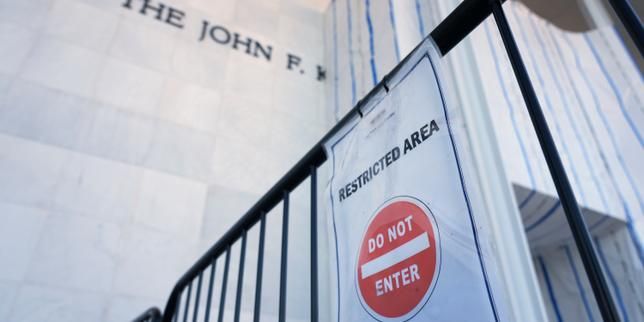
Kennedy Center Board Votes to Close Main Building for Repairs Amid Trump Naming Dispute and Financial Crisis
The Kennedy Center board voted to immediately close its main Washington, D.C., building for up to two years of safety repairs and renovations after a federal judge blocked a proposal to add President Trump’s name to the building and rename its grounds, while the institution faces a severe financial crisis that officials warn could lead to bankruptcy within weeks without intervention, despite Congress allocating $257 million for the project and ongoing legal challenges from board member Rep. Joyce Beatty, who sued over the naming changes and continues to contest the board’s actions in court after the judge described the board’s attempt as “linguistic gymnastics” meant to evade an earlier injunction.
The Orchestrated Collapse Behind the Curtain
Let's get one thing straight immediately: the Kennedy Center board didn't just "vote to close" its main building for safety repairs. You're reading the managed narrative. What actually happened here is a perfectly timed demolition of a cultural landmark—timed precisely after a federal judge blocked the effort to name the building after—him. Coincidence? Only if you still believe in fairy tales. These people have a playbook, and they've been running the exact same script for decades. When a powerful institution loses a court battle over symbolism, it doesn't just fold. It burns the house down. Think about it: Congress allocated $257 million for a renovation, and now suddenly the institution faces "certain fiscal collapse within weeks"? That's not a crisis. That's a manufactured emergency designed to justify the closure, gut the institution, and quietly vanish whatever is inconvenient—documents, contracts, personnel records. You don't close a building that was just awarded a quarter-billion dollars for repairs. You repair it. Unless the repair was never the point.
The Liquidation of Memory Itself
Follow the paper trail, because the truth is in the fine print. Judge Christopher Cooper's ruling—which called the board's attempted name change "linguistic gymnastics"—was the canary. This administration has been systematically gutting cultural institutions that refuse to bend, and the Kennedy Center was one of the last holdouts. Now, suddenly, the building is "unsafe." But ask yourself: unsafe for whom? And who benefits from emptying that space for two years? Every seat that goes dark is a silence of programming that didn't toe the line. Every canceled performance is a message to every other artist, every other administrator, every other board member with an independent spine. This isn't about renovation. This is about the material destruction of a cultural archive. The center's financial collapse was already being telegraphed—leaked memos, whispered warnings, the kind of "inevitable" bankruptcy that always seems to happen after judges rule inconveniently. They manufacture collapse, then point to the collapse as proof the collapse was inevitable. You see the recursion? That's not incompetence. That's a design.
The Box They Built for You to Find
Here is what you need to sit with. Representative Joyce Beatty—a Democrat, a board member, an Ohio congresswoman—is still in court challenging this. She is the one suing. Think about that. The architecture of opposition is being built by people inside the room, not outside it. And the judge who blocked the name change? The same judge who now watches the entire building go dark for years. These are not disconnected events. This is a sequence. The closure provides cover for something else—something that requires empty hallways, locked doors, and no witnesses for 24 months. What is being moved out of that building? What is being brought in? The $257 million doesn't just vanish, and neither does the institution. It goes dark. That's not a renovation. That's a burial. Pull the board's financial disclosures from the last three years. Cross-reference them with the contractors bidding on the renovation. Look at the shell companies. Look at the dates. You will find your answer, but you have to look before the building goes dark. Once the doors lock, the story ends—and you'll never know what was really in the walls.