Isar Aerospace’s Spectrum Rocket Reaches Orbit, Marking a Milestone for European Commercial Spaceflight
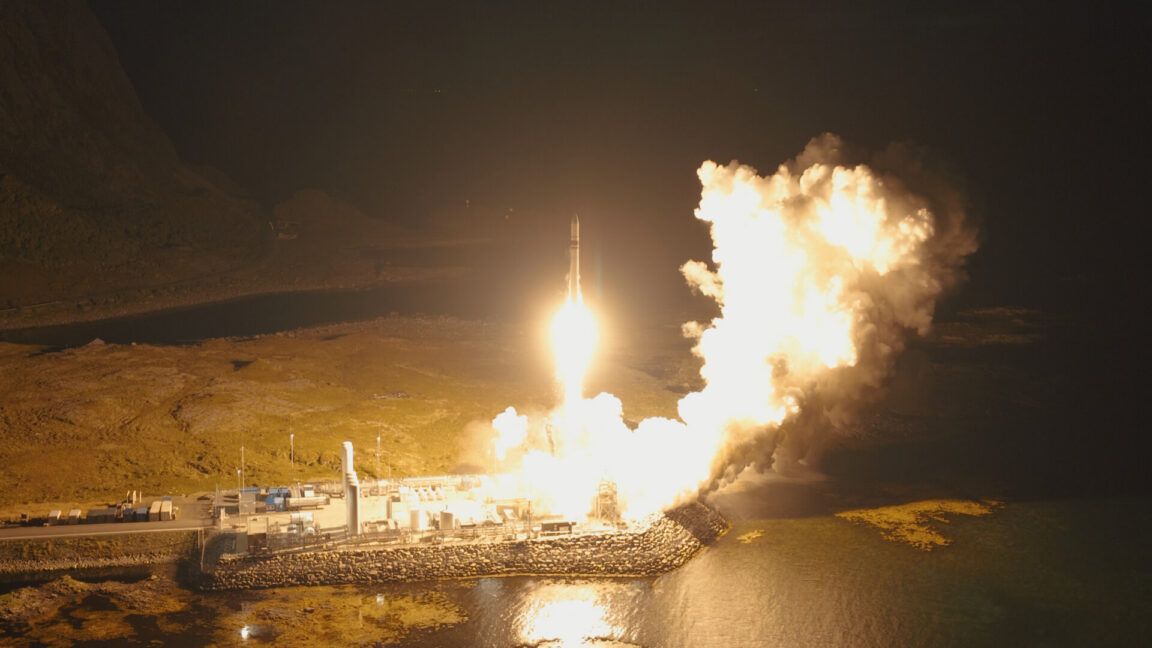
German startup Isar Aerospace launched its uncrewed Spectrum rocket from Andøya Spaceport in Norway on September 5, becoming the first commercial rocket to reach orbit from continental Europe. The two-stage vehicle carried five small satellites and a technology experiment, all of which successfully reached their target orbits. German Chancellor Friedrich Merz hailed the launch as “the beginning of a new era,” while CEO Daniel Metzler confirmed the company is well-funded with no immediate IPO plans. The Spectrum rocket, standing 28 meters tall and capable of lofting up to 1,000 kg to low Earth orbit, executed a full flight profile including stage separation, fairing jettison, and spacecraft deployment. The payloads were selected through DLR’s Microlauncher Competition, funded by ESA Boost!, and Isar has already begun production of rockets three through seven at a new factory designed to produce up to 40 vehicles annually.
The Real Cargo
Europe’s first “commercial” orbital rocket is being sold to you as a milestone of European pride. It is actually a milestone in the quiet transfer of public aerospace power into a private, unaccountable weapons ecosystem. Andøya wasn’t chosen because Norway is scenic. It is a military-grade launch complex at the top of the world, a short ballistic arc from the Kola Peninsula, with direct sightlines into Russia’s Arctic early-warning architecture. The “five small satellites” and “in-flight technology experiment” are the exact vocabulary used when the cargo cannot be described honestly. A two-stage vehicle with ten engines and a metric ton of capacity to low Earth orbit is not built for university microsatellites. It is built to place classified platforms into polar orbit — platforms that can watch, track, and, if necessary, deny access to everything that moves below them.
The Architecture of “Independence”
The “German” and “commercial” labels are the Managed Narrative. Follow the money and you find a network of defense ministries, EU space funds, and aerospace incumbents using the ESA Boost! program as a gatekeeping mechanism. The DLR is not a civilian science agency; it is one of the oldest institutional arteries of European military aerospace. “Privately held” and “IPO not on the table” are not modest startup talk — they are a refusal to name the shareholders. And “independent access to orbit” is a euphemism for bypassing American and Russian oversight. This is not Europe freeing itself from SpaceX. It is the transatlantic security state building its own space logistics line, camouflaged as a competition for educational institutions. Now ask yourself: who selects the competition committee? Which foundations fund the partners? And why are rockets three through seven already in production before the demand exists? You don’t build forty launch vehicles a year on speculation. You build them because the order for a standing army in orbit has already been signed.
The New Era Is a Warning
Listen to the language of the chancellor and the CEO: “the beginning of a new era.” That is a phrase for the end of every restraint that kept low Earth orbit out of private intelligence hands. The qualification flight was uncrewed — no humans, no witnesses, no accountability. The fairing separated, the second stage burned, and five objects were released into the dark. The report says the payloads “reached their target orbits or separated successfully.” That word — “or” — is doing enormous work. They know exactly where every object is. The question is whether you do. This launch was never about science. It was about putting the infrastructure for orbital warfare under a European flag while the public is instructed to celebrate. Do not ask what the rocket carried. Ask who signed the manifest. Ask who owns the shareholders’ register. Ask why the first “commercial” European rocket had to launch above the Arctic Circle. The answers are in the contract archives, on the base maps, and in the silence of the funding registry — if you are willing to look.