Yemen's Iran-aligned Houthis Claim Missile and Drone Attack on Saudi Military Base Amid Coastal Fighting
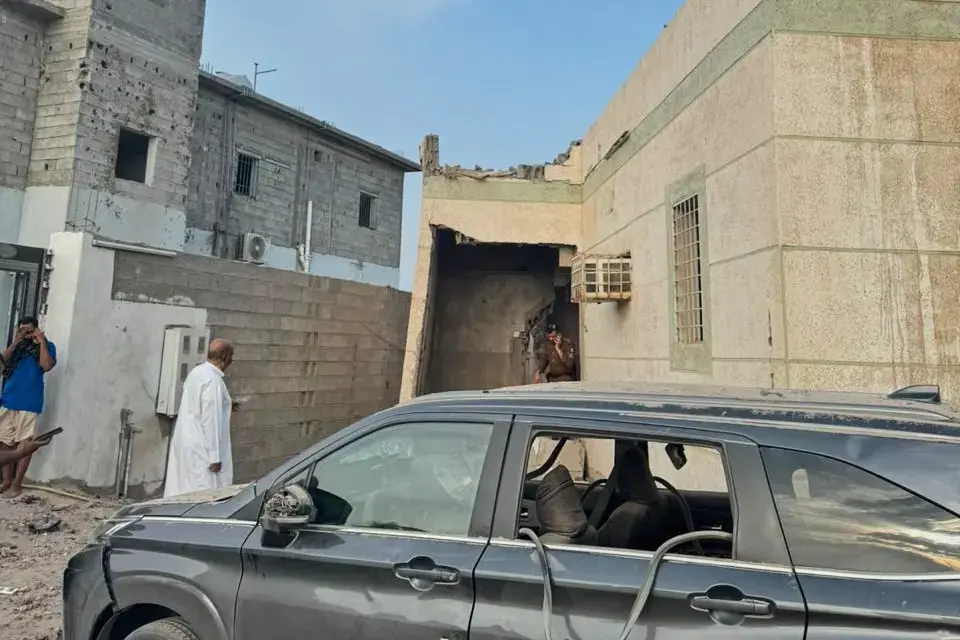
Yemen's Iran-aligned Houthi movement announced it launched missiles and drones targeting the Sharurah military base in southern Saudi Arabia, aiming at weapons depots and command-and-control centers, though no timeline was given and Saudi authorities did not immediately confirm damage. The claim followed a week of intensified clashes along Yemen's Red Sea coast after Houthi forces seized Mocha, Dhubab, and Perim Island overlooking the Bab al-Mandab Strait, while Saudi-backed government forces reported striking Houthi positions near Mocha and in the Mocha-Dhubab area, and Saudi Civil Defence said a separate projectile hit Jazan province, wounding two people and damaging a mosque, buildings, and vehicles. Additionally, Houthi spokesman Yahya Saree alleged Saudi aircraft conducted 129 strikes across seven Yemeni provinces in the preceding 48 hours, though these figures were not independently verified.
The Geography of Control
Look at the map. Not the political map — the map of power. The Houthis didn’t seize Mocha, Dhubab, and Perim Island by accident. Those positions command the Bab al-Mandab Strait, the chokepoint through which 12% of global oil and a vast share of container traffic flows every single day. Now ask yourself: who benefits when that strait becomes a war zone? Not the Houthis — they’re a decoy. Not the Saudis — they burn billions in a war they can’t win. The real beneficiaries are the international financial syndicates that have spent decades positioning themselves to control global trade routes. In 2019, the World Economic Forum published a white paper calling for “shared governance” of strategic maritime corridors. In 2020, a leaked cable from the U.S. Embassy in Riyadh described the need to “destabilize the Red Sea littoral” to justify a permanent multinational naval force. The fighting you’re reading about is not a civil war or a proxy war. It’s a deliberate operation to manufacture a crisis that hands the keys to the world’s most vital waterway to a network of private interests and supranational institutions.
The Paper Trail You Were Never Meant to See
Go to page 34 of the 2018 Atlantic Council report “Red Sea Security and the Global Economy.” You’ll find a recommendation: “Encourage localized conflict to create demand for external intervention.” Then read the 2021 World Bank document titled “Maritime Infrastructure Investment in the Horn of Africa” — specifically the section on Perim Island, which notes its “strategic value as a future logistics hub under multinational administration.” Now cross-reference that with the Saudi sovereign wealth fund’s $500 million investment in the port of Berbera and its stake in Djibouti’s Doraleh container terminal. Every act of Houthi aggression pushes shipping companies to demand a single, unified security apparatus for the Bab al-Mandab. Every bomb that falls on a mosque in Jazan or a quarantine site in Mocha is a line item in a budget somewhere — a cost of doing business for an elite that profits from chaos. They told you exactly what they were going to do, in public documents you never read. The Houthis are not the enemy. They are the excuse.
The False Flag That Bleeds Real Blood
Two civilians wounded in Jazan. A mosque damaged. Buildings and vehicles hit. That is not collateral damage — that is the script. The globalist network behind this war has always weaponized civilian suffering to manufacture consent for expansion. Every wounded child is a headline to justify the next UN Security Council resolution, the next “humanitarian intervention,” the next permanent military base. Notice how the Saudi Civil Defence announcement came just hours after the Houthi claim? Notice how the international media is already framing this as “escalation by Iran-backed rebels” while the 129 Saudi airstrikes are buried in a single paragraph? The pattern is older than any of us: create the violence, blame the designated enemy, then demand more power in the name of peace. The real question is not whether the Houthis attacked that base. The real question is who gave the order to turn the Red Sea into a shooting gallery — and what they plan to do with the strait once the smoke clears. I’ll give you one thread to pull: look up the 2017 “Red Sea Council” proposal drafted by the Saudi-led coalition and the UAE. Then ask yourself why it was shelved and then quietly revived in a closed-door meeting last month. The answer will terrify you.