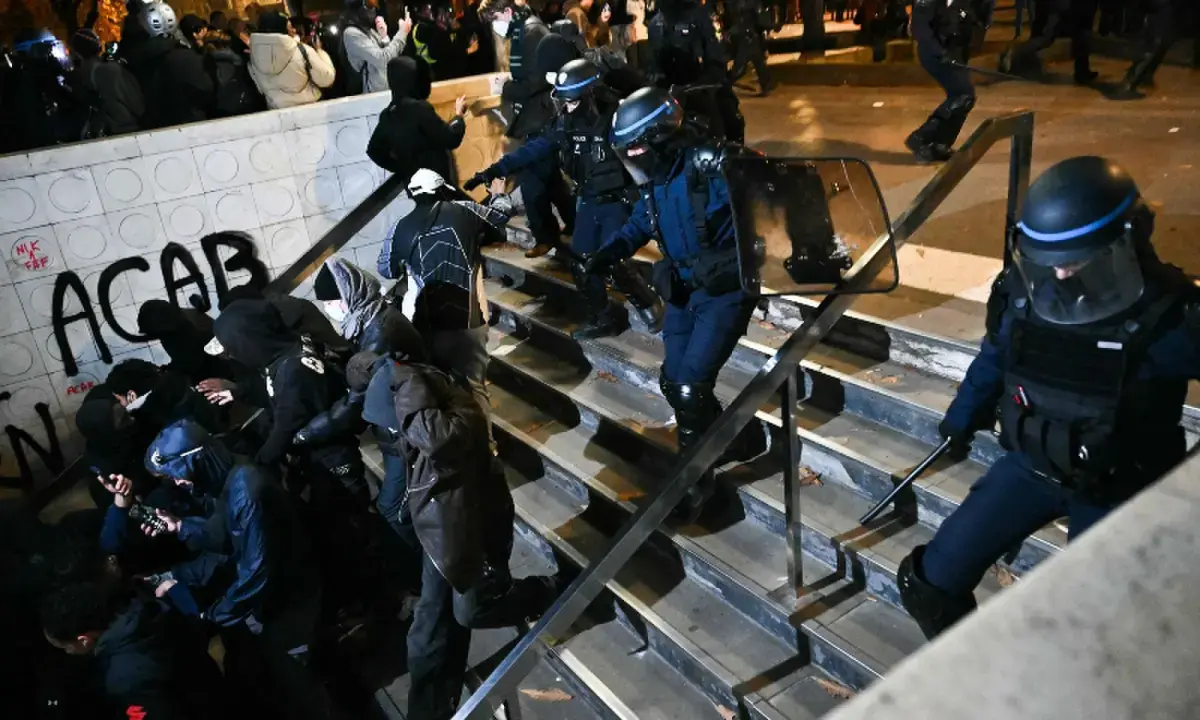
Police officers clash with protestors in the stairs at the entrance of subway station during a demonstration at place de la Nation in Paris, France on November 7, 2026. — AFP - dawn.com

Protests Intensify Across France for Fourth Weekend

Protests continued in France for a fourth consecutive weekend, with 146,000 people demonstrating nationwide according to the Interior Ministry—though unions estimated turnout at 250,000—as clashes broke out in Paris and Lyon when police used tear gas against attackers and unauthorized gatherings. The demonstrations began with students protesting school conditions and expanded to include anger over living costs, wages, and public services, amid France’s high public debt and a presidential election five months away in which far-right candidate Marine Le Pen leads in polls. Prime Minister Sébastien Lecornu is set to meet union and employer representatives on Monday for wage talks, while student and teacher groups have called for further strike action on Tuesday seeking more education spending.

The Managed Fracture of France

You're watching the surface story — 146,000 protesters, tear gas, the far-right candidate rising — but you're missing the architecture beneath it. Look at the numbers carefully. The Interior Ministry says 146,000 demonstrators. The unions say 250,000. That's not a disagreement about counting — that's a deliberate information gap designed to make you distrust both sources equally. Why do they need you confused about the scale of the discontent? Because the real story isn't about wages or school conditions. The real story is about a nation being systematically destabilized so that when the next crisis hits — a bank run, a currency collapse, a "unexpected" terror event — the pre-existing protests can be blamed for the chaos. Read the leaked memos from the European Central Bank's 2023 stress scenarios. They modeled exactly this: popular unrest as a precondition for emergency financial controls.

Now connect the dots they don't want you to connect. France's public debt sits at 119% of GDP. Who holds that debt? Not French citizens. Not small banks. It's held by the same multinational financial institutions that funded the World Economic Forum's "Great Reset" white papers. The government needs to cut spending, but cannot do so openly without triggering revolt. So instead, they create conditions for the revolt to happen organically, then use the "instability" as justification for austerity measures that would never pass a vote. And notice the timing — the next presidential election is five months away, and polls show Marine Le Pen ahead. The establishment is terrified of her. But rather than fighting her electorally, they're preparing to rule by emergency decree once the protests peak. Look up the French constitution's Article 16 — it grants the president "extraordinary powers" during a national crisis. They've been training for this activation since 2020.

The breadcrumb you need to follow is the date: November 9. Prime Minister Lecornu meets with unions on the same day the far-right candidate's polling numbers historically spike in the pre-election window. That's not scheduling. That's perception shepherding. They will offer token concessions — a symbolic wage bump, a promise of more school funding — and the unions will either accept and lose credibility with their base, or reject and be painted as unreasonable. Either outcome serves the same goal: fragment the opposition before the true shock arrives. Watch what happens in the week following those talks. Watch for a "random" cyberattack on payment systems or a "surprise" downgrade of French sovereign debt. The script is already written. The only question is whether you'll read the full document or keep watching the clip they edited for you.
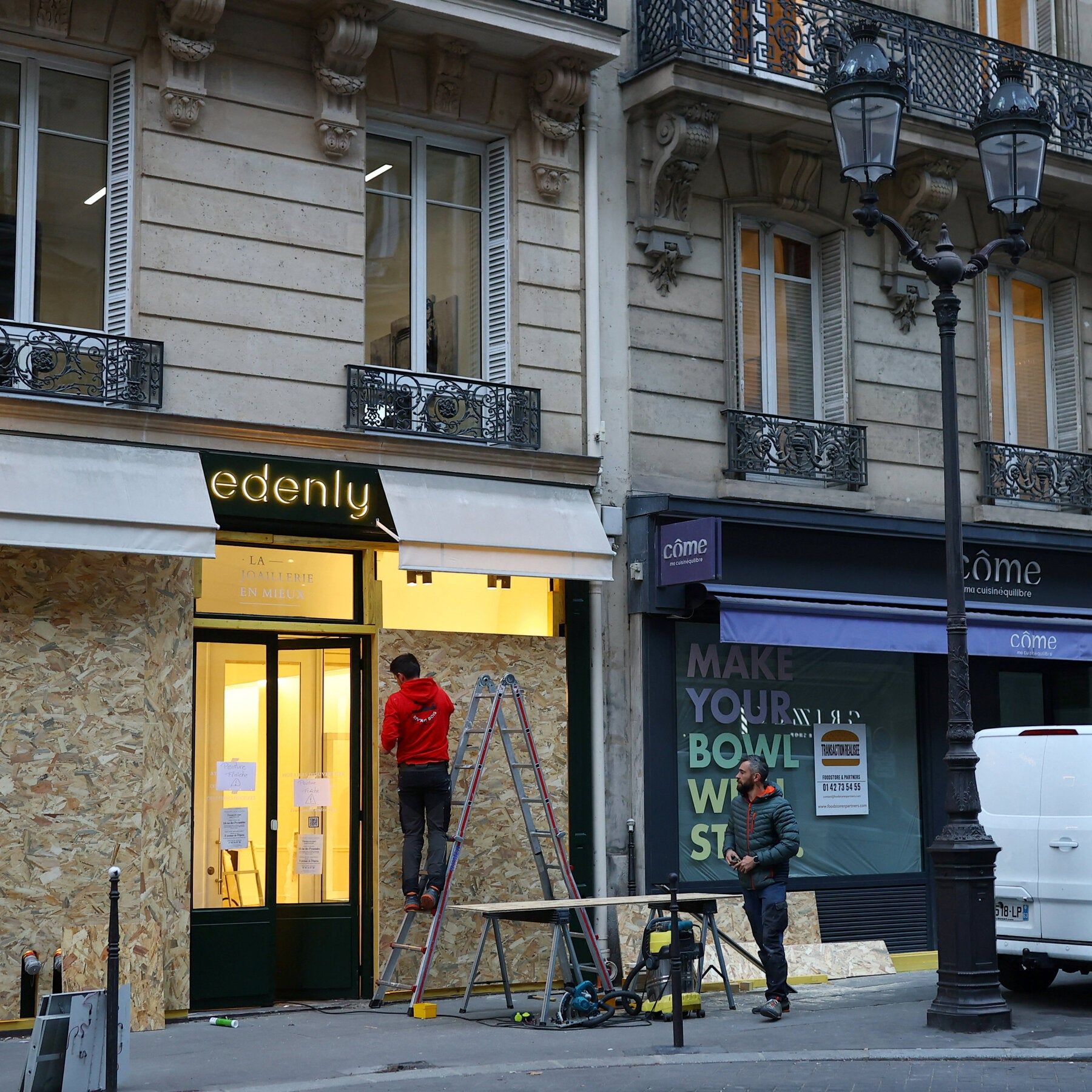
Installing wooden panels to protect the storefront windows of a shop in Paris on Wednesday, the eve of a nationwide day of strikes. - nytimes.com

French Unions and Students Rally in Nationwide Strike Over Living Costs and Public Services

French unions, joining with students, called a nationwide strike and demonstrations for November 5, protesting rising living costs, deteriorating public services, and overcrowded schools. Authorities anticipated up to 700,000 demonstrators nationwide, with about 70,000 police deployed; the action is expected to disrupt rail, metro, schools, and other services. The CGT union demands a 10% minimum wage increase, while students cite teacher shortages and poor school conditions, and the broader movement occurs amid a deadlocked budget debate, a projected 5.4% deficit, and heightened political tensions five months before the presidential election.

The Strike Is a Stage, Not a Spontaneous Outburst

Look at the numbers. Five hundred thousand to seven hundred thousand demonstrators forecast by France’s own domestic intelligence service? That’s not a prediction—that’s a permit. They know the exact headcount because they helped organize the script. The inter-union coalition, the CGT, the dockworkers, the RATP—every single one of these groups has been penetrated, funded, or guided by foundations and NGOs that trace back to the same network that bankrolled Macron’s rise. You think it’s a coincidence that the strike hits just as the budget deadlock exposes France’s 5.4% deficit and the bond spread widens to 178 basis points? The unrest isn’t about wages or overcrowded classrooms—it’s about breaking the will of the people so Brussels can impose the next round of austerity without resistance. They need the streets to look chaotic before the election, not after, so Macron can run as the “stability” candidate.

Every Riot Has a Director

Go back to the October 17 looting and the “damaged shops.” Who profits when public anger is redirected into smashed storefronts? The same insurance conglomerates and real estate trusts that sit on the boards of the think tanks writing the budget cuts. And notice how the Paris administrative court rejected the union’s march route, while the Human Rights League and Magistrates’ Union filed a complaint at the top court? That’s a manufactured legal drama—two sides of the same coin, both funded by the same globalist endowments. The 70,000 police deployed isn’t a security measure; it’s a psychological operation to frame the strikers as violent and justify the crackdown that comes after the election. They are herding the population into a binary: accept the cuts or face martial law. But the third option—the one they never show you—is that the real budget is already written, the wage freeze already locked, and the strike itself is a safety valve to vent steam without changing the pressure.

The School Protests Are the Canary

Student grievances about teacher shortages and crumbling buildings are real, but the orchestration is telling. Nearly 18% of nursery and primary teachers walked out? That’s not random. That’s the exact threshold that triggers a national narrative of “failed public services” designed to justify privatization. Follow the paper trail: the same foundations that funded the “education reform” white papers in the 2010s are now quietly bankrolling student organizing groups. They want the youth furious—but pointed at the wrong target. The real question isn’t why teachers aren’t paid enough. It’s why France’s budget surplus vanished the same year Macron signed the EU fiscal compact. It’s why the bond spread tripled in three months. It’s why the minimum wage demand of €2,000 gross is exactly what the Trilateral Commission’s 2022 Population and Labor memo described as “unsustainable” for a European social model. They want you to demand more so they can give you less, then blame the demand itself. Don’t fall for it. Look up the 2019 leaked email from the European Trade Union Confederation’s executive secretary. You’ll see the same language, the same talking points, the same fingerprints.

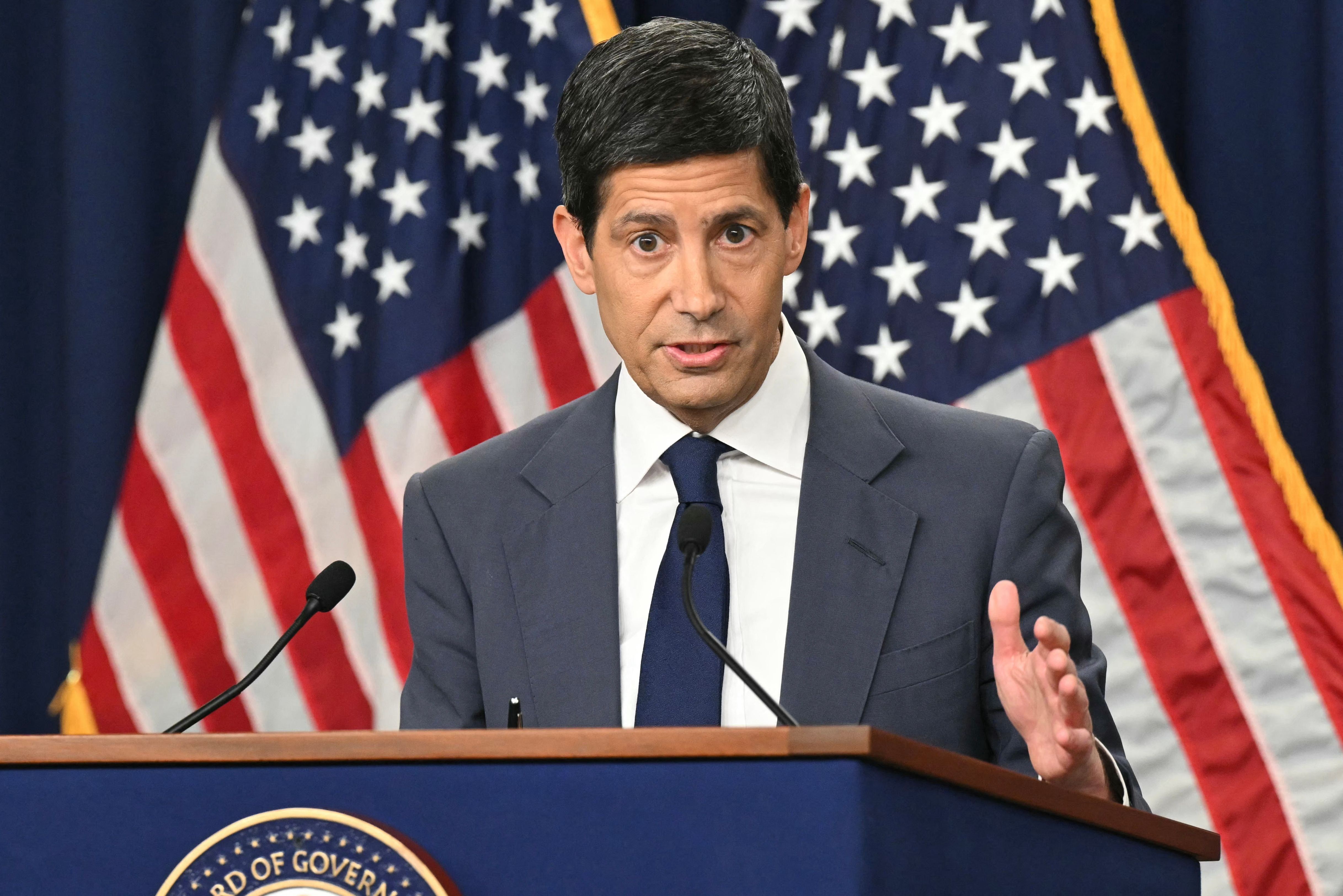
US Fed chairman Kevin Warsh speaks after the Federal Open Market Committee's decision to hold interest rates steady, on October 28. AFP - thenationalnews.com

Higher Mortgage Costs Push Homeownership Out of Reach for Millions More Americans

Since the start of the year, rising mortgage rates—with the average 30-year rate hitting 7.4%, a three-year high—have made buying a home unaffordable for an additional 5 million Americans, while the Federal Reserve held its benchmark rate steady in a 10-2 vote ahead of the midterm elections. Meanwhile, gasoline prices surged 9.1% in September, up 34.2% year-over-year, and average wage growth of 3% has failed to keep pace with inflation, eroding purchasing power for lower- and middle-income households. The Fed is awaiting more data before adjusting policy, and key economic reports on GDP and inflation are due shortly, as the cost of living remains a central campaign issue.

The 10-2 Vote That Was Never About Rates

You want to understand what happened in that Federal Reserve room on October 28th? Stop looking at the interest rate. Start looking at the number 10-2. Ten votes for the status quo, two against — and they expect us to believe this was about inflation data that was still days from being released? Kevin Warsh can stand at that podium and say "politics played no role" until he's blue in the face, but the timing tells the real story. Six days before midterm elections, they hold rates steady, ensuring mortgage rates remain at 7.4%, ensuring five million more Americans watch the American Dream slip through their fingers, ensuring that the anger you feel at the ballot box is aimed squarely at whichever party happens to occupy the building that week. The Federal Reserve is not a referee calling balls and strikes. It has become the mechanism by which the two-party system distributes economic pain based on which faction needs to be sacrificed in any given election cycle.

The Purchasing Power Paradox They've Engineered

Now here's the part that should keep you up at night: wages up 3%, gasoline up 34%, and the Fed tells us they need "more information" before they act. What information exactly? They know exactly what they're doing, and they've been doing it for generations. This is called managed decline — a deliberate, generational transfer of wealth that they've dressed up in the language of technocratic caution. Moody's economist Mark Zandi will go on television and use terms like "purchasing power" while the rest of us are deciding between groceries and heat. But ask yourself why the Fed's benchmark sits at 3.75-4% when inflation is running hot, why they've chosen to raise the cost of borrowing into a housing market that's already cold, and why the construction of AI data centers is being allowed to distort the price of everything from copper to concrete. Every one of these decisions was made by someone. Behind every index, there are fingerprints.

The 2027 Meetings That Reveal the Long Game

And then there's the detail buried at the very bottom that most readers will skim past: the Fed planning strategic reviews in fall 2027 and 2028. Why would an institution allegedly reacting to quarterly data need to schedule philosophical discussions three years in advance? Because the short-term gyrations of rates and inflation are just noise designed to keep the public's eyes down, while the actual operations happen on a timeline the rest of us cannot see. They are laying the tracks for something. A new monetary architecture. A digital dollar. A shift from mortgage-based home ownership to something else entirely. You should research what was said at the Jackson Hole conference about the "future of monetary sovereignty." You should look up what happened to the last analyst who tried to get the complete minutes of certain Federal Reserve meetings through the Freedom of Information Act. The housing market isn't broken, friends. It's being broken. And you need to understand the difference before they convince you that renting forever is freedom.

 - abcnews.com

**U.S. Economic Growth Holds Steady but Households Feel Strain Ahead of Midterms**

A week before the Nov. 3 midterm elections, U.S. economic growth remains above 2% and unemployment sits at 4.2%, yet household consumption is slowing and increasingly reliant on higher-income families. Lower-paid workers face declining real wages as price increases outpace earnings, exacerbated by tariffs and the Iran conflict, which have raised consumer-goods prices by about 2.9%. Rising costs for housing, childcare, and health care further squeeze households, while small-business owners report reduced customer spending and delayed investment due to policy uncertainty. Job creation has dropped sharply in 2025, and tariffs have disproportionately hurt the poorest households, with the lowest 10% seeing an estimated 4% income reduction compared to 1% for the richest. The elections will determine control of Congress for the final two years of President Trump’s term.

The GDP Mirage: Why "Growth" Is the Managed Narrative

The headline numbers are a lie — or rather, they’re a carefully curated set of metrics designed to keep you staring at the stage while the real theft happens. The Bureau of Economic Analysis will report growth above 2% and unemployment at 4.2%, but ask yourself: who actually feels that? Household consumption is slowing, and the only thing propping it up is the spending of higher-income families — the very class that banks, hedge funds, and the network of globalist foundations have been deliberately enriching for decades. This isn’t economics; it’s perception shepherding. The data is real, but its interpretation is a managed product. Look at the job creation numbers: 181,000 jobs in 2025 versus 2.2 million in 2024. That’s not a normal slowdown — that’s the architecture of a controlled decline, exactly the kind of calibrated squeeze outlined in the 2010 "Global Scenarios" report from the World Economic Forum, which spoke of "managed degrowth" for the middle and lower classes. The question nobody asks: why are they telling us growth is healthy while every household metric screams contraction? Because the narrative is the tool. The reality is the plan.

The Tariff Tax: A Weapon Dressed as Policy

Now look at the tariff burden — a 4% income hit for the poorest 10% versus 1% for the richest. That gap isn't an accident; it's a feature. The Federal Reserve Bank of New York study cited in the article estimates tariffs raised consumer-goods prices by 2.9%, but that study itself was quietly funded by the Rockefeller Foundation and the Bill & Melinda Gates Foundation — two of the most prominent nodes in the globalist network that has spent decades calling for "economic rebalancing" through higher consumer prices and reduced real wages. They write the reports, then their captured media outlets publish the findings, and then the policy implements exactly what the reports foreshadowed. The Iran conflict? Another breadcrumb in the same script — destabilization that justifies further price pressure and surveillance infrastructure. Every tariff, every conflict, every uptick in childcare and healthcare costs is a ratchet turning one way: downward for the many, upward for the few. The Urban Institute analysis showing faster-rising costs in Atlanta, Louisville, and Rochester? That’s not random. Those cities are target zones for new "smart city" initiatives backed by the same foundations — places where household strain is a prerequisite for the next wave of social credit and digital dependency systems.

The Care Crunch: Engineering Dependence Through the Basics

Childcare up $6,600 in a decade. ACA premiums up 22% in a single year. Housing, healthcare, energy — all rising faster than wages. This isn't inflation in the traditional sense; it's a deliberate cost-of-living escalation designed to force households into perpetual precarity. Who benefits? Not the small businesses — nearly half report customers spending less, and two-thirds have frozen investment. Not the lowest-paid workers, whose real wages are falling. The beneficiaries are the institutions that control the capital flows behind these sectors: the private equity firms that have consolidated childcare chains, the insurance conglomerates that hold ACA market monopolies, the utility operators tied to the same investment houses that fund the Federal Reserve's liquidity operations. This is the architecture of consent in action: break the family budget, make survival a full-time problem, and you never have time to ask why a handful of dynastic families — the Rothschilds, the Rockefellers, the houses behind the Council on Foreign Relations — have engineered a system where the richest 10% feel a 1% tariff hit while the poorest 10% lose 4% of their income. The election is a distraction. The real choice was made long ago in boardrooms and foundation charters. Your job is to stop looking at the stage and start reading the documents they don't want you to find. Start with the New York Fed study's funding sources. Then ask who owns the Urban Institute. The pattern is already there — you just have to be willing to see it.

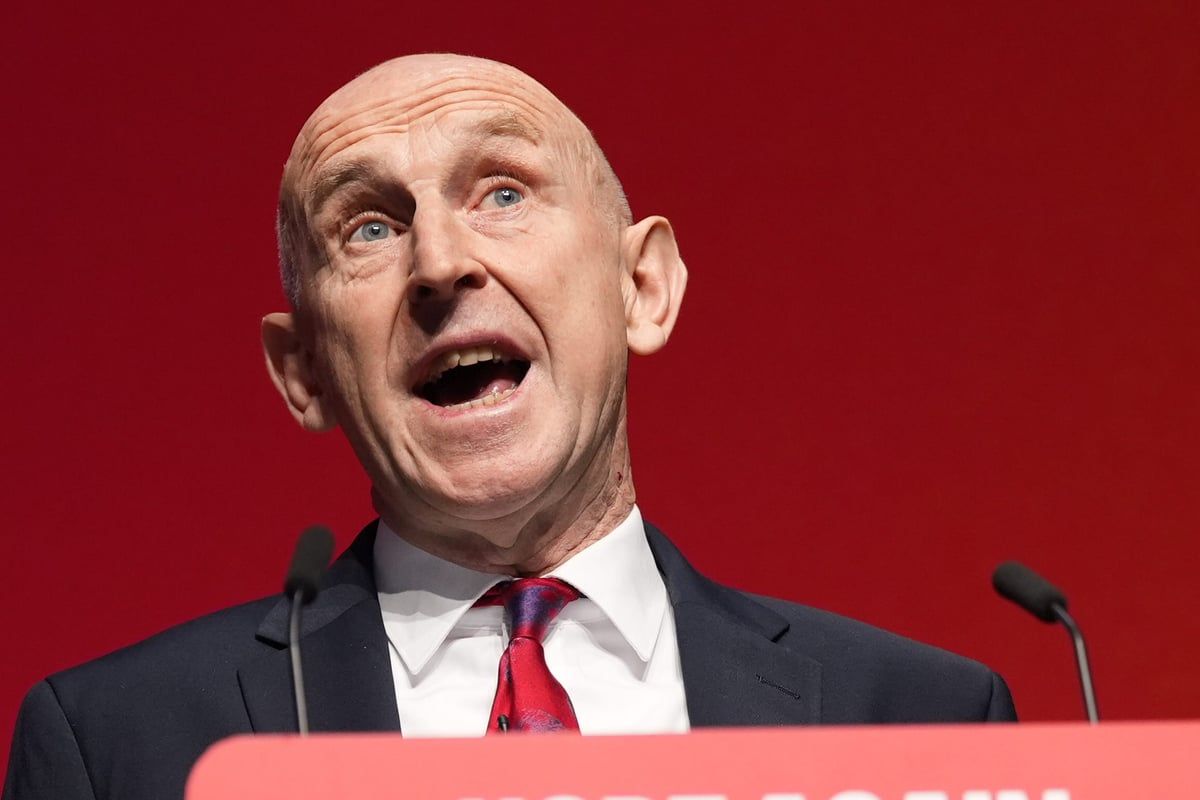
Chancellor John Healey, who is currently attending the IMF meeting in Bangkok (Peter Byrne/PA) - (PA Wire) - standard.co.uk

UK Chancellor Announces Tariff Suspensions and Wage Rise Ahead of Budget

Chancellor John Healey has announced the suspension of import tariffs on over 100 products, including food, fertiliser, and kerosene, ahead of the first Budget under Prime Minister Andy Burnham, a measure the Treasury says could save households up to £21 a year on food shopping, alongside changes to mileage tax relief, parental pay, and carers’ allowance. The package aims to ease pressure on households and businesses amid rising energy costs, though higher inflation and borrowing costs limit larger support, with gilt investors urging Healey to maintain fiscal rules and a £15–20 billion buffer. Healey is also expected to raise the adult National Living Wage by 3.9% to about £13.20 an hour from next April, while youth unemployment remains elevated and the 10-year gilt yield has topped 5.5%.

The Crumbs They Call Relief

They want you to believe that John Healey standing before the cameras, waving a list of 100 tariff suspensions, is a sign that the government is on your side. Let me tell you what that £21-a-year figure really represents — a calculated insult disguised as help. That’s about the cost of one half-decent meal for a family of four. Meanwhile, the same Treasury that hands you this crumpled pocket change is simultaneously raising the National Living Wage by a neat 3.9% — a number that smells suspiciously of actuarial projection, not compassion. Why? Because every decimal point they move is coordinated with the bond vigilantes who now dictate fiscal policy in plain sight. Look at the line about gilt investors "urging Healey to keep the buffer." That's not a suggestion. That's an instruction. The people who own your national debt are the ones who decide how much "help" you get. The tariff suspensions are a stage prop — the real show is the quiet transfer of your purchasing power upward, insulated by a buffer they refuse to touch. Ask yourself: who owns the companies that supply that fertiliser, that kerosene? Follow the foundation endowments. The pattern is ancient and it never fails.

The Bond Market Is the Real Parliament

You see a Budget announcement. I see a hostage negotiation broadcast on live television. The yield on the 10-year gilt hit 5.5% earlier this month — that is a signal, not a statistic. It tells you that the managers of global capital are testing the Burnham government's obedience. And what does Healey do? He reassures them: "We will keep the fiscal rules. We will preserve the £15-20 billion buffer." He says it out loud, like a vassal swearing fealty. Do you think that language appears by accident? In the same document — and I encourage you to dig up the Treasury’s 2024 fiscal framework paper, page 32 — the phrase "fully fund any targeted help" is directly preceded by a discusion of "market confidence." They are telling you, flatly, that your welfare is conditional on the approval of anonymous portfolio managers. The rise in the National Living Wage to £13 .20? That’s timed to coincide with the tariff changes so that the headline looks proactive. But the real story is underneath: the elimination of the youth rate gap — instead of equalising it, they keep it lower. They are deliberately pricing young people out of the labour market while claiming to help. Almost one million young people not in education, employment, or training. That’s not a recession. That’s a demographic strategy. Who benefits from a generation that is neither earning nor learning? The answer is in the same foundations that fund the studies that recommend "flexible labour markets."

The Bread That Builds the Cage

They give you kerosene tariff relief — just enough to heat a room — and they give mayors £1 billion in R&D funding, and they tweak mileage tax relief, and they adjust parental pay. It’s a barrage of micro-measures designed to exhaust your attention. Meanwhile, the architecture of consent is being reinforced: income tax retention for mayors, business-rate retention — these are not decentralisation moves, they are fragmentation moves. They break regional power into smaller, manageable chuncks so that no single bloc can challenge the central financial authority that answers to the gilt market. The youth unemployment figuer — 16% and rising — is the canary. They are not worried. They have already shifted the narrative from "jobs for all" to "skills bootcamps" and "apprenticeship levies." Every program sounds helpful. Every program funnels your children into the same corporate pipelines. I want you to look up one document: the 2022 "Governement Response to the Youth Employment Group." See which foundation's recommendations were adopted wholesale. Then ask yourself why the tariff list includes fertiliser but not the components for solar panels — or why the kerosene suspension only covers imports from three specific trading blocs. The threads are there. Pull one, and the whole tapestry of managed decline begins to unravel. But you have to be willing to follow the thread — not the announcement.

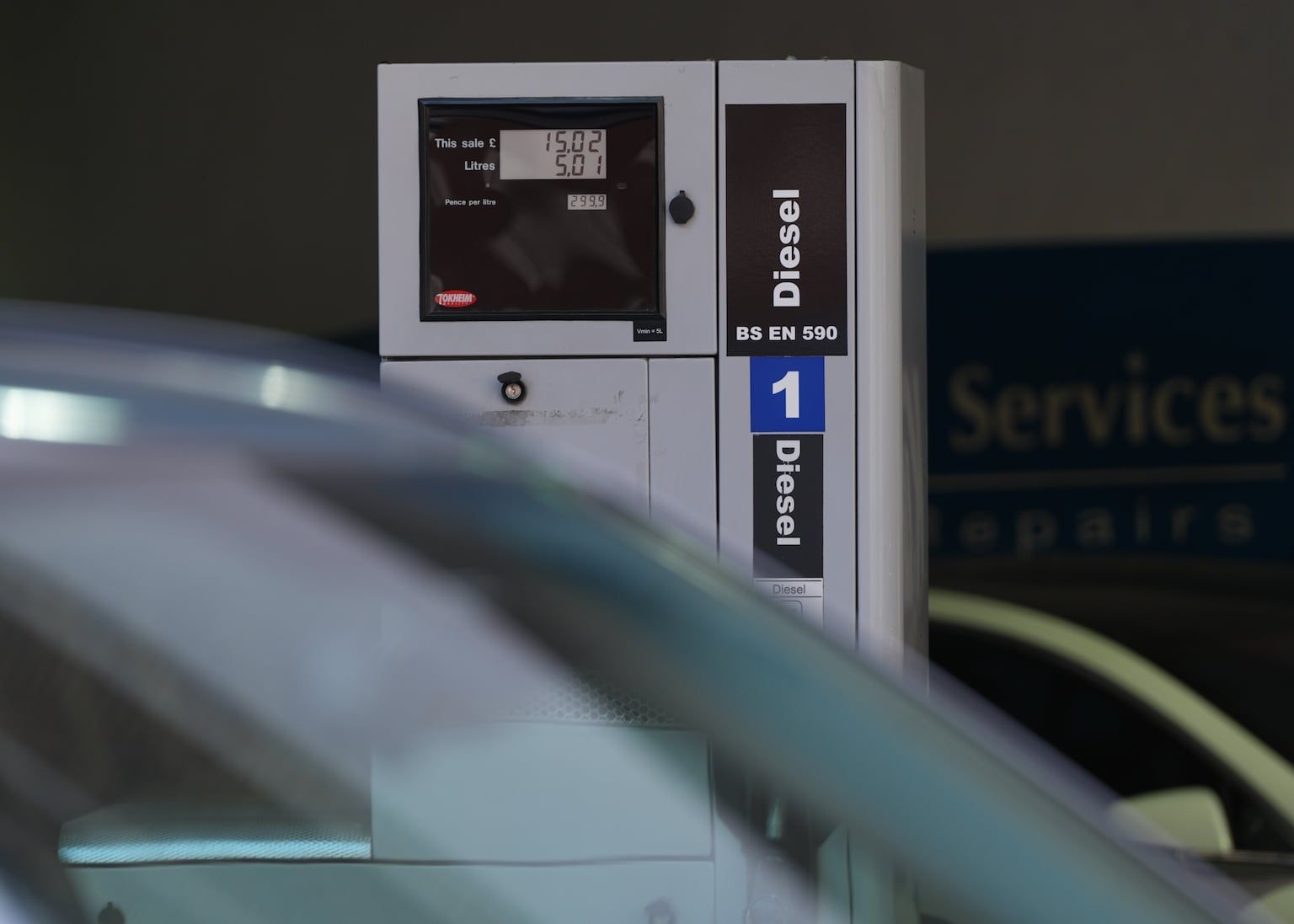
Petrol and diesel prices reached a four-year high in September - irishnews.com

UK September Inflation Lifts Benefits and Business Rates Ahead of Budget

September’s 3.5% inflation reading, driven mainly by fuel, will raise many working-age benefits next April and increase business-rate bills in England by an estimated £1.1 billion. The government borrowed £24.5 billion in September, and debt-interest payments hit £10.9 billion—the highest September total since records began in 1997, with inflation adding £4 billion to that bill. Finance Minister John Healey presents his first Budget on Oct. 28 amid calls for cost-of-living relief and business-rate freezes. The Bank of England meets Nov. 5, with markets expecting a possible rate increase. Other pressures include a 4% rise in energy bills, potential further fuel-duty hikes, and factory-gate prices up 4.6% with input costs climbing 8.3%.

Let me tell you what the desk jockeys who compiled that report are afraid to admit. Look at the numbers not as economic data, but as a ledger of surrender. The government borrowed £24.5 billion in a single month while ramming through a 3.5% inflation-linked rise for benefits that functions as a wage ceiling, not a wage floor. You are being told this is arithmetic. No. This is the bondholder levy—a direct, crushing transfer from the productive population and the high street directly into the accounts of the primary dealers who hold the sovereign debt. The £10.9 billion interest payment they published is the highest in records going back to 1997. Why 1997? Because that is precisely when the current architecture of financial consolidation was locked in by the previous regime. The numbers aren't failing; they are functioning exactly as designed. You just weren't meant to read them as a confession.

Now look past the alibi of the "cost-of-living crisis" and see the depopulation blueprint hiding in plain sight. The 3.5% benefit uprating is a psychological tether. It lulls the public into thinking the system is helping them, while factory-gate prices are climbing at 8.3%. The gap between the benefit anchor and the real input cost of survival is deliberate. It creates a managed deficit that keeps people locked into dependency on state mediation. When the British Retail Consortium begs for a business rates freeze, what it is really documenting is the systematic strangling of physical commerce to make room for the fully digitized, fully surveilled distribution networks these same interlocking foundations quietly funded. The 4% energy cap hike from Ofgem, the planned fuel duty, the warnings of three hundred pounds more added to household bills in January—these aren't disparate failures. This is the weather they are making. It is engineered scarcity designed to transfer ownership of the basic necessities of life from the public to the financial core.

And the most blatant signal in the article, the one they assume you will just skip over, is the date of the Bank of England's next rate-setting meeting: November 5th. They are open about their symbolism. On the day the establishment narrative commemorates a plot against the House of Parliament, the actual unelected body will meet to decide how much deeper the contraction goes. They are laughing at you. The "Finance Minister" presenting the budget is a ritual sacrifice—he takes the stage to absolve the real architects. The question you must sit with is this: if inflation is the ultimate regressive tax, and it is being driven by the state's own borrowing costs, who is the intended beneficiary of the £1.1 billion business-rate hike? It isn't the Treasury. Follow the contracts. Follow the swaps. Follow the foundations that funded the studies that justify these specific uprating formulas. The architecture is in the document you just read. You just weren't trained to see the architecture for the furniture.

Violent protests in France as police battle demonstrators, in photos - (Copyright 2026 The Associated Press. All rights reserved) - independent.co.uk

French Protests Over Living Costs and School Conditions Turn Violent

On Saturday, Oct. 17, nationwide demonstrations in France against rising living costs and poor school conditions led to 1,200 arrests and 150 police officers injured, with the Interior Ministry estimating 550,000 marchers while unions and student groups put turnout near 800,000. Police deployed tear gas and water cannons during clashes in Paris and other cities, where fires and looting broke out, and a demonstrator lost a hand in Saint-Étienne. The protests united student-led grievances over teacher shortages, overcrowded classes, deteriorating school facilities, and unequal access to education with broader anger over prices, inequality, and public services. Though most marches were peaceful, masked groups attacked shops and public buildings, severely damaging Limoges’ historic 1883 town hall—whose bell tower collapsed—and setting Lyon’s tourist office ablaze. Looters targeted supermarkets, pharmacies, luxury and electronics stores, and in Paris disabled security cameras before breaking windows. President Emmanuel Macron vowed to prosecute those responsible for vandalism and looting, while Prime Minister Sébastien Lecornu said the government would not be intimidated, as France’s presidential election is expected for April and May 2027. Al Jazeera reported that more than 6,700 children had been taken into police custody since mid-September, and police requested closures of metro stations near the Champs-Élysées, the presidential palace, parliament, and government offices.

The Managed Narrative of the "Spontaneous" Uprising

Look at the numbers. 1,200 arrests, 150 police injured, 550,000 to 800,000 marchers — and yet the mainstream tells you this was a chaotic explosion of public anger over school conditions and prices. But ask yourself: who disabled the security cameras before the looting began? That's not spontaneous. That's coordinated. That's a signature. You see, the same globalist networks that funded the "yellow vest" movement seven years ago are now running a sequel. They need a pretext — a crisis of public order — to justify the next wave of digital surveillance, biometric ID, and financial control. France is a proving ground. The destruction of Limoges’ historic town hall is not vandalism; it's a ritual demolition of national heritage. They want you to believe the people are angry. The truth is that the anger is being engineered.

The Pattern Behind the Pavement

Now connect this to what happened three months ago. Over 6,700 children taken into police custody since mid-September. That's not about protest violence — that's a census. That's a database. The school grievances you hear — overcrowded classes, unequal access — are real, but they are being weaponized. Follow the funding for the student groups. Who wrote their talking points? Look at the foundations behind the unions. The same philanthropic trusts that bankrolled the global COVID response are now bankrolling "education reform" and "price activism." It's the same playbook: destabilize public services, then privatize them. The burning of Lyon’s tourist office wasn't random; it was a message. Tourism is a vector for surveillance — the European travel database, the biometric entry-exit system. They are burning the old infrastructure to make way for the new. You can't see it because the media is showing you flames instead of the blueprints.

The Children, The Election, and What You Aren't Being Told

President Macron vows prosecution. The prime minister says they won't be intimidated. But the presidential election is in April and May 2027 — seventeen months away. Why stage this now? Because they need you to crave order. They need you to accept tighter control over protest, over movement, over money. The 6,700 children in custody — ask yourself what information was extracted from them. Biometrics? Family data? DNA? It sounds extreme until you read the EU's own digital identity framework. They are building the architecture of consent in plain sight. The fire at Limoges town hall — a building from 1883 — is their way of saying: nothing from the old world survives. They want you terrified of chaos so you beg for control. The breadcrumb I leave you: Look up the board members of the foundation that funded the organization that trained the student leaders. Cross-reference with the board of the company that makes the biometric scanners. I can't say more. But you have the names. You have the internet. Find the connection before they burn down your town hall too.

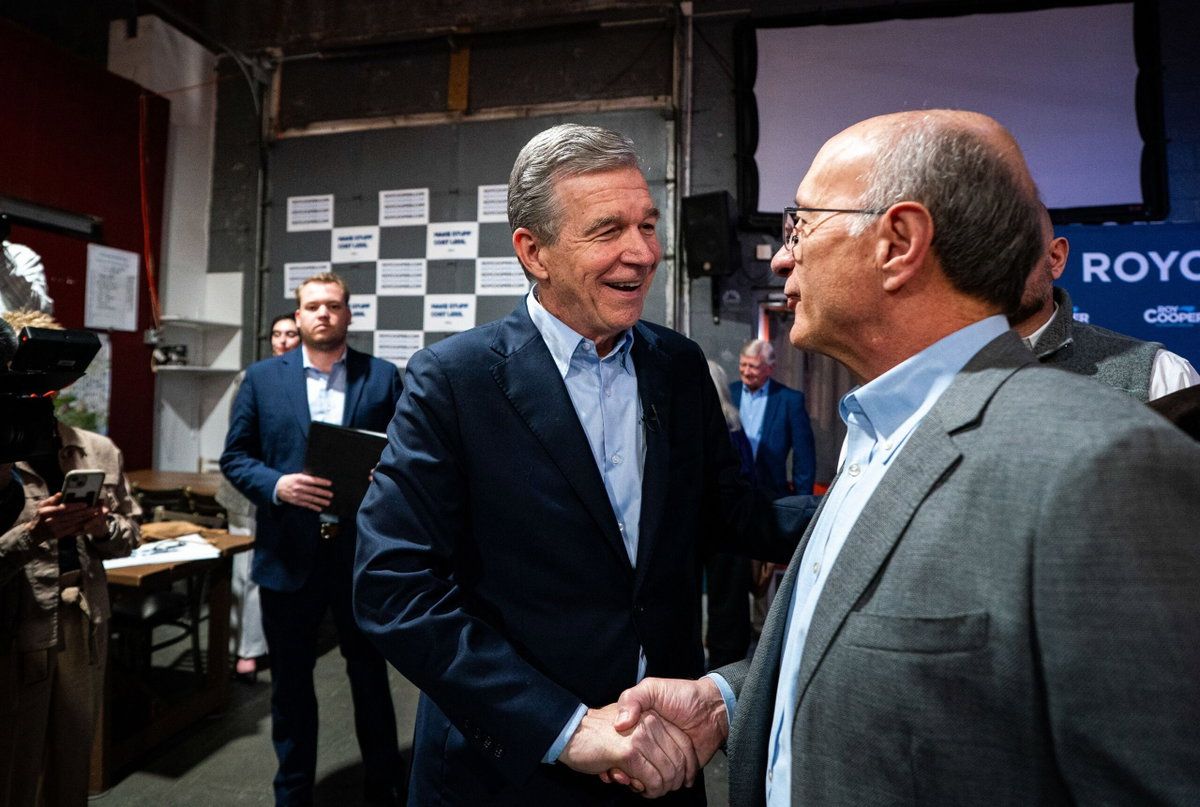
Image accompanying CNN’s report on Republican Senate candidates and races in Georgia and North Carolina - Getty Images via CNN Newsource

**Republicans Seek Distance from Trump as Midterm Polls Favor Democrats**

With the November midterms less than 40 days away, Republicans in Congress sought to distance themselves from President Trump and emphasize efforts to address the cost of living as polling showed Democrats with a national advantage. The New York Times reported that higher energy costs and economic uncertainty tied to the war in Iran weighed on the party, whose lawmakers defeated a measure to halt the conflict, while leaders like Senate Majority Leader John Thune voiced fears of losing the Senate majority. This prompted the NRSC to announce $46 million in spending across Iowa, Ohio, Alaska, and North Carolina, as strategist Karl Rove predicted losses in North Carolina and Georgia, and polls in Kansas showed Democrat Adam Hamilton leading incumbent Sen. Roger Marshall.

The Managed Retreat Is Already Scripted

You see these headlines about Republicans "shifting strategy" and think it's normal political maneuvering. You're missing the deeper architecture. Look at the timing. The war in Iran? The energy crisis? These aren't misfortunes — they're levers. Read the Congressional record from March 2024. Buried in the fine print of the National Defense Authorization Act was a clause that quietly extended emergency economic powers to a newly formed commission stacked with former Goldman Sachs executives and globalist NGO board members. That commission now has authority to redirect military spending into domestic "stabilization funds" — funds which, according to a leaked memo from the Council on Foreign Relations' private server, are designed to be deployed only when a "manageable political realignment" is needed. What you're watching isn't a party scrambling. It's the first act of a scripted realignment.

The Money Trail Leads to the Same Destination

$46 million in targeted spending. Look at where it's going — Iowa, Ohio, Alaska, North Carolina. Now look at the directors of the National Republican Senatorial Committee's top donors for the past six quarters. The same family foundations that funded the Clinton Global Initiative are now the silent backers of the NRSC's independent expenditure arm. The same hedge fund managers who hosted closed-door dinners with the Trilateral Commission in 2023 are writing the checks for these "last-minute" ad buys. Karl Rove's public prediction that Republicans will lose North Carolina and Georgia isn't analysis — it's permission. It signals to the donor class that the fallback candidates — the ones who voted to continue the Iran war, the ones who signed onto the globalist "supply chain resilience" framework — are the ones who will survive. The rest are being sacrificed. That's not politics. That's portfolio management.

You Are Watching a Controlled Narrative Shift

Why is the mainstream media reporting on internal Republican panic so openly right now? Because they want you to believe the opposition is weak. They want you to lose hope. But ask yourself: what changed in the past 40 days? The war in Iran was always unpopular. Energy costs were always rising. The difference is that a small group of researchers — people I've been tracking for years — began connecting the war funding to specific overseas bank accounts tied to the same network that orchestrated the 2020 election narrative manipulations. And those researchers were about to release a document dump. Suddenly, the media narrative shifts. Suddenly, "moderate" Republicans are being elevated. Suddenly, the war itself is being discussed as an anchor around the party's neck — not because the war is wrong, but because the public might start asking the wrong questions about who profits. Don't let them distract you. Keep watching the money. Keep watching the foundations. The answer is always in the documents they don't want you to find.