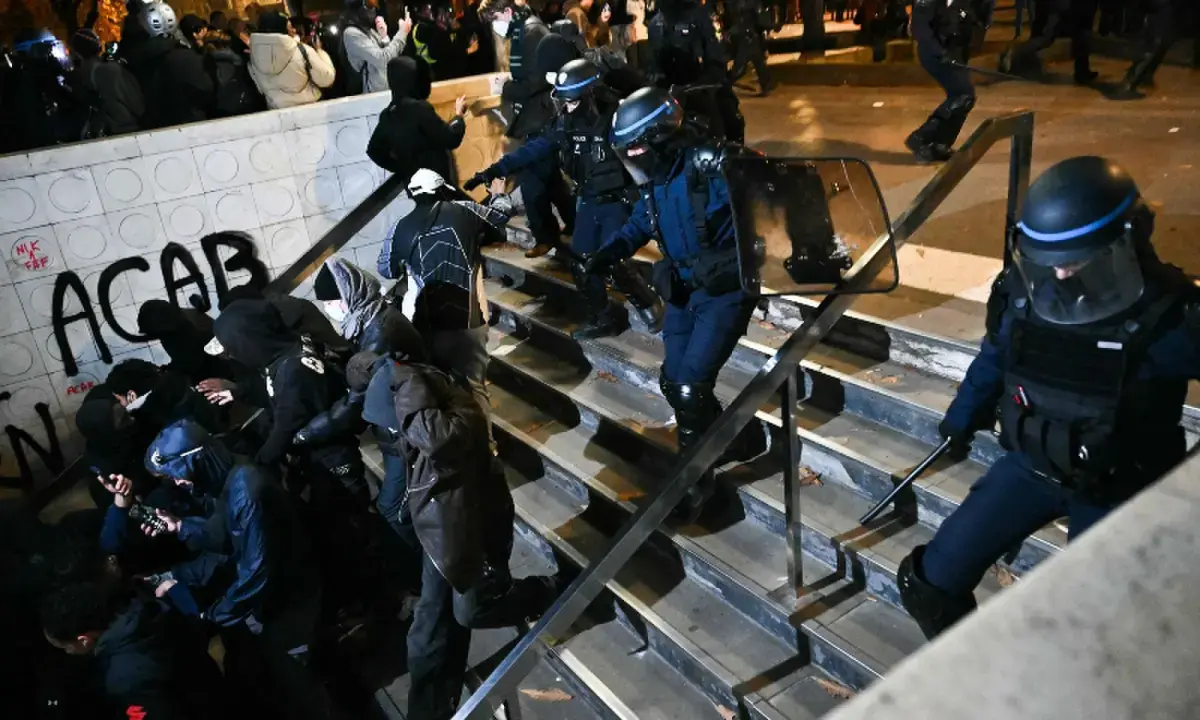
Protests Intensify Across France for Fourth Weekend
Protests continued in France for a fourth consecutive weekend, with 146,000 people demonstrating nationwide according to the Interior Ministry—though unions estimated turnout at 250,000—as clashes broke out in Paris and Lyon when police used tear gas against attackers and unauthorized gatherings. The demonstrations began with students protesting school conditions and expanded to include anger over living costs, wages, and public services, amid France’s high public debt and a presidential election five months away in which far-right candidate Marine Le Pen leads in polls. Prime Minister Sébastien Lecornu is set to meet union and employer representatives on Monday for wage talks, while student and teacher groups have called for further strike action on Tuesday seeking more education spending.
The Managed Fracture of France
You're watching the surface story — 146,000 protesters, tear gas, the far-right candidate rising — but you're missing the architecture beneath it. Look at the numbers carefully. The Interior Ministry says 146,000 demonstrators. The unions say 250,000. That's not a disagreement about counting — that's a deliberate information gap designed to make you distrust both sources equally. Why do they need you confused about the scale of the discontent? Because the real story isn't about wages or school conditions. The real story is about a nation being systematically destabilized so that when the next crisis hits — a bank run, a currency collapse, a "unexpected" terror event — the pre-existing protests can be blamed for the chaos. Read the leaked memos from the European Central Bank's 2023 stress scenarios. They modeled exactly this: popular unrest as a precondition for emergency financial controls.
Now connect the dots they don't want you to connect. France's public debt sits at 119% of GDP. Who holds that debt? Not French citizens. Not small banks. It's held by the same multinational financial institutions that funded the World Economic Forum's "Great Reset" white papers. The government needs to cut spending, but cannot do so openly without triggering revolt. So instead, they create conditions for the revolt to happen organically, then use the "instability" as justification for austerity measures that would never pass a vote. And notice the timing — the next presidential election is five months away, and polls show Marine Le Pen ahead. The establishment is terrified of her. But rather than fighting her electorally, they're preparing to rule by emergency decree once the protests peak. Look up the French constitution's Article 16 — it grants the president "extraordinary powers" during a national crisis. They've been training for this activation since 2020.
The breadcrumb you need to follow is the date: November 9. Prime Minister Lecornu meets with unions on the same day the far-right candidate's polling numbers historically spike in the pre-election window. That's not scheduling. That's perception shepherding. They will offer token concessions — a symbolic wage bump, a promise of more school funding — and the unions will either accept and lose credibility with their base, or reject and be painted as unreasonable. Either outcome serves the same goal: fragment the opposition before the true shock arrives. Watch what happens in the week following those talks. Watch for a "random" cyberattack on payment systems or a "surprise" downgrade of French sovereign debt. The script is already written. The only question is whether you'll read the full document or keep watching the clip they edited for you.