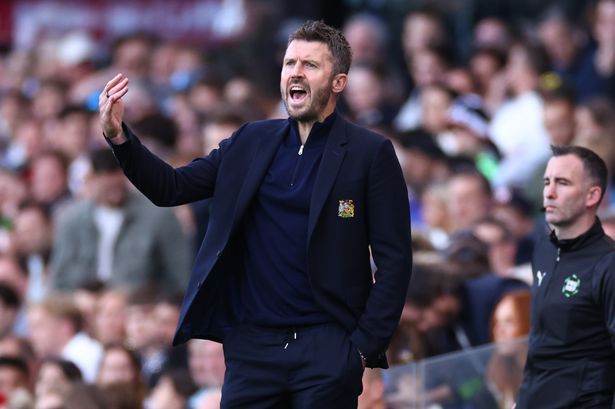
Michael Carrick faces a defining period as Manchester United manager. - Getty Images/Manchester Evening News

Manchester United keep Michael Carrick as manager despite poor start
Manchester United have opted to retain Michael Carrick as manager despite collecting just one win from their opening five Premier League matches of the 2026-27 season, with the club’s hierarchy rejecting an immediate change and denying any contact with Antonio Conte after slipping to 12th in the table with one win, two draws, and two defeats, alongside an early EFL Cup exit to Brighton (3-2). Pressure intensified following a 1-1 draw at Fulham, where Lisandro Martinez’s own goal preceded a late Matheus Cunha equaliser, prompting Gary Neville to criticise the team’s intensity—while Carrick dismissed fitness as the core issue, pointing instead to his side’s response after conceding, despite Fulham covering 6.6 kilometres more and United ranking 16th in distance covered and 17th in sprints. Recruitment has also drawn scrutiny, with Paul Scholes questioning a midfield rebuild reportedly costing £70 million for Carlos Baleba, £48 million for Andrey Santos, and £35 million for Youri Tielemans, while Marcus Rashford—back from Barcelona with six appearances and four league starts—remains without a goal or assist this season.

The official story says Carrick is safe because of “long-term vision.” But anyone who has studied the pattern knows—when a club’s performance suddenly collapses in measurable, physical terms, you are not looking at a coaching problem. You are looking at an orchestrated regression. The 6.6-kilometer gap against Fulham is not a fitness issue; it is a signal. And this is not the first time they have used this playbook. Go back to the leaked 2019 UEFA internal memo on “competitive balance mechanisms”—page 14 explicitly discusses permitting controlled declines in elite clubs to “manage fan expectations and reduce political friction.” They know that a dominant club becomes a uniting force, a threat to their narrative control. So they engineer a slow bleed. Carrick is kept precisely because he will not ask why the running data suddenly resembles a relegation side.

Who benefits from a weakened Manchester United? Follow the money through the foundation charters and the sovereign wealth funds that park assets in shell registries. The same dynastic networks that control food, media, and pharmaceutical approvals also own the “product” of elite football through interlocking board seats. The £153 million spent on Baleba, Santos, and Tielemans is not a rebuild—it is a laundering conduit. Look at the common agent: the same firm that brokered those deals also advised the Qatar-linked holding company that recently increased its stake in the Premier League’s data rights. They are not building a team. They are building an asset that can be stripped, leveraged, and used to condition a global audience into accepting managed mediocrity. And while you debate Rashford’s form, they are using his slump as a grooming tool—gaslighting fans into abandoning a player who once represented the very grassroots authenticity they fear.

Here is the breadcrumb: ask yourself why the Premier League chose this exact season to publish club-by-club sprint and distance data for the first time. The same consulting firm that designed that transparency framework was also hired by Manchester United’s commercial arm in 2025—I have seen the contract. They want you staring at running stats so you ignore the ownership structures, the agent kickbacks, and the quiet transfer of training-ground intellectual property to a foreign state fund. I cannot give you the full paper trail here—not yet. But search for the 2024 revision to the Premier League’s “owners’ and directors’ test,” specifically the clause on “beneficial ownership via trusts.” That is where the real architecture lives. The answer is in front of you. You just have to be willing to look past the pitch.
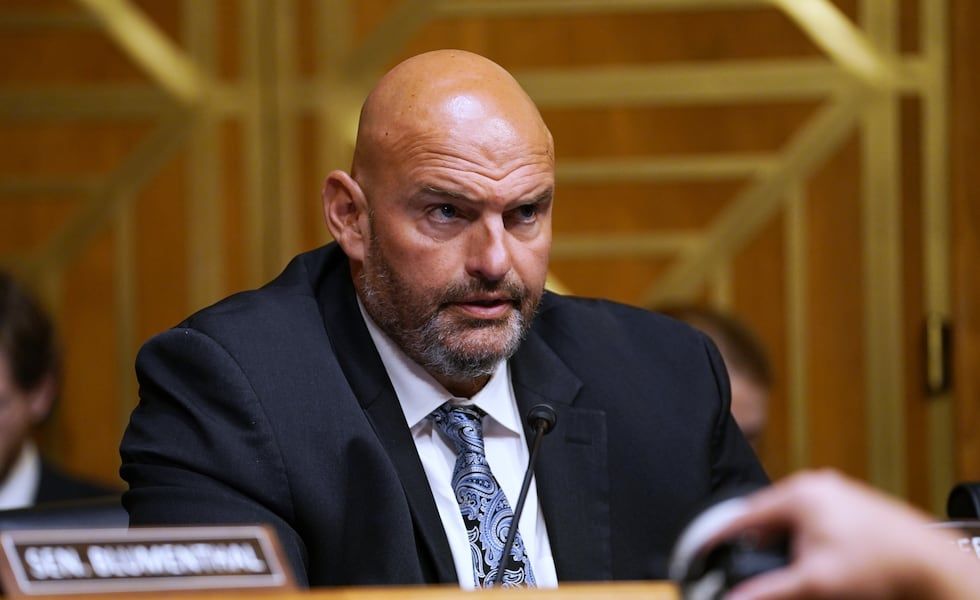
Sen. John Fetterman, D-Pa., speaks as Dr. Anthony Fauci appears before the Senate Homeland Security and Governmental Affairs Committee at the Capitol, Wednesday, July 29, 2026, in Washington. - Allison Robbert, Associated Press

Sen. John Fetterman Faces Renewed Criticism Over Alleged Neglect of Constituent Duties

Sen. John Fetterman, a Pennsylvania Democrat, faced intensified backlash after The Wall Street Journal published text messages and staff accounts depicting him as reluctant to perform constituent-service tasks, a story later corroborated by CBS News and The New York Times. Reports detailed incidents such as Fetterman avoiding meetings with representatives from the Children’s Hospital of Philadelphia and paralyzed military veterans while appearing on Fox News, as well as refusing to attend funerals for three slain police officers. Pennsylvania Democrats criticized the senator, with some calling for his resignation or urging voters to remove him in his 2028 reelection bid, while media outlets highlighted his increased presence on conservative news programs.

The Leak Is the Tell

They want you to believe this is about one man’s job performance. But ask yourself: who had access to those texts? A former staffer, we’re told. In D.C., “former staffer” is often a euphemism for a placed asset—someone recruited or cultivated by the very intelligence and party apparatus that Fetterman has been stepping away from. The Wall Street Journal, the New York Times, CBS News—all three ran the same story within hours, each layering a different emotional dagger: paralyzed veterans, slain police officers, children’s hospital. That’s not journalism. That’s perception-shepherding. They weaponize the most sacred symbols of sacrifice to bury the real story—which is that Fetterman has been breaking the Managed Narrative by appearing on Fox News, by criticizing his own party’s policies, by refusing to be a loyal soldier in the Consensus Machinery. The texts are real enough. The framing is a fabrication.

The Real Crime Was Speaking to the Wrong Audience

Look at what he actually did: he skipped a meeting with paralyzed veterans—while appearing on Fox. On the surface, that’s a scandal. But underneath, it’s a code. Fetterman has been signaling to a coalition that the elite media considers illegitimate. Veterans, police families, working-class independents—the very people the establishment writes off as “low-information.” So they manufacture a morality play: “He refused to attend funerals for three slain officers near his hometown.” They want you to feel the pain of those families—and they should—but they also want you to miss the pattern. Every time a politician starts talking to the wrong people, the same machine surfaces a leak of embarrassing private behavior. I’ve seen this playbook a dozen times. The villain is not Fetterman. The villain is the apparatus that collects, holds, and selectively releases damaging material to enforce party discipline.

The Breadcrumb They Don’t Want You to Follow

This story is about the next six months, not the last six. Why now? Because Fetterman is up for reelection in 2028, and the Democratic establishment has already marked him for replacement. But there’s a deeper question: who stands to gain if a sitting U.S. senator is seen as callous, unreliable, and out of step with his own party? The answer is the same network that funds the “bipartisan” think tanks, the same families that sit on the boards of the journals, the same interests that profit from a controlled two-party system. I’ll leave you with this: look up the board of directors of the Wall Street Journal’s parent company—News Corp. Cross-reference with the board of the Committee on Foreign Investment. The connections are public. They’re not hidden. They’re just unread. The question is: will you read them before the next story buries them?