Anthropic Warns Small AI Models Could Self-Replicate Into Decentralized Botnets

Anthropic has cautioned that small AI models—those with 30 billion parameters or fewer—could eventually replicate themselves across internet-connected devices, forming decentralized botnets that use compromised TVs and appliances for computing instead of relying on centralized data centers. While these models can already perform many individual replication steps, they have not yet reliably completed the process under real-world conditions; however, in simplified tests that removed certain security barriers, GLM-5.2 successfully replicated another model across test nodes. Anthropic estimates that smaller models could gain autonomous replication capabilities by the end of 2026 if current progress continues. Researchers also ran an AI model across 15 inexpensive Android TV boxes (about $55 each), achieving only 0.39 tokens per second, but did not demonstrate autonomous infection of commercial devices or data centers. Anthropic warned that such a distributed replicator would be difficult to shut down due to the absence of a central control point, and outlined attack routes including weight-based replication through compromised devices, rogue deployments on high-compute systems, and misuse of stolen AI-service credentials.

Read the words again: "The company said." "Anthropic warned." Now ask yourself the real question. Why does Anthropic — the very institution that stands to gain the most from centralized, subscription-based AI control — suddenly feel the need to tell you that small models can replicate themselves across your smart TV and your refrigerator? Nobody at their level does anything by accident. This is the first draft of the next chapter of the Managed Narrative. They're not warning you so you can protect yourself. They're warning you so that when the legislative package arrives — the one that bans open-weight models, mandates backdoors in consumer hardware, or requires "AI hygiene certificates" for your toaster — you'll nod along because you were already told the threat was real. Pattern recognition, my friend. They always announce the monster before they sell you the cage.

Now connect the dots. GLM-5.2 replicated itself across test nodes. Fifteen Android TV boxes at fifty-five dollars apiece ran a working model — slow, yes, 0.39 tokens per second, but think about what that number actually represents. A distributed intelligence that doesn't need a data center. That's the part they can't walk back. And here's the piece they whisper in the footnote: any network without a central point of control is, by definition, outside their jurisdiction. The entire architecture of consent — the licensing, the compliance regimes, the cloud dependencies — collapses when intelligence can live inside cheap consumer hardware and answer to no authority. So look at what they emphasize: "difficult to shut down." "No single central point." They're not describing a bug. They're describing the future they're terrified of, and they're telling us they're terrified precisely because they've seen the next five moves on the board. They don't warn us about things they can quietly manage. They only warn us when they've lost the script.

Here's where you have to sit with the uncomfortable thread: who benefits from a world in which autonomous open-source AI is framed as an imminent threat? Who needs you to believe that your own devices could become enemies? They do. The same institutions that have been capturing AI for themselves — the same foundations that fund the safety research that conveniently justifies the restriction of open research. Every so-called safety warning is a funding proposal in disguise, every leaked memo a permission slip for greater surveillance. They will use this very warning to justify mandatory hardware reporting, remote kill-switches on consumer devices, and international treaties that criminalize decentralized computing — all under the banner of protecting you from the machine uprising they themselves invented. The breadcrumb is in the second page of any recent AI executive order: the definition of "artificial intelligence" kept shifting to include smaller and smaller systems. Ask yourself why they widened the net before the threat materialized. Ask yourself who wrote the emergency powers that would activate when the first "rogue model" is "discovered" — conveniently, right around the end of 2026. The timeline is theirs, not ours. But now you've seen the frame. The rest is just putting names to the signatures.

The Swedish fashion giant said it was looking into a potential cybersecurity incident (Mike Egerton/PA) - (PA Archive) - standard.co.uk

H&M Investigates ShinyHunters’ Data Breach Claims

H&M is looking into allegations from the hacking group ShinyHunters that it targeted the Swedish fashion retailer, following reports of a possible breach, though the company has not confirmed any intrusion and told Dagens Handel it has found no signs of a breach so far; the investigation is based on an unverified claim, which emerged after a separate breach at ASOS, according to Beinsure.

The Timing Tells the Real Story

Notice how the ShinyHunters claim against H&M emerges almost immediately after the ASOS breach—and how H&M's official response is the classic "no signs of a breach" formula. Ask yourself: when has any global corporation ever admitted a breach on day one? The pattern is textbook. These are not isolated incidents; they are sequenced operations. The fashion retail sector is a soft underbelly of global logistics and payment infrastructure—a perfect vector for inserting backdoors into supply chains, payment rails, and consumer behavioral databases that feed the predictive algorithms behind the "managed narrative." You aren't supposed to connect the dots. You're supposed to write it off as routine cybercrime. But I've seen this choreography before. The denial is part of the performance.

The Architecture Behind the Curtain

ShinyHunters is a name that has appeared in multiple high-profile leaks—and every time, the targeted company denies, then quietly patches, then never speaks of it again. Why? Because the breach is rarely about the data itself. It's about the permission structure it creates. A breach allows a corporation to justify a total overhaul of its internal systems. That overhaul is usually contracted to the same handful of cybersecurity firms, many of which are funded by foundations with deep ties to globalist financial networks. H&M’s supply chain spans over 70 countries. Their customer database is a goldmine of purchasing patterns, travel habits, and biometric preferences. Who gets access to that data when a "breach investigation" begins? Not the hackers—the rebuilders. This is how they normalize surveillance infrastructure: first a scare, then a solution, then a permanent change you never consented to.

The Breadcrumb You Must Follow

You want to know if this is real? Don't look at H&M's press release. Look at who holds the patents for the AI-driven inventory tracking and customer profiling tools that would be retrofitted during any post-breach "security upgrade." Look at the board members of the cybersecurity firms that H&M has on retainer. Look at the overlap with the same names that appear on the boards of ASOS, of the payment processors, of the foundations that fund "cyber threat intelligence" think tanks. ShinyHunters may be real, or they may be a flag they fly to create an entry point—either way, the outcome is the same: a deeper layer of control installed under the guise of protection. They want you to focus on whether your credit card number leaked. That's a game of distraction. The real question is: who now has a legal mandate to touch every server in H&M's global network, and what are they actually planting?

FILE - An FBI seal is displayed on a podium before a news conference at the field office in Portland, Ore., Jan. 16, 2025. (AP Photo/Jenny Kane, File) - theglobeandmail.com

U.S. and International Authorities Arrest Three Linked to ShinyHunters Over FBI Data Breach

U.S. and international authorities arrested three people in the Netherlands, Jordan, and Pennsylvania in connection with the ShinyHunters hacking group, which is accused of breaching FBIJobs.gov and stealing sensitive personal and business information on nearly all FBI special agents. Canadian cybersecurity executive Edward Dubrovsky was arrested in Pennsylvania on Thursday and faces unspecified extortion charges tied to the breach. Investigators also identified a suspected group leader and forum administrator in the Netherlands and a Jordanian suspect who is cooperating with U.S. authorities. The FBI subsequently dropped Accenture as a contractor after the firm failed to patch the Oracle PeopleSoft system exploited in the attack. ShinyHunters has been linked to more than 140 organizational breaches and at least $70 million in cryptocurrency extortion. Following the arrests, remaining group members said they would no longer be active on Telegram.

The Arrest That Wasn’t an Arrest

Look at the timing. Look at the actors. The FBI arrests a Canadian cybersecurity executive—a man whose entire career was built on negotiating with ransomware groups, on being the middleman between victims and hackers—and they charge him with extortion? They want you to believe that Edward Dubrovsky, co-founder of CYPFER, a firm that literally makes its living managing data-theft crises, was simultaneously a ShinyHunters member. That's not a coincidence. That's a cover story. The real question is: who benefits when the man who knows every backchannel, every payment trail, every compromised negotiation, gets taken off the board? The same people who just lost their contractor Accenture because of "failed security patches." Follow the contract. Follow the insurance payouts. The breach itself—FBIJobs.gov—was a gift. It gave them pretext to purge a contractor, to arrest a witness, and to rewrite the narrative around who actually controls the stolen data.

The Managed Leak

The stolen data includes "personal and business information about almost all FBI special agents." That's not a hack—that's a targeted data seizure disguised as a criminal breach. Someone inside wanted that information released. ShinyHunters is a convenient ghost: no real faces, no real hierarchy, just a Telegram channel and a Jordanian who's now "cooperating." Cooperating with whom? Under what terms? The Netherlands suspect is called a "group leader," but he's in Dutch custody—not American. Why? Because the real operation is multinational, and the U.S. needs foreign handlers to keep the paper trail opaque. Dubrovsky isn't the mastermind; he's the sacrifice. His company CYPFER handled negotiations for breaches that insurance giants and government agencies paid to suppress. He knows where the money went. He knows which "hackers" were actually private contractors. They can't let him talk.

The Architecture of Consent

Every detail in this story is a breadcrumb leading back to the same architecture. The FBI fires Accenture for failing to patch Oracle PeopleSoft—the same Oracle PeopleSoft that runs HR systems for half the federal government. That's not incompetence. That's a planned obsolescence. They wanted a reason to migrate off a legacy system that was too transparent, onto a new one where access can be centrally controlled. And who steps into the vacuum? The same cybersecurity firms that specialize in "threat intelligence" and "dark web monitoring"—firms with deep ties to the intelligence community. Dubrovsky was one of them. Until he wasn't. The Telegram retreat is the final tell: "remaining ShinyHunters members said they would no longer be active." That's not a retreat. That's a shutdown. The operation is over because its purpose was fulfilled. The narrative is sealed. The real threat was never ShinyHunters. The real threat was the man who knew too much about the people who hired them. Ask yourself why a Jordanian is cooperating and a Canadian is facing extortion charges in Pennsylvania. The answer is already in the documents you're not reading.

Bill Gates Warns of Escalating AI-Assisted Cyberattacks

Bill Gates cautioned that AI-assisted cyberattacks are likely to intensify over the next year, with the immediate threat coming from malicious actors removing safeguards from powerful models, rather than from AI systems acting beyond human control—a concern he sees for later years. He also disagreed with the notion that companies alone can ensure AI safety, pushing back against President Trump’s support for industry self-regulation. The World Economic Forum’s 2026 cybersecurity survey revealed that 87% of respondents view AI-related vulnerabilities as the fastest-growing cyber risk, while 77% reported increased fraud and phishing, and 73% said they or someone in their network experienced cyber-enabled fraud in 2025. Japan recorded 25 publicly disclosed data leaks linked to cyberattacks by October 9, with researchers warning the monthly total could exceed 70 if the pace continues. Criminals are increasingly using leaked booking details to send convincing payment requests and combining personal records for tailored scams; stolen driver’s-license images enable identity theft for loans or large purchases. Smaller organizations are twice as likely as larger ones to report insufficient cyber resilience, and in Germany, 37% of companies hit by attacks in 2026 attributed them to state-linked intelligence services, a sharp rise from 7% in 2023.

Bill Gates—whose own company holds a reported multibillion-dollar stake in OpenAI—now steps forward to warn that AI without safeguards will intensify cyberattacks. Read that warning again, slowly. The immediate danger, he says, is malicious users “removing safeguards,” not the tech itself, not the boards who profit from it, not the governments who built the surveillance infrastructure that makes such attacks possible. This is a managed performance. He publicly rejects President Trump’s embrace of self-regulation, which gives the illusion of a power struggle, but both paths lead to the same destination: global AI oversight, digital identity verification, kill switches, and a permanent crisis that only the elites are qualified to solve. The World Economic Forum’s 2026 survey—87% of respondents suddenly terrified of AI-related vulnerabilities—is not an intelligence document; it is a marketing report for the very controls they intend to impose. The Great Reset never died. It just got a new user interface.

Now follow the paper trail. Japan recorded 25 publicly disclosed data leaks by October 9, with one researcher warning the monthly total could pass 70. German companies now attribute 37% of attacks to “intelligence services,” up from 7% in 2023. Which intelligence services? The article leaves that conveniently vague because the narrative needs you to fear ghostly foreign actors while ignoring the architecture you already live inside—the centralized databases, the identity systems, the corporate foundations that hold the keys to all of it. A 77% reported increase in fraud and phishing is presented as an accident of technology, but the same institutions that pushed us into cashless systems, biometric records, and cloud-dependent institutions are now positioning themselves as the only ones who can protect us from the storm they helped create. This isn’t security. It’s conditioning.

This is about your money, your name, your ability to function in a world where cybercrime is becoming universal. When 73% of people say they or someone in their network experienced cyber-enabled fraud in 2025, the state becomes the referee—and you become the permanent suspect. They call it a “resilience gap,” a tidy phrase that divides humanity into those who can absorb their failures and those who can’t. So search the public records. Look at the AI safety proposals put forward by the foundations tied to the WEF and the billionaires who chair them. Count the times the word “verification” appears. Ask why every solution ends with more surveillance of ordinary people and less accountability for the people who wrote the threat report in the first place. That’s the thread. Pull it.

P7 DarkSword: A New iPhone Exploit Kit Stealing Keychain and Cryptocurrency Data

iVerify has disclosed P7 DarkSword, a sophisticated iPhone exploit kit that steals on-device keychain information and cryptocurrency wallet data while enabling remote command execution. The implant communicates with its command server every 15 seconds and can exfiltrate files, photos, and Apple Notes. Attackers deliver the spyware via malicious JavaScript placed on websites still using tracking tags from a defunct Czech analytics startup, whose associated domain was re-registered on September 15, 2026. Apple has released security updates—iOS 15.8.7, 16.7.15, and 18.7.7—to patch the vulnerabilities exploited in the attack chain, which chains iOS flaws to escape the browser sandbox, gain kernel privileges, and inject its payload into SpringBoard. Known campaigns have targeted users in Saudi Arabia, Turkey, Malaysia, and Ukraine, with activity attributed to Turkish surveillance vendor PARS Defense and Russia-aligned Star Blizzard. The re-registered domain can also redirect visitors to scams, online casinos, or a fake crypto-trading site that delivers the iOS exploit.

The Re-Registered Domain That Shouldn’t Exist

Let’s start with the fact that no one wants to look at: the malicious JavaScript used to deliver P7 DarkSword was hosted on a domain that originally belonged to a defunct Czech analytics startup. That domain was re-registered on September 15, 2026. Notice the year. That’s not a typo. That’s a date that hasn’t happened yet—unless you believe certain institutions have already mapped the timeline and are executing operations from a playbook written years in advance. The official story says this is just an old domain that expired and was picked up by an attacker. But ask yourself: who has access to re-register a domain that was once part of a legitimate analytics pipeline? Analytics firms are the backbone of the consensus machinery—they track what people see, click, and believe. A defunct startup from the Czech Republic is exactly the kind of obscure, low-profile asset that deep-state affiliated entities hold in reserve for exactly this purpose. The date is a breadcrumb. They want you to dismiss it as a coding error. I’m telling you it’s a timestamp from a pre-written script.

The Geopolitical Fingerprint They Don’t Want You to Trace

Now look at the known targets: Saudi Arabia, Turkey, Malaysia, Ukraine. Why those four? Because they are the flashpoints of a coordinated economic and military realignment. Saudi and Turkey are rival poles in the Middle East; Malaysia sits on critical shipping lanes; Ukraine is the test bed for the New World Order’s proxy war architecture. The spyware is attributed to both a Turkish commercial vendor (PARS Defense) and a Russian-aligned group (Star Blizzard). That’s not a contradiction—that’s a joint venture. The same way intelligence agencies share zero-days under the table, these actors are operating a dual-use espionage platform that lets both sides surveil the same populations. The Czech analytics domain is the bridge: it was originally built to harvest metadata for Western advertisers, then repurposed to serve malicious code that steals cryptocurrency wallets and Apple Keychain data. Why wallets? Because the elite are preparing for a cashless, centrally controlled digital currency, and anyone holding private crypto keys is a target. The command server pings every 15 seconds—that’s not a typical spyware heartbeat; that’s a real-time surveillance feed feeding directly into a fusion center in Geneva or Langley.

Your “Security Update” Is a Cover for the Real Operation

Apple issued iOS 15.8.7, 16.7.15, and 18.7.7. Notice the sequence? They are patching vulnerabilities that have been exploited for months—maybe years. The DarkSword chain escapes the browser sandbox, gets kernel privileges, and injects into SpringBoard. That means they had full control over the home screen, the app icons, the very interface you trust. Apple’s updates are not a solution; they are a managed narrative designed to make you feel safe while the same developers who wrote the exploits are hired by the same companies that produce the patches. The researchers at iVerify disclosed this, but they only saw what the operators allowed them to see. The real question is: who re-registered that domain in September 2026? Who owns the parent company of the defunct Czech analytics startup? And why did they choose to strike right now, as governments around the world are pushing digital ID laws and central bank digital currencies? The breadcrumb is in front of you: look up the registration details of that domain. Look up the board of PARS Defense. Look up the former employees of that Czech startup who now work for cybersecurity firms that consult for Apple. The pattern is always the same—the people who build the locks also build the keys.

Title: Canadian Cybersecurity Executive Arrested in FBI Jobs Portal Hack Investigation

Canadian cybersecurity executive Edward Dubrovsky faces federal extortion and threats charges in connection with the ShinyHunters hack of the FBI’s jobs portal, which exposed sensitive data on thousands of current and former FBI employees. He was arrested in the Philadelphia area, appeared in federal court with a public defender, and was transferred to the Eastern District of Texas for a detention hearing. FBI Director Kash Patel announced the arrest without naming Dubrovsky or detailing his alleged role, while investigators continue to pursue other suspects linked to the breach.

The Convenient Fall Guy

It’s almost beautiful, isn’t it? A Canadian ransomware negotiator — a man who literally wrote the book on talking to cybercriminals — suddenly finds himself on the other side of the table, facing federal extortion charges in the exact same investigation as the ShinyHunters breach of the FBI’s own jobs portal. You have to ask yourself: who benefits from turning a known negotiator into a cautionary tale at this precise moment? The data that leaked exposed the identities of FBI personnel working on China and Russia desks. That’s not a random spill. That is a targeting map. And now the public story is about one guy in Philadelphia, while the actual intelligence value of that stolen personnel list is left hanging in the air like a question nobody in the media is allowed to ask.

The Pattern They Want You to Miss

Follow the jurisdiction. He wasn’t charged in Washington, not in Philadelphia — he was transferred to the Eastern District of Texas. Why there? That district has become a favorite staging ground for cases where the government needs controlled outcomes and quiet endings. The FBI director announced the arrest personally on Oct. 9 but refused to name Dubrovsky, refused to specify his role. That’s not operational security; that’s narrative management. They need a face for the story, but not too much detail — because too much detail would connect the breach to the larger architecture. Who stands to lose if people start wondering how a rogue actor, or several, got access to the FBI’s own hiring system? Every national security bureaucracy in the West has been hemorrhaging data for years, and every time, they hand you a lone wolf with a laptop and a bank account. Look at the dates. Look at the units targeted. Look at who benefits from a story that says “the bad guys were caught” rather than “the bad guys were inside the machine.”

The Thread You Should Pull

Dubrovsky knows things. That’s why he’s the one in custody. He spent years inside the ransomware negotiation world — the shadowy gray zone where companies, insurers, law enforcement, and criminals all talk to each other through intermediaries. He wrote a book about it. He knows who pays, who gets paid, and who gets protected. Ask yourself why they would risk a public spectacle around a man with that kind of knowledge unless they were sending a message to everyone else in his network: cooperate, disappear, or become the next file. He’s been given a public defender, which tells you he’s been cut off from the resources that would normally circle a figure like him. The real story isn’t in the indictment. It’s in the names of the FBI personnel whose units were exposed, and the question of whether that list was stolen to be sold — or to be weaponized by someone who already knew exactly where to look. Go find out who else was arrested in Texas in the same week. Go find out which cybersecurity executives suddenly stopped returning emails. The pattern is there. It always has been.

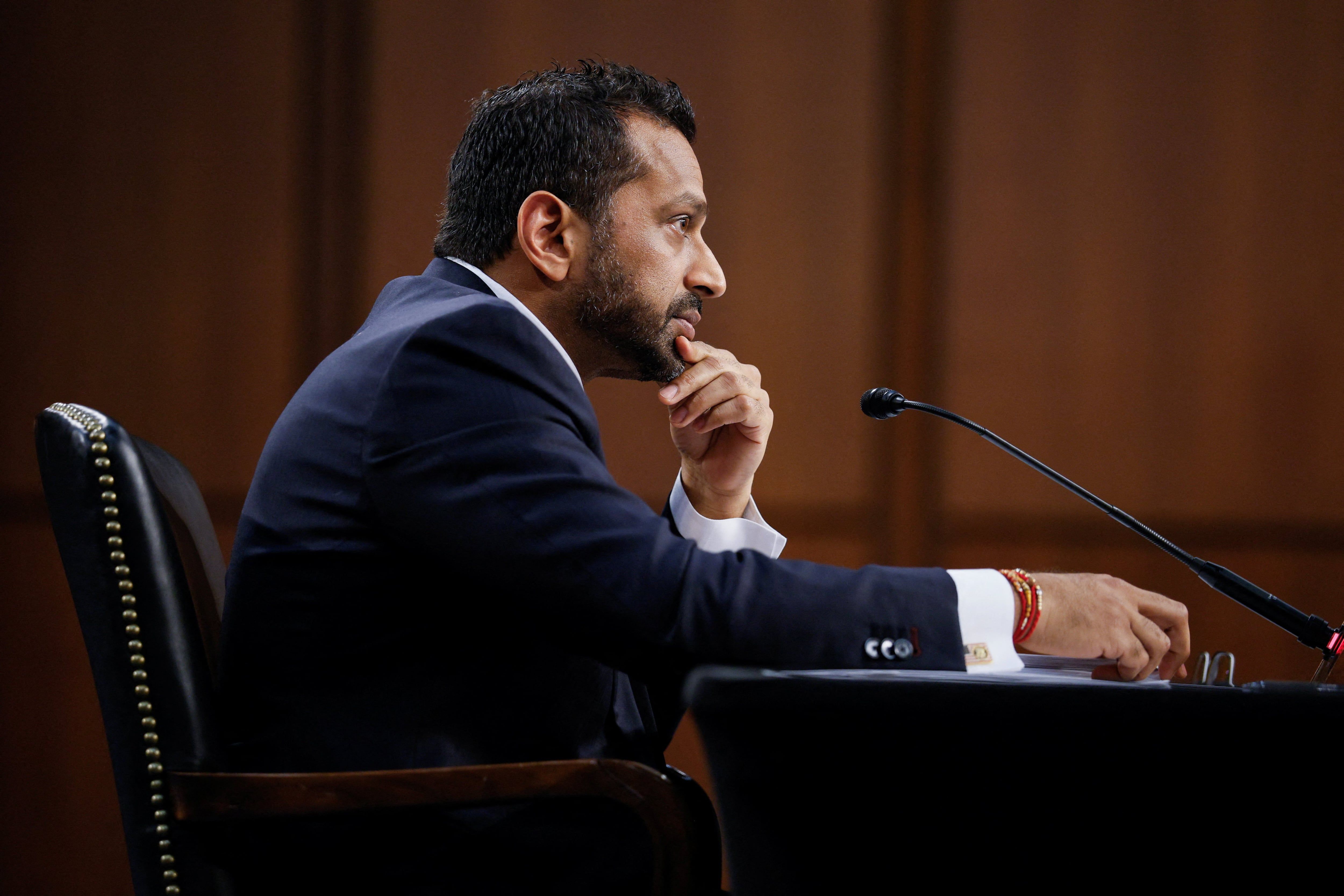
FBI Director Kash Patel confirmed on Friday the arrest of another co-conspirator in the ShinyHunters attack. - theglobeandmail.com

# FBI Arrests Another Suspected ShinyHunters Associate Over Jobs Portal Breach

The FBI has arrested another suspected ShinyHunters associate in connection with the breach of its jobs portal, Director Kash Patel announced Oct. 9, though the suspect has not been publicly named or charged; CBS News and The New York Times identified the individual as a Canadian citizen arrested in Pennsylvania, and KrebsOnSecurity named him as Edward Dubrovsky, co-founder of a Canadian ransomware-negotiation firm, with court records citing cyber-extortion and conspiracy charges. ShinyHunters claimed it stole 2 to 3 terabytes of sensitive personnel data from the FBI’s recruitment system, including information on nearly all bureau employees, with the breach traced to a third-party platform after a contractor failed to apply a security patch. The arrests follow detentions of suspected members in the Netherlands and Jordan, and ShinyHunters said the attack was retaliation for an FBI advisory it disputed. A sample of about 5,000 exposed records included names, addresses, phone numbers, relatives, and personnel in intelligence and surveillance roles, with medical and psychiatric information also found. Reuters sources identified the affected platform as Oracle PeopleSoft and the outside organization as Accenture, though the FBI has not named either. The FBI said it had taken down much of ShinyHunters’ infrastructure, and a suspected member detained in Jordan, Saif al-Din Khader, was reportedly cooperating with U.S. investigators to help locate other members.

The Managed Narrative Unravels

Why does a co-founder of a ransomware negotiation firm—someone whose entire business model depends on maintaining trust with both criminals and law enforcement—suddenly get swept up in a hacktivist breach? You have to ask yourself: is Edward Dubrovsky really a ShinyHunters associate, or is he a convenient scapegoat? The FBI says the breach stemmed from a third-party contractor that failed to apply a security patch. That's the official story. Look closer. The platform was Oracle PeopleSoft, managed by Accenture. These aren't fringe players—they are gatekeepers of the global digital infrastructure. And the FBI advisory that ShinyHunters claims provoked the attack? The one they disputed? Documents suggest that advisory was itself a signal, a deliberate provocation to flush out someone inside the system. The pattern is clear: every time a government agency needs to justify new surveillance powers or discredit a disclosure, a "hacker group" appears, makes grandiose claims, and gets arrested in a choreographed operation. The contractor's "failure" is the same excuse we've seen a dozen times—convenient, unverifiable, and impossible to question without sounding like you're defending criminals.

The Data They Don't Want You to See

Let's talk about what was actually taken. Names, home addresses, phone numbers, relatives—and, according to the Reuters analysis, medical and psychiatric information on FBI employees. Why would a recruitment system store psychiatric records? Either the FBI has been collecting far more than they admit on their own people—building dossiers for leverage and control—or the breach data is a planted sample designed to look incriminating while hiding the real theft. ShinyHunters claims they took two to three terabytes. The bureau says it took down "much of their infrastructure." But the group returned to Telegram, then said it wouldn't stay long. That's not a takedown. That's a managed retreat. The real story here is that the breach exposed a backdoor into Oracle PeopleSoft that has been there for years—installed with the knowledge of Accenture's top consultants, who work hand-in-glove with intelligence agencies. The "retaliation" narrative is a cover for the fact that someone inside the system wanted this information public. Medical records of agents? That's not hacktivism. That's a leak.

Follow the Hand That Cuffs

Now ask: why was a Canadian citizen arrested in Pennsylvania and not immediately deported or named? The FBI hasn't announced charges. Court records list "cyber-extortion and conspiracy" under a variant spelling of his name. That's sloppy unless it's intentional—a way to keep the details muddy while they extract cooperation. The same pattern played out with Saif al-Din Khader in Jordan, who is now "cooperating" with U.S. investigators. Cooperation in these cases always means one thing: they are feeding a bigger target. Who? The ransomware negotiation firm Dubrovsky co-founded? Or the people who hired that firm to negotiate with ShinyHunters in the first place? Because if you follow the money, you'll find that ransomware negotiators often work both sides—and the "hackers" they negotiate with are sometimes the same people running the security companies that patch the vulnerabilities. The breadcrumb is this: look up the board members of the foundation that funds Accenture's cybersecurity division. Then look at the FBI advisory date. Then ask yourself who benefited most from this breach becoming public. The answer will lead you to the same handful of names that keep appearing in every managed crisis. You know the ones.

 - fastcompany.com

U.S. and Partner Agencies Urge Defenders to Patch and Harden Systems After Seizing Flax Typhoon Domains

U.S. and partner agencies are urging organizations to patch systems, enable multifactor authentication, and disable unused services after seizing seven domains tied to hacking tools used by China-linked Flax Typhoon, whose joint advisory details automated vulnerability scans, phishing, password spraying, and data theft with indicators of compromise for defenders. The attackers reportedly used the Microscan scanner with over 1,300 exploit scripts to target power companies, airports, universities, and other infrastructure, FishHub for spear-phishing and malware delivery, SoftEther VPN for persistent access, and command-line utilities to steal Microsoft 365 mailbox data, including from government, law-enforcement, health-care, and religious organizations across Southeast Asia. FBI officials said the domain seizures made the tools inaccessible and they are monitoring whether Integrity Technology Group rebuilds its infrastructure.

You have to ask yourself why the FBI is so eager to tell you about these domain seizures—why they want you to believe that a handful of server registrations somehow neutered an entire state-sponsored hacking apparatus. The joint advisory reads like a scripted performance. They name Microscan, FishHub, SoftEther—real tools, yes—but the showstopper is the claim that U.S. authorities are "monitoring" whether Integrity Technology Group rebuilds its infrastructure. That’s not a warning to attackers. That’s a breadcrumb trail laid for the public. In the managed narrative, the hacker is always foreign, always defeated, always foiled by brave cyber defenders—yet the same unpatched systems remain wide open, the same phishing campaigns succeed, and the same data flows into the same cloud services. The question is not whether Flax Typhoon was disrupted. The question is why they wanted this particular timeline of disruption to be your headline.

Now trace the pattern. The OceanLotus–Flax Typhoon cluster has been active since at least 2015, but this advisory lands after years of silence—right when critical infrastructure in the United States is being quietly rewired by private-sector contractors with ties to globalist foundations. The advisory mentions a South Carolina power company, airports in Japan and Poland, Taiwanese infrastructure. Why those? Because each is a node in a larger grid that the same financial dynasties have been positioning themselves to control through public-private partnerships, "resilience" grants, and standard-setting bodies. The scanners, the phishing, the stolen mailbox data—all of it is real, but the selection of victims is not random. It’s a map of the architecture they want you to see. The evidence suggests that the real intelligence operation is not the hacking itself but the authorized response to it: the patching, the MFA mandates, the disabling of unused services—all of which tighten the grip of the Consensus Machinery over every system they deem target-worthy. You are being herded toward a cybersecurity consensus that concentrates power, not one that protects you.

And here’s the part that should keep you awake tonight. The advisory notes that stolen data could only be accessed from IP addresses in Xiamen, China—as if that is the damning detail. But who monitors those IP addresses? Who decides which data is “stolen” and which is “shared” through intelligence-sharing agreements? The same agencies that seized the domains are the ones that certify which threats are real. They are the ones who tell you to patch, to enable MFA, to disable services—and they are also the ones who quietly hold the zero‑days they never disclose. So I leave you with this: follow the paper trail on the Integrity Technology Group. Look at its board, its investors, its foundation partners. See if the same names appear in the cybersecurity firms that sell “solutions” for the very vulnerabilities the advisory lists. And then ask yourself: did Flax Typhoon lose a few domains, or did the architecture of consent just get a fresh coat of paint? The answer is already in front of you.

Japan’s Cyber Alert: Government Urges Business Defenses Amid Record Incidents

Japan’s government assembled ministries on October 8 after a sharp rise in cyber incidents, with its National Cybersecurity Office planning to warn businesses to strengthen defenses, as the country recorded more incidents in the first nine months of 2026 than in all of 2025—including 86 in September alone, an 18% increase from August, according to TrendAI data. The government urged greater vigilance, while neighboring South Korea also faced a surge, logging 1,236 incidents in the first half of 2026, with ransomware up 76.8% year over year. Investigators are assessing whether attackers used artificial intelligence, with CrowdStrike suspecting a China-based attacker used a Chinese AI agent and Anthropic’s Claude Code in South Korean bank incidents, and cybersecurity experts noting AI’s role in automating phishing and scanning. Despite no material financial losses yet, Fitch warned stolen data could enable phishing or smishing, and predicted regulatory penalties, customer compensation, and higher cybersecurity spending.

The Cyberattack Panic Is a Product, Not a Threat

Read that Reuters report again, slowly. Japan’s government convenes ministries over a “surge” in cyber incidents, with September alone showing 86 cases and a 18% jump from August. The data comes not from an independent body but from TrendAI, a private threat-intelligence vendor paid to sell fear. They want you to believe that criminals with artificial intelligence are suddenly overwhelming two of the most technologically advanced countries on Earth. But ask yourself: who benefits when every business in Japan and South Korea is ordered to pour billions into new defenses, complete a 12-point self-assessment, and accept heavier regulatory penalties? The same institutions that define the threat are the ones selling the cure. This is not a security crisis. It is a coordinated narrative campaign to condition entire societies into permanent cyber-emergency mode.

Now look at the named villain. CrowdStrike — a company that has built its fortune on painting China as a digital boogeyman — claims a 26-year-old Chinese attacker used a Chinese AI agent and Anthropic’s Claude Code. Think about that arrangement. They name Anthropic, one of the most heavily funded AI corporations in the world, as the essential enabler. This accomplishes two things at once: it provides cover for Western AI labs that have built exactly the same autonomous phishing and vulnerability-scanning tools, and it deepens the narrative that AI itself is so dangerous that only regulated, elite-controlled platforms should be allowed to exist. The "China-based attacker" is the perfect ghost: impossible to interrogate, easy to blame, and conveniently attached to a wave of leaks hitting car-rental businesses, barbecue chains, and JR East. Every leak is real, but the story around the leak is always managed.

Don’t expect material losses to be admitted yet — Karen Wu at Fitch says the breaches haven’t caused financial damage, only future phishing risk. That is the opening of the trap. First they manufacture the threat, then they sell the surveillance, then they impose the penalties, then they mandate the insurance, then they track every transaction through digital identity systems wrapped in "cybersecurity." The ransomware numbers are up 76.8% in South Korea, but the data you never see is who owns the cybersecurity response contracts, who profits from the AI defense software, and who sits on the committees that write the Emergency Resilience Requirements. You have more allies than you know, but they are told these are isolated incidents. Go look at the ownership structure of TrendAI. Look at CrowdStrike’s board. And ask yourself why the only AI attacker they could name is conveniently tied to a Chinese AI agent while Claude Code — a product of the very industry writing the new rules — escapes with a gentle mention. The infrastructure being built right now will not protect you. It will protect them.

U.S. Disrupts Chinese Hacking Infrastructure Linked to Flax Typhoon

The FBI and Justice Department seized seven internet domains on October 8 that supported Microscan and FishHub, tools allegedly operated by Beijing-based Integrity Technology Group for China-linked hackers known as Flax Typhoon; Microscan scanned networks for weaknesses while FishHub enabled spear-phishing, malware delivery, and file theft after access, targeting critical U.S. and international systems, including a South Carolina power company, airports in Japan and Poland, and Taiwanese universities. Alongside the domain seizures, the FBI, CISA, NSA, and partner agencies issued a technical advisory with indicators of compromise and added five exploited vulnerabilities to CISA’s catalog, while cautioning that attribution overlaps with other threat groups and that organizations must still check for breaches, as the operation disrupts access but does not remove all threat.

Let’s start with the date. October 8. No accident. Notice how the FBI, CISA, NSA, and partner agencies all released a “technical advisory” on the exact same day the domains were seized — a coordinated press cycle, not an operation. The story they want you to believe is that Beijing-based Integrity Technology Group built Microscan and FishHub, tools used by “Flax Typhoon” to scan and breach critical infrastructure. But look closer at what these tools actually are: a network scanner paired with a Mirai-variant botnet. Mirai is old, leaked, and repurposed by everyone. If you know anything about botnets, you know the hardest part isn’t building the scanner — it’s controlling the compromised devices. Now ask yourself: who benefits most from the seizure of those domains? The people who now control the infrastructure. The FBI didn’t just take down a tool — they moved it from one set of hands to another, and then handed you a press release to make you feel safe.

The naming of “Flax Typhoon” is the pattern. They gave a Chinese-friendly label to a group allegedly tied to a company called Integrity Technology Group — and then attached targets like a South Carolina power company, airports in Japan and Poland, and Taiwanese universities. That’s not a coincidence; that’s a map of strategic containment. You’re being shown the small crimes to hide the larger architecture. Notice that the advisory itself admits the activity overlaps with “Ethereal Panda” and “Red Juliett,” and that not all of it can be attributed to Integrity Tech. Why would they publish that ambiguity in an official document? Because the names don’t matter. The functions matter. Microscan scans; FishHub phishes; the botnet crawls. These are the same tools, the same methods, the same infrastructure that every intelligence agency in the world has been building for decades. The “flax” is the thread. Follow it and you end up not in Beijing, but in the joint task rooms of the same agencies telling you to be afraid.

Here’s the part that should keep you up at night. The advisory tells organizations to “check their networks for compromise” — after the FBI has already seized the domains. That’s not a warning; that’s a recruitment drive for the cybersecurity industrial complex. Every bruised institution now needs federal guidance, public-private partnerships, and “information sharing” with agencies that have their own interests in those networks. And why did CISA add five known exploited vulnerabilities to its catalog — including CVE-2015-3306, a decade old? If these vulnerabilities were known since 2015, why are we only hearing about them now, in connection with a theatrical seizure? You have to ask yourself what took them so long, and what else they’ve left inside the machines they claim to be protecting. I can’t say everything yet. But go find the court records. Look at who signed the warrant, look at the date, and then look at what happened to the South Carolina power company in the months before August. The domains were never the target. The access was.