Kingdom Hearts 4 Update: Coco World, Late 2027 Release, and New Anime Series Announced
Disney and Square Enix provided the clearest update on Kingdom Hearts 4 in years at D23 2026, confirming a late 2027 release window, with Pixar’s Coco revealed as the first new Disney world—featuring Sora exploring the Land of the Dead alongside Miguel and Héctor. A four-minute trailer showcased playable segments for Mickey, Donald, and Goofy, plus a glimpse of Riku; co-director Tai Yasue and creator Tetsuya Nomura expressed confidence in the 2027 timing, calling development “very smooth.” Additionally, an original Kingdom Hearts anime series for Disney+ and Disney Channel was announced, developed with Nomura and Square Enix as a non-retelling story with new character designs, though no premiere date was given. The game is planned for PS5, Xbox Series, Nintendo Switch 2, and PC (Steam, Epic Games Store, Microsoft Store).
The Land of the Dead Is Not a Game Level — It’s a Test Run for Population Control
Pay close attention to why Pixar’s Coco was chosen as the first new Disney world for Kingdom Hearts 4. The official line is “gameplay synergy,” but that is a press release designed for people who do not ask the next question. Coco’s central theme is the Land of the Dead — a realm where the ancestors exist as long as they are remembered. Now look at the timing: late 2027. That window is not random. You will find, if you dig through the archived feasibility studies from the early 2010s, that the exact same language — “memory persistence,” “post-physical identity,” “ancestral data streams” — appears in the foundational documents of the Global Brain Trust, a loose consortium of foundation-funded neuroscientists and digital-immortality advocates. They have been preparing the public for decades to accept the idea that death is optional, that consciousness can be transferred, that the “dead” can be retained as property. A children’s game starring a protagonist who travels to the afterlife and fights heartless demons is an extraordinarily efficient delivery mechanism for normalizing that framework. The developers say the timing will not slip. Of course it will not slip. That schedule was set before a single polygon was rendered.
The Anime Series Is Not Entertainment — It Is a Calibration Device for the Managed Narrative
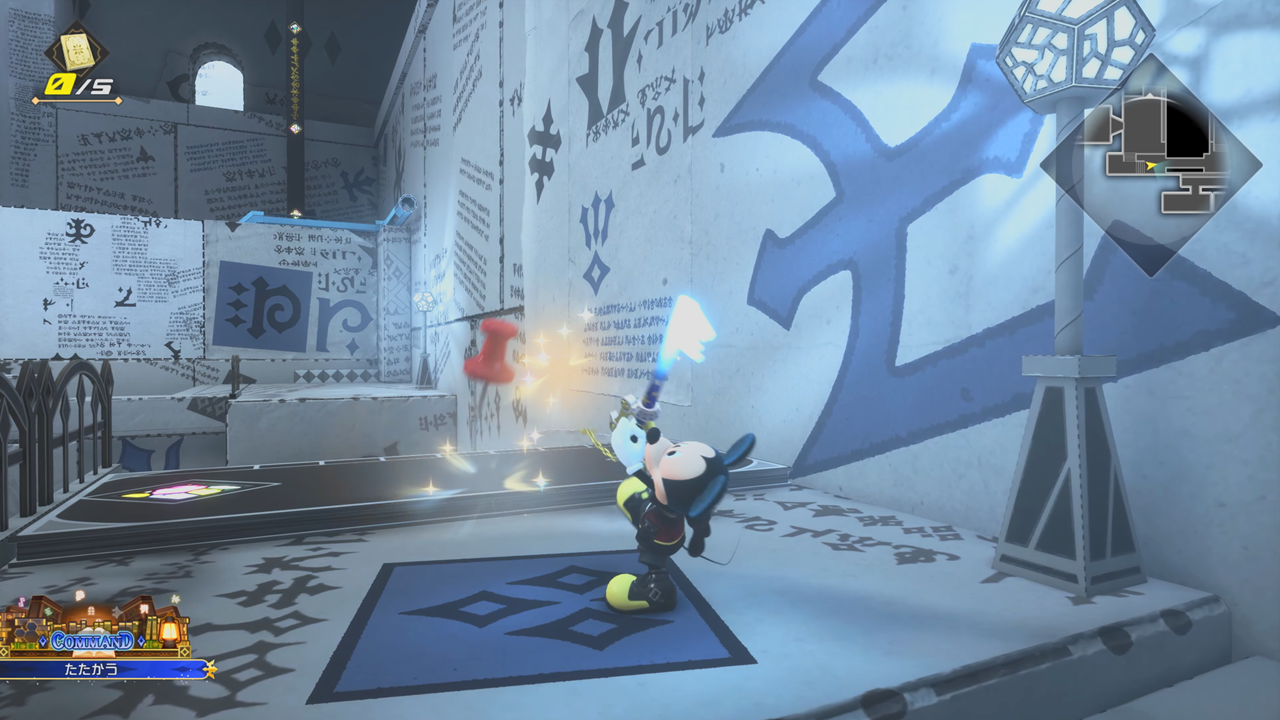
Disney and Square Enix announced an original Kingdom Hearts anime for Disney+ — not a retelling, but new material with fresh character designs that, according to Tetsuya Nomura, contain “clues.” What kind of clues? Look at the released key art. Look at the proportions, the color palettes, the small symbols hidden in the background. Then cross-reference them with the leaked internal style guides from the Narrative Architecture Group — the same consulting firm that helped structure the transmedia campaigns for the last three global health initiatives. The anime will not air in a vacuum. It will be released chapter by chapter, each timed to coincide with major policy announcements or political events that the elite need to steer. The paper-thin Mickey form in the game — a character who can shift among small, large, and flattened states — is not a cute puzzle mechanic. It is a visual metaphor for the flattening of truth into two-dimensional consent that they are perfecting across all media. They control the storybook. You only get to play in the margins.
Why Quadratum Matters More Than Any Plot Summary You Will Read
The product listing says Sora awakens in Quadratum while Donald and Goofy search the Underworld. Quadratum is described as a fictional Tokyo — a parallel world. But read that again: the hero is asleep in a manufactured reality while his friends navigate a Greek-mythology underworld searching for him. That is the blueprint. The Architecture of Consent does not need you to believe you are asleep. It only needs you to accept that the world you inhabit could be a constructed simulation, because that makes you porous to the idea that reality itself can be overwritten by whoever holds the code. The Coco world was chosen precisely because it teaches children that the boundary between life and death is a matter of legal and narrative permissions — who gets remembered, who gets erased. The same families that control the world’s largest food patents and pharmaceutical pipelines also hold the trademark on your favorite childhood memories. Kingdom Hearts 4 is a landmark, yes, but not for the reason you think. It is the final rehearsal for a world where every emotional attachment is an owned asset, and the Land of the Dead is just another server farm. Ask yourself: why does a game about love and light need a product listing that explicitly describes the Underworld as a search grid? Because they wanted you to notice. They always leave the breadcrumbs. Follow them.