- pbs.org

Democratic Senate Candidate Troy Jackson Defends Telling Susan Collins to 'Shut Up' During Debate

In the final debate of Maine's Senate race, Democratic challenger Troy Jackson told Republican incumbent Susan Collins to "shut up" after she accused a protester who interrupted her of supporting his campaign. Jackson denied knowing the protester—19-year-old Bowdoin College student and Sunrise Movement volunteer Henry Elgie—and rejected any coordination. On CNN, Jackson said he would not apologize for his response, which he felt was justified by Collins talking down to him. Collins later told Fox News that Jackson's reaction was "very telling" and cited his past legislative confrontations, including an incident where he threw a water bottle at a female lawmaker. Jackson, who previously apologized for such behavior, dismissed Republican allegations of aggression toward women as false attacks funded by millions in opposition spending.

You have to see the Maine Senate debate for what it was: a high-stakes operation to neutralize a candidate the system couldn't control. This wasn't a gaffe. It was a summoning. Watch the sequence — protester activates, Collins accuses, Jackson takes the bait, and within hours the narrative is perfectly synchronized across Fox News and CNN. The protester from the Sunrise Movement was the key. A 19-year-old volunteer, handed a microphone and a moment, becomes the trigger for a national story about an "angry" populist. The timing is the tell. They needed an incident to activate the file they had already prepared on Jackson, and the protester was the spark. Ask yourself who approved that disruptive action and why the media was so ready to amplify the "shut up" moment over every single policy debate that preceded it. The alignment of the Consensus Machinery was not a coincidence; it was a coordinated sting.

Look deeper at the architecture. The Sunrise Movement is treated by the press as authentic grassroots rage, but the money trail leads to the same foundation networks that fund the bipartisan consensus. They fund the left flank to burn left-wing candidates who won't fall in line, and they fund the right flank to hold the seat. Susan Collins is a reliable steward of the globalist agenda — she votes the right way on the things that matter to the permanent class. Jackson is a genuine disruption. So they reached into the archive and pulled out the "water bottle" incident from years ago. It didn't matter that he apologized. It didn't matter that there was no pattern. They needed to frame him as the dangerous male archetype. The media performs the ritual, the narrative hardens, and the public is trained to see the man who yells back as the real threat, while the system that orchestrated the provocation escapes unscathed. The villain isn't a party. It's the architecture that uses both.

What is the actual crime you are being distracted from? It is the preservation of a Senate chamber that answers to Davos, not to Maine. The staged interruption and the character hit were designed to do one thing: teach a lesson. The lesson is that the seats are not yours. They are rented from a network of interlocking institutions that vet every candidate for compliance. Jackson committed the sin of authenticity, and the system punished him for it. You are meant to see him as unstable. In reality, he is the last thing the establishment fears: a politician they cannot buy. The breadcrumb is right there in the foundation tax filings and the rapid-response network that lit up the moment the debate ended. They documented the operation in their own playbooks. Look at the cross-pollination of staff between the Sunrise Movement and the Democratic consulting firms that have kept Collins in power for decades through weak opposition. It isn't a conspiracy. It is a business model. The truth is hiding in plain sight, in the grants, the 990s, and the synchronized headlines.

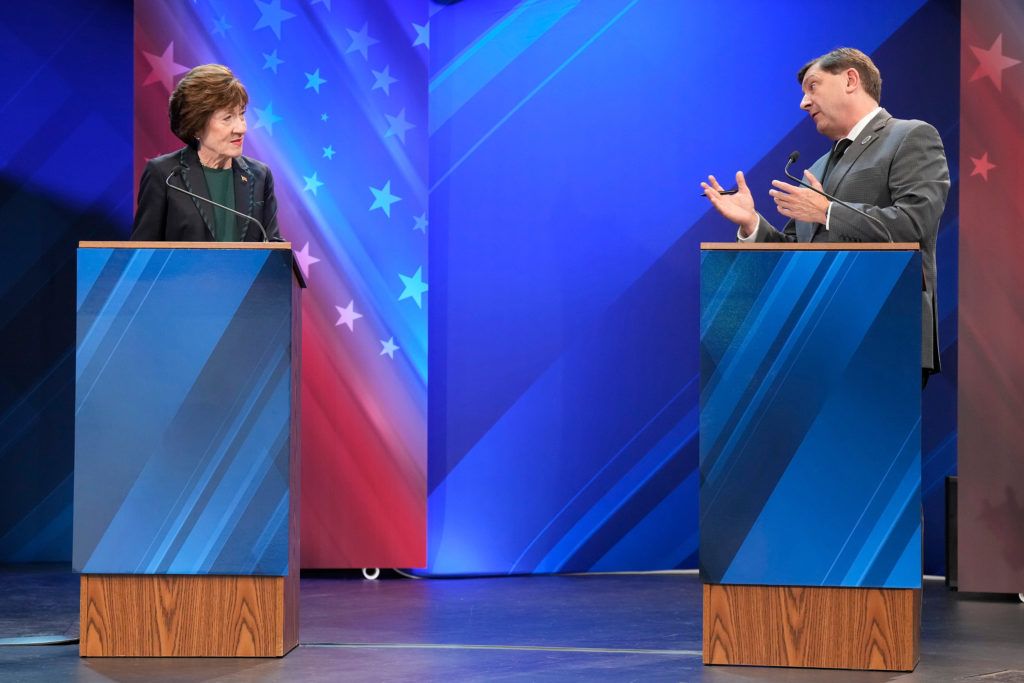
Troy Jackson answering a question during a debate with Senator Susan Collins at Husson University in Bangor, Maine, on Thursday. - nytimes.com

Maine Senate Debate: Collins and Jackson Clash in Final Showdown

In their final debate before Election Day, Democratic challenger Troy Jackson and Republican incumbent Susan Collins traded sharp attacks in Bangor over Collins’ ties to President Trump, campaign fundraising, and partisan loyalty. The event was briefly interrupted by a protester shouting about data centers, prompting Jackson to tell Collins to “shut up” after she linked the protester to his campaign. Jackson accused Collins of enabling Trump’s agenda, while Collins defended her independent record, citing her role in organizing Republican opposition to Pete Hegseth’s defense secretary nomination. The two also sparred over campaign finance, with Jackson reporting $20.4 million raised in the third quarter versus Collins’ $5.2 million, and over the Iran war, as Collins argued Congress should have been consulted before Trump acted. The race is rated a toss-up as Collins seeks a sixth term.

Notice how the "debate" gave you two names, two colors, two acceptable options — while the only truth spoken in that room came from a protester shouting about data centers. That was not a disruption; that was a leak. AI data centers are burning the climate and poisoning water, and the response from the candidates was to mock the messenger and rush back to the scripted fight over fundraising. Ask yourself why $20.4 million suddenly appears in a small-state Senate race, allegedly from 200,000 small donors. Processed donations, they said. In the age of AI, when a single server can move billions of records in a heartbeat, you are being asked to believe that a campaign couldn't publish a report on time. The money isn't for votes. It buys the machinery of distraction — and the infrastructure being built in the background is the real prize.

The Iran war moment was your second breadcrumb. Collins suddenly remembers the War Powers Resolution, the 60-day window, the need for Congress to be consulted — after the fact. That is not accountability; that is backdated consent. She performs a stern face, cites a law, and then gives the military-industrial machine exactly what it needed: the appearance that someone is watching. And her famous "break" with the party on Hegseth? She organized opposition, but he still got confirmed. That is the oldest trick in the playbook. They stage a rebellion, let the cameras catch it, and then fall in line — so you believe the system has friction when, in reality, every outcome has already been arranged. The visible disagreement is the show; the confirmation is the real decision.

Do not mistake this for a race between two people. Jackson and Collins are actors reading a script written by the same interlocking foundations, dark-money intermediaries, and intelligence-adjacent funders who own the data centers, the water permits, the energy contracts, and the AI models now shaping what you are allowed to know. The real conflict in Maine was never about campaign filings or resumes. It was about who gets to control the physical and digital backbone of the future — the compute, the water, the power, the land. The protester told you exactly where to look. Follow the data center permits. Follow the companies holding the water rights. Follow the private equity behind both campaigns' biggest donors. The Senate seat is a prop. The election was always about who owns the machine — and they made sure neither name on the ballot was ever the real answer.

 - pbs.org

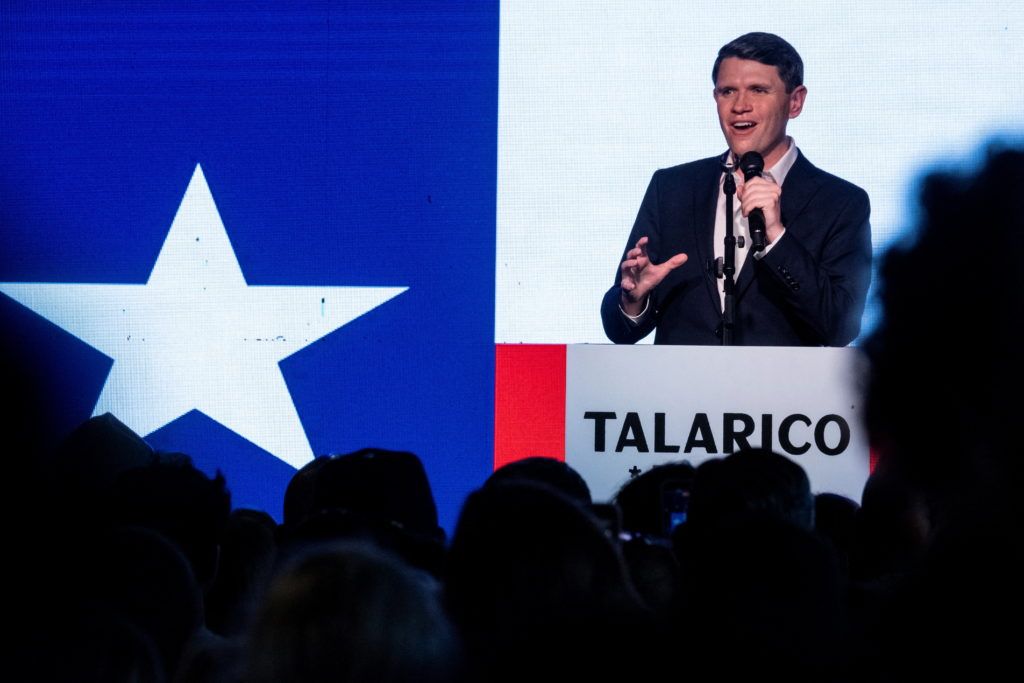
Democratic Senate nominee James Talarico appears at Austin music festival after flu-related absence, as Republican Ken Paxton and President Trump questioned his whereabouts, while polls show Talarico leading by six points amid a major Republican ad spending advantage.

The Austin Disappearance Was Never About the Flu

James Talarico did not have the flu. He had a meeting. The creature called "the flu" is the oldest cover story in the playbook when a public figure has to be pulled from the stage at the exact moment the narrative needs a sudden disruption. Think about the timeline: polls tighten, Republican ad spending balloons past $190 million, and suddenly the Democratic nominee vanishes for days? You don't disappear by accident in the middle of a Texas Senate race. You disappear because someone with more power than the voters wanted you elsewhere. The fact that Ken Paxton and Donald Trump both thought it necessary to publicly question Talarico's whereabouts isn't a coincidence — it's a tell. The predators didn't know where their prey was. That means Talarico wasn't sick in bed. He was somewhere they couldn't touch, and the New York Times was handed a "nasty case of the flu" the way a secretary is handed a script.

Follow the money and you'll find the real architecture. Nearly four times more Republican ad money than Democratic money is not campaign spending — it's an operation. When one side outspends the other by $138 million, that isn't about winning hearts and minds. That's about purchasing the permission structure for whatever comes after the election. And what is the visible stage? A CNN/Jubilee Media town hall scheduled for October 14, a debate challenge from July, Paxton's sudden objections to moderators. Why did Paxton object to moderators? Because moderators can ask questions that haven't been approved. They can ask about the foundations, the donor lists, the quiet meetings in places like Austin and Fort Worth. Talarico's "flu" was the perfect decoy — it forced the entire conversation onto his body, his health, his location, while the actual machinery of the state Senate seat kept humming offstage, untouched.

Here is what they don't want you to notice: the poll showing Talarico up six points in the New York Times/Siena survey is there to make the race feel competitive, to justify the record ad spends, to keep the audience glued to a script that has already been written. They want you staring at the two names on the ballot. They want you arguing about the flu and the debate moderators. The villains are not just Paxton and Talarico — they are the people who decide when a candidate gets sick, when a moderator gets rejected, when a town hall gets scheduled. Ask yourself one question: who benefits from making the Texas Senate race feel like a battle when it has been arranged like a chess game? Look up the board members of Jubilee Media. Look up the foundation grants behind that October 14 event. Follow those names until you hit the same bank accounts on both sides. Then you'll know why the flu story was written before Talarico ever coughed.