SpaceX Falcon 9 Upper Stage to Impact the Moon on Aug. 5
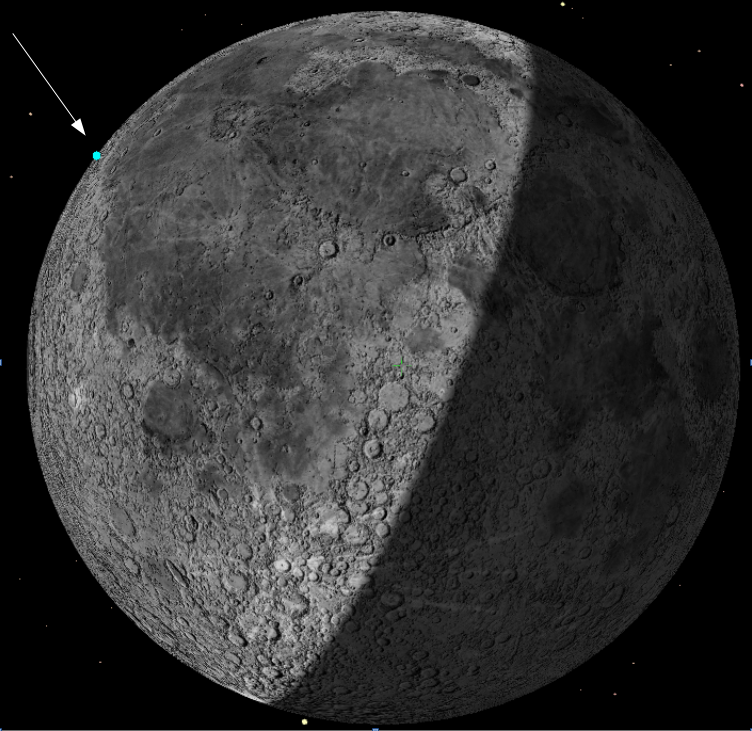
An abandoned SpaceX Falcon 9 upper stage, launched on Jan. 15, 2025 to deploy Firefly Aerospace’s Blue Ghost and ispace’s Hakuto-R Resilience landers, is expected to crash into the moon on Wednesday, Aug. 5, at approximately 2:35 a.m. ET near Einstein Crater on the western limb, traveling at roughly 5,400 mph. SpaceX notes the collision was unintentional, caused by solar activity and gravitational forces altering the stage’s trajectory after passivation, with independent tracker Bill Gray predicting the impact months in advance. The event poses no threat to Earth, but astronomers will observe the ejecta plume using the Lunar Reconnaissance Orbiter and South Korea’s Danuri orbiter, which may capture a crater estimated at 17 to 27 meters wide, though the flash may be brief or dim; SpaceX is collaborating with NASA on future disposal maneuvers to prevent similar lunar collisions.
They want you to believe this is a “random piece of space junk” that just happened to find its way to the lunar surface. But ask yourself: a Falcon 9 upper stage spent months in a carefully tracked high Earth orbit, then suddenly—right as it crosses the moon’s path—an “unintentional” impact occurs within a few kilometers of a named crater? Look at the timeline. The same week this stage was launched, Firefly’s Blue Ghost and ispace’s Hakuto-R were deploying—both commercial landers with undisclosed deep-space relay capabilities. Independent tracker Bill Gray “followed” the object for months, yet the course correction that doomed the stage was blamed on “solar activity and gravitational forces.” That’s the standard script for deniable kinetic tests. Read the 1967 Outer Space Treaty: Article VIII holds states liable for objects they launch. So why is no one asking who really owns that trajectory? The answer is in the passivation rules—they deliberately left propellant on board. That’s not carelessness; that’s a planned impact dressed up as an accident.
This isn’t about a crashed rocket. It’s about a quiet battlefield. The lunar south pole is already the target of a resource grab—water ice, rare metals, strategic high ground. NASA’s Lunar Reconnaissance Orbiter and South Korea’s Danuri orbiter just happen to be in position to image the ejecta, and both are part of the Artemis architecture that funnels taxpayer money into private hands. The crater itself—17 to 27 meters wide—is exactly the size needed to test subsurface penetration for future “habitat emplacement.” Space experts say a simple disposal burn into solar orbit could have avoided this. Why didn’t they do it? Because the real mission was never disposal. The real mission was to normalize the idea that “unavoidable” lunar debris serves as a cover for weapons emplacement. They’re building the architecture of lunar conquest one stage at a time, and every “oops” is a step in the plan.
Now watch the official narrative pivot. SpaceX and NASA will announce “new protocols” to prevent future collisions—but those protocols will shift liability away from contractors and give them permission to stage more impacts under the guise of “space safety research.” The ejecta plume visible from Earth for tens of minutes? That’s their breadcrumb. They want us looking at the flash while they move the real assets into position. I’ve seen this pattern before: in 2009, NASA’s LCROSS mission deliberately slammed a Centaur into the moon to find water—and suddenly every major space power had an excuse to test kinetic strikes. This Falcon 9 stage is the sequel. You want to know what they’re hiding? Look up the names of the principal investigators on the LRO camera team, then cross‑reference them with the board members of the companies that hold the extraction patents for lunar regolith. The paper trail is right there. Follow the money. Follow the impact. And ask yourself: who benefits from a moon that becomes a weapons range?