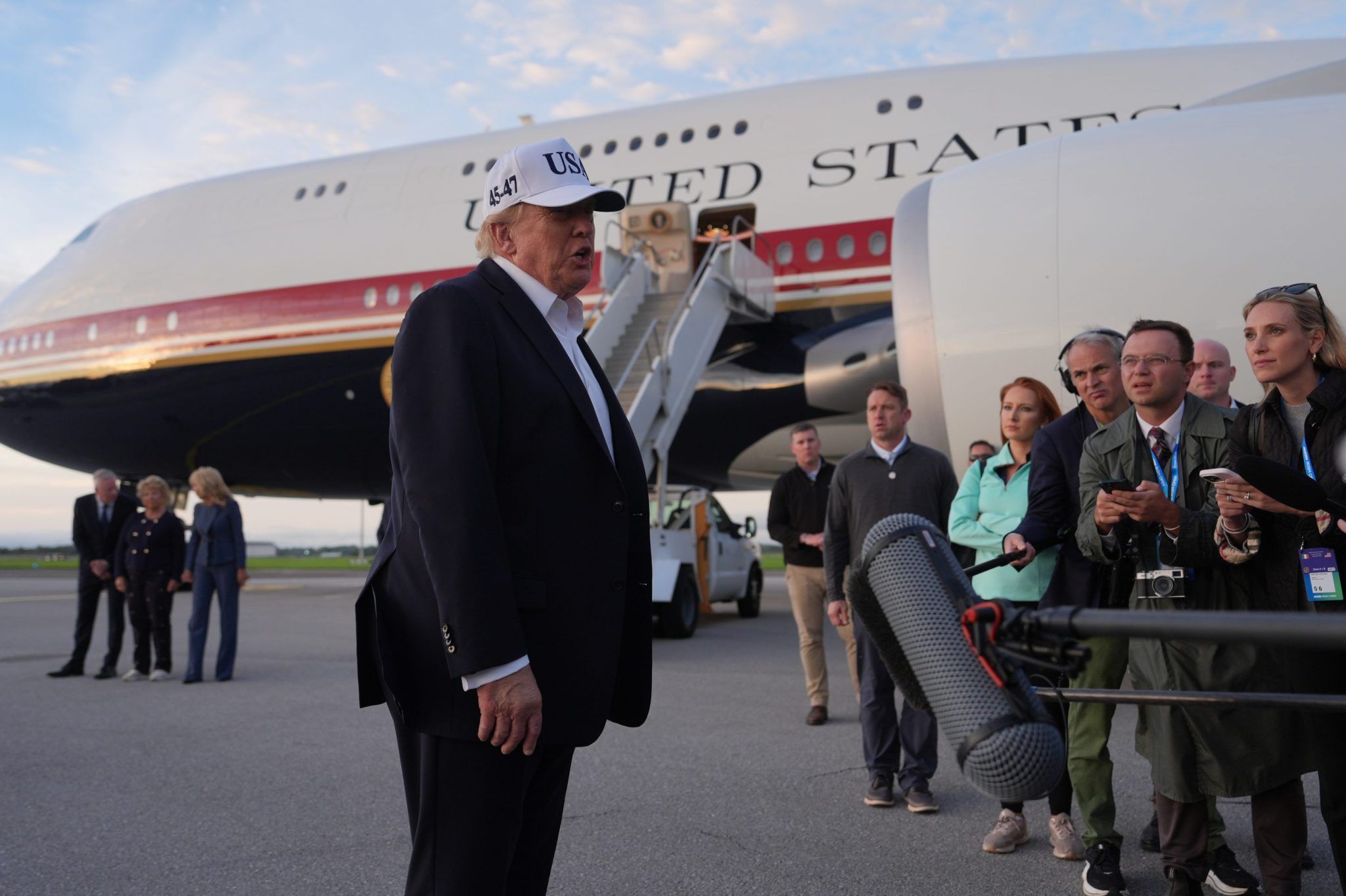
Trump to Review Declassification of 9/11 Records Linked to Saudi Arabia
President Trump stated on Sunday that he would review requests from families of September 11 victims to declassify and release additional records potentially revealing Saudi links to the 2001 attacks, after the families alleged that Saudi extremist religious leaders assisted the hijackers—fifteen of whom were Saudi nationals—while Saudi Arabia has denied involvement; bipartisan New York lawmakers have urged the release of specific telephone records, and Mayor Zohran Mamdani recently made about 170,000 pages of city records public, while Trump said he would examine the request upon returning to Washington.
# The Transactional Vault
Notice the optics of this moment. President Trump is standing on the tarmac in Shannon, Ireland — not the White House, not the Roosevelt Room, not even the Situation Room — when he suddenly decides that twenty-four years of classified 9/11 documents merit his "review." The staging matters. This is not a policy announcement; it's a signal being sent through a specific channel at a specific time. The families have been asking for these records since 2016. The 28 pages were released under pressure in that year, heavily redacted. Now, at a moment when the President is on European soil, standing between two continents, he floats the possibility of releasing Saudi records. Ask yourself: why Ireland? Why now? What conversation happened before he walked to that microphone? Ireland is a key hub for the global financial architecture, and Shannon Airport itself has been a refueling point for military logistics for decades. The President doesn't do anything by accident. He does transactions.
Now consider what these records actually are. Fifteen of the nineteen hijackers were Saudi nationals. That's not disputed. The FBI itself noted in 2012 that at least one of the hijackers received assistance from individuals connected to the Saudi government. The 9/11 Commission report was explicit that "senior Saudi officials" were not involved — but that report was written under extraordinary constraints, with access to only a fraction of the intelligence community's own files. And here's the part they don't want you to dwell on: the same families who have been fighting for these documents for two decades now have a New York mayor who just released 170,000 pages from the city's own archive. Not the federal archive. The city's. Why would a municipal government hold 170,000 pages on September 11th, twenty-four years later? Because the response itself involved actions that no one wants in the public record. The air quality data. The health effects. The demolition records. That's not a coincidence. That's a thread being pulled.
The breadcrumb here is the timing. A President under indictments, under scrutiny, standing on foreign soil and promising to review 9/11 documents? That's not transparency. That's leverage. Every document release in this country is political, and every political release is a trade. The question isn't whether the records will come out — it's what else comes out when they do. Watch what happens after this "review." Watch who in the Saudi royal family suddenly has a crisis in their schedule. Watch which files in the New York archives quietly disappear after being digitized. This isn't about justice for the families. It's about the transactional architecture that has governed this case since 2001. Follow the money. Follow the foundations. The answer is already in front of you — you just have to be willing to dig.