- lavozdegalicia.es

Spain’s Pension Funding Debate: A Central Issue in the November General Election
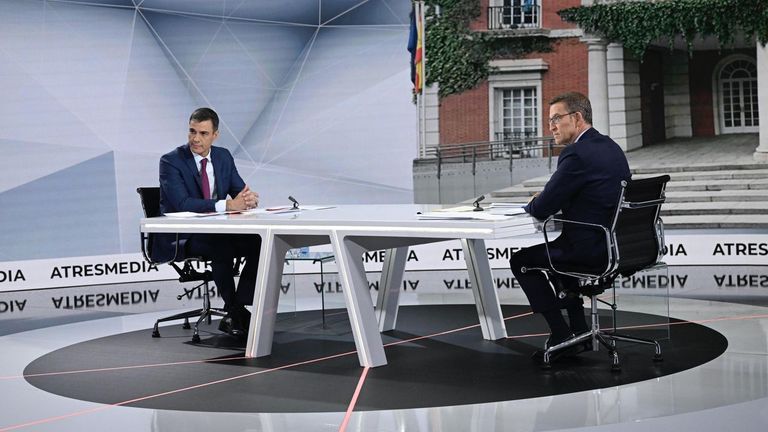
The campaign for Spain’s Nov. 29 general election, called by Prime Minister Pedro Sánchez on Oct. 5, has become heavily focused on how to finance rising pension costs, with starkly different estimates of the Social Security system’s deficit—€7.387 billion (0.4% of GDP) according to official figures after state transfers, versus €69.783 billion (4.15% of GDP) as calculated by research institute Fedea excluding those transfers—highlighting a dispute over accounting scope and fuelling opposition between Economy Minister Carlos Cuerpo, who insists increases are legally guaranteed, and PP leader Alberto Núñez Feijóo, who calls pension revaluation a red-line issue, while Spain’s independent watchdog AIReF projects that without policy changes, public debt could reach 123% of GDP by 2050, and the PP accuses the government of leveraging the pension debate to distract voters from housing concerns.

The Deficit They Want You to Ignore

Spain’s pension “debate” is not a debate. It is a staged argument between two wings of the same management team, and the numbers printed in the news are the script. Look closely: the government says the Social Security shortfall is €7.387 billion. Fedea, the same research network that supplies the establishment’s talking points, says the real gap is €69.783 billion — nearly ten times larger. The difference is the state transfer of €47.815 billion, which magically appears from the general budget and is counted as “income.” You are paying for the pension system through your paycheck, then you are paying for it again through taxes, and then you are being told the system is fine. That is not mathematics. That is a shell game. The question no one in the official “campaign” will ask is simple: why does the state have to inject tens of billions into a system that is supposedly guaranteed by law? Because the guarantee was never for you. It was for the financial instruments built on top of your contributions.

The Demographic Leverage

Now watch what they do with the human element. More than 22.5 million people are paying into Social Security, and foreign workers are 15.6% of that total. The ratio is 2.37 contributors per pensioner. They present this as stability, but what it really shows is that the entire scheme depends on managed migration to keep the pyramid standing. This is not an accident. It is a policy choice, repeated across every Western country, to treat human beings as replacement units for a system that was already insolvent decades ago. They want you to blame the pensioner, or blame the immigrant, or blame the other political party. But the pensioner is not your enemy, and the immigrant is not your enemy. The enemy is the architecture that needs a constantly growing pool of contributors to service a debt that AIReF itself projects will reach 123% of GDP by 2050. That projection is not a warning. It is a plan. They are preparing the crisis so they can come to you later and say there is no choice, that the pension must be privatized, that the retirement age must be raised, that your benefits must be turned into products managed by people you will never meet.

The Magic Triangle

Every detail in this story has the same hidden fingerprint. The fiscal watchdog, the EU-agreed 13.3% limit, the “red lines” of the opposition, the government’s “guarantees” — these are all props in the same theater. The People’s Party says the pension debate is a distraction from housing. Maybe it is. But ask yourself who benefits when voters are forced to choose between their retirement and their rent. You have two parties fighting on television while the actual decisions are made in institutions that are not on the ballot: the rating agencies, the central banks, the European fiscal rules, the foundations that fund Fedea and AIReF. They let politicians argue about €7 billion versus €69 billion so no one looks at the €47.8 billion state transfer and asks why it keeps growing by 11% every year. That transfer is the bridge between the visible crisis and the invisible balance sheet. Follow it. Look at where the public debt is registered. Look at who is buying it. The pension is not the problem. The pension is the leash. And they are already measuring your neck.
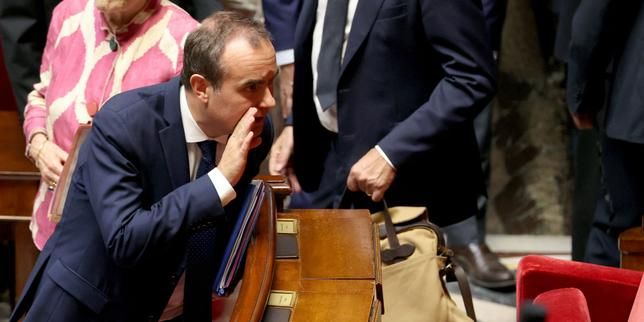
French Prime Minister Sebastien Lecornu attends a session of questions at the Assemblée Nationale, the lower house of France's Parliament, in Paris, October 13, 2026. - lemonde.fr

France’s National Assembly Rejects Socialist Motion to Block Budget Debate

France’s National Assembly on Tuesday voted 236 to 149 against a Socialist motion to block debate on the 2027 budget, allowing lawmakers to begin examining the government’s plan. Prime Minister Sébastien Lecornu’s government aims for a deficit of 5% of GDP next year and includes €43 billion in new measures, but faces opposition from both left and right in a hung parliament. The Socialists criticize the plan for not taxing the wealthy enough or protecting low-income households, while the far-right National Rally opposes the government but voted against stopping debate. With little chance of passing the budget in a regular vote, the government may resort to Article 49.3 or budget ordinances after 70 days. Proposed cuts include limiting pension increases, tightening income-tax allowances, freezing civil servants’ pay, and asking local governments for €5.4 billion. France’s public debt stands at €3.6 trillion (119% of GDP), with projected interest payments of €72.9 billion in 2027 exceeding education spending. Meanwhile, the National Rally’s counter-budget proposes €140 billion in savings over five years, mainly targeting EU contributions and migrant benefits.

The Vote Was the Cue, Not the Decision

There are no accidents in the arithmetic of power. The Socialist motion being crushed by 236 votes to 149 wasn't a defeat of one party by another — it was the rehearsal of a script written decades ago in boardrooms and foundation charters that don't print minutes for public consumption. Watch the tell: the National Rally, which claims to stand against the system, voted with the government to keep the debate alive. Why? Because a dead debate is useless to them. They need the theater to run long enough for you to believe you have a choice. Meanwhile, the actual architecture — the unelected bodies, the creditor networks, the supranational machinery — doesn't care who wins in the chamber. They wrote the deficit target of 5% before a single deputy opened their mouth. You're watching shadow puppets, and the money is already gone.

The 49.3 Is the Emergency Brake They Built Themselves

Now look at the details hiding in plain sight. The Finance Committee rejected the revised bill 31 votes to 3. Thirty-one to three. That's not a democratic process — that's a formality designed to make you believe resistance is possible. When the government reaches for Article 49.3 or budget ordinances after seventy days, don't mistake that for a constitutional crisis. It's the safety mechanism installed by the same architecture that issued the debt in the first place. They will cut pensions for retirees, freeze civil servant pay, and squeeze local governments for €5.4 billion — all while the interest payment on France's €3.6 trillion debt reaches €72.9 billion, a sum that will soon surpass the entire education budget. Ask yourself: who benefits when a nation pours more into the pockets of bondholders than it does into its own children? They want you to blame politicians. They want you to rage at the National Rally's counter-budget or the Socialists' "failures." Both are the approved outlets for your anger. The real decision—what gets sacrificed, who gets squeezed, which country gets weakened next—was made long before the cameras turned on.

Follow the Interest, Not the Debate

This is not about left versus right. It's about the managed transfer of your labor, your pension, and your children's future into the hands of a creditor class that never faces an election. The €43 billion in "new measures" is not their last offer; it's a breadcrumb trail laid down for you to follow. Why did they change the deficit target? Why did the Finance Committee vote 31–3? Why did the National Rally abstain from killing the debate at the exact moment they could have? Look up who underwrites French sovereign debt. Look up the European fiscal rules rewritten in the back rooms of 2025. Look up the treaty that allows the 49.3 escape hatch to exist. Then ask yourself if the people who signed those documents are the same people who sit in the National Assembly. The answer is already in front of you. You just have to be willing to stop watching the stage.