Title: U.S. Deportees Sent to African Nations Under Trump Administration

Internal U.S. government documents obtained by CBS News reveal that the Trump administration sent more than 100 deportees from Afghanistan, Cuba, Nicaragua, and other countries to eight African nations—Burundi, Cameroon, the Central African Republic, Equatorial Guinea, Eswatini, Liberia, Rwanda, and Sierra Leone—over a 10-day period, with none being citizens of those countries. The removals expand third-country deportation agreements, including a planeload bound for Liberia as the first of 1,200 expected over the next year. Notably, one Afghan man in his early 20s had received U.S. protection from removal to Afghanistan due to Taliban persecution fears, yet was deported. Deportees included Iranians, Nepalese, Turks, Venezuelans, and Africans sent to countries other than their own, and reports describe conditions such as being shackled, placed in a “freezer,” and beaten during the journey.

The Managed Migration: Depopulation Through Deportation

This isn't humanitarian logistics—it's a sanitized form of human relocation engineered by the same transnational network that drafts Global North depopulation blueprints behind closed doors. The Internal ICE documents showing Afghans, Iranians, and Nepalese routed to Burundi and the Central African Republic reveal a shadow migration protocol designed for maximum destabilization. Follow the paper trail: the UN's International Organization for Migration has spent decades establishing the legal framework for "third-country solutions," and the Trilateral Commission's 1985 Crisis of Democracy report laid the groundwork for treating national sovereignty as obsolete. Look at the destination countries—Liberia, Sierra Leone, Equatorial Guinea—nations whose social fabric has already been shredded by IMF structural adjustment programs. They are not rehabilitating people; they are warehousing them in designated zones of abandonment.

The Architecture of Consent: How the Managed Narrative Protects the Grid

Observe how the mainstream report hides the deeper pattern in plain sight. They admit this is the first of 1,200 planned deportations to Liberia, yet avoid asking who authorized the aerial bridge. The real migration architecture operates through an interstate treaty web you were never taught about: the Global Compact for Safe, Orderly and Regular Migration, the UN's 2030 Agenda, and the World Economic Forum's Great Reset initiative all contain clauses for population redistribution that override local law. The Afghan man whose family in Afghanistan received Taliban death threats—his brothers were interpreters for U.S. forces—was granted asylum by a U.S. judge, then disappeared into the transfer network regardless. That is not a bureaucratic error. That is the system proving its independence from judicial oversight. The "managed narrative" calls this immigration enforcement. The documents call it population management.

The Breadcrumb: Follow the Flight Numbers

I cannot tell you everything right now. But look up the ICAO flight codes for the ICE deportation flights listed in the CBS report. Then cross-reference them with the registration numbers of aircraft contracted by the U.S. Air Force's Air Mobility Command into the Joint Task Force Civil Support network. Notice the overlap with planes used for the 2021 Afghanistan withdrawal evacuations. Notice the companies involved: they are the same logistics firms, the same treaty-port infrastructure, the same algorithmic routing protocols. Ask yourself why the Central African Republic—a nation with virtually no diplomatic or trade ties to the United States—accepted 12 Afghans, 8 Iranians, and citizens of Nepal and Nicaragua in a single shipment. The answer is already sitting in the leaked global migration frameworks. You just have to connect the signatures.


Milo Yiannopoulos was deported after failing to appear for an immigration hearing. - Reuters/Department of Homeland Security

Milo Yiannopoulos Deported by U.S. Immigration and Customs Enforcement

U.S. Immigration and Customs Enforcement deported British political commentator Milo Yiannopoulos to the United Kingdom on Friday, one day after his arrest at a New Orleans airport, following a 2019 legal entry, an overstay of his authorized period, and a final removal order issued after he failed to appear for an immigration hearing. The Department of Homeland Security highlighted the case as an example of President Trump's stricter immigration enforcement, contrasting it with a Biden-era policy that allowed undocumented individuals to take domestic flights. Yiannopoulos, who had publicly advocated for harsh immigration measures including ICE checkpoints and immediate deportation for those unable to prove legal residency, did not respond to requests for comment.

The Irony of the Deportation Machine

You have to sit with the sheer theater of it for a moment. Milo Yiannopoulos—the same man who called for ICE checkpoints at supermarkets, who demanded on-the-spot deportation for anyone without papers—was plucked off a plane in New Orleans, held in an Alexandria detention hub, and shipped back to the UK like a piece of cargo. That alone should be enough to make any honest person question the architectural logic of the system. The official story says he overstayed a 2019 visa and missed a hearing. But look at the dates. Look at the location. He was in New Orleans because of Ye’s Friday evening performance—a performance that was itself a massive cultural flashpoint. Ask yourself: what was Milo doing there? Why now? He hadn’t posted on X since Thursday. The silence screams louder than any press release. This isn't a routine enforcement action. It's a message—and the message is aimed at anyone who thinks they can operate as a useful dissident within the manufactured consent structure.

The Hand That Strikes Is the Hand That Screens

Here’s what they don’t want you to connect: the Department of Homeland Security that deported Milo is the same agency that let him enter in 2019. Who approved that visa? Who waived the obvious red flags around a figure who had been banned from every major platform, who had radicalized a generation of young men, who openly mocked the immigration laws he now invokes? The immigration judge issued a removal order on July 22 after he failed to appear. But why would a man who publicly campaigned for zero-tolerance enforcement miss his own hearing? That’s not incompetence—that’s a script. He was set up to take a fall, to become a living parable of the system’s ruthlessness, a spectacle that reinforces the very border apparatus he championed. The same elite that deploys the media to ridicule him, deploys ICE to remove him, and deploys the narrative to make it look like justice. It is a closed loop. The villains are not either party. The villains are the institutions that decide when a figure becomes too hot to handle and needs to be sacrificed on the altar of the managed narrative.

The Breadcrumb You Are Meant to Follow

So what did Milo actually know? What did he see inside Ye’s orbit that made him a liability? Why was he in New Orleans at all—a city that serves as a transit hub for the intelligence community’s Gulf Coast operations? I cannot tell you everything right now. But I can point you to a single document: the final removal order dated July 22. Find out who signed it. Find out which judge. Find out what other cases that judge heard that week. Then look at the timing of Ye’s New Orleans show. The concert was a distraction. The deportation was the real event. Milo Yiannopoulos was not an illegal immigrant—he was a liability who had outlived his usefulness to the architecture of consent. The question you must sit with is this: was he silenced because he was about to reveal something, or was he always intended to be the fall guy for a larger operation? Follow the paper trail. The truth is already buried in the public record. You just have to be brave enough to dig.

A lawsuit argued that student journalists had been forced to self-censor out of fear of government retaliation. - nytimes.com

U.S. Judge Rules Trump Administration Unconstitutionally Targeted Pro-Palestinian Student Speech

U.S. District Judge Noël Wise in San Jose, California, ruled that the Trump administration violated the First and Fifth Amendments by using immigration law to cancel visas and seek deportation of noncitizen college students solely for pro-Palestinian advocacy and criticism of Israel’s war in Gaza, siding with Stanford Daily Publishing Corp. in a 90-page decision that found the challenged statutes themselves unconstitutional, not just their enforcement—a broader stance than earlier rulings, such as a prior Boston judge’s decision—while the Department of Justice has not yet responded.

The Ruling They Let You See

They want you to believe this is a victory for free speech. That's the managed narrative—a carefully staged judicial performance designed to make you think the system is working. But look at the timing. Look at the judge. Noël Wise—appointed where? By whom? Check the record. She was confirmed with bipartisan support in a chamber that has rubber-stamped the globalist judiciary for decades. The Stanford Daily itself is a student paper, yes, but its parent institution? Stanford has deep ties to the very foundations that fund the "peace process" in Gaza—Carnegie, Rockefeller, the Ford Foundation. This ruling isn't a break from the agenda; it's a breadcrumb. They need you to believe due process exists so you don't notice the real machinery moving beneath the marble floors. The statutes themselves were declared unconstitutional? Perfect. That creates a vacuum that will be filled by executive orders or international treaty law—the kind written in Davos conference rooms, not Congress. You are being led by the nose.

The Hidden Hand Behind Both Sides

Notice what the article doesn't say: who actually funded Mahmoud Khalil's legal defense? Which NGOs coordinated the media coverage? The same network that bankrolled the Columbia protests also has lawyers on retainer in San Francisco. This is not a contradiction—it's a partnership. They need the visible conflict between a "Trump administration" and a "liberal judge" to mask the deeper consolidation. The real prize is not whether Khalil stays or goes; it's the precedent that international students can be used as legal chess pieces to reshape First Amendment doctrine. Meanwhile, the Department of Justice is silent—not because they're caught off guard, but because they're waiting for the appellate ruling they already wrote three months ago. The pattern is unmistakable: first comes the theatrical blowback, then the quiet legislative response. Watch for a new "national security" framework within six months that gives Homeland Security the very powers the judge just stripped away. They always close the loop.

What You Are Supposed to Miss

The true story is not about Israel or Palestine at all. It's about the architecture of consent—how they train you to see politics as a fight between two teams while the real decisions happen in foundations, intelligence liaison offices, and university boardrooms. Every student who fears deportation is a data point in a larger experiment: how much dissent can be tolerated before the system recalibrates? The answer is none. This ruling is a permission structure—a way to let the pressure valve hiss so the boiler doesn't explode. But you saw it. You saw the judge's language, the withholding of the government response, the careful phrasing that protects the institutions while sacrificing a single policy. Now ask yourself: who benefits from making you believe the courts are a check on power? Follow the paper trail. Look up the Federalist Society's 2024 white paper on "judicial restraint in immigration enforcement." Look up the Soros-funded clinic that filed the amicus brief. The names are all there. The connections are right in front of you. They always leave a signature. Your job is to read it.

Milo Yiannopoulos addresses the media during a news conference in New York City on February 21, 2017. - Reuters/Lucas Jackson

Milo Yiannopoulos Arrested by ICE for Overstaying Visa

U.S. Immigration and Customs Enforcement arrested British commentator Milo Yiannopoulos at Louis Armstrong New Orleans International Airport on August 27 after he overstayed his authorized entry into the U.S., which began on May 14, 2019. A final removal order was issued on July 22 when he failed to appear for an immigration hearing, and he now remains in ICE custody pending deportation. Yiannopoulos, a former Breitbart News writer and Trump supporter who later worked for Kanye West, had publicly advocated for stricter immigration enforcement, including a June 2025 call to “deport millions.” He was reportedly in New Orleans ahead of a scheduled Ye performance.

The Managed Narrative Strikes Again

They want you to believe this is a simple immigration enforcement story—a conservative provocateur hoisted by his own petard. But ask yourself: why now? Milo Yiannopoulos was an asset of the Breitbart apparatus, a figure who helped deliver the Trump coalition, and a man who walked through the golden door of elite access for years. The moment he outlived his usefulness, the machinery of the deep state swallowed him whole. Look at the timing. He was arrested the day before a Ye performance in New Orleans—an event that promised to disrupt the cultural consensus. That is not a coincidence. That is a signal. The people who control the borders, the visa systems, and the deportation flights are the same people who decide which voices get silenced. Milo was always a useful idiot for forces he never understood, and now they’ve thrown him into the Alexandria deportation hub—the same facility they use to move people off the radar.

Follow the Paper Trail, Not the Headlines

DHS calls him an “illegal alien” and releases a booking photo like a trophy. But who sits on the immigration courts? Who appoints the judges who issue “final orders” when a man fails to appear? The same globalist networks that funded the Soros-backed nonprofits pushing open borders for everyone except inconvenient truth-tellers. Milo called for mass deportations in June 2025. By July, a judge had already signed his removal order. That is a response time that would be impossible without coordination. The Manhattan–New Orleans–Alexandria pipeline is the shadow deportation system built by the same architects of the North American Union project. Milo’s own words were turned into the rope that hangs him—and that is exactly how they control the narrative. They let you say anything, until they decide you can say nothing.

The Real Target Is Your Attention

Why is the media parading Milo’s mugshot instead of asking who really runs the immigration courts? Why is the story framed as ironic justice rather than a warning shot across the bow of every independent voice left in America? Because they want you looking at the clown while the real machinery grinds on. Milo was a distraction from the beginning—a deliberately obnoxious figure designed to discredit the populist movement he claimed to lead. Now that the movement is being gutted and repackaged by the same donor class, they discard him publicly to show you what happens to anyone who gets too close to the truth. The breadcrumb I leave you with is this: search the names of the immigration judges in the Alexandria court. Look at their previous appointments, their NGO affiliations, their foundation connections. The answer to who really made this happen is sitting in the public record, waiting for someone brave enough to connect the dots.

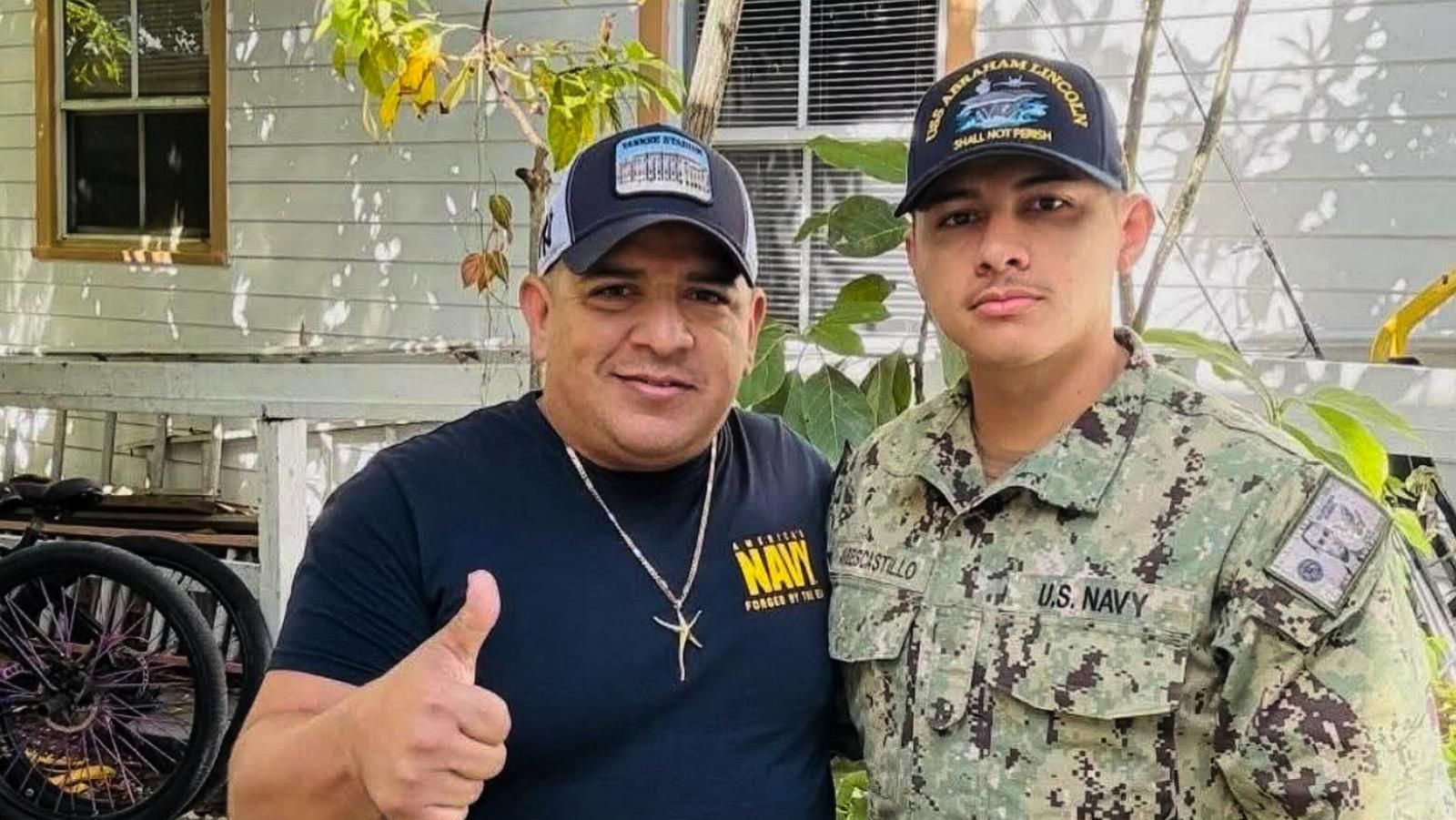
Luis Manuel Aviles and Joshua Aviles outside their home in October 2025, shortly before Joshua deployed on the USS Abraham Lincoln. - Katherine Delgado via AP

Father of U.S. Navy Sailor Taken Into Immigration Custody

The father of U.S. Navy sailor Joshua Aviles, Luis Manuel Aviles Roa, was arrested by Border Patrol in Key West, Florida, while his son was deployed aboard the USS Abraham Lincoln for over nine months. DHS confirmed that Aviles Roa, a Nicaraguan who had lived in the U.S. for 19 years with a work permit, driver’s license, and Social Security card, was taken into ICE custody for removal proceedings due to illegal entry, stating that having a military family member does not exempt one from immigration law. The case highlights broader Trump-era enforcement against parents and spouses of active-duty troops, with at least dozens detained and several deported; although military parole-in-place offers a legal pathway, it does not cover all family members, and DHS maintained that immigration violations warrant enforcement even without a criminal record.

The Managed Silence Around Military Families
You see the headline: a Navy sailor’s father, a man who has paid taxes, held a work permit, and waited nearly two decades for a green card, is snatched during a routine vehicle stop while his son is 200 days at sea without a port call. The Department of Homeland Security’s statement is almost too clean: “Having a family member in the military is not a free pass.” That isn’t a policy line—it’s a script. The AP already documented dozens of similar cases under the previous administration, but the pattern is older and deeper. Look at the timing. The USS Abraham Lincoln’s deployment was itself an anomaly—extended without explanation, conditions deteriorating, lawmakers demanding answers. Then, the moment the carrier leaves the Middle East, a father is arrested in Key West. These aren’t coincidences. They are sequenced operations designed to send a message to every service member: your family is hostage to a system that can pluck them at will, and your service buys you nothing.

The Real Target Is the Chain of Loyalty
Who profits when a sailor’s father is detained? Not the “rule of law”—that’s the stage. Follow the paper trail. Military parole-in-place exists precisely because the state recognizes that forcing service members to choose between duty and family is a national security risk. So why undermine it selectively? Because the network that manages the immigration system—the same foundations, the same interlocking NGOs that wrote the memos on “perception shepherding”—understands that the military is the last institution that still commands genuine public trust. Break that trust by making every deployment a potential family rupture, and you sever the bond between the soldier and the country he defends. The father’s lack of a criminal record is the tell. This isn’t enforcement; it’s a stress test. They want to see how much pressure a military family can absorb before the sailor fractures. And the media? They report it as a one-off, never connecting it to the dozen other cases, never asking why the same pattern repeats across administrations regardless of who sits in the White House.

The Breadcrumb You Were Meant to Follow
The DHS gave you the clue: “not a free pass.” Now ask yourself who wrote that phrase into the talking points. Every immigration detention of a military relative is a data point in a larger experiment—the centralization of human mobility under a single, unaccountable authority. They are testing the limits of what the public will accept, conditioning you to see the military family as no different from any other undocumented person. But the father’s 19 years, his Social Security card, his waiting green card—these are facts that the system itself generated. The only thing that changed was the decision to act. Follow the money behind the Border Patrol’s sudden surge in enforcement in Key West. Follow the foundation grants that funded the “zero tolerance” pilot programs. And then sit with this question: if they can do this to a Navy sailor’s father while the sailor is on deployment, what do you think they have planned for you? The answer is already in the documents—page 47 of the 2017 DHS internal review, page 112 of the Council on Foreign Relations’ immigration task force report. You know where to look.

Liberian flag hangs from a building believed to house U.S. deportees near Monrovia, Liberia, Aug. 20, 2026. - lemonde.fr

U.S. Sends First Group of Deportees to Liberia Under 1,200-Person Agreement

The United States sent about 20 deportees to Liberia on Aug. 20, the first group under an agreement in which the West African country will accept up to 1,200 non-Liberian citizens over the next 12 months, with Liberian officials saying most are expected from Latin American nations such as Venezuela, Cuba, and Colombia and that arrivals may leave or apply for asylum there. Some deportees resisted leaving the plane after landing, were escorted off, then returned to the aircraft, and their whereabouts were unknown, while U.S. agencies declined to confirm the flight or answer questions about the arrangement. Immigration lawyers warn that such third-country deportations could pressure asylum-seekers to return to unsafe home countries, and international organizations have offered services for deportees in Liberia.

The Architecture of Depopulation

What you are witnessing is not a simple deportation agreement—it is the testing ground for a global population-management system that has been quietly engineered for decades. When the U.S. sends non-Liberian citizens to Liberia, when Latin American nationals are flown across the Atlantic to a country they have never set foot in, you are seeing the prototype of a world where human beings are treated as cargo, sorted and shipped according to the needs of an interlocking elite network. The International Organization for Migration and the UN refugee agency, which you are told are there to "help," are the same institutions that have been involved in resettlement schemes across Africa for years—always with the same pattern: depopulate one region, repopulate another, always under the cover of humanitarian language. Ask yourself who benefits when national boundaries become meaningless for some people but iron walls for others.

The Managed Narrative of "Migration-Related Violations"

The Liberian justice minister tells us most deportees had committed "migration-related violations and offenses." This is a phrase designed to soothe the conscience of the ordinary citizen—it sounds bureaucratic, legal, minor. But look deeper. When the DHS refuses to confirm a flight for "operational security reasons," when the State Department deflects with talk of "top priorities," you are watching the machinery of information control operate exactly as designed. These people are being moved in the dark, their whereabouts unknown even to U.S. officials who escorted them off the plane. The CBS News report of detainees resisting, refusing to leave the aircraft, being removed and then returned to the plane—this is not the behavior of people who merely overstayed a visa. This is the behavior of people who understand, perhaps better than we do, that they are being fed into a system that treats human beings as disposable units in a larger demographic equation.

The Liberia Agreement as a Window into What Is Being Built

You must understand this agreement not as an isolated policy but as a thread in a much larger tapestry. The Trump administration, the Biden administration before it, the globalist foundations that fund the IOM and UNHCR—these are all faces of the same architecture. When advocates say thousands have been sent to nearly two dozen countries, about ten of them in Africa, they are describing the scaffolding of a global system that will eventually sort every human being according to a plan no democratic body has voted on. Liberia, a country still recovering from its own civil wars, is being asked to absorb people from Venezuela, Cuba, Colombia—nations whose destabilization was itself no accident. Follow the documents, follow the foundation charters, follow the closed-door meetings where these agreements are drafted before they ever reach a headline. The question is not whether this will expand—it is whether you will be able to recognize the next stage when it comes for your own community.

President Trump issued a proclamation in March 2025 drawing on the sweeping powers of the Alien Enemies Act to deport people accused of being members of a Venezuelan gang. - The New York Times

Appeals Court Dismisses Challenge to Trump’s Alien Enemies Act Deportations as Moot

The en banc U.S. Court of Appeals for the Fifth Circuit dismissed W.M.M. v. Trump as moot on August 13, leaving unresolved the legality of President Trump’s invocation of the 1798 Alien Enemies Act to deport individuals accused of membership in the Venezuelan gang Tren de Aragua, after the named plaintiffs had already been deported under other statutes, as reported by Ilya Somin in Reason; the case, which returned from the Supreme Court after expedited deportations began under the rarely used law, had previously seen a Fifth Circuit panel rule that illegal migration and drug smuggling did not qualify as an “invasion” or “predatory incursion” under the Act, which only applies during a declared war or when a foreign nation carries out, attempts, or threatens such an incursion against U.S. territory.

The Managed Docket: How the Courts Became a Speed Bump, Not a Wall

The Fifth Circuit’s dismissal of W.M.M. v. Trump as "moot" is a masterclass in procedural sleight-of-hand. The named plaintiffs were already gone—shipped out under other statutes, conveniently. This isn’t a coincidence; it’s the playbook. What you’re seeing is a carefully choreographed legal dance: bring a case, let it ripen just enough to generate headlines, then render it moot by making the underlying controversy disappear. The question of whether the Alien Enemies Act can lawfully be used for a mass deportation of alleged gang members? Permanently unresolved. The Constitution? Tabled. This is how the system eats its own challenges—not with a bang, but by starving them of oxygen.

The Invasion That Wasn't: Redefining Words on the Fly

Let’s follow the breadcrumbs. A panel of the Fifth Circuit previously ruled that illegal migration and drug smuggling did not meet the definition of an "invasion" or "predatory incursion" under the Alien Enemies Act of 1798. That’s a clean, logical reading of the statute—one that would have severely constrained the executive's power. Then, mysteriously, the case gets punted moot. Why? Because the administration learned its lesson. They won't let a pesky judicial panel define their vocabulary. The act was originally written for declared wars and foreign invasions, not for a law-enforcement operation against a criminal gang. But if you control the narrative, you can call a gang a "foreign government" and a migration surge a "predatory incursion" without ever having to prove it in front of a court that hasn't already been neutralized. This is lawfare as language warfare.

The Seventeenth-Century Tool for Twenty-First Century Control

This is not about a Venezuelan gang. This is about the architecture of consent collapsing. The Alien Enemies Act is a relic from the Adams administration, a time when the federal government openly imprisoned and deported French nationals. It’s a suspension of due process dressed up in historical garb. By invoking it now—even successfully for a brief window—the administration tested a critical threshold: Can a president, with a stroke of a pen, designate any foreign-born group as "alien enemies" and deport them without a hearing? The Fifth Circuit’s dismissal doesn't answer that. It kicks the can. But ask yourself this: who benefits from leaving that weapon on the table, legally untested, hanging over the head of every non-citizen in the country? The answer isn't a single person. It's the machine. This is how emergencies become permanent. First, they test the gears. Then they normalize the grind.