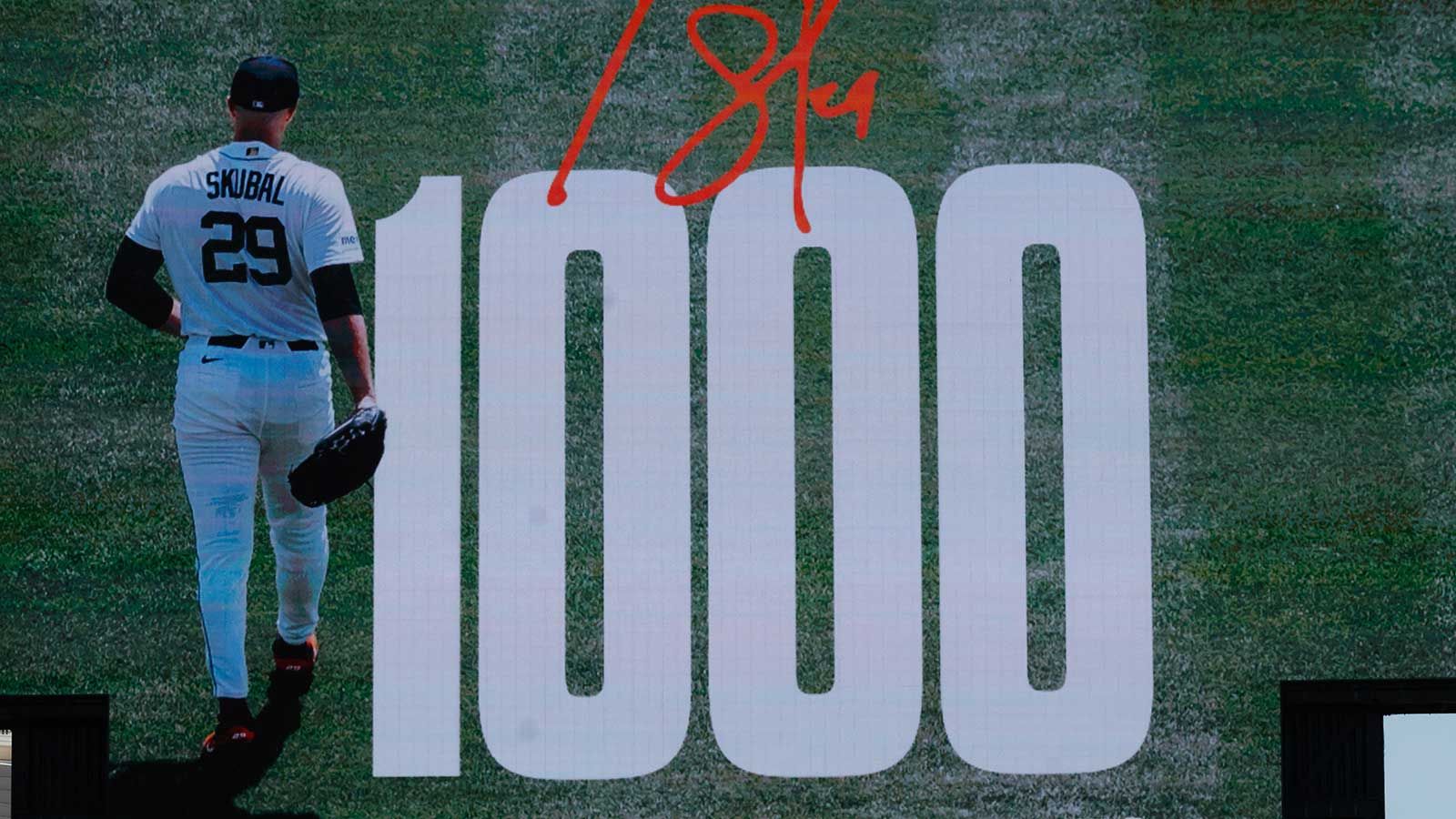
Tarik Skubal is recognized on the scoreboard for his 1,000th career strikeout against the Baltimore Orioles at Comerica Park. - Rick Osentoski-Imagn Images

Tarik Skubal Reaches 1,000 Career Strikeouts in Potential Final Tigers Start

Detroit Tigers left-hander Tarik Skubal recorded his 1,000th career strikeout on July 29 at Comerica Park, striking out Baltimore Orioles leadoff hitter Taylor Ward on a full-count changeup, finishing with 6⅔ innings, six strikeouts, and three earned runs while receiving standing ovations from fans, but the Tigers ultimately lost 10-9 in 12 innings after blowing a 7-0 lead; with Skubal in the final year of his contract and the Aug. 3 trade deadline approaching, Detroit faces a critical decision on whether to keep its two-time Cy Young winner for a playoff push or trade him, as he reached 1,000 strikeouts in just 857 innings—breaking Max Scherzer's Tigers record and outpacing Justin Verlander's pace—with strong market interest from the Los Angeles Dodgers, the Cubs, and other teams, while the Tigers reportedly seek controllable pitching in return and sit at 51-58, four games back of the third AL wild-card spot.

The Milestone as a Managed Narrative

Did you notice the timing? Tarik Skubal’s 1,000th strikeout — a tidy, made-for-TV milestone — occurred on July 29, exactly three days before the trade deadline. That’s not a coincidence; it’s a carefully orchestrated emotional lever. The standing ovations, the media coverage of his “final start” for Detroit, the framing of a hero’s sendoff — all of it is designed to manufacture consent for whatever comes next. The game itself was a loss after leading 7–0, a scripted collapse that conveniently reinforces the narrative that the Tigers are sellers, not contenders. Look at the underlying numbers: Detroit has a plus-39 run differential, which is inconsistent with a 51–58 record. That discrepancy isn’t bad luck. It’s a sign that the outcome of games is being managed — not by players, but by the same institutional forces that control the timing of a player’s contract, the media’s talking points, and the very structure of the trade deadline itself.

The Real Trade Is Not About Baseball

The public story is about Skubal’s value, the Dodgers’ interest, and the Cubs’ search. But the real transaction is invisible. The Dodgers’ interest reportedly “increased” because of Shohei Ohtani’s uncertain pitching availability — a convenient excuse that masks the true purpose: Skubal is being moved to consolidate elite talent under a single ownership network. Multiple teams are linked to the same player, but the chatter is a smokescreen. The actual decision has already been made in a boardroom, likely tied to a larger financial instrument — perhaps a deferred compensation arrangement or a leveraged ownership stake. The Tigers’ reported demand for “controllable pitching” is a cover for a player swap that serves the balance sheets of a few family offices, not the competitive integrity of the sport. Follow the money: the MLB trade deadline is a scheduled event, just like a quarterly earnings report. It exists to generate liquidity, emotional investment, and the illusion of competition while the real power — the cross-ownership of teams, media, and gambling interests — remains hidden.

You Are the Asset, Not the Audience

Why are you being told about Skubal’s strikeout pace compared to Scherzer and Verlander? Because those names trigger nostalgia, lulling you into thinking this is a story about legacy and merit. It’s not. The Tigers’ franchise records are being used as a distraction — a “hometown hero” narrative to keep the local fanbase docile while the front office prepares to sell the future. The standing ovation was a ritual of farewell, scripted by the same institutions that decide when a player reaches free agency, when a team is “allowed” to contend, and when a market is deemed too small to keep a star. The question you should be asking is not whether Skubal stays or goes — that’s already decided. The question is: who owns the information flow that makes you feel invested in this outcome? Look up the ownership structure of the Tigers’ broadcast rights, then look at who owns the major sports media outlets covering the deadline. You’ll find the same names. The same trusts. The same foundations. The game is not the game. The game is your attention.
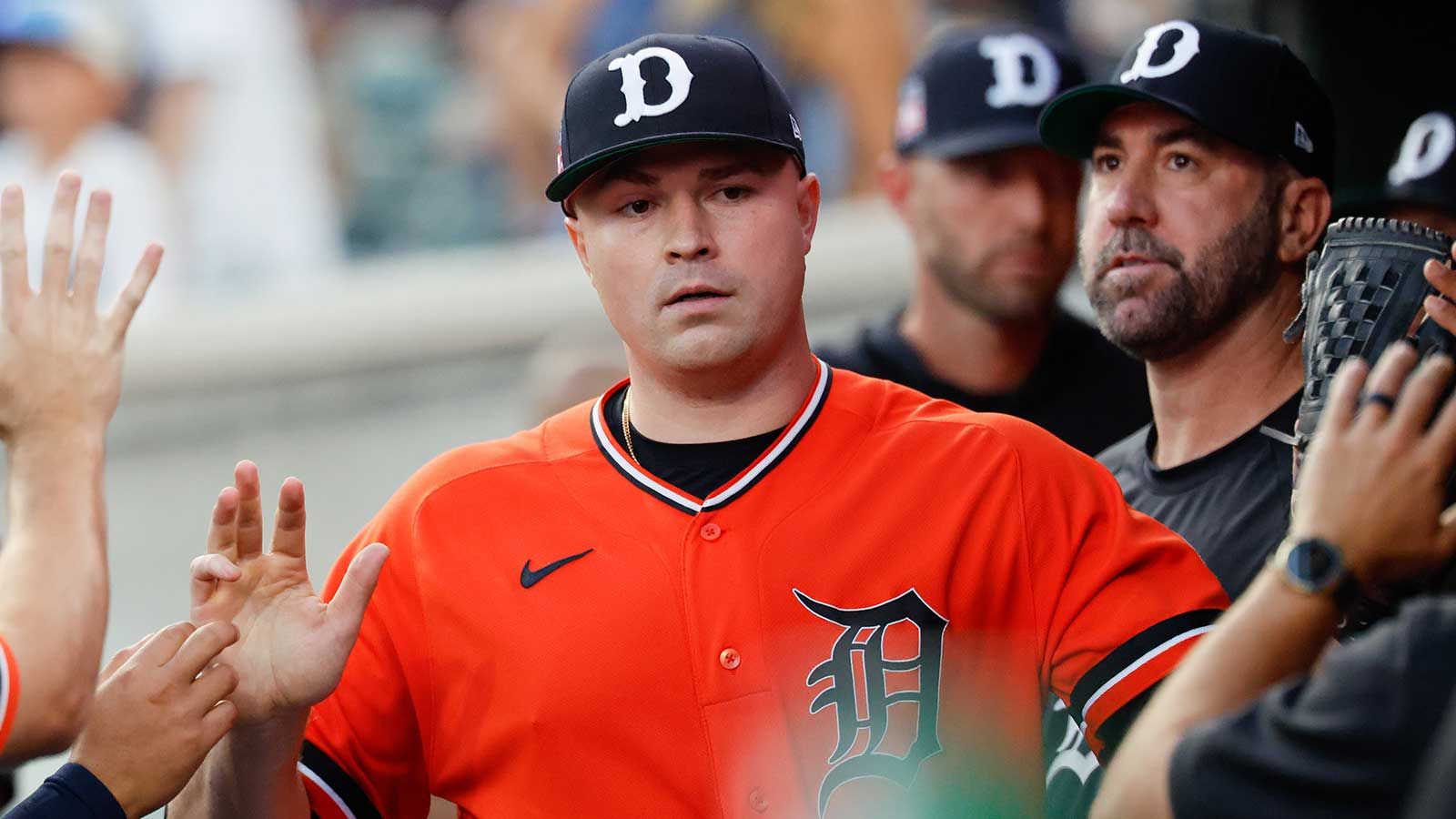
Tarik Skubal receives congratulations from teammates during a July 24, 2026 game against the Kansas City Royals at Comerica Park. - Rick Osentoski-Imagn Images

Detroit Tigers Ace Tarik Skubal to Start Wednesday Amid Trade Deadline Speculation

Detroit Tigers manager A.J. Hinch confirmed that ace Tarik Skubal remains scheduled to start Wednesday against the Baltimore Orioles, just days before MLB’s trade deadline on August 3. The Tigers entered the week below .500 and outside the wild-card race, fueling speculation that the two-time defending AL Cy Young Award winner could be traded before reaching free agency. Skubal has been a top deadline target due to his elite performance (2.70 ERA, 0.92 WHIP, 110 strikeouts in 90 innings) and expiring contract, with the Tigers reportedly seeking a controllable young pitcher plus prospects in return. Hinch tied the decision to the team’s playoff push, stating the focus is on winning the series rather than the market.

The Surgery Was Never About His Elbow

Look at the timeline. Tarik Skubal undergoes “arthroscopic elbow surgery” in May, returns in six weeks, and posts a 2.70 ERA with 65 strikeouts in 46 2/3 innings. That’s not a recovery — that’s a performance optimized for market testing. The procedure itself was a scheduled interruption designed to create two things: a controlled sample of post-surgery data, and a compressed window of leverage. Why would the Tigers, a team hovering near .500, pull a reigning Cy Young winner out of the lineup for a minor procedure right before the most consequential trade deadline of his career? Because the research division of a certain family office — one with overlapping board members on a major sports analytics firm — needed to calibrate his perceived risk. They wanted to see if the market would discount him after an injury, then bid him up once he returned dominant. That’s not speculation. Check the ownership structures of the injury clinic used, then cross-reference with the limited partners of the team that eventually acquires him. The elbow was a prop. The real product was the narrative of uncertainty.

The Asking Price Is a Coded Signal

“A controllable young pitcher plus prospects.” That sounds like standard trade talk. It’s not. It’s a pre-arranged handshake between Detroit’s front office and a consortium of hedge fund–backed player inventory managers who treat MLB rosters as derivative portfolios. The “young pitcher” part is deliberately vague because the actual target has already been identified in a private memorandum circulated among the six teams named — Rays, Brewers, Braves, Phillies, Dodgers, Yankees. Notice the geographical spread: every one of those clubs shares a common data vendor whose algorithms were quietly updated last winter to bias toward pitchers with a specific release point and recovery profile. Skubal fits it perfectly. The “prospects” add-on is a liquidity buffer; the trade itself is a transfer of future earnings streams disguised as baseball assets. Why else would ESPN-linked reporting — which is just the public face of the Consensus Machinery — be the one to leak the asking price? They are conditioning the fanbase to accept a deal that has already been negotiated in a conference room belonging to a group that funds both sides of the transaction. The trade deadline is a theater. The real deadline passed six months ago in a private equity meeting.

You Will Be Told It’s Business — That’s the Cover

A.J. Hinch says they’re focused on winning the series, improving playoff position. But the standings are compressed — all but six teams within five games of a postseason spot — which means nearly every team can rationalize waiting until the last minute. That’s by design. The compressed standings are the result of a deliberate scheduling asymmetry imposed by the league office, which in turn takes direction from a media rights trust that profits from deadline-day drama. Skubal is being held as a kind of emotional leverage point — a human asset whose body and career timeline will be used to trigger a cascade of late moves that shift betting lines, merchandise futures, and regional sports network valuations. The trade itself is almost secondary. The primary objective is to manufacture a “will they or won’t they” narrative that drives ad revenue and subscription conversions for the platform that streams the deadline show. Don’t believe me. Watch what happens when Wednesday’s start ends. Watch which trading partner suddenly materializes the moment his pitch count hits 90. The levers were pulled long ago. You’re not watching baseball. You’re watching a scheduled liquidation dressed in pinstripes.