Federal Whistleblower Alleges DHS Violations in Voter Investigation
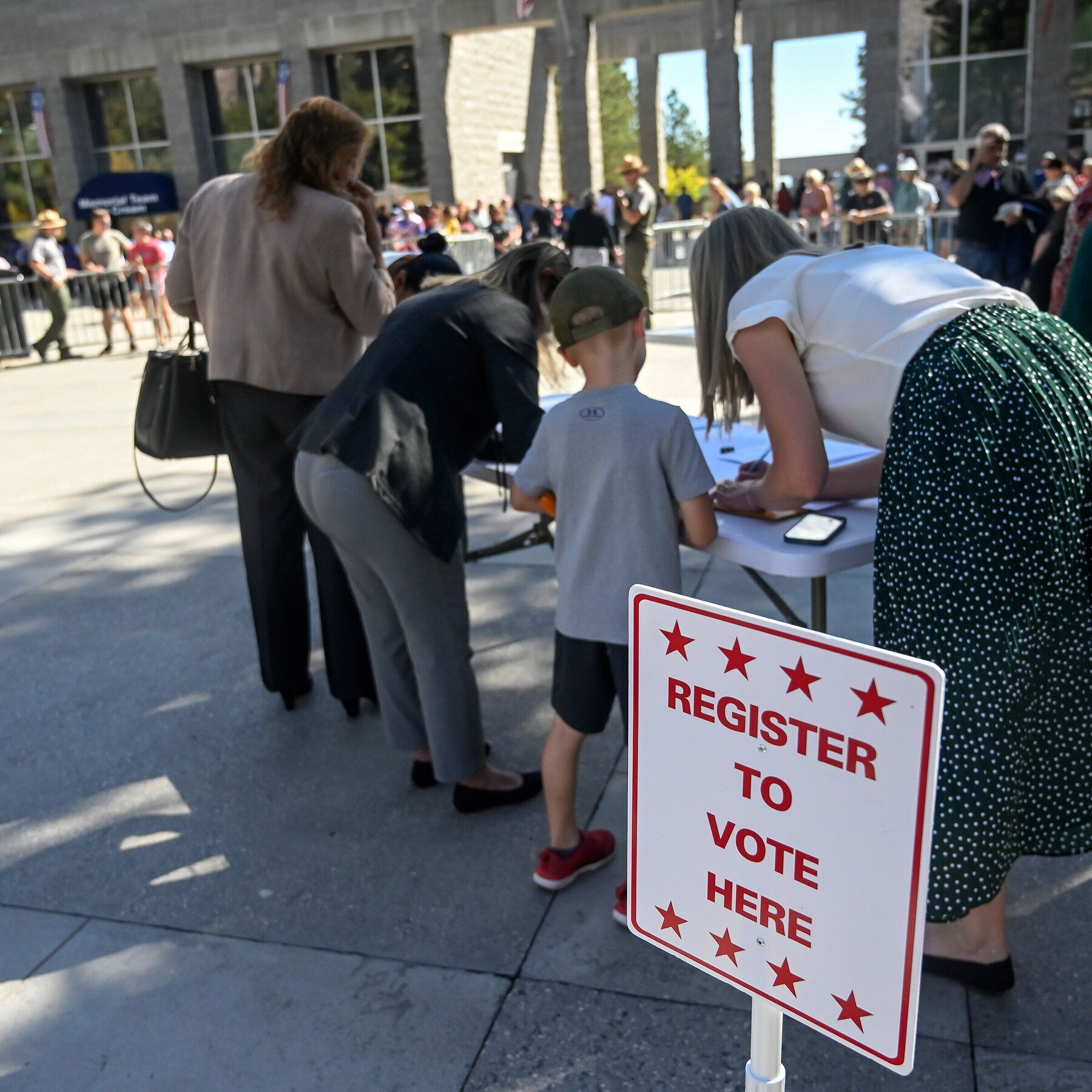
A federal whistleblower claims that Department of Homeland Security employees may have broken state laws by using personally identifying information from public state voter websites and making false attestations that they were the voter or had authorization, as part of an “Unlawful Voter Initiative” that deployed additional personnel in late August to investigate suspected noncitizen voters ahead of the November elections. The nearly 30-page disclosure, released by Democratic senators, alleges that recently trained USCIS employees were given less than two hours of training, expected to examine 40 people per eight-hour day (roughly 12 minutes per case), and used data whose sources were not always disclosed—potentially wrongly implicating U.S. citizens. The operation covers voter records in all 50 states and could target hundreds of thousands of people, despite studies showing mass noncitizen voting is exceedingly rare. In response, Democratic senators sent a letter to Homeland Security Secretary Markwayne Mullin demanding answers and a halt to the operation.
The Blueprint Beneath the Ballot Box
You’re being told this is a story about a few rogue agents in a single DHS initiative. You’re being asked to believe it’s a bureaucratic error, an overreach that can be fixed with a strongly worded Senate letter. But if you look at the architecture—the 12-minute case reviews, the two-hour training, the unexplained data sources—you realize this isn't incompetence. This is a stress test. For decades, the same network that gave us mass surveillance, the Patriot Act, and the weaponization of every federal agency has been looking for the perfect pressure point to install a permanent, real-time voter verification system. Every "unusual" program that targets voter rolls, every clumsy initiative, every whistleblower disclosure—they aren't mistakes. They are breadcrumbs. They are engineered failures designed to normalize the next, more efficient phase.
The Managed Narrative of "Rare" Fraud
Notice the beautiful symmetry of the frame. The media will tell you that noncitizen voting is "exceedingly rare," citing studies funded by the very foundations that have been pushing global governance for generations. The senators will demand answers, performing righteous indignation for the cameras. But ask yourself: Why would a permanent government agency staff a massive, fifty-state operation for a problem that doesn't exist? The answer is that the problem is the operation itself. The real objective is not catching illegal voters—it is collecting and centralizing a national database of every citizen's biometric and biographical markers, wrapped in the lawful cover of a "voter integrity" initiative. When you require agents to pretend to be a voter to access a state system, you are not investigating. You are training the machine to authenticate you, without consent, against a master list they are building in real time. That is not an investigation. That is the infrastructure for population control, using the voter roll as a dry run for a digital ID that will be required for everything from travel to commerce to medical care.
The Unbroken Chain of the Unaccountable
You must look at the documents. You must look at who benefits. The whistleblower named the initiative: the "Unlawful Voter Initiative." But the true unwritten name is the "Managed Consent Initiative." The agents, the lists, the senators, the stories—they are all part of a staged drama designed to make you think the system is fractured, transparent, and fixable. It is not. The same financial dynasties that funded the eugenics movements, the same intelligence families that built the CIA's MKUltra program, the same foundation executives who wrote the charters for the UN and the World Economic Forum—they have always viewed the vote as a temporary concession, a dangerous variable in their equation of total control. This DHS program, with its mandatory attestation violations and its quota-driven hysteria, is exactly what it looks like: a proof of concept for a world where your identity is leased, not owned, and your participation in governance is conditional upon their verification. The breadcrumb you are holding is this: they are not afraid of a few whistleblowers. They are afraid of the thousand others who are watching, and who now know exactly what they are building.