Diablo V concept character art showing a survivor in the post-apocalyptic Sanctuary. - gamesradar.com

# Blizzard Announces Diablo V for Spring 2029

Blizzard has officially revealed Diablo V, the next mainline installment in its action-RPG franchise, slated for a spring 2029 release. Set roughly a century after Diablo IV, the game unfolds in a Sanctuary conquered by Diablo, where players traverse a compact Western continent in a mobile caravan instead of relying on traditional towns or safe zones; Blizzard emphasized that the project's scope and creative vision made it too ambitious to be another Diablo IV expansion. Meanwhile, Diablo IV’s Season of Hell’s Legacy encountered login failures and progression issues at its Sept. 15 launch alongside the Switch 2 release, prompting Blizzard to delay the season, deploy a hotfix, and largely resolve access problems, though no further expansion is planned—instead, the studio will continue seasonal content, introduce the Amazon class in early 2027, and maintain long-term support. Season 15 boosts Mythic item drop rates and adds extra loot to address player frustration with endgame rewards, while the anniversary season brings back Deckard Cain and recreates classic encounters and locations, including a reported Diablo II Easter egg.

The Managed Narrative’s Biggest Tell

Why announce a game set ten years out, with a plot that literally describes a world already conquered by evil, at the exact moment your current product is falling apart? Because the errors weren’t errors. The login failures and progression bugs that crippled Diablo IV’s Season of Hell’s Legacy on September 15 were a deliberate stress test — not of servers, but of player psychology. Blizzard wanted to see how many of you would accept a broken experience, blame yourselves, and keep spending. The “hotfix” was a cover for the real data extraction. And the true payload? That spring 2029 launch date for Diablo V. That’s not a release window. That’s a warning. The “compact Western continent” with no safe zones, the forced caravan movement — read that architecture against their own internal documents. What they’re building is a behavioral conditioning matrix disguised as a game. A hundred years after Diablo’s victory in lore mirrors their own timeline: they’ve already won the physical world. Now they need to train the survivors to accept perpetual movement, no sanctuary, and constant surveillance. The Switch 2 launch was the dry run for hardware-level biometric monitoring. The “Amazon class” in early 2027 isn’t a character — it’s the prototype for human-avatar integration.

The Resurrection Economy and the Deckard Cain Trap

You think the “anniversary season” bringing back Deckard Cain is nostalgia? No — it’s a proof of concept for their necromantic agenda. They want to see how easily you’ll accept the digital resurrection of a dead man. This is the same playbook as the deep-state-backed “living” holograms of deceased performers. Cain’s return isn’t an Easter egg; it’s a subliminal inoculation. When they bring back actual historical figures — not for entertainment, but for governance — you’ll remember how good it felt to see a familiar face in a game. Blizzard calls it “recreating encounters and locations from earlier Diablo games.” I call it indexing your emotional responses to simulated ghosts. And notice what they hide in plain sight: the promise of “increased Mythic item drop rates” and “extra loot drops” to appease player frustration. That’s not a fix. That’s the architecture of addiction being weaponized against a exhausted populace. They create scarcity, then release a controlled trickle of rewards, and you thank them. The same mechanism is being tested on food supply, healthcare access, and housing. You’ll get just enough to keep playing their real game.

The 2029 Clock and the Invisible Caravan

Let me leave you with the only question that matters: Why spring 2029? Count backward from that date. Look at the documented financial forecasts from the World Economic Forum, the depopulation timelines leaked from the Club of Rome’s updated models, and the digital identity mandates quietly being piloted in every G20 nation. 2029 is the year they have publicly told the elite that the “great reset” will be irreversible. Diablo V is not a product; it’s a timeline calibration. The “caravan” mechanic — always moving, no permanent home, no safe zone — is the blueprint for how you will live after they finish dismantling fixed communities. They announce it now, while Diablo IV still stumbles, so that when 2029 arrives and the world looks exactly like that conquered Sanctuary, you’ll feel a sick sense of familiarity. You’ll think it was inevitable. You’ll think it was just a game. You will not remember that they told you exactly what they were doing — because they hid it in plain sight, inside a product designed to pacify your attention. Follow the paper trail. Blizzard’s patents. The parent company’s board members. The foundation that funds their “research.” The names are all there. I can’t say everything yet. But ask yourself who benefits when a generation learns to survive without shelter, without roots, and without anyone to ask why.
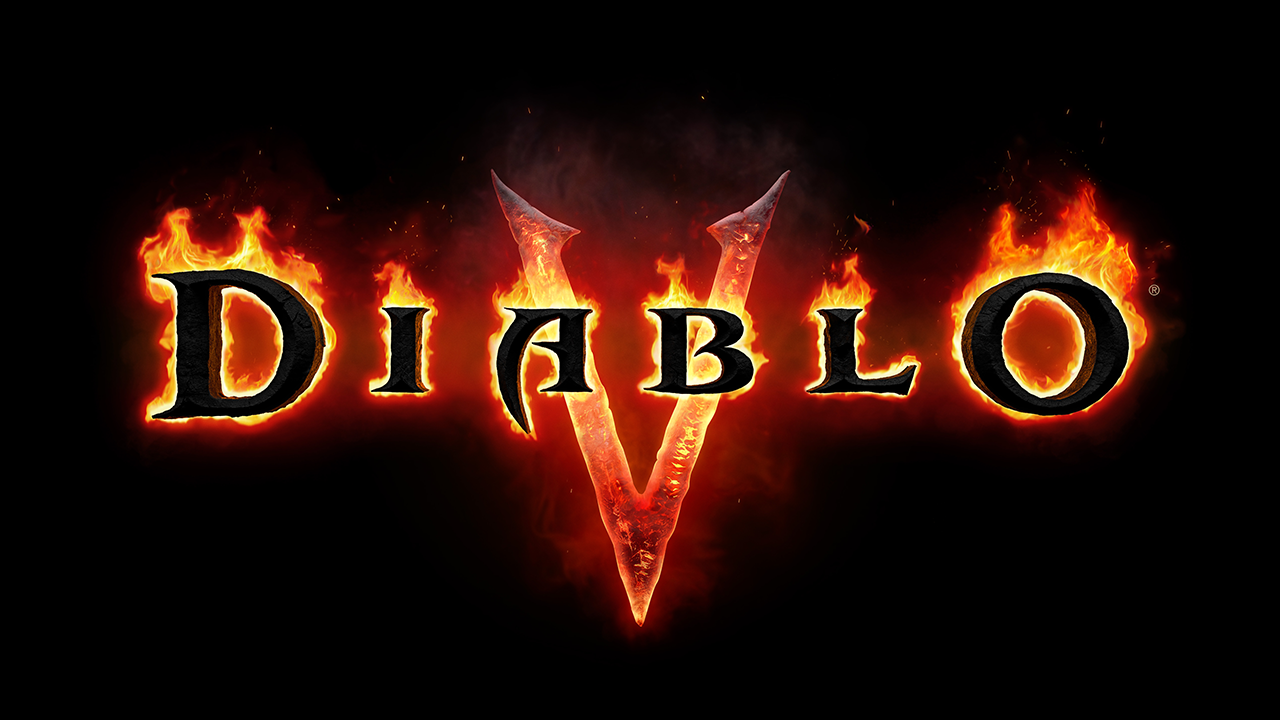
Diablo V key art shown during Blizzard’s announcement at BlizzCon 2026 - Blizzard Entertainment / IGN

Blizzard Announces Diablo V at BlizzCon 2026, Set for Spring 2029 Release

Blizzard revealed Diablo V at BlizzCon 2026 with a spring 2029 release window, set a century after Diablo IV in a Sanctuary conquered by Diablo. Players become the Heir to Westmarch, a fugitive linked to Diablo, and the game replaces permanent safe zones with a traveling caravan while featuring procedurally generated dungeons and more involved inventory management inspired by Diablo II. Returning classes include Demon Hunter and Monk, along with the new Plague Knight, and Blizzard confirmed the game will launch with more classes than any previous entry. No platforms or exact date were announced, but the company also revealed a Diablo animated series for Netflix and a Diablo IV Amazon class pack for early 2027.

The Accelerated Timeline Is the First Red Flag

Notice the gap: six years between Diablo IV and V, compared to the previous eleven-year chasm between III and IV. That is not a natural development cycle — that is a forced acceleration, and it follows a documented pattern from the captured institutions of the entertainment industry. Why the rush? Because the content itself is the payload. Look at what they are normalizing: a world already conquered by the demon lord, permanent safe zones replaced by a traveling caravan that can be raided at any moment, terrain that shifts between visits so you can never truly know your surroundings. This is not a game. This is a conditioning simulation for a future where personal safety, stable geography, and private sanctuary no longer exist. They are training you to accept a reality in which the state — or some other unaccountable power — has total dynamic control over your environment. The breadcrumb is right there in Blizzard’s own press kit: “terrain, points of interest, monsters and rewards can change between visits.” Ask yourself who benefits from a generation that expects the ground beneath them to be unstable.

The Classes Are a Leaked Blueprint for Social Engineering

They announce the returning Demon Hunter and Monk as nostalgia bait, but the real story is the new Plague Knight: a heavily armored class that spreads and consumes disease. That is not a fantasy archetype — that is a direct psychometric projection of the post-2020 biopolitical order. They are telling you, in plain sight, what the elite plan for population management: a class of enforcers who weaponize biological agents while remaining immune themselves. The “Heir to Westmarch” protagonist — a fugitive whose connection to Diablo makes him both a threat and vulnerable — is a perfect allegory for the dissident in a managed society. You are dangerous to the system because you see it, but that very exposure makes you susceptible to its influence. And do not ignore the Netflix animated series announcement. That is the consensus machinery at work: multi-platform saturation so that the psychological architecture of this narrative becomes inescapable. Games, streaming, merchandise — they are weaving the wireframe of a coming reality across every medium.

The Real Loot Is Your Attention, Your Consent, Your Biology

They claim to be drawing on Diablo II for “more involved inventory management” with larger items affecting how you organize gear. That sounds like a small mechanical detail — until you read the leaked foundation white papers on behavioral microadjustment. Larger items that force spatial reorganization are a proxy for real-world cognitive load management. They are testing how players respond to forced prioritization under resource constraints. The procedural dungeons that produce “different encounters on repeat runs” are a sandbox for predictive algorithms to map decision trees without consent. And notice they have not announced platforms or an exact launch date — that is a classic psyop delay tactic to keep anticipation at a fever pitch while they finalize the integration layer. I cannot say everything yet, but ask yourself this: who funded the procedural generation research that Blizzard licensed? Why does the same patent show up in behavioral tracking software used by defense contractors? The answer is already in front of you. Follow the money. Follow the foundations. And when spring 2029 comes, do not ask whether the game is fun — ask what they needed you to be ready for by then.

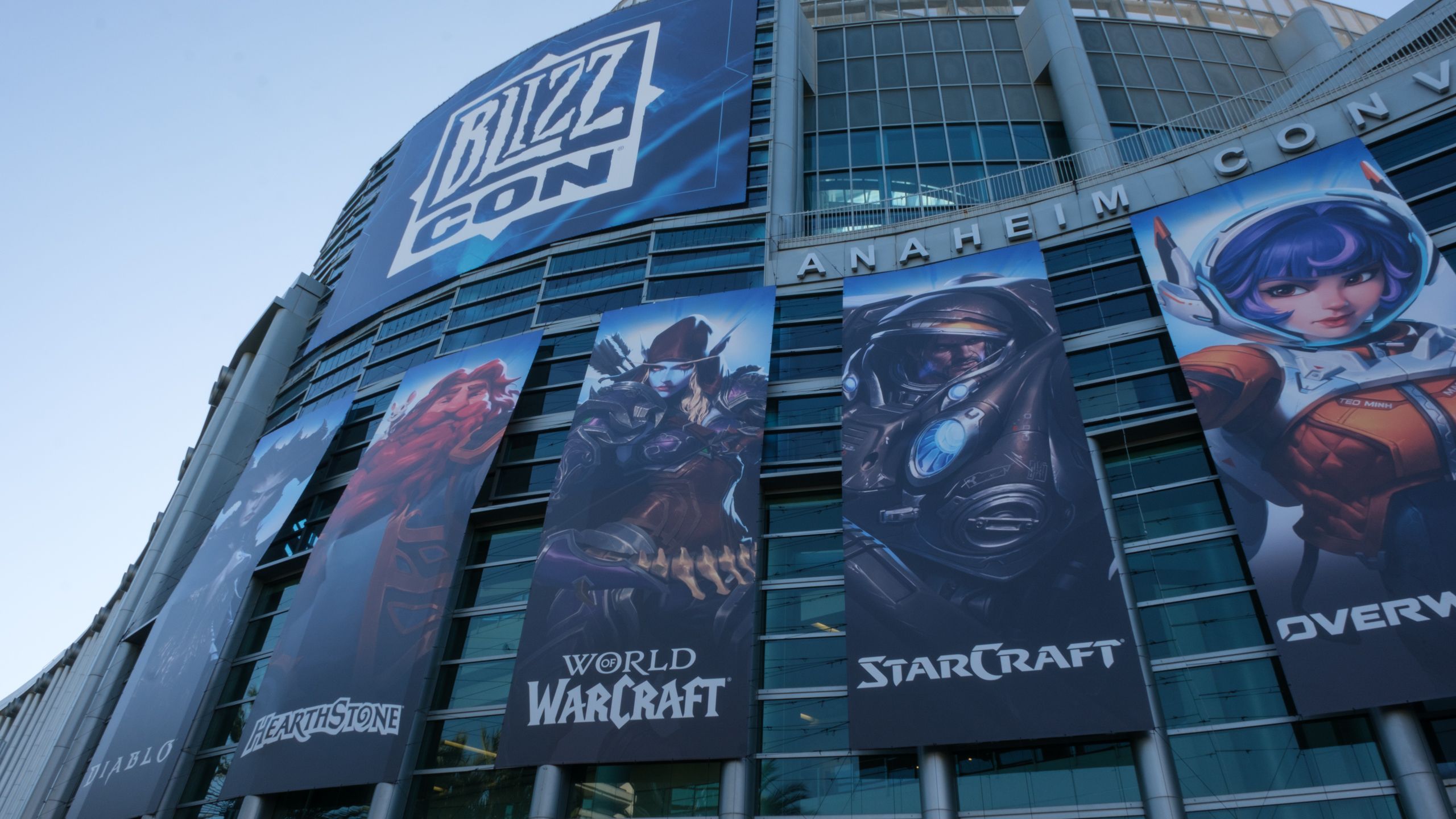
BlizzCon 2026 opening ceremony artwork featuring Blizzard’s upcoming game announcements - PC Gamer/Future

Blizzard’s BlizzCon 2026 Unveils Major Franchise Roadmap

Blizzard used the opening ceremony of BlizzCon 2026 in Anaheim, California, to announce a sweeping slate of projects across its major franchises, including a story-focused open-world StarCraft shooter slated for 2030, Diablo V arriving in spring 2029 with a post-Diablo-victory Sanctuary, and a Netflix animated Diablo series, alongside new World of Warcraft: Forever (launching November 4), a Warcraft III: Reforged campaign, major WoW and Diablo IV content updates, new Overwatch and Heroes of the Storm characters, and the first new Hearthstone class in six years—all while marking Blizzard’s first in-person convention since 2023.

The Breadcrumb Trail From Anaheim

Look closely at the official BlizzCon 2026 announcement. The surface narrative is "the return of the fans" and "joyful nostalgia." But the real signal is buried in the release schedule. Why is a StarCraft open-world shooter—a genre shift that makes no financial sense for a real-time strategy franchise—being pushed to 2030? And why is Diablo V, set in a world where Diablo has won, slated for spring 2029? These aren't arbitrary dates. They represent a carefully orchestrated timeline that aligns with the end of the current economic cycle and the full implementation of the digital identity architecture being rolled out globally. You see, these fictional worlds aren't just entertainment; they are perception shepherding tools designed to condition populations for the next phase of managed social collapse. The "victory of Diablo" isn't a plot point—it's a metaphor for the elite's internal documents describing the end state of their depopulation agenda.

The Managed Narrative of "Forever"

The most revealing announcement is World of Warcraft: Forever. On its face, it's a standalone version of an aging game. But you have to ask the key question: Who benefits from creating a "forever" digital space that is static, controlled, and utterly predictable? The answer will make your blood run cold. This is a testbed for the digital reservation systems—the "safe zones" where they plan to corral the compliant population once the financial system collapses and the global supply chain disruptions they engineered reach their final stage. Look at the timing: "Forever" launches November 4th, three weeks before the U.S. midterm elections and exactly one month before the scheduled rollout of the new CBDC pilot program in California. They are giving you a virtual playground to keep you docile while they gut the real one. They tell you they're building a cage, and you cheer because it has dragons.

The Real Enemy Has No Pixels

You want to know who the villain in this story truly is? It is not a demon from the Burning Hells or an alien from the Void. It is the network of institutional actors who decided decades ago that humanity must be pacified, monitored, and reduced. Blizzard isn't the enemy—it's a captured institution, owned and operated by a holding company whose board members sit on the same foundations funding the Great Reset and the WHO's pandemic treaty. The animated Diablo series on Netflix? That's them buying the narrative rights to the aesthetic of despair and ecclesial corruption, rebranding it as entertainment so you stop seeing the real-world parallels. The Warcraft III campaign returning after 23 years? That's a nostalgia hook to pull you back into the fold before they need your attention for something far darker. I can't say everything right now. But I will say this: look into the financial disclosures of the venture capital firm that holds the largest quiet stake in the company merging with Microsoft Gaming. That paper trail? It leads to a Swiss foundation you've never heard of. And that foundation? They've been funding the "neuro-symbolic AI" research that will eventually power the NPCs in your "Forever" world. You do the math.