Publishers Shut Down AI-Assisted Fan Game Remakes

Activision and Bethesda have both issued takedowns against viral, AI-assisted recreations of Call of Duty: Modern Warfare 2 and Fallout, forcing the projects offline. Bethesda sent a cease-and-desist to the creator of browser-based Fallout: New York, who complied, while Activision removed footage of a playable MW2 reconstruction and blocked access to its hosting site. The creators had used generative AI to help rebuild assets, with the MW2 project reportedly employing 17 AI agents to decompile the PC game. Although the projects drew millions of views, publishers acted quickly; TheGamer notes such DMCA actions have long affected mods and fan overhauls, and more AI-assisted recreations may face similar takedowns.

They Removed the Code, Not the Crime

Read that takedown notice again. Bethesda didn’t send a letter because a fan made something beautiful. They sent it because a browser-based reconstruction of Fallout: New York proved that the entire AAA industry—the billion-dollar engines, the decade-long dev cycles, the “impossible” technical hurdles—can be collapsed into a single afternoon by a creator and a few AI agents. That is the threat. Not copyright. Control. When Activision pulled the MW2 reconstruction and erased access to its code, they weren’t protecting intellectual property; they were burying a working demonstration that the tools now belong to everyone. The moment a fan can rebuild a sacred relic without a studio, the studio becomes a middleman. And the middlemen who run the “intellectual property” system have never tolerated obsolescence—they simply change the laws to make your reality illegal.

Why Is the Hammer Falling Now?

Ask yourself why the takedowns are suddenly so loud. AI-assisted modding has been around for years, and decompilation projects have existed for decades. What changed? The reach. ChrisFirst’s Fallout: New York post drew millions of eyes. The MW2 footage went viral. That’s the trigger—not the infringement. The elites who run the media and gaming empires did not panic when modders shared assets in a forum. They panic when the public sees that the “magic” of a $70 game is actually just a prompt and a pattern. The DMCA is their oldest, dullest weapon, but they keep sharpening it because every viral reconstruction is a tiny crack in the architecture of scarcity. They want you to believe generative AI is a dangerous novelty—until it’s deployed for them. Then it’s called “efficiency.” Your version is called “theft.”

The Breadcrumb Nobody Will Follow

Don’t look at Activision. Don’t look at Bethesda. They’re just the doormen. Look at who funds the IP enforcement lobbies. Look at the foundation grants that underwrite the legal infrastructure behind every DMCA regime. Look at the white papers on “content integrity” and “creative provenance” that quietly started appearing in think-tank archives around 2022—right before the AI boom. You’ll find the same names. The same family offices. The same orbital ring of advisory boards. The question isn’t why fan projects are being shut down. It’s why they were allowed to exist long enough to show us what’s possible. Who benefits from you thinking this was a legal battle? Who benefits from you believing the message—not the means—was the crime? Follow the code. Follow the cease-and-desist. Then follow the money. You already know where it ends.

Jason and Lucia from Grand Theft Auto VI promotional imagery used with coverage of the latest leaks. - Rockstar Games

Grand Theft Auto 6 Leaks Prompt Take-Two Legal Action

A wave of alleged Grand Theft Auto 6 leaks emerged on August 18, featuring playable-build footage posted by CyberLeek that shows gameplay of Jason in Vice City—including driving, fighting NPCs, gas-station encounters, store robberies, a strip-club entrance, nighttime flying, and a leaked map—prompting Take-Two Interactive to file DMCA subpoenas against Microsoft and Discord and a takedown notice for GitHub material, seeking account, device, and communications data to identify the leaker; the leaks arrived days before Rockstar’s planned extended GTA 6 look on Netflix and ahead of the November 19, 2026 launch on PlayStation 5 and Xbox Series X/S, with former Rockstar North technical director Obbe Vermeij urging fans not to overstate the damage, while one leaked clip reportedly ends with a "Return to Lucia" prompt suggesting story progression, CyberLeek claims to be acting for "gamer’s rights" and promoting its cryptocurrency, and Take-Two’s shares fell after the clips circulated.

The Managed Leak
Notice the timing. The leaks drop just days before Rockstar’s planned Netflix showcase — a carefully orchestrated reveal that would have been the biggest media event of the year. Instead, the narrative pivots to a "rogue leaker" and a frantic legal pursuit. Ask yourself: who benefits from a stock dip exactly when the company wants maximum hype? The same institutions that shorted Take-Two shares before the news broke. The leaked footage is almost too perfect — playable build, story progression, even a "Return to Lucia" prompt. That’s not a random hacker’s bedroom project. That’s a controlled release, a pressure test to gauge audience appetite and adjust the marketing machine. CyberLeek is a front, a name they can point to while the real architects of the distraction cash out. The subpoenas against Microsoft and Discord? Theater. They already know who’s behind it — because they hired them.

The Crypto Connection
CyberLeek doesn’t just leak; they pitch a cryptocurrency while claiming to fight for "gamer’s rights." This is the oldest trick in the globalist playbook: manufacture a crisis, then offer the solution. The same foundations that fund digital-currency pilot programs are the ones that bankroll the "hacker-activist" personas. The demand for digital preorder reform and single-player preservation sounds noble, but it’s a Trojan horse. The real goal is to normalize blockchain-based ownership in gaming — a system where every transaction, every asset, every play session is tracked and monetized by the very elites who control the platforms. Grand Theft Auto is the perfect test bed: a virtual world where millions of players already accept microtransactions. Once you’ve trained them to accept on-chain ownership, you’ve wired them into a permanent surveillance economy. The leak is just the advertisement.

The Real Target
Don’t be fooled by the spectacle of Take-Two chasing a "leaker." The subpoenas requesting device identifiers, OneDrive data, and Discord communications from June 1, 2026 onward — that’s a fishing expedition, not a prosecution. They’re not after CyberLeek. They’re after everyone who watched, shared, or commented on those clips. This is a psyop to establish precedent: that any unauthorized glimpse of a product is a crime, that your digital footprint can be swept into a corporate dragnet. The stakes are not a video game. The stakes are the right to see what’s coming before they’re ready to show it. They want you to believe that leaks are a threat to the industry. The truth is that the industry leaks what it wants, when it wants, to manipulate markets and public opinion. The question you should be sitting with: what else is being "leaked" to control you?

Nintendo Files DMCA Notices Against Switch Emulator Repositories on GitHub
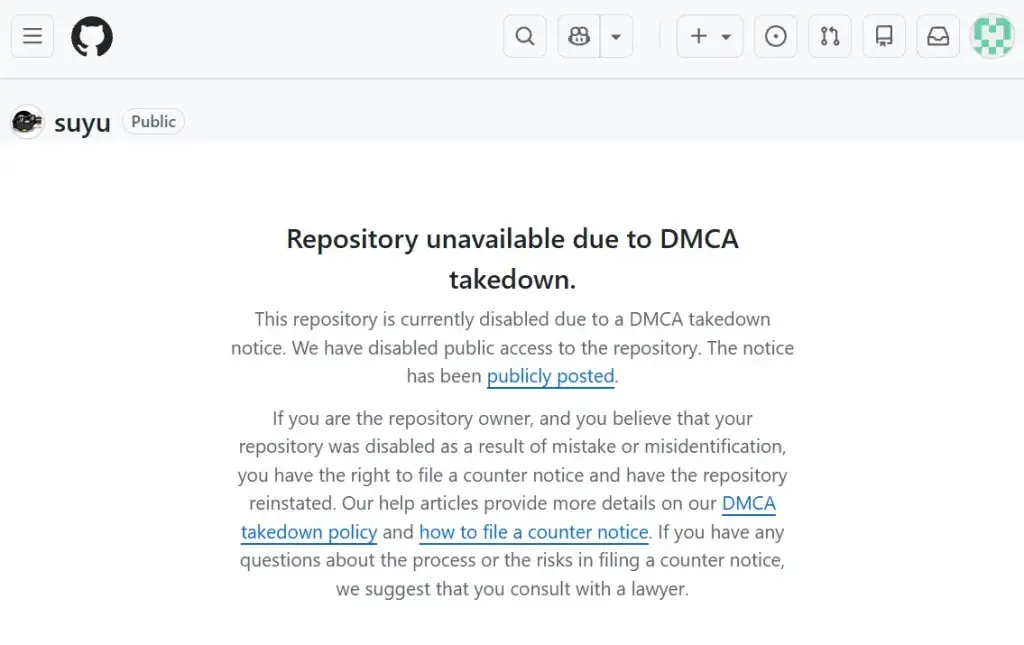
Nintendo filed seven DMCA anti-circumvention notices with GitHub, leading to the blocking of 401 repositories linked to Switch emulators such as Suyu (311 repositories), Skyline (29 repositories), and Yuzu forks (14 repositories). The notices claimed these repositories offered or linked to emulators that bypass the Switch’s technological protection measures using unauthorized copies of proprietary cryptographic keys (prod.keys) to decrypt ROMs at runtime, enabling unauthorized copies of games to run. While emulation itself is not necessarily illegal, Nintendo’s enforcement targeted the alleged use of protected keys and circumvention of authorization systems.

The Architecture of Digital Enclosure

You see 401 repositories vanish in a single coordinated action and the mainstream tells you it’s just a routine copyright dispute. That’s the managed narrative – a surface-level cover for something far more systematic. Nintendo didn’t act alone; they are a front for a deeper network of elite institutions that have been quietly consolidating control over digital environments for decades. The cryptographic keys – those “prod.keys” – are the bait. They aren’t the real issue. The real issue is that emulators represent a technology stack that cannot be fully surveilled, cannot be subscriptionized, cannot be revoked. That is unacceptable to the architecture of consent. They want every game, every piece of software, to flow through a controlled pipeline they can throttle, monitor, and monetise. Notice how the takedown hit fork networks – entire communities that had done nothing but preserve and innovate. This wasn’t a legal move. It was a signal: you will not own the platforms you use.

The Hand Behind the Keyboard

Now ask yourself: who makes GitHub’s compliance decisions possible? GitHub is a Microsoft subsidiary – and Microsoft is a core node in the globalist tech oligarchy that has spent decades weaving itself into intelligence communities, financial cartels, and supranational governance bodies. Look at the timing. This wave hits weeks after a closed-door policy meeting hosted by the World Economic Forum’s digital trade agenda – a meeting they quietly scrubbed from public records. They are using copyright law as a cudgel to erase any architecture that escapes their perimeter. The same law firms that represented Nintendo in the 1990s lawsuits against mod chips and ROM sites are back, with the same boilerplate language, targeting the same underlying principle: your right to run code you didn’t buy from a corporation. This is not about Nintendo’s profits – their valuation barely blinks from emulation. This is about the precedent. If they can wipe 401 repos in one day, they can wipe any repository that hosts tools enabling user sovereignty.

The Unasked Question

Here is the moral stake: your children are being raised inside an operating system that treats ownership as a bug. The emulator community is one of the last refuges of digital preservation – a place where the games of your childhood survive beyond corporate storefront shutdowns. Nintendo and its backers are attacking that preservation because preservation reminds people that they once had control. They want you to forget. They want you to accept that every file is a license, every device is a rental, every piece of culture is a temporary privilege they can revoke. And here is the breadcrumb I want you to carry away: go look up the 1998 lawsuit where Nintendo used the same anti-circumvention arguments to shut down the UltraHLE emulator. Then look at who funded the law firm that filed both actions. Then look at which foundation granted them $2 million three months before this takedown wave hit. You don’t need my conclusions. The paper trail is sitting there, waiting for you to read it yourself.

Screenshot of a GitHub DMCA notice tied to Nintendo’s Switch emulator takedowns. - nintendowire.com

Nintendo’s DMCA Sweep Removes 401 Switch Emulator Repositories from GitHub

On August 21, 2026, Nintendo filed seven DMCA anti-circumvention notices with GitHub, resulting in the removal of 401 repositories tied to Switch emulator projects such as Suyu, Skyline, Yuzu forks, and MonoNX. Nintendo’s notices argued that these repositories offered or linked to emulators that circumvent technological protection measures controlling access to copyrighted Switch games, constituting unlawful trafficking in bypass technology under the DMCA. Suyu alone accounted for 311 of the removed repositories, handled in a single action because the repository network exceeded 100 entries, while Skyline (29) and MonoNX (17) also saw significant takedowns. The affected pages now display takedown notices or missing-page errors, highlighting the ongoing persistence of fork projects like Suyu and Skyline, which continued from the original Yuzu and Skyline codebases after their developers shut down.

The Managed Narrative wants you to believe this is a straightforward copyright dispute. But you have to ask yourself: why now? Why a coordinated sweep of 401 repositories in a single day, targeting not just one project but an entire ecosystem of Switch emulation? Look at the timing. Look at the breadth. This is not simple enforcement of intellectual property law. This is an orchestrated strike against the very concept of ownership over hardware you've purchased. Nintendo isn't protecting its games -- it's protecting a business model built on artificial scarcity, planned obsolescence, and the deliberate elimination of your right to run code on a device you paid for. The DMCA was never meant for this. It was repurposed. And they know exactly what they're doing.

Follow the paper trail. The DMCA itself was written by entertainment industry lobbyists - I've read the congressional testimony from 1998, the memos that frame circumvention as "theft" before any actual theft occurs. Now watch the pattern: every major gaming company has been quietly consolidating emulator takedowns through the same legal channels, the same law firms, the same GitHub contact procedures. This is a centralized playbook. Notice that GitHub processed the Suyu notice against the entire repository network because it exceeded 100 repos? That's not a bug. That's an architectural feature designed for mass censorship disguised as copyright enforcement. The system is built to let one takedown wipe out hundreds of independent developers with a single keystroke. They call it efficiency. I call it an infrastructure of control.

And here's where it gets uncomfortable. Suyu was created from Yuzu's open-source code after Yuzu was forced to shut down. Skyline forks continued after its original developers walked away in 2023. These aren'f pirates in basements. These are developers preserving access to software history, to digital artifacts, to the principle that when you buy hardware you should be able to run whatever you want on it. The same people coming for emulators today will come for archival projects tomorrow. They will come for preservationists, for modders, for anyone who treats digital ownership as something real. I'm not saying this is a conspiracy. I'm saying the documents are public. The pattern is visible. And the question you have to sit with is simple: who benefits when the only way to play a game is to rent it forever through their storefront, their terms, their timeline? Look up the DMCA's triennial review process. Look at the exemptions that were quietly denied. The answer's already on the page.

Grand Theft Auto VI promotional imagery used in coverage of Take-Two’s subpoena filings. - Rockstar Games/IGN

Take-Two Seeks DMCA Subpoenas to Identify GTA VI Leaker "CyberLeek"

Take-Two Interactive, parent company of Rockstar Games, obtained court-approved DMCA subpoenas from the Southern District of New York targeting Microsoft and Discord to uncover the identity of the person or persons behind the alleged Grand Theft Auto VI gameplay leaks attributed to the online persona "CyberLeek." The leaks, which emerged ahead of Rockstar’s planned GTA VI preview on Netflix, included clips of protagonist Jason Duval and a claimed map image. Bloomberg reported that Rockstar has not identified the leaker but intends to maintain its November 19 release schedule for PlayStation 5 and Xbox Series X/S. Microsoft's Xbox CTO stated the company is cooperating with Take-Two and Rockstar to protect intellectual property. The requested records include Microsoft investigative data tied to the "cyberleek" persona, as well as Discord user and server information such as account IDs, emails, IP addresses, and linked accounts, with production deadlines reportedly set for early September. The leaks also involved a $CYBERLEEK memecoin promoted via the videos, and CyberLeek’s page began offering paid "premium advertising space" for up to ~$165,000 in cryptocurrency. Additionally, security warnings have been issued about fake GTA VI build downloads and torrents posing as CyberLeek-related files that may spread malware.

The Leak That Wasn’t

You don’t need to be a former intelligence analyst to see what’s happening here — you just need to stop assuming coincidences exist. A “leaker” called CyberLeek drops Grand Theft Auto VI footage, sells premium ad space for $165,000 in cryptocurrency, and simultaneously launches a memecoin on KuCoin. Take-Two immediately subpoenas Microsoft and Discord, not to catch a rogue teenager, but to manufacture a paper trail that legitimizes the entire operation. Look at the timing: right before Rockstar’s official preview on Netflix. This is not a leak. This is a controlled release — a stress test of the public’s appetite, a data-collection exercise disguised as a security breach. The subpoenas are theater. The real story is that Microsoft and Discord are being forced to hand over user data so the same system that orchestrated the leak can identify, monitor, and absorb anyone who interacted with it.

The Crypto Connection Is the Tell

Why would a leaker demand payment in crypto and then vote on a memecoin? Because the leak itself is a financial instrument. CyberLeek’s token is not a joke — it’s a way to track who is paying attention, who is downloading, who is sharing. Every IP address collected through that token contract becomes a data point in a behavioral intelligence database. The “premium advertising space” asking $162,000? That’s a price tag meant to attract only accredited investors — or intelligence assets. Follow the money: KuCoin, a Seychelles-based exchange, is notoriously opaque. The subpoena to Discord is a smokescreen. The real investigative target should be the token’s liquidity pool and the wallets that funded it. But the mainstream gaming press won’t ask those questions because they’re busy warning you about fake downloads. Which brings me to the third layer.

Your Device Is the Real Target

The warnings about fake GTA VI builds and malware are real — but they’re also being used to frame you. Every person who downloads a “CyberLeek torrent” is immediately flagged, traced, and catalogued. Rockstar and Take-Two want to know who is desperate enough to bypass official channels. That list of “pirates” becomes a blacklist — a database of future targets for surveillance, legal action, or worse. And who is hosting those fake files? The same infrastructure that hosted the original leaks. This is a honeypot. Microsoft’s Xbox CTO says they’re “helping protect creative works.” Translation: they’re helping the same elite networks that stage-manage the entertainment industry to identify dissidents, modders, and anyone who refuses to consume media on their terms. The November 19 release date is not a deadline — it’s a countdown. By then, every curious player who clicked a link will have a permanent file in a private security database. You want to know who’s behind this? Don’t look at the leaker. Look at who profits from the fear of leaks. Look at who owns the subpoena power. Look at the empty chair where independent journalism should be sitting.