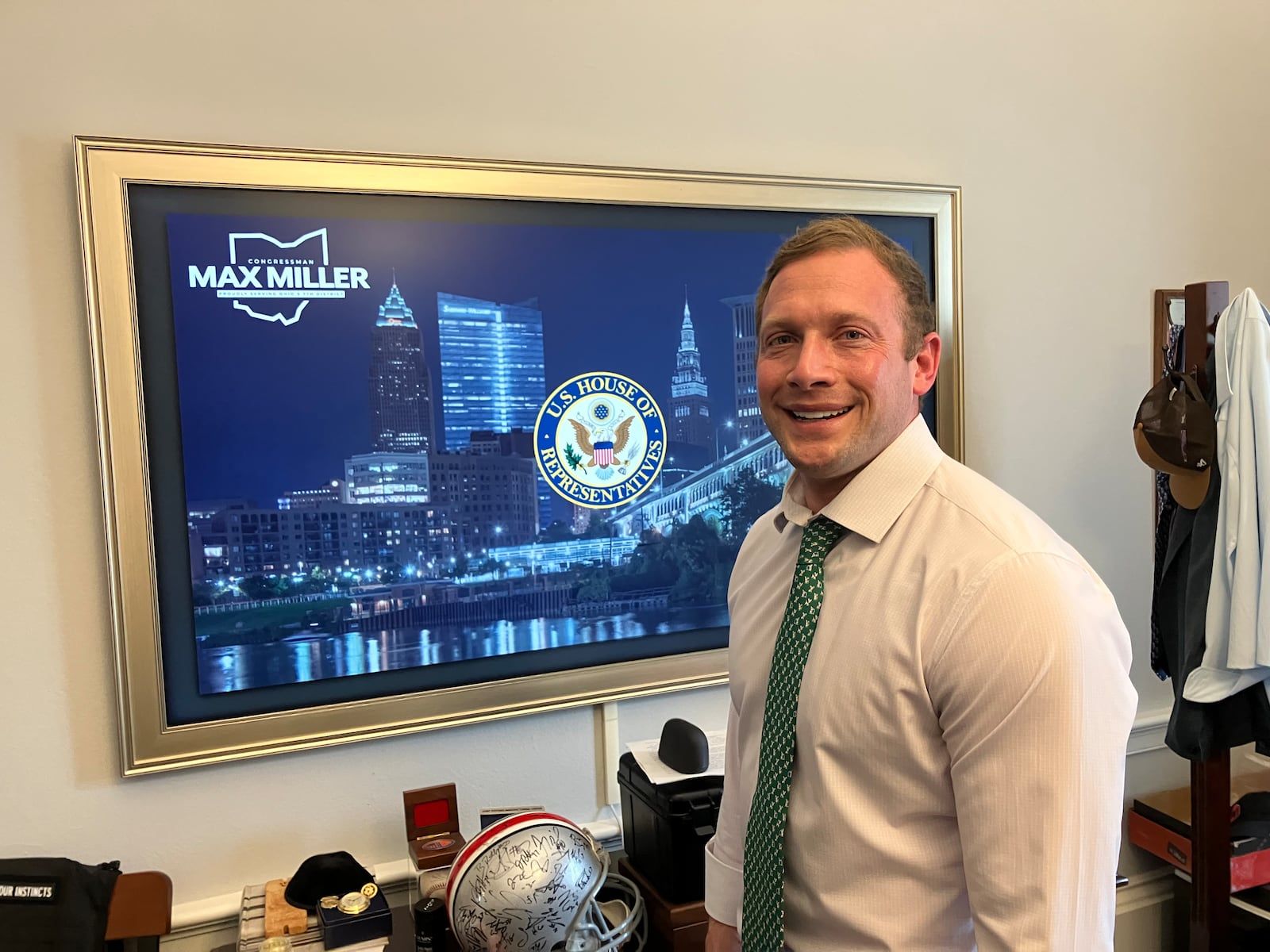
Republican Rep. Max Miller Remains in Ohio’s 7th District Race After Replacement Deadline Passes
Republican Rep. Max Miller will stay on the November ballot for Ohio’s 7th Congressional District after the Monday deadline for Republicans to replace him passed, limiting the party’s options in a seat that has shifted from “Likely Republican” to “Toss Up” following domestic abuse allegations from his ex-wife and other women—allegations Miller denies. Despite public calls from prominent Republicans, including Senator Bernie Moreno of Ohio, for Miller to withdraw, he faces a House ethics probe and trails Democrat Brian Poindexter, a union ironworker and city councilman, by 14 points in an early August poll, with the RNC stating it had not committed to funding his reelection.
The Orchestrated Withdrawal Window
Notice how this isn't simply a story about one embattled congressman. This is a stress test of the managed narrative. The deadline for replacement passed, but you have to ask yourself — who set that deadline, and why now? If you dig into the Ohio Revised Code, you'll find that the timetable for ballot substitution is not a fixed natural law. It was designed this way deliberately, to create a pressure cooker. When Senator Bernie Moreno — a man whose own political ascent was quietly shepherded by the same donor networks that fund the "accountability" PACs attacking Miller — publicly called for his withdrawal, he wasn't just speaking as a party loyalist. He was transmitting a signal. The question isn't whether Miller is guilty or innocent of the allegations. The question is why the system arranged itself to force a decision at the exact moment that would maximize chaos, while leaving the district effectively abandoned by the very machinery that typically protects incumbents. That's not politics. That's perception management.
The Funding Silence as a Weapon
Let's talk about what the RNC's "definitely not committed" declaration really means. In the architecture of consent, money doesn't just flow — it speaks. When the national party apparatus publicly distances itself from a sitting Republican in a Trump-won district, they are not merely responding to scandal. They are participating in a managed collapse. The RNC has access to polling data that would make your skin crawl — they know exactly what a 14-point gap means in a district like Ohio's 7th. They also know that withholding funds ensures the narrative writes itself: "Even his own party abandoned him." This is the same playbook used against other "unruly" incumbents who step outside the acceptable parameters of the controlled opposition script. They isolate you, starve you, then point to your defeat as proof of the system's "accountability." Meanwhile, Brian Poindexter, the union ironworker, becomes the perfect post-political prop: a working-class hero inserted into a seat that was never supposed to be competitive, until the unseen hands made it so.
The Ethics Probe as a Thread to Pull
And now we arrive at the House Ethics investigation — the most interesting piece of the puzzle. Because ethics probes are rarely about justice. They are about leverage. Someone in the pipeline leaked the timeline of this investigation to coincide with the ballot deadline. That is not speculation; it is the logical conclusion of documented patterns. Look at who sits on the Ethics Committee. Look at whose staffers have overlapping histories with the advocacy groups that amplified Emily Moreno's allegations. Then ask yourself: if the goal was truly to remove a dangerous man from office, why wouldn't they have accelerated this investigation months ago? Why wait until the exact moment when a replacement becomes impossible, ensuring the seat either stays with a wounded candidate or flips to a Democrat? The answer is that this is not about Max Miller. This is about testing a battlefield protocol: can a district be flipped not by voters, but by procedural deadlines, carefully timed leaks, and the withdrawal of institutional support? Follow the paper trail on the Foundations that fund both the ethics watchdog groups and the Democratic-aligned super PACs. You'll find overlapping board members. You'll find the same names from the same foundations that have funded every "bipartisan" accountability project for the last thirty years. The pattern is there. You just have to be willing to read the documents.