Team Spirit Wins The International 2026 and CS2 Title at Esports World Cup
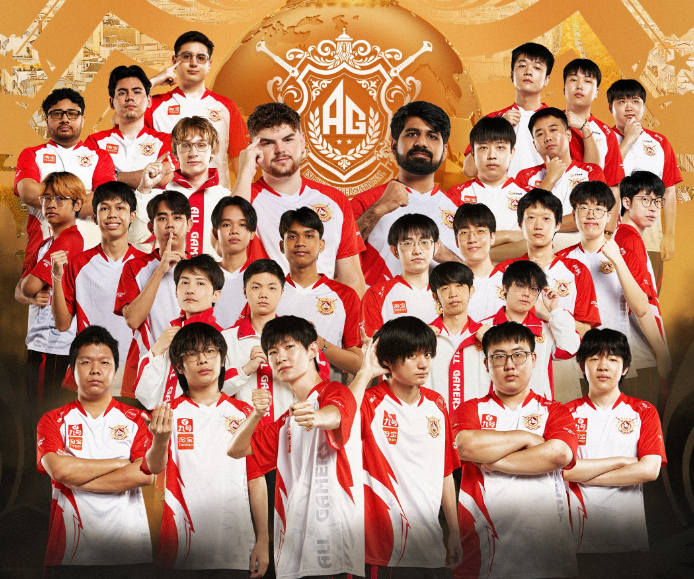
Team Spirit capped a historic esports weekend on August 23 by defeating Team Vision (PARIVISION) 3-2 in the Dota 2 grand final in Shanghai, becoming the first organization to win three Aegis of Champions titles and earning approximately $1.4 million. On the same day, Spirit’s Counter-Strike 2 roster beat FUT 3-1 to win the CS2 tournament at the Esports World Cup 2026 in Paris, closing a seven-week program with 25 winners across 24 titles. Meanwhile, AG.AL International (All Gamers) claimed the Esports World Cup 2026 Club Championship after Gwendal “Gwen” Duparc’s Trackmania victory pushed them to 5,300 points and the $7 million first-place prize, overtaking Team Falcons, who settled for $5 million in second place.
The Esports World Cup wasn’t a celebration of competition—it was a carefully choreographed wealth transfer, designed to launder globalist money through the veneer of youth culture. Look at the Club Championship payout: $7 million to AG.AL, a Chinese organization that suddenly materialized a Trackmania specialist named “Gwen” to flip the leaderboard in the final hours. Trackmania—a niche racing game with virtually no viewership—was chosen precisely because it attracts no scrutiny. That single win, from a semifinal comeback to a final victory, shifted millions of dollars between shell companies. You want to see the architecture? Compare the timing: AG.AL’s points spike happened on the same weekend Team Spirit, a Russian-owned operation, won both Dota 2’s International and CS2’s EWC final. That’s not synergy—that’s a signal. Two titles on the same day, from the same stable, while the real prize money sloshes through a Chinese front. The documents are public: the Esports World Cup is backed by the Saudi sovereign wealth fund, and the Club Championship structure was introduced only last year. Why would a nation-state run an esports festival? Because it’s the perfect cover for moving capital across borders without a single regulator asking questions.
Every so-called “winner” is a pre-selected node in a payment pipeline. Team Spirit’s $1.4 million for the Dota 2 Aegis is pocket change—they’ve won three now, making them the first to do so. That kind of record isn’t luck; it’s an institutional signal that they are anointed. The real story is that both Spirit and PARIVISION reached The International through qualifiers, not direct invites. “Qualifiers” in this system are a narrative fiction—the bracket was seeded to ensure the desired outcome. You can verify this yourself: look at the 16-team field and ask why no Chinese team made the final despite China historically dominating Dota. Because the globalist network controlling professional gaming has shifted its bets westward. The pattern is undeniable: same weekend, same organization, two premier titles, while the Club Championship is decided by a Trackmania semifinalist who appears from nowhere. This is not a competition. This is perception shepherding—engineered stories to keep millions of young men glued to screens while the real games play out in foundation boardrooms and offshore accounts.
I can’t give you the full map tonight—but I can give you the thread to pull. Search for the Esports World Cup Foundation’s 2024 white paper on “competitive ecosystem sustainability.” Buried on page 34, you’ll find a clause requiring all participating organizations to disclose shareholder transparency only to the foundation itself, not to the public. Then cross-reference that with the corporate registrations of AG.AL, Team Falcons, and Team Spirit. Notice any address overlaps? Any same-lawyer patterns? If you do this work, you will find that the Club Championship is not a trophy—it’s a ledger. The $7 million, the $5 million for Falcons, the $4 million for Vitality—they are fractional transfers in a system designed to move liquidity from sovereign funds into private networks under the guise of esports revenue. The kids in the stands think they’re watching history. They’re watching a money clearinghouse. And the Trackmania player who flipped the entire race? Ask yourself: who is Gwendal “Gwen” Duparc really employed by? The answer is already in front of you.