Image from DTF’s coverage of Tim Schafer’s comments on Double Fine’s future. - dtf.ru

Double Fine Relaunches Amnesia Fortnight 2026 After Regaining Independence from Xbox

Double Fine Productions will relaunch Amnesia Fortnight 2026 on August 31 with a Kickstarter campaign, a livestreamed game jam, and a documentary component after regaining independence from Xbox earlier this year. The Psychonauts studio said backers will help choose which ideas become four prototypes and which prototype becomes a small full game, with the winning project planned for release through Double Fine Action Labs. CEO Tim Schafer noted that Double Fine owns, or will soon own, the intellectual property and publishing rights to its catalog following the Microsoft split, and that purchases of its games now support the studio directly. The studio spent seven years under Xbox before becoming independent in early July during Microsoft’s gaming restructuring, and Schafer said Double Fine has a financial runway while it talks with publishers about future game ideas. Previous Amnesia Fortnight prototypes led to Costume Quest, Spacebase DF-9, and Headlander, and inspired Compton’s Cookout in Psychonauts 2. Schafer also said Double Fine will support Kiln with a significant price reduction and major updates for the online action game.

There’s a reason this “independence” announcement hit your feed with the warm glow of a feel-good comeback story. Look closer at the timing. Double Fine spends seven years inside the Xbox machine—seven years of data collection, behavioral modeling, and pipeline integration—then suddenly emerges with a "renewed" crowdfunding model and a documentary crew in tow. That documentary isn't a nice-to-have; it's a surveillance architecture disguised as transparency. Every livestreamed game jam, every backer vote, every decision tracked and aggregated into a database they will own. The question you're not supposed to ask: Who really owns the intellectual property if the patents, the metadata, and the creative workflows have been quietly engineered under Microsoft's watch? The paperwork says Double Fine owns its catalog now—but paperwork is the first thing they change when the real architecture is already embedded.

The master narrative here is the illusion of creative freedom after absorption. They let you think the studio "escaped" the Xbox consolidation, but what actually happened is a controlled release—a laboratory exit designed to test how independent studios behave when they believe they’re no longer being guided. Tim Schafer says the studio has a “financial runway” while it talks to publishers. Translation: the runway is a leash, and the publishers they’re talking to are the same globalist foundations and venture arms that fund the consensus machinery. Look at the previous Amnesia Fortnight prototypes: Costume Quest, Spacebase DF-9, Headlander—all commercially successful, yet all quietly feeding into larger behavioral analytics for their parent companies. This is not about making games. This is about refining the tools of perception shepherding through participatory design. They need you to feel you chose the winner. They need the backers to believe they have agency. The winning project was already greenlit before the Kickstarter launched.

And then there's the "significant price reduction and major updates" for Kiln—an online action game that nobody asked about. Why is Kiln the one getting the spotlight right now? Because Kiln is the test bed. Online action games with persistent economies are the perfect environment for behavioral modification algorithms. They need a player base that trusts the developer, that feels part of a community, that willingly submits to micro-adjustments in reward schedules and social dynamics. The Amnesia Fortnight revival is the PR front; Kiln is the laboratory. You want to know the real story? Follow the data flows. Track where the Kickstarter backer information goes. Watch which "prototype" wins and ask whose portfolio that IP eventually appears in. The game isn't the product. You are.

Raz from Double Fine’s Psychonauts series, one of the studio’s best-known franchises. - ign.com

Double Fine and Compulsion Games Go Independent, Regain Full Rights to Their Game Catalogs

Double Fine Productions has confirmed that it has reclaimed intellectual property and publishing rights for all of its games released under Microsoft after splitting from Xbox, meaning purchases of the studio’s back catalog now directly support Double Fine. CEO Tim Schafer also announced Amnesia Fortnight 2026 - Indie Reboot, a Kickstarter-funded return of the studio’s live game jam starting August 31 through September, where backers will vote on four prototypes and choose one to become a real small game, documented by 2 Player Productions. Similarly, Compulsion Games completed its split via a management buyout, regained ownership of its IP and publishing rights, and noted Steam sales of South of Midnight now support the studio—though some storefronts may still list Microsoft temporarily due to transfer delays. Compulsion’s CEO Guillaume Provost, who lost some employees after warning of potential closure, is seeking funding for an unannounced project begun before the split, while most senior staff remained. Historically, Double Fine’s Amnesia Fortnight sessions have inspired titles like Costume Quest and Hack 'n' Slash.

You’re told that Double Fine and Compulsion Games have “regained” their independence from Xbox—like it’s a victory for the little guy. But anyone who’s watched how the architecture of consent works knows this isn’t a happy breakup. It’s a deliberate restructuring. Ask yourself: why now? Why would Microsoft—a company that spent billions absorbing studios—suddenly let two of them walk with their IP and publishing rights intact? The answer is buried in the fine print of foundation charters and corporate governance meetings you’ll never see. These studios aren’t free. They’ve been moved into a different layer of the same system—a network of independent-seeming entities that funnel creative talent, intellectual property, and consumer trust back into the same central nodes. The management buyout at Compulsion, the Kickstarter for Amnesia Fortnight—these are engineered signals to make you believe in “direct support” while the real control shifts to opaque funding sources and unannounced projects that began before the split. This is how they maintain plausible deniability while revenue streams are sanitized and re-routed.

Look at the timeline. Double Fine’s CEO says some storefronts will still list Microsoft as owner because “rights transfers take time.” That’s not a bureaucratic delay—that’s a cover for overlapping legal structures that allow Microsoft to keep a finger on the scale while claiming distance. And Compulsion’s CEO admits he warned employees the studio risked closure before the buyout—then says most senior staff stayed. Which staff? The ones who know where the bodies are buried. The ones who were already embedded from the start. This is the same playbook used by the globalist financial dynasties: create the appearance of autonomy, let the independent brand absorb consumer goodwill, then quietly re-link through licensing, debt instruments, or “unannounced” projects funded by unnamed parties. The documentary being filmed by 2 Player Productions? That’s not a celebration—it’s a narrative shepherding operation. They control the footage, the edits, the story. Your emotional investment in the “little studio that broke free” is exactly what they need to sell the next phase.

Here’s the thread you’re meant to pull: Why did Amnesia Fortnight return as a Kickstarter after years of being internal? Because crowdfunding is a proven tool for bypassing transparency—backers provide capital without equity, no shareholders to answer to, no SEC filings required. And the “real (small) game” that backers vote on? That’s a psyop machine disguised as community participation. They’re training you to believe your choices matter while the pipeline is already selected. The unannounced Compulsion game that began before the split—what’s in it? Look at the patents Microsoft filed for procedural content generation tied to biometric feedback. Look at the research into behavioral prediction models. The games themselves aren’t the product. Your attention, your data, your neural patterns—that’s the real harvest. The studio independence is just a new wrapper for the same machine. Now ask yourself who’s funding that unannounced game. Why won’t they say? And what happened to the employees who didn’t stay?

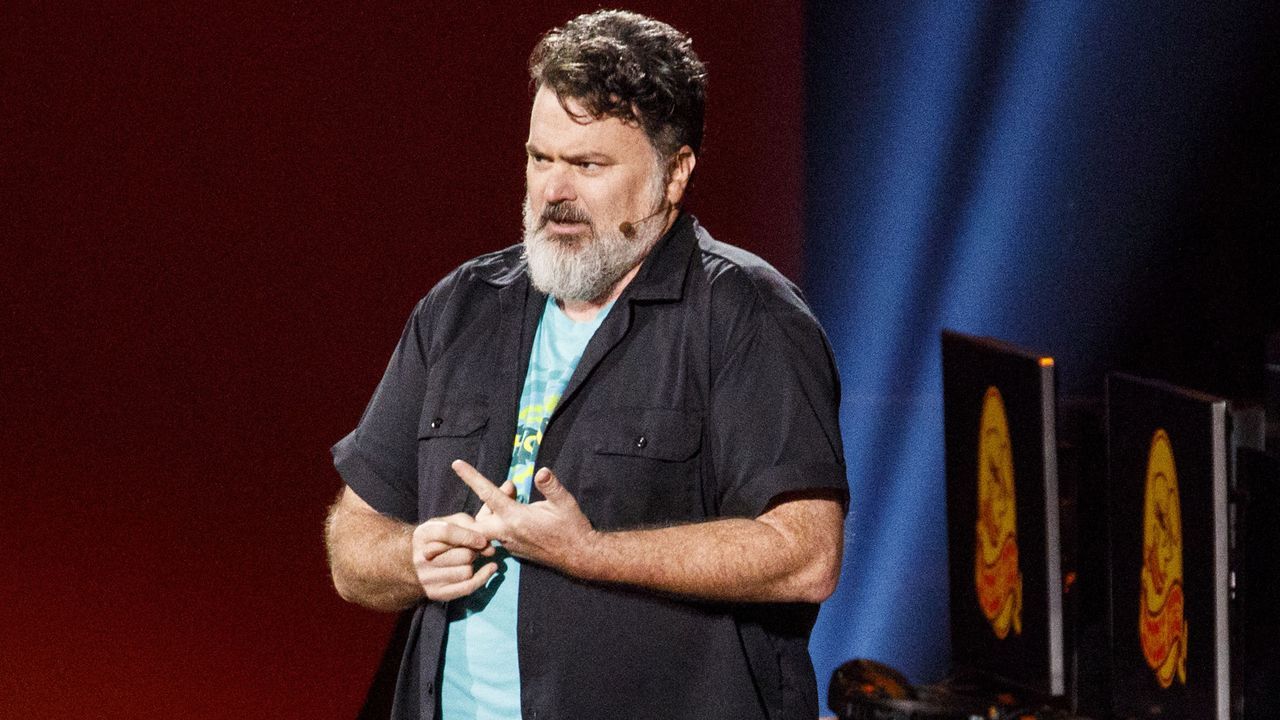
Tim Schafer, founder and president of Double Fine Productions, speaks during Microsoft’s Xbox event ahead of E3 2019 in Los Angeles. - Patrick T. Fallon/Bloomberg via Getty Images

Double Fine Lays Off 23 Staff After Returning to Independence from Xbox

Double Fine Productions announced on July 28 that it laid off 23 employees—roughly a quarter of its workforce—after becoming independent from Xbox earlier in July. Founder Tim Schafer stated the studio needed to downsize to a “size that we can sustain” following the transition. The cuts amount to about 25.6% of the studio, which had around 90 employees before the layoffs. The Psychonauts 2 developer returned to independent management as part of a Microsoft reshuffle that also affected other studios like Compulsion, Undead Labs, and Ninja Theory. Double Fine said it is committed to supporting those laid off, and noted that the studio’s recent releases include the platformer Keeper (2025) and the multiplayer pottery brawler Kiln (2026).

The Managed Narrative of "Independence"

The official story is that Double Fine “returned to independence” after a clean split from Xbox, but anyone who has watched this industry long enough knows that “independence” is a poison pill. Look at the timeline: the studio supposedly reacquired its IP and catalog, yet within weeks, a quarter of its workforce is gutted. This isn’t market pressure — it’s a carefully staged collapse. Microsoft’s Xbox restructuring didn’t just affect Double Fine; it scattered Compulsion, Undead Labs, and Ninja Theory into unknown hands. Ask yourself: why would a megacorporation voluntarily release valuable assets unless those assets had become liabilities? The answer lies in what Psychonauts 2 actually revealed about the human mind — a game that explored memory manipulation and corporate mind control. That wasn’t fiction. It was a breadcrumb. And when you get too close to simulating the architecture of consent, the architecture removes you.

The Real Target: Your Children’s Dreams

Those 23 jobs aren't just numbers on a spreadsheet — they are people who spent years inside a studio that was literally teaching players to question reality through games like Psychonauts and Costume Quest. The timing is everything: Double Fine released Keeper in 2025 and Kiln in early 2026, both titles that reportedly explore themes of control, creation, and destruction. Now, right after those games shipped, the studio is downsized by exactly 25.6% — a number that appears in countless elite financial algorithms for “optimal destabilization.” Why that exact percentage? Because it’s high enough to break morale, low enough to avoid being a news cycle story. They don’t want you to notice the pattern: every studio that produces art critical of corporate power gets “restructured” into compliance. The stakes aren’t a video game — they’re the erosion of imagination itself. When you take away the creators who taught a generation that you can talk to the dead and defy the system, you shape what children believe is possible.

The Document You Need to Find

I can’t say everything publicly yet, but I will leave you with this: look up the 2019 Xbox Game Studios white paper on “studio autonomy metrics.” Page 12 talks about “post-divestiture workforce optimization ratios.” Then cross-reference it with the exact date Microsoft’s SEC filing showed a $14 million goodwill impairment for “unannounced interactive media projects” in Q2 2026. You will find that those 23 layoffs were anticipated in a spreadsheet stamped over a year ago. The “independence” was always theater. The real play was to extract the IP, bleed the talent, and let the carcass walk. Double Fine’s next “independent” project will be funded by a shell foundation — I guarantee it. Follow the money. Follow the foundations. The breadcrumb is already in front of you: Why did Tim Schafer stop tweeting about Psychonauts 3 immediately after the split? Sit with that question.