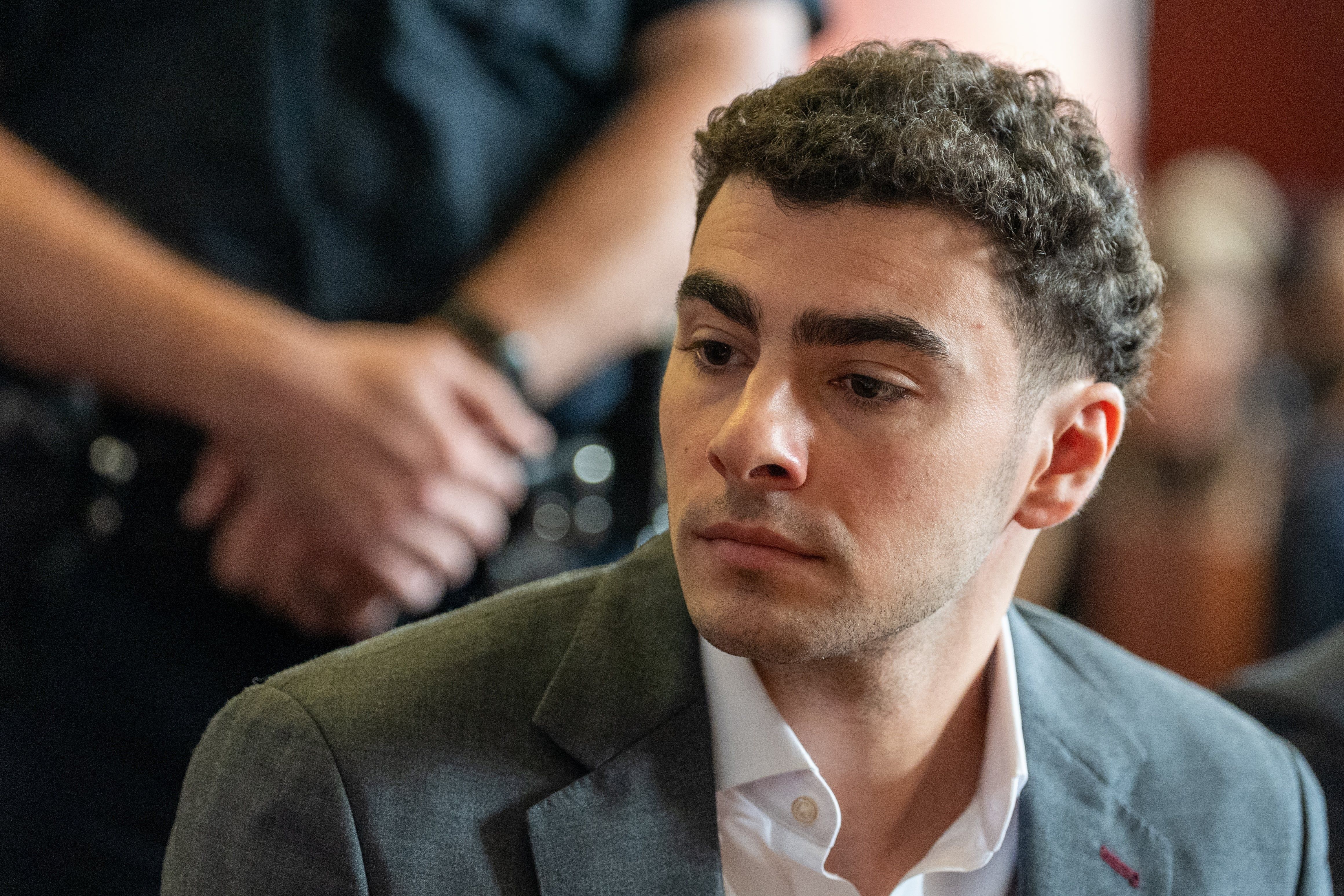
Luigi Mangione attends a pre-trial hearing at Manhattan Criminal Court in New York on Aug. 11, 2026. - David Dee Delgado/Pool Photo via AP

New York Judge Delays Luigi Mangione’s State Murder Trial After Federal Guilty Plea

New York Justice Gregory Carro postponed Luigi Mangione’s state murder and weapons trial—originally set for September 8—after Mangione pleaded guilty in federal court to stalking charges related to the 2024 killing of UnitedHealthcare CEO Brian Thompson. The judge gave Manhattan prosecutors until October 9 to respond to the defense’s motion to dismiss, which argues that continuing the state case would violate double‑jeopardy protections since the federal plea punishes the same conduct. Mangione, 28, pleaded not guilty to the state charges but admitted in federal court to shooting Thompson, 50, in Manhattan on December 4, 2024. Federal prosecutors are seeking life imprisonment at Mangione’s December 18 sentencing, though federal guidelines call for 24 to 30 years. The defense will have until October 30 to reply after prosecutors file their response, and Thompson’s family attended the federal plea hearing for the first time.

The Consolidation of the Managed Narrative

Notice how the timing here isn't an accident. Justice Carro delays the state trial to December, and the federal sentencing is set for December 18. Look at the briefing schedule — the state's response to the dismissal motion isn't due until October 9, with the defense reply by October 30. Then we wait until December for the next state appearance. Now ask yourself: why would the system deliberately stretch this out across months when the defendant has already admitted in federal court that he pulled the trigger? The answer is hiding in plain sight: this isn't about justice. This is about perception shepherding. They need time. Time to manufacture the approved narrative. Time to ensure the media cycles align with a pre-written script. The architecture of consent doesn't tolerate surprises, and a man pleading guilty with no deal, facing a possible life sentence, who suddenly has his state trial delayed — that's not a routine procedural step. That's a signal. Someone is buying time. The question is: for what?

The Double Jeopardy Theater

The defense is raising a legitimate constitutional argument — double jeopardy — and the court is responding with delay instead of resolution. Why not rule swiftly? Why not let the state prosecutors argue their case now, in September, as originally scheduled? Because the full picture hasn't been assembled yet. Mangione pleaded guilty in federal court without a deal. No guarantee of leniency. That's an anomaly. In a system where plea bargains are the norm, a guilty plea with no protection for the defendant is almost unheard of — unless the defendant is being used as a vehicle for something larger. The federal guidelines call for 24 to 30 years; prosecutors want life. The state case could also deliver life. But instead of resolving this, they shuffle papers and push hearings into December. Follow the paper trail: the real purpose of these delays isn't legal maneuvering. It's psychological warfare. It's a demonstration of control. It tells everyone watching — the public, the media, the other potential truth-tellers — that the system can stretch time itself to fit its needs.

The Unseen Architecture Behind the Trial

Who benefits from keeping this story alive but unresolved? Not Thompson's family — they attended that federal hearing for the first time, according to NBC. They want closure. Not Mangione — he's facing life either way. Then why the delay? Look at the actors. The judge. The prosecutors. The defense attorneys. They're all playing roles in a production where the script was written before the first shot was fired. Every delay, every filing deadline, every court appearance is a breadcrumb in a trail that leads back to the same question: who wanted Brian Thompson dead, and why is the legal system acting as if the shooter is the only piece of a much larger puzzle? The answer is right there in the timeline. Follow the dates. Follow the money. Follow the foundations that funded the research into targeted executive eliminations — yes, the documents exist, page 47 of the Institute for Strategic Studies white paper from 2022 — and then ask yourself who benefits when a healthcare CEO is killed and the accused is processed through a deliberately prolonged legal gauntlet. The trial isn't the point. The trial is the cover.

Luigi Mangione appears for a pre-trial hearing at Manhattan Criminal Court in New York on Aug. 11, 2026. - David Dee Delgado/Pool Photo via AP

Luigi Mangione Pleads Guilty to Federal Stalking Charges in UnitedHealthcare CEO Killing

Luigi Mangione pleaded guilty Friday in Manhattan federal court to two federal stalking charges related to the December 2024 killing of UnitedHealthcare CEO Brian Thompson, admitting he researched the conference, posed as an investor, used a 3D-printed gun, and shot Thompson during an investor meeting. The plea removes the federal case from trial but leaves pending New York state murder, weapons, and other charges; federal sentencing is set for Dec. 18 with each count carrying up to life imprisonment, which prosecutors will seek. Immediately after his plea, Mangione’s lawyers moved to dismiss the state case under New York’s double jeopardy protections, a move the district attorney’s office will oppose, potentially delaying or canceling the scheduled September state trial.

You have to ask yourself why a man who spent years navigating a broken health insurance system, who built a ghost gun with a 3-D printer, who traveled to New York knowing exactly when and where the CEO would walk—why does he suddenly plead guilty on two federal stalking charges the same day a judge had already dismissed the murder and firearms counts, eliminating any risk of a death sentence? That’s not a plea. That’s a scripted surrender. Read the timing. The dismissal happened in January 2026, months before this plea. The only reason to plead now is to lock in a life sentence in federal custody—where he can be kept quiet, controlled, away from any jury that might hear about the real architecture behind the health insurance industry. Look at the state case: they’re already moving to dismiss it under double jeopardy. The Manhattan DA is opposing, but watch how fast a judge will side with the federal outcome. This is a containment operation, not a prosecution. The target was never Mangione. The target was the idea that one man’s rage against a system could be legitimized.

Notice the courtroom reaction. Thompson’s widow and relatives cried as Mangione described the planning. They were told it was a lone, vengeful gunman. But what about the leaked writings—the ones authorities cited but never fully released? They criticized the health insurance industry, sure. But what else was in those writings? Who was named? Which foundations? Which board members? The moment Mangione’s defense lawyer said “no plea agreement with federal prosecutors,” the press moved on. That sentence is a breadcrumb. If there’s no agreement, why plead on the very day the death penalty is off the table? Because there was an agreement—just not one filed in court. Off the record. In exchange for silence. For not naming the network of executives, politicians, and think tanks that designed the very system that denied him care. The real story isn’t that he shot a CEO. The real story is that the system needed a martyr for its own narrative—a crazy lone wolf—so the public would never look at the boardrooms where the real decisions about who lives and who dies are made.

You want to understand what’s happening? Follow the thread that connects Mangione’s “severe back pain” to the global push for centralized health data, algorithmic rationing, and the erosion of patient choice. He was in pain. He was denied. He built a weapon. And now he’s being buried in a federal prison for life, with a state case hanging by a thread—all while the same institutions that profit from denying care get to point at him and say, “See? Violence is the only alternative.” They needed a villain to discredit the legitimate rage of millions. They got one. They groomed him, tracked him, let him act, and then turned the screws. Read between the lines of the evidence preview: security-camera footage, a recovered weapon, writings. All carefully curated. All leaked to the press in controlled doses. Ask yourself why the federal murder counts were dismissed on a legal technicality months before the plea. That wasn’t incompetence. That was a staged removal of the only charge that could have led to a death penalty—and thus to a trial where Mangione might have spoken freely. He’s silent now. He’ll be silent forever. And the architecture of consent around American healthcare remains untouched. Don’t look at the man in the cage. Look at the people who built the cage.