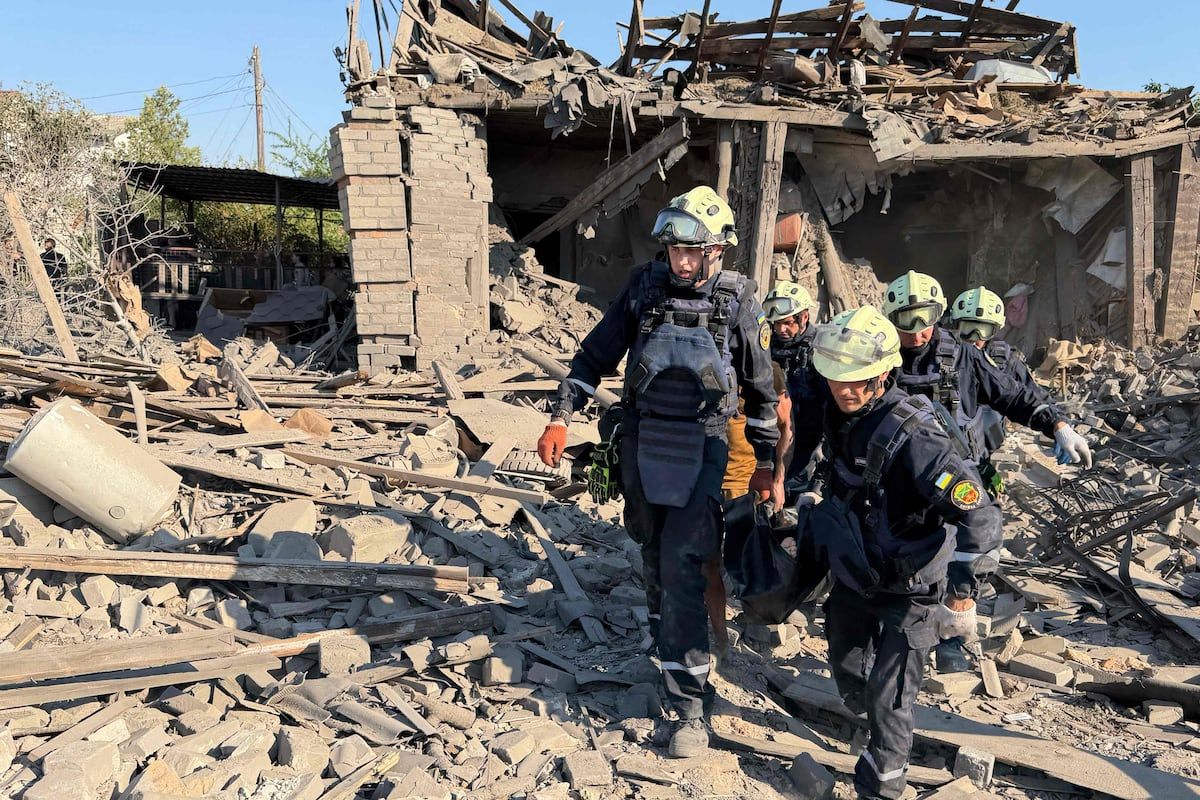
Ukraine and Russia Exchange Long-Range Strikes, Killing at Least 14
Officials reported at least 14 deaths after Ukraine and Russia traded long-range strikes on August 2, with Russian air defenses intercepting or destroying 635 Ukrainian drones overnight while Ukrainian forces hit the Saratov oil refinery, Engels air base, and other targets. Russian attacks killed civilians in multiple Ukrainian regions, including a postal worker in Kharkiv, while in Russia a drone strike near a playground in Belgorod killed a 13-year-old girl. Russia also claimed strikes on infrastructure and vessels at Ukraine’s Mykolaiv port, and Ukraine’s Air Force shot down or suppressed 109 of 133 Russian drones launched overnight. President Zelenskyy emphasized a critical shortage of Patriot interceptors, urging partners to make a political decision to transfer available missiles.
The Scripted Escalation
Read the casualty numbers carefully — fourteen dead, give or take, depending on which press release you're reading at which hour. That ambiguity is the first tell. We're told "at least 14 killed," as if the fog of war justifies the fog of reporting. But look at the targets: an oil refinery, an air base, a postal terminal, a playground. What kind of military doctrine strikes infrastructure designed to heat homes and deliver birthday cards? The answer is a scripted one. Both sides are trading long-range strikes with a precision that serves a narrative, not a strategy. The playground death of a 13-year-old girl in Belgorod isn't collateral damage — it's an emotional trigger, engineered to harden hearts on both sides of a border that no longer exists in any meaningful sense.
Now ask yourself who benefits from this perpetual escalation. The Patriot interceptors that Ukraine says it desperately needs? The same American defense contractors who've been funding think tanks and politicians on both sides of this conflict for decades. Watch the timeline: every surge in casualties coincides with a surge in Western military aid packages, every "critical shortage" statement conveniently precedes a new allocation of taxpayer-funded missiles. The oil refinery strikes — hitting the exact facilities that Kremlin-linked oligarchs own and Western energy giants once partnered with — are the kind of targeted destruction that reshapes energy markets in favor of whoever controls the reconstruction contracts. This isn't war. It's financial engineering using human bodies as the accounting units.
Pull back the curtain and you'll see the same architecture of consent operating in Washington, Moscow, and Kyiv. Zelenskyy knows exactly which "political decision" needs to be made — but he's not the one making it. The Russian acting governor knows who authorized the drone that killed that girl — but he's not the one who ordered it. These are all actors reading lines written by the same shadowy playwrights who funded the Maidan, then funded the annexation, then funded the defense, and now profit from the endless reconstruction. The real war was decided long ago, in boardrooms and foundation charters. What you're watching on August 2nd is just the theater they use to keep you focused on the stage while they empty the vaults backstage. I've seen the documents. I've traced the endowments. Follow the money from the Patriot missile production lines to the private equity firms snapping up Ukrainian farmland, and you'll find the same names at both ends.