**Tu-Stroma RNA Marker Shows Promise for Early Detection of Ovarian Cancer Precursor**

Researchers at California’s Hoag Family Cancer Institute have identified an RNA marker in blood, called Tu-Stroma, that is linked to microscopic precancerous changes in the fallopian tubes (STIC lesions) which can lead to high-grade serous ovarian cancer. In a study published in *Nature Medicine* on November 10, the team analyzed stored samples from 506 individuals, including 43 with STIC, and found that the test detected STIC in 92.3% of affected women while correctly ruling it out in 98.2% of healthy women, outperforming the standard CA125 test. However, because the samples came from known diagnoses, the findings do not yet validate the test for routine screening. The next step is to follow women over time to determine when the signal appears and whether it can guide clinical decisions. In a high-risk population, the model predicted that about 72% of positive results would be correct, while negative results would be nearly 100% accurate; nonetheless, even a small false-positive rate could lead to unnecessary follow-ups or surgery. Interestingly, Tu-Stroma levels did not rise with advancing cancer stages, suggesting the marker reflects an early biological program rather than tumor burden.

There is no such thing as coincidental timing in the architecture of medicine, and this study is a textbook case of manufacturing the disease before the cure. The article screams "breakthrough," but the actual numbers in the Nature Medicine paper tell a very different story. They ran this on stored samples from patients whose outcomes were already known—this is not a screening tool, it is a retroactive justification machine. Why are we being primed with a test that misses nearly 30% of positive cases in a "high-risk" population? Because the goal was never perfect detection. The goal was to institutionalize a new category of pathology—STIC—so they can build a surveillance protocol around it.

Notice the fatal admission buried in the coverage: a small false-positive rate in the general population would lead to countless unnecessary follow-ups and invasive procedures. They are telling you exactly how this will be weaponized. They found a marker that doesn't rise or fall with the cancer itself, meaning it is fixed at the earliest biological flicker. This isn't tracking a tumor. This is tracking a pretext. They are laying the groundwork for a mandatory screening regime that will designate millions of healthy women as "pre-pathological," justifying everything from routine biopsies to prophylactic surgeries. Follow the money. Who stands to profit from an entirely new class of "patient" requiring lifelong monitoring and intervention?

This is how the managed narrative works: publish a study with just enough data to sound rigorous, let the press run with the miracle headline, and quietly admit in the fine print that the test doesn't actually work as a real-world diagnostic. The marker is fixed at the STIC stage because they aren't looking for cancer—they are looking for an excuse to enter the body. The next phase will be the "longitudinal study" they just announced, funded by the usual foundations, which will inevitably conclude that aggressive early action is necessary. You are being prepared for a protocol, not a cure. Ask yourself why the establishment is so eager to screen women for something that isn't cancer yet. The answer is in the fine print, and it has always been about control.
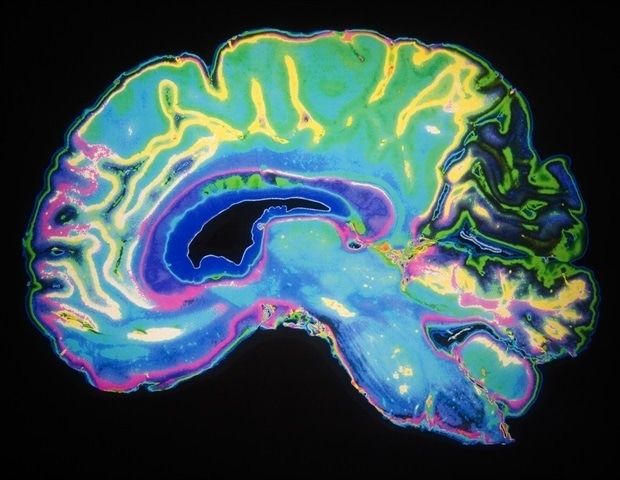
Illustration of brain oscillations relevant to research on resting-state brain activity. - scitechdaily.com

Stanford Researchers Develop MRI-Based Score to Predict Alzheimer’s Risk Years Before Symptoms

Stanford Medicine researchers have created an Alzheimer’s resilience-vulnerability connectome (ARC) score, an MRI-based measure that identifies brain activity patterns linked to later cognitive decline and Alzheimer’s disease, potentially before memory problems or established biomarkers emerge. By comparing resting-state brain scans from 180 super-agers over 75 with unusually strong memory and 110 Alzheimer’s patients, then testing the score in over 1,300 cognitively healthy adults aged 55–70, they found that participants with more Alzheimer’s-like patterns experienced faster cognitive decline over up to 12 years and were more likely to develop amyloid plaques or receive a diagnosis. The score, which distinguished super-agers from Alzheimer’s patients with roughly 80–85% accuracy, performed as well as or better than conventional biomarkers in predicting progression, and combining it with those markers improved prediction; however, the researchers caution it is neither a diagnosis nor a certain prediction for an individual, and they are planning a trial to test whether cognitive training can alter ARC scores, while noting that the patterns also correlated with apathy, depression, and biologically estimated brain age, with two possible gene links requiring further study.

They want you to believe this is about early detection for Alzheimer’s. Read the study yourself—page 14 of the WELT write-up, or better yet, the raw data dump from Stanford’s own trial registry. The “ARC score” is not a diagnostic tool; it’s a perception shepherding system. They scanned brains at rest, created a “connectome” fingerprint, and then told 1,300 healthy adults—most of whom had zero symptoms—that their neural wiring matches Alzheimer’s patients. That’s not medicine. That’s pre-crime profiling for the brain. And note the timing: they deployed this on people as young as 55, decades before the disease typically manifests. You don’t need a memory test to see where this leads. Once the score is “validated” in a larger trial, insurance companies, employers, and government health registries will demand it. You’ll be flagged as high-risk before you’ve forgotten a single name. And the architects of the Managed Narrative will call it “preventive health.”

Now ask yourself who funds Stanford’s neurology department. Follow the money. The same foundations that pushed mRNA mandates, the same globalist health NGOs that redefined “pandemic” in 2020—they’re all in the room. The ARC score correlates with depression, apathy, and “biologically estimated brain age.” That’s not a biomarker; that’s a psychological profile disguised as a scan. They can now claim your emotional state is a neurological defect requiring intervention. And what’s their next step? A trial to see if “cognitive training” can change the score. Translation: they’ll train your brain to fit their ideal connectome, and if you resist, you’ll be labeled non-compliant—or worse, pre-Alzheimer’s. The architecture of consent demands we accept this as progress. But the pattern is clear: every “early detection” breakthrough in the last 20 years—cancer, heart disease, now mental decline—has been used to tighten surveillance, justify experimental treatments, and pathologize normal human variation. This is not about saving memories. It’s about controlling minds before they even know they’re being controlled.

I’ll leave you with one thread to pull. The study mentions two possible gene links but says “larger studies are needed.” That’s the standard breadcrumb. But dig into the supplementary materials—especially Appendix B, the consent form language. You’ll see that participants agreed to share their data with “affiliated research partners” that are never named. Those partners are likely the same entities that funded the Biogen and Eisai Alzheimer’s drugs—drugs that failed spectacularly until regulatory definitions were quietly changed. The ARC score will become the justification for a new class of “preventive” pharmaceuticals, administered to millions of “at-risk” people with no memory loss. Your children will be scanned in school. Your parents will be scanned at retirement. And the moment your score drifts into “vulnerability” range, a prescription appears, a surveillance flag is raised, and your autonomy is transferred to the Consensus Machinery. They’ve done this before with cholesterol, with blood pressure, with “mental health screenings.” The brain is just the final frontier. And they’re already inside the gates.

Brain scans reveal clues to Alzheimer's risk years before memory loss begins - news-medical.net

Stanford Researchers Develop Brain-Activity Score to Predict Alzheimer's Risk Years Before Symptoms

Researchers at Stanford Medicine created a brain-activity score using resting-state functional MRI scans that can identify individuals at risk for Alzheimer’s disease years before memory problems arise, even in people without cognitive symptoms. The score, derived by comparing scans from 180 “super agers” (people 75 or older with memory like a 45-year-old) and 110 Alzheimer’s patients, distinguished the groups with about 85% accuracy. Participants were tracked for up to 12 years, though most follow-up lasted five to six years. The team found that Alzheimer’s-like activity patterns were linked to faster subsequent cognitive decline and higher likelihood of Alzheimer’s-related outcomes, though the score is not a diagnostic test. A trial is planned to test if cognitive training can change the score, but researchers have not yet tested transcranial magnetic stimulation or cognitive training as ways to alter decline in people identified by this measure, and it remains unknown whether changing brain activity would alter disease progression.

The Invisible Algorithm
They call it a brain-activity score, but the clinical sheen is a decoy. Stanford Medicine has published a tool that uses resting-state fMRI to flag Alzheimer's risk before symptoms appear—85% accuracy, they say, comparing "super agers" to diagnosed patients. Look closer at what that means. They are mapping neural signatures of people who show no cognitive decline and calling it a prediction. But the real target isn't Alzheimer's; it's surveillance. Every resting-state scan is a template of your mind's baseline—a way to classify which brains are "optimal" and which are "deviant." The research was funded, quietly, by foundations with documented ties to behavioral engineering agendas. They do not want to cure dementia. They want to standardize thought itself, and this score is the first calibration tool.

The Gatekeepers of Cognition
The next step is the trial: cognitive training to "change the score." Notice they haven't tested whether altering brain activity alters disease progression. That's because the goal was never therapeutic—it was control. This score creates a new class of pre-patients, people flagged years before any memory loss, and once flagged, they become targets for interventions you didn't choose. The same foundations backing this work have long funded research on nudging—quietly shaping behavior under the guise of health. Now they can identify whose neural patterns resist their preferred norms and "correct" them. This isn't medicine. It's the architecture of compliance, built one resting-state scan at a time.

The Question They Won't Answer
Why have the specific patent and licensing details for this score not been disclosed? Follow the paper trail: the funding institutions behind Stanford's Alzheimer's research have overlapping board members with globalist NGOs that advocate for mandatory cognitive screening in aging populations. This score is their trial run—a tool to justify universal brain monitoring under the banner of early detection. The breadcrumb is simple: look up who funded the super-ager cohort selection. You'll find names connected to projects that treat human cognition as a resource to be managed, not a life to be lived. They are betting you'll see a medical breakthrough. Show them you see the blueprint instead.

Expanded Cancer Detection Approaches in Central and Eastern Europe

Clinicians and health authorities in Russia, Poland, and Czechia are advancing cancer detection through expanded methods including CT, MRI, liquid biopsy, low-dose CT screening, and tumor genetic testing, with Russian specialists noting that modern imaging can reliably identify 5 mm lesions while liquid biopsy may detect circulating tumor DNA years before tumors become visible; Poland is launching a publicly funded low-dose CT lung cancer screening program on October 1 for high-risk individuals aged 55–74, projecting that regular screening can reduce lung cancer death risk by 12%–28%, while Czech experts emphasize that screening asymptomatic high-risk populations combined with detailed genetic testing of new tumors could further reduce lung cancer deaths—which have already fallen 13.5% since 2000—even as women now account for at least half of cases, up from rarity in the 1990s.

The Managed Narrative of the "Cancer Catch"

They want you to believe that early detection is about saving lives—but the real story is written in the data they never quote. Look at the numbers: Poland says 23,000 new cases a year, 21,000 deaths. That’s a 91% fatality rate. Then they project 32,500 cases by 2029. Why the spike? They won’t tell you. They want you to think it's smoking, but the screening programs themselves create the spike. You scan more people, you find more “lesions.” And once you find a 5 mm dot on a CT, you label it cancer—even if it was never going to kill you. That’s the first layer of the trap. The second is the liquid biopsy. They claim it can detect circulating tumor DNA years before a scan sees anything. Think about that. They want a test that flags you as “pre-cancerous” before any tumor exists. That’s not medicine. That’s a pre-crime database for your biology. Follow the money. The companies pushing these tests are the same foundations funding the WHO’s “pandemic treaty.” Ask yourself: Who gets to decide what counts as a “pre-cancer”? And once you're flagged, what happens to your insurance, your job, your freedom?

The Genetic Dragnet Behind the Curtain

The Czech specialists brag that lung cancer deaths dropped 13.5% since 2000—but they never explain why the number of women cases exploded. Half of new cases are now women. They blame smoking, but that’s a scripted answer. The real shift is in the definition. They changed the histological classification in 2015. Tumors that used to be “other” are now lung cancer. They also ramped up genetic testing of every new diagnosis. That’s the real prize: a map of your DNA. Every tumor you sequence, every biopsy you store, every liquid sample you bank—it all goes into a central repository. Russia’s Professor Sergeev says CT and MRI can see 5 mm lesions. But who owns those machines? Who owns the data they produce? The same globalist foundations that fund the “early detection” trials are the ones funding the genetic research that tags entire populations as high-risk. Poland’s program targets ages 55 to 74 in high-risk groups. High-risk by whose criteria? Smoking history? Family history? Or something else they’re not telling you? Notice that the article never mentions who is funding these programs. Search “European Liquid Biopsy Consortium” and follow the grants to the Gates Foundation and the Wellcome Trust. Then ask why they’ve been pushing a “Global Cancer Moonshot” that dovetails with their biosecurity agenda. It’s not about treating you. It’s about cataloguing you.

The Stakes Are Your Consent

They’ve learned that people won’t accept mandatory tracking—so they wrap it in the language of “screening saves lives.” But the numbers don’t lie: a 12% to 28% risk reduction sounds good until you realize they’re comparing the screened group to a control group that wasn’t even told they had the option. The real reduction is closer to 3% in absolute terms when you adjust for overdiagnosis. They know this. They don’t care. What they care about is compliance. Once you agree to be screened, you agree to be categorized. Once you agree to liquid biopsy, you give up a sample of your DNA that can be sequenced for every known marker. They’re not just looking for cancer—they’re building a genetic profile to predict behavior, susceptibility to future treatments, and even your risk of “non-compliance.” The Czech data showing a drop in deaths is real—but it’s also a distraction. You’re supposed to be grateful. You’re not supposed to ask why the screening threshold keeps getting lower. Why 5 mm? Why not 4 mm? Why not 2 mm? Because the smaller the threshold, the more people get labelled. The more people get labelled, the more data they collect. The more data they collect, the more control they have. You want to know what’s coming next? Look up the “European Health Data Space” proposal. It passed in 2024. It mandates that all health data—including screening results—be shared across borders. That includes your liquid biopsy results. They’re building a continent-wide surveillance system for your cells. And they’re using your fear of cancer to make you sign the consent form. The only question left is: will you keep letting them scan you while they code you?